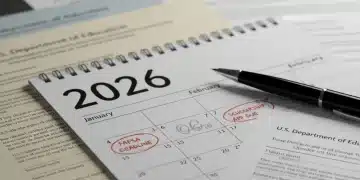
Mastering 2026 FAFSA: Maximize Federal Student Aid for Higher Education

The journey to higher education is often paved with aspirations, dreams, and, for many, the critical need for financial assistance. Understanding and effectively navigating the Free Application for Federal Student Aid (FAFSA) is paramount to unlocking these opportunities. As we approach the 2026 academic year, it’s crucial for students and families to be well-versed in the latest FAFSA guidelines, changes, and strategic approaches to maximize federal aid. This comprehensive guide, focusing on the 2026 FAFSA Guide, will walk you through every essential step, from preparation to submission, ensuring you are equipped to secure the financial support you deserve for your educational pursuits.
The FAFSA is more than just a form; it’s your gateway to federal grants, scholarships, work-study programs, and low-interest federal student loans. Without completing the FAFSA, you could be missing out on thousands of dollars in aid that can significantly reduce the cost of college. The landscape of financial aid is constantly evolving, and the 2026 FAFSA cycle brings with it new considerations and potential changes that applicants must be aware of. Staying informed is the first step towards a successful application.
This article aims to demystify the 2026 FAFSA Guide, providing practical solutions and expert advice. We’ll delve into the eligibility requirements, the documents you’ll need, understanding the Student Aid Index (SAI), common pitfalls to avoid, and crucial deadlines. Whether you are a first-time applicant or a returning student, this guide will serve as your indispensable resource for mastering the FAFSA process and maximizing your federal student aid.
Understanding the FAFSA: What It Is and Why It Matters
The Free Application for Federal Student Aid (FAFSA) is a form completed by current and prospective college students in the United States to determine their eligibility for student financial aid. This aid comes from various sources, including the federal government, state governments, and individual colleges and universities. The information provided on your FAFSA is used to calculate your Student Aid Index (SAI), a number that colleges use to determine how much financial aid you are eligible to receive.
The Importance of the FAFSA
- Access to Federal Grants: These are funds that do not need to be repaid, such as the Pell Grant.
- Federal Work-Study Programs: These programs allow students to earn money to help pay for educational expenses through part-time employment.
- Federal Student Loans: These loans often have lower interest rates and more flexible repayment options than private loans.
- State and Institutional Aid: Many states and colleges use FAFSA data to award their own grants and scholarships.
- Special Circumstances: The FAFSA provides an opportunity to explain any unusual financial circumstances that might impact your ability to pay for college.
Without a completed FAFSA, you are effectively closing the door to a significant portion of financial aid opportunities. Even if you believe your family earns too much income to qualify for need-based aid, it’s still highly recommended to complete the FAFSA. Many scholarships and some federal loan programs are not strictly need-based, and the FAFSA is often a prerequisite for all types of aid.
Key Changes and Updates for the 2026 FAFSA Cycle
The FAFSA has undergone significant modernization in recent years, and the 2026 FAFSA cycle continues this evolution. While specific details for the 2026 cycle are still being finalized and announced by the Department of Education, we can anticipate the continuation and refinement of changes introduced in previous cycles, particularly those stemming from the FAFSA Simplification Act. Staying updated on these changes is a crucial part of mastering the 2026 FAFSA Guide.
Anticipated Key Changes and Continuations:
- Simplified Application Process: The FAFSA form has been streamlined, reducing the number of questions and making it more user-friendly. This aims to make the application process less daunting for students and families.
- Shift from EFC to SAI: The Expected Family Contribution (EFC) has been replaced by the Student Aid Index (SAI). The SAI is a new eligibility index that determines the amount of federal student aid a student is eligible to receive. This change includes a new formula for calculating eligibility, which may impact how aid is distributed.
- Expanded Pell Grant Eligibility: The FAFSA Simplification Act aims to expand Pell Grant eligibility to more students and to link eligibility to family size and the federal poverty level. This could mean more students qualify for federal grants.
- Direct Data Exchange with IRS: A more direct data exchange with the IRS is being implemented, allowing for easier and more accurate transfer of tax information. This can reduce errors and simplify the application process for many families.
- Changes to Family Farm and Small Business Reporting: The treatment of family farms and small businesses in the financial aid calculation has been a point of adjustment. Applicants should pay close attention to how these assets are to be reported under the new guidelines.
- Reporting of Child Support: There have been changes to how child support is reported on the FAFSA. Historically, it was reported as untaxed income, but this may have shifted to an asset, which can affect the SAI calculation.
It is imperative to consult the official Federal Student Aid website (StudentAid.gov) regularly for the most up-to-date information regarding the 2026 FAFSA. Changes can be significant and directly impact your aid eligibility. Being proactive in understanding these updates is a cornerstone of this 2026 FAFSA Guide.
Gathering Your Documents: Preparation is Key
One of the most common reasons for delays or errors in the FAFSA application is incomplete documentation. Beginning the process with all necessary documents in hand will save you time and stress. The 2026 FAFSA Guide emphasizes thorough preparation.
Documents You Will Need:
- FSA ID: Both the student and one parent (if the student is dependent) will need an FSA ID to access the online FAFSA form, sign electronically, and access federal student aid information. If you don’t have one, create it well in advance; it can take a few days to verify.
- Social Security Numbers: For the student and parents.
- Driver’s License Number: If the student has one.
- Alien Registration Number: If the student is not a U.S. citizen.
- Federal Tax Information: For the student and parents. For the 2026-2027 FAFSA, you will typically need tax information from the 2024 tax year. This includes:
- IRS Form 1040 (U.S. Individual Income Tax Return)
- W-2 Forms
- Other records of income earned
- Records of Untaxed Income: This includes child support received, interest income, and veterans non-education benefits. The reporting of child support has seen changes, so be sure to follow the latest guidelines.
- Records of Assets: This includes cash, savings and checking account balances, investments (stocks, bonds, mutual funds, etc.), and real estate (excluding the family’s primary residence).
- Business and Farm Records: If applicable, especially with the recent changes in how these are treated.
The FAFSA now uses a direct data exchange with the IRS, making it easier to import your tax information directly. Even with this feature, having your tax documents readily available for reference is wise.
Organize these documents in a secure place. Having them ready will make the application process much smoother and reduce the likelihood of errors, which can delay your aid disbursement. This proactive step is a cornerstone of successfully utilizing the 2026 FAFSA Guide.
Understanding the Student Aid Index (SAI)
The Student Aid Index (SAI) is a significant change from the previous Expected Family Contribution (EFC). The SAI is an eligibility index number that a college’s financial aid office uses to determine how much federal student aid a student is eligible to receive. This index is not the amount of money your family will have to pay for college, nor is it the amount of federal student aid you will receive. It is simply a number used in a formula to determine your financial need.
How the SAI is Calculated:
The SAI is calculated using a formula established by law, based on the information provided on your FAFSA. Key factors include:
- Applicant’s Income and Assets: This includes the student’s earnings, savings, and investments.
- Parental Income and Assets: For dependent students, this includes the parents’ earnings, savings, investments, and other assets.
- Family Size: The number of people in the household.
- Number of Students in College: This factor has been removed from the SAI calculation under the FAFSA Simplification Act, which is a notable change from the EFC.
- Untaxed Income: Certain untaxed income will also be considered.
A lower SAI generally indicates a higher financial need and, consequently, eligibility for more need-based aid. It’s even possible for the SAI to be a negative number, which signifies a high level of financial need and could lead to increased Pell Grant eligibility.
Understanding your SAI is crucial because it directly influences the amount of aid you can receive. Financial aid offices use the following formula:
Cost of Attendance (COA) – Student Aid Index (SAI) = Financial Need
The goal is to minimize your SAI if possible, by accurately reporting your financial information and understanding how different assets and income sources are treated. This insight is a vital component of this 2026 FAFSA Guide.

Step-by-Step Application Process for the 2026 FAFSA
Applying for the FAFSA can seem daunting, but breaking it down into manageable steps makes the process much clearer. Follow this step-by-step guide to successfully complete your 2026 FAFSA Guide application.
Step 1: Create Your FSA ID
Both the student and one parent (for dependent students) must create an FSA ID. This is a username and password combination that serves as your legal signature and allows you to access federal student aid websites. Make sure to create these well in advance, as it can take 1-3 days for the FSA ID to be verified.
Step 2: Gather Required Documents
As detailed in the previous section, collect all necessary documents, including Social Security Numbers, tax returns (2024 for the 2026-2027 FAFSA), W-2s, and records of assets and untaxed income.
Step 3: Access the FAFSA Form
Once the 2026-2027 FAFSA becomes available (typically in December 2025), access it online at StudentAid.gov. You will log in using your FSA ID.
Step 4: Complete the Student Demographics Section
Fill in your personal information, including your name, date of birth, Social Security Number, and contact information. Answer questions about your dependency status carefully. If you are unsure whether you are dependent or independent, review the dependency questions on the FAFSA.
Step 5: Provide Financial Information
This is where you’ll use your tax information. For the 2026-2027 FAFSA, you will report your 2024 tax information. Utilize the IRS Direct Data Exchange (DDX) tool to import your tax data directly from the IRS. This is the most accurate and efficient way to provide your tax information. If you or your parents did not file taxes, you will need to manually enter income information.
Step 6: Report Assets
Enter information about your and your parents’ (if dependent) assets, such as savings and checking account balances, investments, and business/farm net worth. Be mindful of the specific instructions for reporting these, especially with recent changes.
Step 7: List Colleges You Want to Receive Your FAFSA Information
You can list up to 20 colleges on your online FAFSA form. Each college will receive your FAFSA information and use it to determine your eligibility for financial aid. It’s advisable to list all colleges you are considering, even if you haven’t been accepted yet.
Step 8: Sign and Submit Your FAFSA
Review all sections for accuracy before signing with your FSA ID. If you are a dependent student, one parent must also sign the FAFSA using their FSA ID. Once signed, submit the form. You will receive a confirmation email with a confirmation number.
Step 9: Review Your FAFSA Submission Summary (FSS)
After your FAFSA is processed (typically within a few days), you will receive a FAFSA Submission Summary (FSS). This document replaces the Student Aid Report (SAR) and provides a summary of the data you submitted, your SAI, and an estimate of your Pell Grant eligibility. Review it carefully for any errors and make corrections if needed.
Following these steps meticulously is key to a smooth application process and maximizing your aid, as outlined in this 2026 FAFSA Guide.
Critical Deadlines for the 2026 FAFSA
Missing deadlines is one of the biggest mistakes applicants make. Financial aid is often awarded on a first-come, first-served basis, so applying early is crucial, especially for state and institutional aid. The 2026 FAFSA Guide emphasizes the importance of timely submission.
Key Deadlines to Remember:
- Federal Deadline: The federal deadline for the 2026-2027 FAFSA is typically June 30, 2027. However, this is the absolute last day, and waiting this long is highly discouraged.
- State Deadlines: Many states have their own FAFSA deadlines, which are often much earlier than the federal deadline. These deadlines vary by state and are crucial for state-specific financial aid programs. Check your state’s financial aid agency website for specific dates.
- College Deadlines: Individual colleges and universities often have their own priority deadlines for financial aid. These deadlines can be as early as October or November of the year prior to enrollment. Submitting by these priority deadlines significantly increases your chances of receiving institutional aid.
Recommendation: Aim to complete and submit your 2026-2027 FAFSA as soon as it becomes available in December 2025. This will give you the best chance to be considered for all available federal, state, and institutional aid.
Create a calendar reminder for all relevant deadlines. Procrastination can cost you valuable financial aid, making timely submission a critical part of your 2026 FAFSA Guide strategy.
Maximizing Your Federal Aid: Strategies and Tips
Beyond simply completing the FAFSA, there are strategies and tips that can help you maximize the amount of federal aid you receive. This section of the 2026 FAFSA Guide provides actionable advice.
1. Apply Early
As mentioned, applying as soon as the FAFSA opens (December 2025 for the 2026-2027 cycle) is paramount. Many funds are limited and distributed on a first-come, first-served basis.
2. Be Accurate and Honest
Provide accurate information. Errors or intentional misrepresentations can lead to delays, requests for additional documentation, or even loss of eligibility. The IRS Direct Data Exchange helps ensure accuracy for tax information.
3. Understand Dependency Status
Carefully review the FAFSA dependency questions. If you are considered a dependent student, your parents’ financial information will be required. If you believe you have unusual circumstances that make you independent, even if the FAFSA says you are dependent, contact the financial aid office at your prospective colleges.
4. Report Special Circumstances
If your family has experienced a significant change in financial circumstances since the 2024 tax year (e.g., job loss, divorce, death of a parent, high unreimbursed medical expenses), contact the financial aid office at your chosen colleges. They have the authority to make professional judgments and adjust your FAFSA data to reflect your current financial situation, potentially increasing your aid eligibility.
5. Minimize Assets Strategically (If Possible)
While not always feasible, understanding how assets are assessed can be beneficial. For example, money in retirement accounts (401k, IRA) is generally not counted as an asset on the FAFSA. Also, the family’s primary residence is excluded. If you have significant savings in a student’s name, it is assessed at a higher rate than parent assets. Consider if any financial planning moves can be made well in advance of applying, but always consult a financial advisor.
6. Compare Financial Aid Offers
Once you receive financial aid offers from different colleges, compare them carefully. Look beyond the sticker price and focus on the net price (Cost of Attendance minus grants and scholarships). Understand the difference between grants (free money) and loans (money that must be repaid).
7. Understand Work-Study
Federal Work-Study is a great way to earn money for college expenses without incurring debt. It’s often included in your aid package. If offered, consider accepting it.
8. Don’t Forget State and Institutional Aid
The FAFSA is the primary application for federal aid, but it’s also often a prerequisite for state and institutional aid. Ensure you meet all deadlines for these additional sources of funding.
9. Seek Help When Needed
If you encounter difficulties or have questions, don’t hesitate to reach out. Utilize resources like the Federal Student Aid Information Center, your high school counselor, or the financial aid offices at the colleges you are applying to. They are there to help you navigate the 2026 FAFSA Guide complexities.

Common FAFSA Pitfalls to Avoid
Even with a comprehensive guide, it’s easy to make mistakes. Being aware of common pitfalls can help you avoid them and ensure a smooth FAFSA application process for the 2026 cycle.
1. Missing Deadlines
This is perhaps the most critical mistake. As discussed, state and institutional deadlines are often much earlier than the federal deadline. Mark all relevant deadlines on your calendar and aim to submit well in advance.
2. Not Creating an FSA ID in Advance
The FSA ID verification process can take a few days. Waiting until the last minute to create one can delay your application.
3. Entering Incorrect Information
Even small errors can lead to delays or require corrections, which can push back your aid package. Double-check all numbers, especially Social Security Numbers, dates of birth, and income figures. Utilize the IRS Direct Data Exchange to minimize tax-related errors.
4. Not Reporting All Colleges
List all colleges you are considering. You can add or remove schools later if needed. If a college isn’t listed, they won’t automatically receive your FAFSA information.
5. Assuming You Won’t Qualify for Aid
Many families mistakenly believe their income is too high to qualify for federal aid. However, eligibility is based on many factors, and even high-income families can qualify for unsubsidized federal loans or certain scholarships. Always apply!
6. Forgetting to Reapply Each Year
The FAFSA is not a one-time application. You must reapply every year you wish to receive federal student aid. Your financial situation can change, affecting your eligibility.
7. Not Saving Your Progress
If you’re completing the FAFSA online, save your progress frequently. The system may time out, and you could lose unsaved work.
8. Not Reviewing the FAFSA Submission Summary (FSS)
After submission, carefully review your FSS for any inaccuracies. If you find errors, correct them promptly on StudentAid.gov.
9. Falling Victim to Scams
Be wary of services that charge a fee to complete your FAFSA. The FAFSA is free to file. Official communications will come from StudentAid.gov. Never share your FSA ID with anyone.
By being vigilant and avoiding these common mistakes, you can ensure a smoother and more successful FAFSA application process, a key objective of this 2026 FAFSA Guide.
After You Submit: What Happens Next?
Submitting your FAFSA is a significant step, but the process doesn’t end there. Understanding what happens next is crucial for managing your financial aid journey.
1. Receive Your FAFSA Submission Summary (FSS)
Within a few days of submitting your FAFSA, you’ll receive your FSS via email or postal mail. This document summarizes the information you provided, your Student Aid Index (SAI), and an estimate of your Pell Grant eligibility. Review it meticulously for any errors. If you find any, log back into StudentAid.gov to make corrections.
2. Colleges Receive Your FAFSA Information
The colleges you listed on your FAFSA will receive your information electronically. Their financial aid offices will then use your SAI and their Cost of Attendance (COA) to determine your eligibility for federal, state, and institutional aid.
3. Receive Financial Aid Offer Letters
Each college that accepts you will send you a financial aid offer letter (sometimes called an award letter). These letters detail the types and amounts of financial aid they are offering you, which may include grants, scholarships, work-study, and federal student loans. These letters typically start arriving in the spring.
4. Compare Aid Offers and Make Your Decision
Carefully compare the financial aid offers from all the colleges where you’ve been accepted. Pay close attention to the net price (COA minus grants and scholarships) and the balance of loans versus grants. Choose the offer that best meets your financial and academic needs.
5. Accept or Decline Aid
Once you’ve decided which college to attend, you’ll need to formally accept or decline the aid offered. Follow the instructions provided by the college’s financial aid office. You don’t have to accept all the aid offered; for example, you can decline loans if you don’t need them.
6. Complete Entrance Counseling and Sign Promissory Notes (for loans)
If you accept federal student loans, you will likely need to complete entrance counseling, which educates you on your rights and responsibilities as a borrower. You will also sign a Master Promissory Note (MPN), a legal document promising to repay your loans.
7. Maintain Eligibility
Remember that to continue receiving federal student aid, you must reapply for FAFSA each year and maintain satisfactory academic progress according to your college’s policies.
8. Student Loan Forgiveness
This post-submission process is just as important as the application itself. By understanding these steps, you can confidently navigate your financial aid journey, guided by this comprehensive 2026 FAFSA Guide.
Conclusion: Your Path to Maximizing Federal Aid
Navigating the Free Application for Federal Student Aid (FAFSA) for the 2026 academic year can seem complex, but with the right knowledge and a systematic approach, it is entirely manageable. This comprehensive 2026 FAFSA Guide has provided you with the essential information, from understanding key changes and gathering necessary documents to a step-by-step application process, critical deadlines, and strategies for maximizing your federal aid.
The FAFSA is a cornerstone of financial accessibility for higher education. By taking the time to prepare thoroughly, submit accurately and on time, and understand the nuances of the Student Aid Index (SAI) and financial aid offers, you are empowering yourself to make informed decisions about your educational future. Remember to stay updated with official announcements from Federal Student Aid, and don’t hesitate to reach out to financial aid professionals for personalized guidance.
Your educational aspirations are within reach, and federal student aid plays a vital role in making them a reality. Embrace this guide as your trusted companion in mastering the 2026 FAFSA, ensuring you unlock every possible opportunity for financial support. Good luck on your journey to higher education!