2026 Interest Rate Forecast: Debt Management & Refinancing

The 2026 interest rate forecast suggests continued volatility requiring proactive debt management and strategic loan refinancing to safeguard financial stability amidst evolving economic conditions.
As we approach 2026, understanding the 2026 interest rate forecast becomes paramount for anyone looking to manage their debt effectively or consider loan refinancing. The economic landscape is constantly shifting, and staying informed can make all the difference in your financial well-being.
Understanding the Economic Drivers Behind 2026 Interest Rates
The trajectory of interest rates in 2026 will largely be shaped by a confluence of macroeconomic factors. These include inflation trends, the Federal Reserve’s monetary policy, and broader global economic stability. A clear grasp of these drivers is essential for anticipating potential shifts.
Inflation, in particular, remains a critical determinant. If inflationary pressures persist or intensify, the Federal Reserve may feel compelled to maintain a tighter monetary policy, leading to higher benchmark interest rates. Conversely, a moderation of inflation could provide the Fed with room to ease, potentially bringing rates down.
The Federal Reserve’s Role in Rate Setting
The Federal Reserve, through its Federal Open Market Committee (FOMC), sets the federal funds rate, which influences all other interest rates in the economy. Their decisions are based on a dual mandate: maximizing employment and maintaining stable prices. Analyzing their forward guidance and economic projections offers valuable clues.
- Inflation Targeting: The Fed’s commitment to bringing inflation back to its 2% target will be a primary driver of their policy decisions.
- Employment Data: Strong employment figures might give the Fed confidence to keep rates elevated, while a weakening labor market could prompt a more dovish stance.
- Economic Growth: The overall health and growth rate of the U.S. economy play a significant role in determining the appropriate level of interest rates.
Ultimately, the Fed’s responsive approach to economic data means that the 2026 interest rate forecast will be dynamic, requiring continuous monitoring of these key indicators. Their policy adjustments will have ripple effects across various loan products, from mortgages to personal loans.
Assessing the Impact of Inflation on Your Finances
Inflation is not merely an abstract economic concept; its effects are deeply felt in household budgets and the cost of borrowing. High inflation erodes purchasing power and can lead to the Federal Reserve raising interest rates to cool down the economy, directly impacting debt service costs.
When interest rates rise in response to inflation, existing variable-rate debts become more expensive, and new loans come with higher monthly payments. This creates a challenging environment for consumers and businesses alike, necessitating careful financial planning and proactive debt management strategies.
Understanding Inflationary Pressures
Several factors can contribute to inflationary pressures, including supply chain disruptions, strong consumer demand, and geopolitical events. Keeping an eye on these underlying causes can help you better predict the potential for continued interest rate hikes.
- Supply Chain Resilience: Improvements in global supply chains could alleviate some inflationary pressures, leading to more stable prices.
- Consumer Spending: Robust consumer spending, while indicative of a healthy economy, can also fuel inflation if demand outstrips supply.
- Energy Prices: Fluctuations in oil and gas prices have a broad impact on inflation, affecting transportation, manufacturing, and consumer goods.
The interplay of these forces will determine the severity and persistence of inflation into 2026, directly influencing the Federal Reserve’s decisions regarding interest rates. Therefore, understanding inflation’s nuances is a cornerstone of effective financial forecasting.
Debt Management Strategies in a Rising Rate Environment
In a period of potentially rising or volatile interest rates, effective debt management becomes more crucial than ever. Proactive strategies can help you mitigate the impact of higher borrowing costs and maintain financial stability. It’s about being strategic with your existing obligations.
One primary strategy involves prioritizing high-interest debts. Credit card balances and certain personal loans often carry the highest annual percentage rates (APRs), making them the most expensive to carry. Focusing on paying these down first can significantly reduce the total interest paid over time.
Techniques for Optimizing Your Debt Repayment
There are several proven methods for tackling debt efficiently. The ‘debt snowball’ and ‘debt avalanche’ methods are popular choices, each offering a distinct approach to repayment.
- Debt Snowball Method: Pay off debts from smallest balance to largest, regardless of interest rate. This method provides psychological wins that can keep you motivated.
- Debt Avalanche Method: Prioritize debts with the highest interest rates first. This approach is mathematically more efficient, saving you the most money on interest.
- Budgeting and Expense Reduction: Creating a detailed budget and identifying areas to cut expenses can free up more funds for debt repayment.
Beyond these methods, exploring options like debt consolidation or working with a credit counselor can provide additional avenues for managing your obligations more effectively. The key is to have a clear plan and stick to it, adapting as economic conditions evolve.
Loan Refinancing: Opportunities and Considerations for 2026
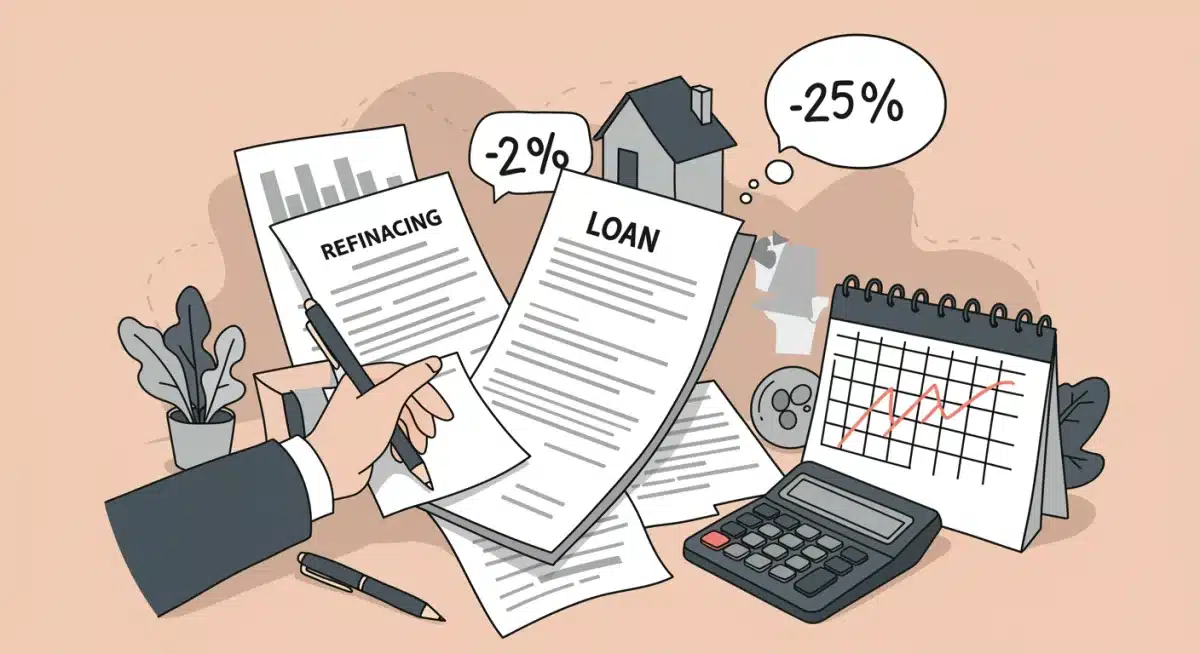
Loan refinancing can be a powerful tool for improving your financial situation, especially when anticipating changes in the 2026 interest rate forecast. It involves taking out a new loan to pay off one or more existing loans, often with more favorable terms.
However, refinancing is not a one-size-fits-all solution. It requires careful consideration of current market rates, your credit score, and the potential costs associated with the new loan. The goal is always to reduce your overall interest payments, lower your monthly payment, or shorten your loan term.
When to Consider Refinancing
Deciding when to refinance depends heavily on the prevailing interest rates and your personal financial goals. If rates are expected to drop or stabilize at a lower level, it might be an opportune time to lock in a more favorable rate.
- Lower Interest Rates: If current market rates are significantly lower than your existing loan’s rate, refinancing can lead to substantial savings.
- Improved Credit Score: A better credit score since taking out your original loan could qualify you for more attractive terms.
- Changing Loan Terms: You might refinance to switch from a variable-rate to a fixed-rate loan, or to extend/shorten your repayment period.
It’s crucial to compare different lenders and understand all fees and closing costs associated with refinancing. Sometimes, the savings on interest might be offset by high upfront costs, making it less beneficial. Always perform a thorough cost-benefit analysis.
Navigating Mortgage and Auto Loan Refinancing
Mortgages and auto loans represent significant financial commitments for many Americans. The 2026 interest rate forecast will inevitably influence decisions regarding refinancing these large debts. Understanding the specifics for each type of loan is vital.
For mortgages, even a small reduction in interest rate can translate into tens of thousands of dollars saved over the life of the loan. Homeowners should closely watch mortgage rate trends and consider refinancing if they can secure a significantly lower rate or switch to a more stable fixed-rate option.
Specifics for Mortgage and Auto Loan Refinancing
- Mortgage Refinancing: Evaluate your break-even point for closing costs. Consider cash-out refinancing if you need funds, but be aware of increasing your principal.
- Auto Loan Refinancing: Look for opportunities to lower your monthly payment or interest rate, especially if your credit score has improved since the initial purchase.
- Market Timing: While impossible to perfectly time, staying informed about economic indicators and Fed announcements can help you make a more informed decision.
Always review the full terms of any new loan offer, including the annual percentage rate (APR), fees, and any prepayment penalties on your existing loan. The goal is to ensure the refinancing genuinely improves your financial standing and aligns with your long-term goals.
Future-Proofing Your Finances Against Rate Volatility
Given the inherent unpredictability of economic forecasts, especially for something as sensitive as interest rates, adopting a strategy of financial resilience is paramount. This means building safeguards into your financial plan that can withstand unexpected shifts in the 2026 interest rate forecast.
A key component of future-proofing is maintaining a robust emergency fund. This provides a buffer against unforeseen expenses or income disruptions, reducing the need to take on high-interest debt during unfavorable lending conditions. Aim for at least three to six months of living expenses.
Key Pillars of Financial Resilience
Beyond an emergency fund, several other practices contribute to a strong financial foundation, enabling you to weather economic storms and capitalize on opportunities.
- Diversified Investments: Spreading investments across different asset classes can help mitigate risk during volatile periods.
- Regular Financial Review: Periodically assess your budget, debt, and investment portfolio to ensure they align with your current financial goals and market conditions.
- Improving Credit Score: A strong credit score is your best friend when seeking favorable loan terms, regardless of the interest rate environment.
By proactively managing your finances and adopting a forward-looking perspective, you can minimize the negative impacts of interest rate fluctuations and position yourself for long-term financial success. This continuous vigilance is the hallmark of sound financial planning.
| Key Strategy | Brief Description |
|---|---|
| Prioritize High-Interest Debt | Focus on paying down debts like credit cards first to minimize total interest paid. |
| Strategic Loan Refinancing | Evaluate refinancing options for mortgages and auto loans to secure lower rates or better terms. |
| Build Emergency Fund | Maintain 3-6 months of living expenses to avoid high-interest debt during financial shocks. |
| Monitor Economic Indicators | Stay informed about inflation, Fed policy, and economic growth to anticipate rate changes. |
Frequently Asked Questions About 2026 Interest Rates
The 2026 interest rate forecast will primarily be influenced by inflation trends, the Federal Reserve’s monetary policy decisions, and the overall health of the U.S. and global economies. Geopolitical events and supply chain stability can also play significant roles in shaping the outlook.
To prepare for potential rate changes, prioritize paying down high-interest variable debts like credit cards. Consider consolidating debt into a fixed-rate loan if advantageous. Building an emergency fund and regularly reviewing your budget are also crucial steps for financial resilience.
Whether 2026 is a good time to refinance depends on prevailing market rates compared to your current loan rates, and your personal financial situation. If rates are lower or expected to drop, refinancing could offer better terms. Always compare offers and calculate potential savings against fees.
Failing to manage debt proactively before 2026 could expose you to increased interest costs, especially on variable-rate loans, if rates rise. This can lead to higher monthly payments, extended repayment periods, and greater financial strain, potentially impacting your credit score and overall financial health.
Your credit score significantly impacts refinancing opportunities. A higher credit score typically qualifies you for lower interest rates and more favorable loan terms. Lenders view borrowers with excellent credit as less risky, making it easier to secure competitive refinancing offers in any rate environment.
Conclusion
The financial landscape leading into 2026 presents both challenges and opportunities regarding interest rates, debt management, and loan refinancing. By understanding the underlying economic forces, adopting proactive debt strategies, and carefully evaluating refinancing options, individuals can position themselves to navigate potential rate volatility effectively. Continuous vigilance and informed decision-making will be key to maintaining financial stability and achieving long-term economic goals in the evolving market.