2026 K-12 Federal Education Funding: Navigating New Landscapes and Recent Updates

The 2026 Education Landscape: Navigating New Federal Funding for K-12 Schools (RECENT UPDATES)
The landscape of K-12 education funding is perpetually evolving, and as we approach 2026, understanding the nuances of federal allocations becomes paramount for school districts across the nation. The decisions made at the federal level directly impact the resources available to schools, influencing everything from teacher salaries and classroom technology to special education services and extracurricular programs. For school administrators, educators, and community stakeholders, staying informed about these changes is not just beneficial, but essential for strategic planning and ensuring equitable educational opportunities for all students. This comprehensive guide will delve into the anticipated shifts in K-12 federal funding, highlight recent legislative updates, and offer actionable insights for navigating this complex but crucial domain.
The year 2026 promises to bring a blend of continuity and change in how federal dollars support K-12 education. While foundational legislation like the Every Student Succeeds Act (ESSA) continues to shape much of the funding framework, new priorities, emerging challenges, and the lingering effects of recent crises (like the COVID-19 pandemic) are prompting adjustments to federal appropriations. These adjustments often manifest as targeted grants, revised program requirements, or shifts in allocation formulas, all designed to address specific educational needs and national objectives. Our focus here is to demystify these changes and equip you with the knowledge to effectively leverage available resources.
Understanding the Bedrock: Key Federal Education Legislation
Before diving into the specifics of 2026, it’s vital to have a firm grasp of the core federal legislation that underpins K-12 federal funding. These acts establish the legal framework, define programmatic goals, and often dictate how funds are distributed and utilized.
The Every Student Succeeds Act (ESSA)
Signed into law in 2015, ESSA reauthorized the Elementary and Secondary Education Act (ESEA) and remains the primary federal law governing K-12 public education. ESSA replaced No Child Left Behind (NCLB) and shifted significant authority back to states and local districts in terms of accountability, school improvement, and intervention strategies. Under ESSA, several key funding streams persist:
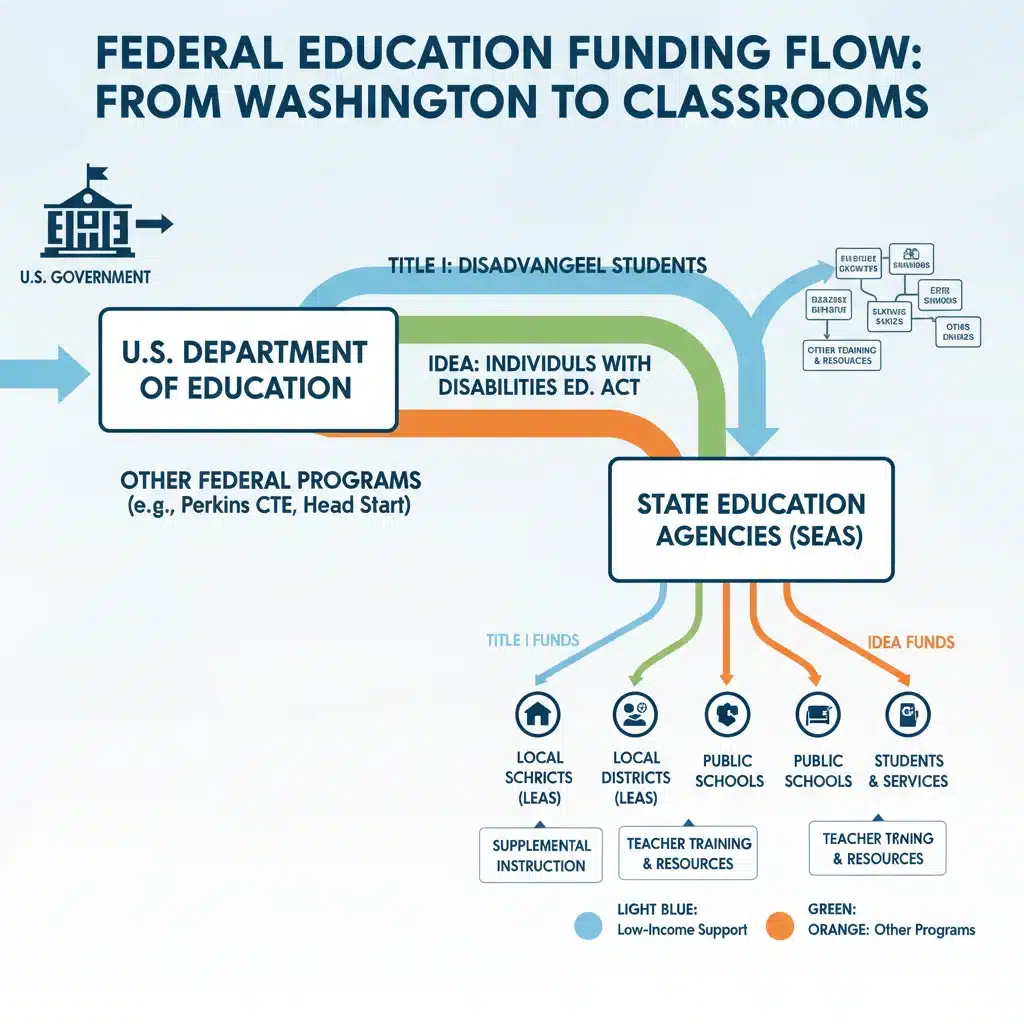
- Title I, Part A: Improving Basic Programs Operated by Local Educational Agencies (LEAs): This is the largest federal program for K-12 education, providing financial assistance to schools with high percentages of children from low-income families. The goal is to ensure all children have a fair, equal, and significant opportunity to obtain a high-quality education. For 2026, expect continued emphasis on equitable access and evidence-based interventions.
- Title II, Part A: Supporting Effective Instruction: Focuses on preparing, training, and recruiting high-quality teachers, principals, and other school leaders. This funding is crucial for professional development and reducing class sizes, areas that are consistently high priorities for schools.
- Title III, Part A: Language Instruction for English Learners and Immigrant Students: Supports programs for English Learners (ELs) to attain English proficiency and meet state academic standards. As student demographics continue to diversify, the importance of this funding stream cannot be overstated.
- Title IV, Part A: Student Support and Academic Enrichment Grants: A flexible block grant designed to improve students’ academic achievement by increasing the capacity of states, LEAs, schools, and local communities to provide all students with access to a well-rounded education, improve school conditions for student learning, and improve the use of technology to improve the academic achievement and digital literacy of all students.
Individuals with Disabilities Education Act (IDEA)
IDEA is a landmark federal law that ensures all children with disabilities have access to a free appropriate public education (FAPE) tailored to their unique needs. Federal funding under IDEA helps states and districts cover the additional costs associated with providing special education and related services. While the federal government has historically funded only a fraction of these costs, advocacy efforts continue to push for increased federal contribution. For 2026, any adjustments to IDEA funding will have significant implications for special education programs and services nationwide.
Recent Updates and Their Implications for 2026
The educational landscape is not static, and recent legislative actions and appropriations will undoubtedly shape the K-12 federal funding outlook for 2026. While specific budget numbers for 2026 are still subject to congressional appropriation cycles, general trends and recent spending patterns offer valuable insights.
The Aftermath of Pandemic Relief: ARP ESSER Funds
The American Rescue Plan (ARP) Elementary and Secondary School Emergency Relief (ESSER) Fund provided an unprecedented influx of federal aid to K-12 schools to address the impact of the COVID-19 pandemic. These funds, totaling over $122 billion, were designed to help schools safely reopen, address learning loss, and support student mental health. While the spending deadline for ARP ESSER funds is typically September 30, 2024, their long-term impact will be felt well into 2026 and beyond. Districts that strategically invested these one-time funds in sustainable programs, infrastructure, or long-term staffing solutions will be better positioned. Conversely, districts that used them for temporary fixes might face significant fiscal cliffs. Understanding how these funds were utilized and what ongoing needs remain will be critical for shaping future federal allocations.
Focus on Mental Health and Well-being
The pandemic significantly exacerbated mental health challenges among students and staff. Consequently, there has been a growing bipartisan consensus on the need for increased federal support for school-based mental health services. Expect to see continued emphasis and potential new funding streams or expanded eligibility within existing programs (like Title IV-A or Medicaid in Schools) dedicated to bolstering mental health support, hiring more school counselors and psychologists, and implementing trauma-informed practices. Schools should proactively assess their mental health infrastructure and needs to align with these federal priorities.
Workforce Development and Teacher Shortages
Teacher shortages, particularly in critical areas like special education, STEM, and rural communities, remain a persistent national challenge. Federal initiatives are increasingly looking to address this through various mechanisms, including:
- Teacher preparation programs: Support for universities and alternative certification programs.
- Residency programs: Funding for high-quality teacher residency models.
- Loan forgiveness and scholarships: Incentives for individuals to enter and remain in the teaching profession, especially in high-need schools.
Districts should monitor legislative proposals related to teacher recruitment and retention, as new grant opportunities or expanded eligibility for existing programs (like Title II-A) are likely.
Navigating the Funding Landscape: Strategies for Success
Securing and effectively utilizing K-12 federal funding requires a proactive and strategic approach. Here are key strategies for school districts to navigate the 2026 landscape:
1. Comprehensive Needs Assessment
Before seeking any federal funds, districts must conduct a thorough and data-driven needs assessment. This involves:
- Identifying academic gaps: Where are students struggling most? What demographic groups are disproportionately affected?
- Assessing social-emotional needs: What mental health services are lacking? What support systems are needed for student well-being?
- Evaluating resource disparities: Are there inequities in access to technology, qualified teachers, or facilities across schools within the district?
- Understanding community input: Engaging parents, students, and community members to ensure identified needs reflect local priorities.
A robust needs assessment provides the foundation for aligning district priorities with federal funding opportunities and demonstrating a clear rationale for funding requests.
2. Strategic Grant Writing and Application
Federal grants are highly competitive. Successful applications are typically:
- Data-driven: Providing compelling evidence of need and projected impact.
- Aligned with federal priorities: Demonstrating how the proposed project addresses specific federal goals (e.g., improving academic achievement, supporting English learners, enhancing mental health).
- Evidence-based: Proposing interventions and programs that have a proven track record of effectiveness. Federal agencies increasingly prioritize initiatives supported by research.
- Detailed and Realistic: Presenting a clear plan for implementation, evaluation, and sustainability, along with a realistic budget.
Consider dedicating resources to professional grant writers or providing training for existing staff to enhance grant-writing capacity.
3. Maximizing Existing Funds and Fiscal Responsibility
Effective management of current K-12 federal funding is crucial. This includes:
- Understanding Maintenance of Effort (MOE): Ensuring that state and local education spending does not fall below certain levels, a common requirement for federal programs like Title I and IDEA.
- Allowability and Allocability: Ensuring that all expenditures meet federal guidelines for allowable costs and are directly tied to the program’s objectives.
- Timely Expenditure: Avoiding the loss of funds due to failure to spend within specified timelines.
- Fiscal Transparency: Maintaining clear and auditable records of all federal funds received and expended.
Robust financial management systems and trained personnel are indispensable for demonstrating accountability and maximizing the impact of every federal dollar.
4. Leveraging Cross-Program Collaboration
Many federal programs have complementary goals. Districts can maximize impact by fostering collaboration across different departments and funding streams. For example, Title I funds for academic intervention might be combined with Title III funds for English Learners and IDEA funds for students with disabilities to create comprehensive support systems. Similarly, Title IV-A funds for technology and well-rounded education can complement Title II-A funds for professional development in digital literacy. Integrated planning ensures resources are not siloed and address student needs holistically.
5. Advocacy and Relationship Building
While federal funding decisions are made in Washington D.C., local voices matter. Engaging with congressional representatives, participating in state education advocacy groups, and sharing local success stories can influence future policy and appropriations. Building relationships with state education agencies (SEAs) is also critical, as SEAs often serve as the pass-through for federal funds and provide technical assistance to LEAs.
Anticipated Challenges and Opportunities
The 2026 K-12 federal funding landscape will undoubtedly present both challenges and opportunities.
Challenges:
- Inflationary Pressures: Rising costs for resources, salaries, and services can diminish the purchasing power of federal funds, requiring districts to do more with the same or even less real funding.
- Fiscal Cliffs: As one-time pandemic relief funds sunset, districts must manage the transition to sustainable funding models without cutting essential programs or staff.
- Political Divides: The federal budget process can be contentious, leading to uncertainty and delays in appropriations, making long-term planning difficult.
- Evolving Needs: Student needs are constantly changing, from academic recovery to mental health support and digital equity, requiring flexibility and adaptability in funding use.
Opportunities:
- Innovation in Learning: Federal funding can act as a catalyst for piloting innovative instructional models, technology integration, and personalized learning approaches.
- Equity Focus: Persistent federal emphasis on equity (e.g., through Title I) provides opportunities to target resources to historically underserved student populations and close achievement gaps.
- Workforce Development: Continued focus on attracting and retaining high-quality educators can lead to new programs and incentives for teachers and school leaders.
- Infrastructure Modernization: While not always direct K-12 funding, broader federal infrastructure initiatives can indirectly benefit schools through improved broadband access, facility upgrades, and energy efficiency projects.

Key Areas of Potential Growth or Change in K-12 Federal Funding
Beyond the core legislation, several thematic areas are likely to see increased federal attention or new initiatives as we move towards 2026:
Early Childhood Education
There’s a growing recognition of the long-term benefits of high-quality early childhood education. While often separate from traditional K-12 funding, federal initiatives aimed at expanding access to preschool and improving early learning outcomes (e.g., Head Start, Child Care Development Block Grant) can have significant upstream impacts on K-12 readiness and achievement. Expect continued advocacy for greater federal investment in this crucial area, potentially leading to more integrated K-12 and early childhood funding models or increased coordination.
Career and Technical Education (CTE)
The Perkins V Act (Strengthening Career and Technical Education for the 21st Century Act) provides federal funding to states for CTE programs. As the economy evolves and the demand for skilled labor grows, expect continued federal emphasis on strengthening CTE pathways, aligning programs with workforce needs, and ensuring equitable access for all students. This includes funding for equipment, curriculum development, and industry partnerships. Districts should explore how to leverage Perkins funds more effectively to prepare students for post-secondary education and in-demand careers.
Digital Equity and Broadband Access
The pandemic starkly highlighted the digital divide. While significant federal investments have been made in broadband infrastructure and device access, ensuring sustained digital equity remains a priority. Federal programs, potentially through the Department of Commerce or FCC, will likely continue to support initiatives that ensure all students have reliable internet access and appropriate learning devices, both at school and at home. Schools should integrate digital equity plans into their overall technology strategies to align with these federal goals.
School Safety Initiatives
School safety remains a paramount concern. Federal funding sources, such as those through the STOP School Violence Act or specific grants from the Department of Justice and Department of Education, are likely to continue supporting measures like school resource officers, mental health services, threat assessment teams, and physical security enhancements. Districts should stay informed about these grants and integrate safety planning into their comprehensive federal funding strategies.
The Role of Data and Accountability
Federal funding always comes with accountability requirements. For 2026, the emphasis on using data to demonstrate impact and inform decision-making will be stronger than ever. Districts will need robust data systems to:
- Track student progress: Monitoring academic growth, attendance, and social-emotional well-being.
- Evaluate program effectiveness: Determining whether federally funded programs are achieving their intended outcomes.
- Report accurately: Meeting federal reporting requirements for expenditures and results.
Investing in data infrastructure, staff training, and evaluation expertise will be critical for demonstrating compliance and making a compelling case for continued K-12 federal funding.
Conclusion: A Proactive Stance for 2026 and Beyond
The 2026 K-12 federal funding landscape is dynamic, shaped by legislative priorities, national needs, and ongoing economic realities. For school districts, navigating this environment successfully means adopting a proactive, informed, and strategic approach. By understanding the foundational legislation, staying abreast of recent updates, conducting thorough needs assessments, and practicing diligent fiscal management, schools can maximize their access to and the impact of federal resources.
The ultimate goal of all K-12 federal funding is to ensure that every student, regardless of their background or zip code, has access to a high-quality education that prepares them for future success. As we move towards 2026, the ability of school leaders to effectively harness these federal investments will be a defining factor in achieving this critical mission for the next generation.
Stay engaged, stay informed, and continue to advocate for the resources our students and schools deserve. The future of education depends on it.