Medicaid Expansion 2026: Navigating Eligibility Changes and Securing Your Health Coverage
As we look towards the future of healthcare in the United States, understanding the evolving landscape of programs like Medicaid is paramount. The year 2026 is poised to bring significant discussions and potential changes surrounding Medicaid Expansion 2026, impacting millions of Americans’ access to vital health coverage. This comprehensive guide aims to demystify these changes, provide clarity on eligibility, and walk you through the enrollment process, ensuring you are well-prepared for what lies ahead.
Medicaid, a joint federal and state program, provides health coverage to millions of low-income Americans, including children, pregnant women, elderly adults, people with disabilities, and low-income adults. The Affordable Care Act (ACA) of 2010 introduced the option for states to expand their Medicaid programs to cover nearly all non-elderly adults with incomes up to 138% of the Federal Poverty Level (FPL). This expansion has been a cornerstone of increasing access to healthcare, but its implementation varies significantly across states, leading to a complex patchwork of coverage.
The discussions around Medicaid Expansion 2026 are not just about numbers and policies; they are about real people, real families, and real health outcomes. Staying informed about potential shifts in eligibility criteria, funding mechanisms, and state-level decisions is crucial for anyone who currently relies on Medicaid or anticipates needing it in the future. This article will delve into the historical context, current status, and future projections for Medicaid, offering practical advice and resources to help you navigate this essential program.
The Foundation of Medicaid Expansion: A Look Back and Forward
To fully grasp the implications of Medicaid Expansion 2026, it’s essential to understand its origins and evolution. Before the ACA, Medicaid eligibility for adults was often restricted to specific categories, such as parents with very low incomes or individuals with disabilities. This left a significant gap in coverage for many low-income adults, often referred to as the “coverage gap,” where they earned too much to qualify for traditional Medicaid but too little to afford private insurance, even with ACA subsidies.
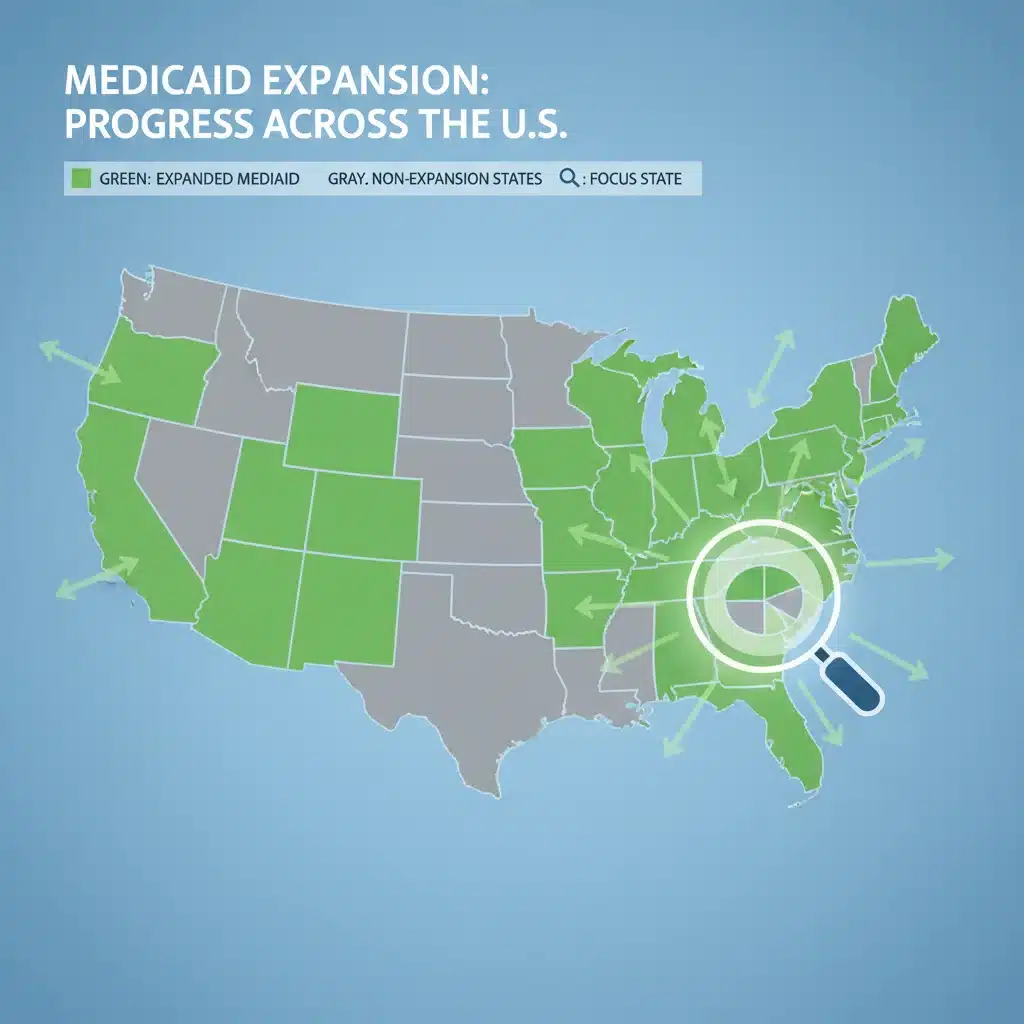
The ACA sought to address this by offering states a substantial federal funding match to expand Medicaid eligibility. While initially intended to be mandatory for all states, a 2012 Supreme Court ruling made the expansion optional. This decision led to a bifurcated system: states that expanded Medicaid saw a dramatic reduction in their uninsured rates, while non-expansion states continued to grapple with higher uninsured populations and the challenges of the coverage gap.
As of late 2024, most states have expanded Medicaid, but a handful have not. The ongoing debate in non-expansion states, coupled with potential federal policy shifts, means that Medicaid Expansion 2026 remains a dynamic topic. Future political landscapes, economic conditions, and public health needs could all influence how the program operates and who it serves. Understanding these foundational elements is the first step in preparing for any forthcoming changes.
The long-term impact of Medicaid expansion on state economies, healthcare providers, and public health has been extensively studied. Research consistently shows that expansion leads to improved access to care, better health outcomes, reduced medical debt, and even positive economic effects through job creation in the healthcare sector. These findings often fuel the ongoing advocacy for full national Medicaid expansion, making the discussions around Medicaid Expansion 2026 incredibly relevant.
Furthermore, the COVID-19 pandemic highlighted the critical role of robust health coverage. The public health emergency allowed for continuous Medicaid enrollment, preventing millions from losing coverage during a time of unprecedented health crisis. As these emergency provisions wind down, states are redetermining eligibility for millions, underscoring the constant need for individuals to understand their coverage options and the potential for changes, especially as we approach Medicaid Expansion 2026.
Eligibility Changes for Medicaid Expansion in 2026
One of the most critical aspects of Medicaid Expansion 2026 for individuals and families will be any potential changes to eligibility criteria. While the core principle of expanding coverage to those up to 138% of the FPL is likely to remain, specific state-level adjustments or federal policy directives could introduce new nuances. It’s important to differentiate between federal guidelines and state-specific implementations, as these can significantly impact who qualifies.
Understanding Federal Poverty Levels (FPL)
Medicaid eligibility is primarily tied to the Federal Poverty Level (FPL), which is updated annually by the Department of Health and Human Services. For Medicaid Expansion 2026, the FPL for that year will be the benchmark. Generally, for states that have expanded Medicaid, adults under 65 years old with incomes up to 138% of the FPL are eligible. This threshold varies based on household size. For example, 138% of the FPL for a single individual will be different from that for a family of four.
It’s crucial to regularly check the most current FPL guidelines as they are released, typically in January each year. These figures directly influence the income cutoffs for Medicaid eligibility. Keeping an eye on these updates will be a key part of preparing for Medicaid Expansion 2026.
Potential State-Level Adjustments and Waivers
Even within the framework of federal expansion guidelines, states have some flexibility. They can apply for waivers from the Centers for Medicare & Medicaid Services (CMS) to implement alternative approaches to their Medicaid programs. These waivers can introduce different eligibility requirements, benefit packages, or even work requirements for certain beneficiaries. While work requirements have faced legal challenges and varying degrees of success, the possibility of states pursuing such waivers in the future, potentially impacting Medicaid Expansion 2026, cannot be entirely dismissed.
Furthermore, non-expansion states may continue to debate and potentially adopt expansion in the lead-up to 2026. If a non-expansion state decides to expand, it would dramatically alter eligibility for hundreds of thousands of its residents, opening up new avenues for coverage that were previously unavailable. Monitoring legislative activities and public health discussions in your specific state is therefore vital.
Demographic Shifts and Special Populations
Discussions around Medicaid Expansion 2026 may also consider the needs of specific demographic groups. For instance, there’s ongoing attention to postpartum coverage, with many states extending Medicaid coverage for new mothers beyond the traditional 60-day period. Policy debates may also focus on individuals transitioning from the justice system, those experiencing homelessness, or specific behavioral health needs, potentially leading to targeted eligibility pathways or enhanced services under Medicaid.
Understanding whether you fall into a category that might be subject to special provisions or changes in eligibility is important. This often requires consulting state Medicaid agency websites or speaking with navigators and assisters who are experts in local Medicaid policies. The complexity of these rules underscores the need for clear, accessible information as we approach Medicaid Expansion 2026.

The Enrollment Process for Medicaid Expansion in 2026
Once you understand the eligibility criteria, the next crucial step is the enrollment process. While the specifics can vary by state, the general pathway to enrolling in Medicaid under Medicaid Expansion 2026 is designed to be accessible, primarily through online portals, phone applications, or in-person assistance.
Where to Apply
- State Medicaid Agency Website: Each state has its own Medicaid website where you can find detailed information about eligibility and apply directly. This is often the most straightforward method.
- Healthcare.gov or State-Based Marketplaces: If your state uses the federal marketplace (Healthcare.gov) or has its own state-based marketplace, you can apply for coverage there. The application will determine if you qualify for Medicaid or for subsidies to purchase private insurance. This integrated approach ensures that individuals are routed to the most appropriate coverage option.
- Local Departments of Social Services/Human Services: In many areas, you can apply for Medicaid in person at your local social services office. This can be particularly helpful if you need assistance with the application or have complex circumstances.
- Community Health Centers and Hospitals: Many healthcare providers and community organizations have staff who can assist with Medicaid applications. They often serve as certified application counselors.
Required Documentation
Regardless of where you apply, you will typically need to provide certain documentation to verify your eligibility for Medicaid Expansion 2026. Preparing these documents in advance can significantly speed up the application process:
- Proof of Identity: Driver’s license, state ID, passport, etc.
- Proof of Citizenship or Immigration Status: Birth certificate, U.S. passport, naturalization papers, Green Card, etc.
- Proof of Residency: Utility bill, rental agreement, mail with your address, etc.
- Proof of Income: Pay stubs, tax returns, W-2 forms, Social Security benefits statements, unemployment benefits statements, etc. This is crucial for determining if your income falls within the 138% FPL threshold for Medicaid Expansion 2026.
- Household Information: Names, birth dates, and Social Security numbers for all household members.
- Information on Current Health Insurance: If applicable.
It’s important to provide accurate and complete information. Any discrepancies or missing documents can delay your application. If you need help gathering documentation or understanding what’s required, don’t hesitate to reach out to a Medicaid enrollment assister.
The Application Process: Step-by-Step
- Gather Information: Collect all necessary personal, income, and household information.
- Choose Your Application Method: Decide whether to apply online, by phone, mail, or in person.
- Complete the Application: Fill out the application thoroughly. Be honest and accurate.
- Submit Documentation: Upload or submit copies of your supporting documents.
- Await Determination: The state Medicaid agency will review your application and documents. This process can take a few weeks.
- Receive Decision: You will be notified by mail or electronically about your eligibility. If approved, you’ll receive information about your coverage and how to use it.
For those who may be newly eligible due to Medicaid Expansion 2026, paying close attention to public announcements from your state’s Medicaid agency and federal health officials will be key. They will provide specific guidance on how and when to apply for any new or adjusted programs.
The Impact of Medicaid Expansion 2026 on Healthcare Access and Costs
The reach of Medicaid Expansion 2026 extends far beyond individual eligibility; it profoundly influences the broader healthcare ecosystem. Increased Medicaid enrollment means more people have access to primary care, preventive services, prescription medications, and specialized treatments, which can lead to a healthier population overall.
Improved Health Outcomes
Studies consistently demonstrate that Medicaid expansion is associated with improved health outcomes. This includes a reduction in preventable hospitalizations, better management of chronic conditions, and increased rates of early cancer detection. For individuals who gain coverage through Medicaid Expansion 2026, this translates to better quality of life and reduced health disparities.
Access to mental health and substance use disorder treatment is another critical benefit. Medicaid is a significant payer for these services, and expansion has enabled more individuals to receive necessary care, addressing a major public health challenge. As we look towards 2026, continued expansion efforts can further bolster these services, providing a safety net for those most in need.
Financial Protection for Individuals and Families
One of the most immediate and tangible benefits of Medicaid coverage is financial protection. Medical emergencies or chronic illnesses can quickly lead to overwhelming debt for uninsured individuals. Medicaid Expansion 2026 helps to shield low-income families from catastrophic medical bills, allowing them to allocate their limited resources to other necessities like food and housing.
This financial stability can have ripple effects, reducing the number of personal bankruptcies due to medical debt and fostering greater economic security within communities. For those contemplating applying for Medicaid in 2026, understanding this crucial financial safeguard is often a primary motivator.
Impact on Healthcare Providers and State Budgets
From the perspective of healthcare providers, Medicaid expansion often leads to a reduction in uncompensated care, as more patients have a payer source for their services. This can stabilize hospital finances, particularly for rural hospitals and safety-net providers that disproportionately serve uninsured populations. The federal government’s enhanced matching funds for expansion states also represent a significant economic infusion, potentially offsetting state costs and even generating economic growth.
However, states that have not expanded Medicaid continue to bear the burden of uncompensated care, which often translates to higher costs for privately insured patients or a strain on state and local budgets. The ongoing debate around Medicaid Expansion 2026 in these states often centers on the economic arguments, weighing the costs of expansion against the costs of not expanding.
Navigating Potential Challenges and Future Outlook for Medicaid Expansion 2026
While the benefits of Medicaid expansion are clear, the path forward to Medicaid Expansion 2026 is not without its challenges. Political shifts, economic downturns, and ongoing debates about the role of government in healthcare can all influence the program’s trajectory.
Political and Legislative Landscape
The political climate plays a significant role in Medicaid policy. Changes in federal administrations or state legislatures can lead to renewed efforts to either expand Medicaid in non-expansion states or introduce new restrictions in expansion states. Advocacy groups, healthcare organizations, and public opinion will continue to shape these debates. Staying informed about election outcomes and legislative proposals will be crucial for understanding the future of Medicaid Expansion 2026.
For example, if more non-expansion states were to adopt Medicaid expansion, it would significantly broaden coverage across the nation. Conversely, federal policy changes could alter the funding formulas or introduce new requirements, potentially affecting the financial incentives for states to maintain or adopt expansion.
Economic Considerations
Economic conditions also impact Medicaid. During recessions, more people lose employer-sponsored health insurance and may turn to Medicaid for coverage, leading to increased enrollment. While federal matching funds cushion some of the financial burden on states, sustained economic challenges could prompt states to re-evaluate their healthcare spending. However, the counter-argument is that Medicaid acts as an economic stabilizer during such times, both for individuals and the healthcare system.
The long-term fiscal sustainability of Medicaid is a recurring theme in policy discussions. As we approach Medicaid Expansion 2026, expect continued scrutiny of the program’s costs and benefits, and innovative approaches to care delivery and cost containment.
The Role of Technology and Innovation
Technology will undoubtedly play an increasing role in the administration of Medicaid. Digital enrollment platforms, telehealth services, and data analytics can streamline processes, improve access to care, and enhance program efficiency. As part of Medicaid Expansion 2026, states may invest further in these technological solutions to better serve their beneficiaries and manage their programs.
Telehealth, in particular, has proven invaluable in expanding access to care, especially in rural areas or for individuals with mobility challenges. Its continued integration into Medicaid services will be a key development to watch.
Staying Informed and Advocating for Coverage
For individuals, the best strategy is to remain informed. Regularly check official state Medicaid websites, consult with trusted community organizations, and pay attention to reliable news sources regarding healthcare policy. If you or someone you know might be eligible for Medicaid, understanding the enrollment process and deadlines is paramount.
Advocacy also plays a vital role. Supporting organizations that champion accessible healthcare and participating in public discussions can help shape the future of programs like Medicaid. Your voice, combined with the collective efforts of many, can influence policy decisions as we navigate the landscape of Medicaid Expansion 2026 and beyond.
Conclusion: Preparing for Medicaid Expansion 2026
The journey towards Medicaid Expansion 2026 represents a critical juncture in the ongoing effort to ensure comprehensive health coverage for all Americans. While the core tenets of Medicaid expansion—providing affordable care to low-income adults—are likely to remain, the specifics of eligibility, enrollment, and program administration may evolve.
Understanding the historical context, the current state-by-state variations, and the potential for future policy changes is essential. For individuals, this means proactively monitoring federal poverty level updates, familiarizing yourself with your state’s specific Medicaid guidelines, and being prepared to navigate the enrollment process with accurate documentation.
The benefits of Medicaid expansion are clear: improved health outcomes, significant financial protection, and a stronger healthcare system. As we move closer to 2026, continued advocacy, informed engagement, and a commitment to accessible healthcare will be crucial in shaping a future where more people have the opportunity to lead healthier, more secure lives. Stay informed, stay prepared, and ensure you or your loved ones can access the vital health coverage provided by Medicaid.