Pell Grant Maximums 2026-2027: Accessing $7,395 for Higher Education

Understanding the New Pell Grant Maximums for the 2026-2027 Academic Year: Accessing Up to $7,395 for Higher Education
For millions of American students, the dream of higher education is made possible through financial assistance programs like the Pell Grant. As we look ahead to the 2026-2027 academic year, prospective and current students alike are eager to understand the latest updates regarding this crucial federal aid. The good news is that the anticipated Pell Grant Maximums 2026-2027 are projected to offer up to $7,395, a significant sum designed to alleviate the financial burden of college tuition, fees, and living expenses. This comprehensive guide will delve into what these new maximums mean for you, how to navigate the application process, and strategies to maximize your eligibility and aid.
What Are Pell Grants and Why Are They Important?
Before we dive into the specifics of the Pell Grant Maximums 2026-2027, let’s establish a foundational understanding of what Pell Grants are. A Pell Grant is a subsidy the U.S. federal government provides for students who need to pay for college. Unlike loans, Pell Grants do not have to be repaid, making them an incredibly valuable resource for students from low-income backgrounds. They are considered the cornerstone of federal student aid programs, designed to promote access to higher education for those who might otherwise be unable to afford it.
The importance of Pell Grants cannot be overstated. They serve as a vital bridge, enabling countless individuals to pursue degrees, acquire new skills, and ultimately improve their economic outlook. For many, a Pell Grant is the deciding factor in whether they can attend college at all. The funds can be used for a wide range of educational expenses, including tuition, fees, room and board, books, supplies, and even transportation, offering comprehensive support to students.
The Anticipated Pell Grant Maximums 2026-2027: A Closer Look at $7,395
The projection of up to $7,395 for the Pell Grant Maximums 2026-2027 represents a continued commitment by the federal government to make higher education more accessible. While the exact figure can be subject to legislative appropriations and economic factors, this projection provides a strong indicator of the financial support students can expect. It’s important to understand that this is the maximum amount; not all eligible students will receive the full $7,395. The actual amount you receive will depend on several factors, including your financial need, the cost of attendance at your chosen institution, your status as a full-time or part-time student, and your plans to attend school for a full academic year or less.
This maximum amount is typically adjusted annually based on inflation and other economic indicators. Historically, Pell Grant maximums have seen incremental increases, reflecting the rising costs of higher education. For students planning their college finances, understanding these projected maximums is critical for budgeting and making informed decisions about their educational path.
Eligibility Criteria for Pell Grants: Do You Qualify?
To access the Pell Grant Maximums 2026-2027, or any Pell Grant funds, you must meet specific eligibility requirements set by the U.S. Department of Education. These criteria are designed to ensure that the aid reaches those who demonstrate the greatest financial need. Key eligibility requirements include:
- Financial Need: This is the primary factor. Your financial need is determined by the information you provide on the Free Application for Federal Student Aid (FAFSA).
- Undergraduate Status: Pell Grants are generally awarded to undergraduate students who have not yet earned a bachelor’s or professional degree. In some limited circumstances, a student enrolled in a postbaccalaureate teacher certification program may receive a Pell Grant.
- U.S. Citizenship or Eligible Non-Citizen: You must be a U.S. citizen or an eligible non-citizen with a valid Social Security number.
- High School Diploma or GED: You must have a high school diploma or a recognized equivalent, such as a General Educational Development (GED) certificate.
- Satisfactory Academic Progress (SAP): You must maintain satisfactory academic progress as defined by your college or university. This typically involves maintaining a certain GPA and completing a minimum number of credits.
- No Default on Federal Student Loans: You cannot be in default on any federal student loans or owe a refund on a federal grant.
- Enrollment in an Eligible Program: You must be enrolled in an eligible degree or certificate program at an institution that participates in the federal student aid program.
Understanding these criteria early can help you prepare for the application process and determine your potential eligibility for the Pell Grant Maximums 2026-2027.
The FAFSA: Your Gateway to Pell Grant Funds
The Free Application for Federal Student Aid (FAFSA) is the single most important document for accessing federal financial aid, including the Pell Grant Maximums 2026-2027. Completing the FAFSA accurately and on time is paramount. Here’s a breakdown of the process and crucial tips:
When to Apply
The FAFSA opens on October 1st each year for the upcoming academic year. For the 2026-2027 academic year, the FAFSA will open on October 1, 2025. While federal deadlines are typically later, many states and colleges have earlier priority deadlines. Applying as early as possible significantly increases your chances of receiving the maximum aid you qualify for, as some funds are awarded on a first-come, first-served basis.
Information Needed for FAFSA
Before you begin, gather the following documents:
- Your Social Security number (and parents’ if dependent).
- Your Alien Registration number (if you are an eligible non-citizen).
- Your federal income tax returns, W-2s, and other records of money earned. For the 2026-2027 FAFSA, you will need your 2024 tax information.
- Bank statements and records of investments (if applicable).
- Records of untaxed income (if applicable).
Tips for Completing the FAFSA
- Create an FSA ID: Both you and one of your parents (if you are a dependent student) will need an FSA ID to sign the FAFSA electronically. Create this well in advance.
- Use the IRS Data Retrieval Tool (DRT): This tool allows you to securely transfer your federal tax information directly from the IRS into your FAFSA. This saves time and reduces errors.
- Accuracy is Key: Double-check all information before submitting. Errors can delay your application and impact your aid eligibility.
- List All Schools: Include all colleges you are considering on your FAFSA. You can list up to 20 schools.
- Submit On Time: Pay close attention to federal, state, and college-specific deadlines. Missing a deadline can mean missing out on aid.

By diligently completing the FAFSA, you set yourself up for the best possible chance to receive the maximum available Pell Grant Maximums 2026-2027 and other forms of federal student aid.
How Your Financial Need is Calculated for Pell Grants
The amount of Pell Grant you receive, up to the Pell Grant Maximums 2026-2027, is primarily determined by your Expected Family Contribution (EFC), now often referred to as the Student Aid Index (SAI) under the new FAFSA Simplification Act. The SAI is a number that colleges use to determine how much financial aid you are eligible to receive. It is not the amount of money your family will have to pay for college, nor is it the amount of federal student aid you will receive. Instead, it’s an index number used in the financial aid formula.
The calculation considers several factors:
- Income: Both student and parent (if dependent) income are assessed. Taxable and untaxed income sources are included.
- Assets: Certain assets, such as savings and investments, are considered. However, the value of your primary residence and retirement accounts are generally excluded.
- Family Size: The number of people in your household.
- Number of Students in College: If there are multiple family members attending college, this can impact the SAI.
The formula for determining your eligibility is essentially:
Cost of Attendance (COA) - Student Aid Index (SAI) = Financial Need
Your Pell Grant amount will be based on your financial need, your enrollment status (full-time, part-time), and the cost of attendance at your chosen school. The lower your SAI, the higher your financial need, and therefore, the greater your eligibility for the Pell Grant Maximums 2026-2027.
Understanding the Cost of Attendance (COA)
The Cost of Attendance (COA) is a critical component in determining your financial aid package. It’s not just tuition and fees; it’s an estimate by your school of what it will cost to attend for an academic year. The COA includes:
- Tuition and Fees: The direct costs charged by the institution.
- Room and Board: The cost of housing and food, whether on-campus or off-campus.
- Books and Supplies: Estimated costs for textbooks, course materials, and other necessary supplies.
- Transportation: The cost of getting to and from school.
- Personal Expenses: An allowance for miscellaneous expenses, such as toiletries, clothing, and entertainment.
Each school sets its own COA, which can vary significantly. When comparing financial aid offers, it’s essential to look at the COA in conjunction with the aid package, including any Pell Grant you might receive up to the Pell Grant Maximums 2026-2027. A higher COA at one school might still be more affordable if it comes with a generous aid package.
Maximizing Your Pell Grant and Other Financial Aid
Securing the full Pell Grant Maximums 2026-2027 or as much aid as possible requires strategic planning. Here are some tips to maximize your financial assistance:
- Apply Early: As mentioned, submitting your FAFSA as soon as it opens (October 1st) is crucial. Don’t wait until the last minute.
- Be Accurate and Thorough: Provide precise information on your FAFSA. Any discrepancies can lead to delays or a reduction in aid.
- Understand Dependency Status: Know whether you are considered a dependent or independent student. This significantly impacts the information required on the FAFSA.
- Consider Your College Choices: The cost of attendance varies widely. Research schools that align with your academic goals and financial capacity.
- Maintain Good Academic Standing: To continue receiving federal aid, including Pell Grants, you must meet your school’s Satisfactory Academic Progress (SAP) requirements.
- Search for Additional Scholarships: Pell Grants are a great start, but don’t stop there. Look for scholarships from private organizations, your state, and your chosen college. These do not need to be repaid and can significantly reduce your overall college costs.
- Explore State and Institutional Aid: Many states and individual colleges offer their own grant programs based on financial need or merit. Your FAFSA information is often used to determine eligibility for these as well.
- Understand the Lifetime Eligibility Limit (LEU): There is a limit to how long you can receive a Pell Grant. You can generally receive a Pell Grant for no more than 12 semesters or the equivalent (roughly six years). This is known as your Lifetime Eligibility Used (LEU). Keep track of your LEU to ensure you have enough eligibility for your entire program.
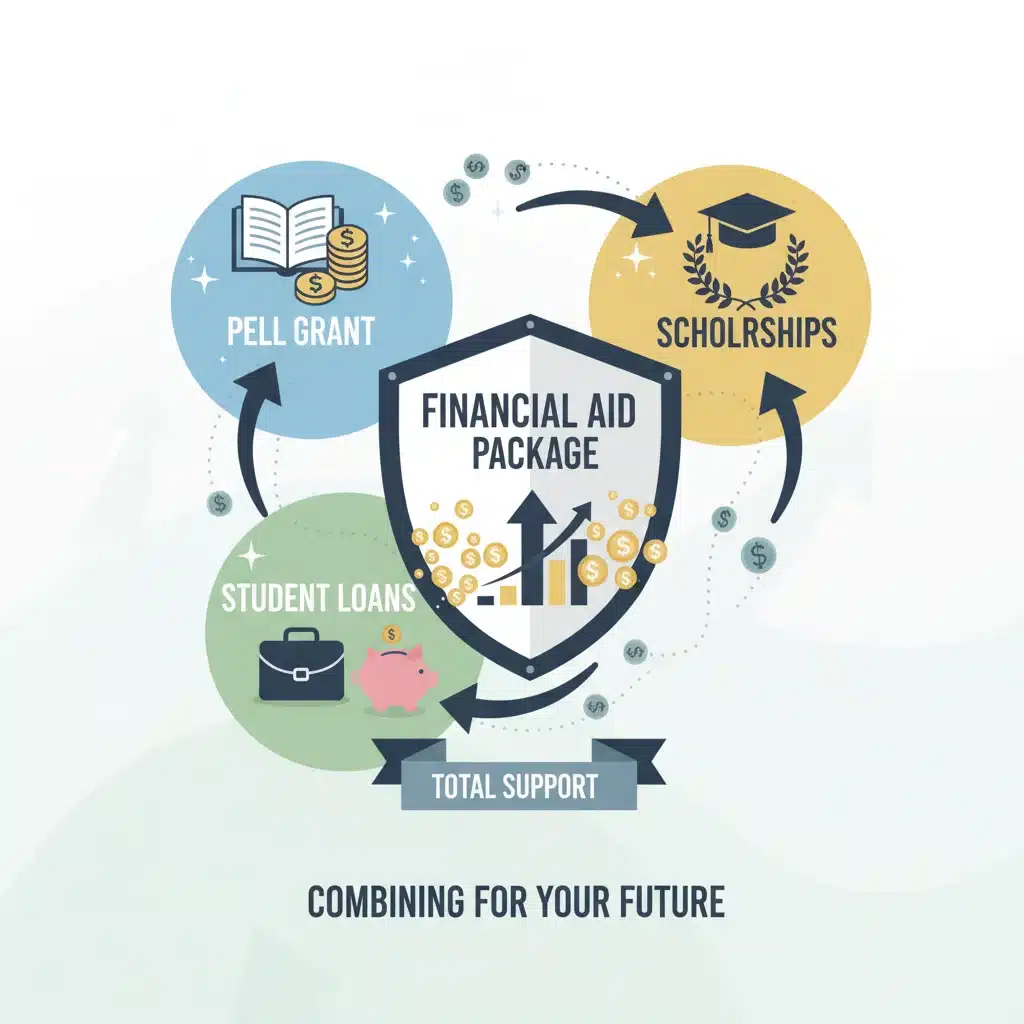
By taking a proactive approach to financial aid, you can significantly reduce the out-of-pocket costs of your higher education and make the most of the Pell Grant Maximums 2026-2027.
Changes and Updates to Federal Student Aid (FAFSA Simplification Act)
It’s important to note that the federal student aid landscape has undergone significant changes in recent years, particularly with the implementation of the FAFSA Simplification Act. These changes are designed to make the FAFSA process easier and more intuitive for students and families. While the core purpose of the Pell Grant remains the same, some aspects of eligibility and calculation have been updated. For example, the Expected Family Contribution (EFC) has been replaced by the Student Aid Index (SAI). These changes aim to expand Pell Grant eligibility to more students and provide a clearer picture of a family’s ability to pay for college.
Key changes include:
- Simplified FAFSA Form: The form has been streamlined with fewer questions.
- Expanded Pell Grant Eligibility: More students are now eligible for Pell Grants due to changes in the calculation of financial need.
- New Terminology: EFC is now SAI.
- Direct Data Exchange with IRS: The IRS Direct Data Exchange (DDX) replaces the IRS Data Retrieval Tool (DRT), making tax data transfer even more seamless and secure.
These updates are particularly relevant as you plan for the Pell Grant Maximums 2026-2027, as they will directly impact how your aid is determined. Staying informed about these changes through official U.S. Department of Education resources is highly recommended.
What to Do After Submitting Your FAFSA
Submitting your FAFSA is a significant step, but the process doesn’t end there. Here’s what to expect next:
- Receive Your FAFSA Submission Summary: After your FAFSA is processed, you’ll receive a FAFSA Submission Summary (formerly the Student Aid Report or SAR). Review this document carefully for any errors. If you find mistakes, make corrections promptly.
- Review Your Financial Aid Offers: Each college you listed on your FAFSA will send you a financial aid offer (sometimes called an award letter). This letter will detail the types and amounts of aid you’re eligible to receive, including your Pell Grant amount, up to the Pell Grant Maximums 2026-2027, along with scholarships, grants, work-study, and federal student loans.
- Compare Offers: Don’t just look at the total aid. Compare the net price (Cost of Attendance minus grants and scholarships) of each school. This will give you the true out-of-pocket cost.
- Accept or Decline Aid: Follow the instructions from each college to accept or decline the aid offered. Be mindful of deadlines.
- Complete Additional Requirements: Some aid, particularly loans, may require additional steps like entrance counseling or signing a Master Promissory Note (MPN).
This post-FAFSA period is crucial for finalizing your college plans and ensuring you have all the financial support necessary to attend.
The Long-Term Impact of Pell Grants
The impact of Pell Grants extends far beyond just covering tuition. By reducing the financial barrier to higher education, these grants foster social mobility, economic growth, and individual empowerment. Students who receive Pell Grants are often first-generation college students or come from backgrounds where higher education might otherwise be unattainable. The opportunity to earn a degree can lead to higher earning potential, better job prospects, and greater civic engagement.
The continued support for programs like the Pell Grant, reflected in the anticipated Pell Grant Maximums 2026-2027, underscores a societal belief in the transformative power of education. It’s an investment in individuals that pays dividends for communities and the nation as a whole.
Addressing Common Misconceptions About Pell Grants
Despite their widespread availability, some misconceptions about Pell Grants persist:
- “Only for very low-income students”: While Pell Grants are need-based, the definition of ‘need’ is broad. Many middle-income families may also qualify for some Pell Grant funding, especially with multiple children in college or specific financial circumstances. The FAFSA Simplification Act aims to expand this further.
- “Pell Grants cover everything”: While the Pell Grant Maximums 2026-2027 of $7,395 is substantial, it rarely covers the entire cost of attendance at most four-year institutions. It’s a significant contribution, but students often need to combine it with other aid, scholarships, and sometimes loans.
- “It’s too complicated to apply”: The FAFSA process has been simplified, and numerous resources are available to help students. Don’t let perceived complexity deter you from applying.
- “I’m too old for a Pell Grant”: There are no age limits for Pell Grant eligibility. As long as you meet the other criteria, you can apply regardless of age.
Dispelling these myths can encourage more eligible students to apply and take advantage of this invaluable federal resource.
Conclusion: Securing Your Future with Pell Grants
The projected Pell Grant Maximums 2026-2027, offering up to $7,395, represents a beacon of hope for students aspiring to achieve higher education. This federal aid program remains a cornerstone of college affordability, providing crucial non-repayable funds to those who need them most. By understanding the eligibility requirements, diligently completing the FAFSA, and exploring all available financial aid options, you can significantly reduce the financial burden of college and focus on your academic journey.
Remember, early application, accuracy, and proactive engagement with your financial aid office are key to maximizing your potential Pell Grant award. Don’t let financial concerns be a barrier to your educational dreams. The resources are available, and with careful planning, the path to a brighter future through higher education is within your reach.