Student Loan Forgiveness: Up to $20,000 Relief by June 2025
Navigating student loan forgiveness programs is crucial for borrowers to understand eligibility and application processes for potential relief up to $20,000 before the June 2025 deadline.
For millions of Americans, the burden of student loan debt is a significant financial challenge. Understanding how to qualify for relief is more critical than ever, especially with looming deadlines. This article will guide you through Navigating Student Loan Forgiveness Programs: What to Know by June 2025 to Qualify for Up to $20,000 Relief (TIME-SENSITIVE, FINANCIAL IMPACT), offering insights into available options and crucial steps to take.
Understanding the Current Landscape of Student Loan Forgiveness
The landscape of student loan forgiveness has been dynamic, with numerous changes and new initiatives introduced in recent years. It’s essential for borrowers to stay informed about these developments, particularly as some programs have specific deadlines and eligibility requirements that are quickly approaching. The objective is to provide clarity on how borrowers can strategically approach their student loan debt.
Many borrowers often feel overwhelmed by the complexity of federal student aid programs. However, breaking down these programs into manageable components can reveal pathways to significant financial relief. The current focus is on programs designed to address long-standing issues within the student loan system, offering opportunities for those who meet specific criteria.
Key Programs and Recent Changes
Several programs offer avenues for forgiveness, each with unique stipulations:
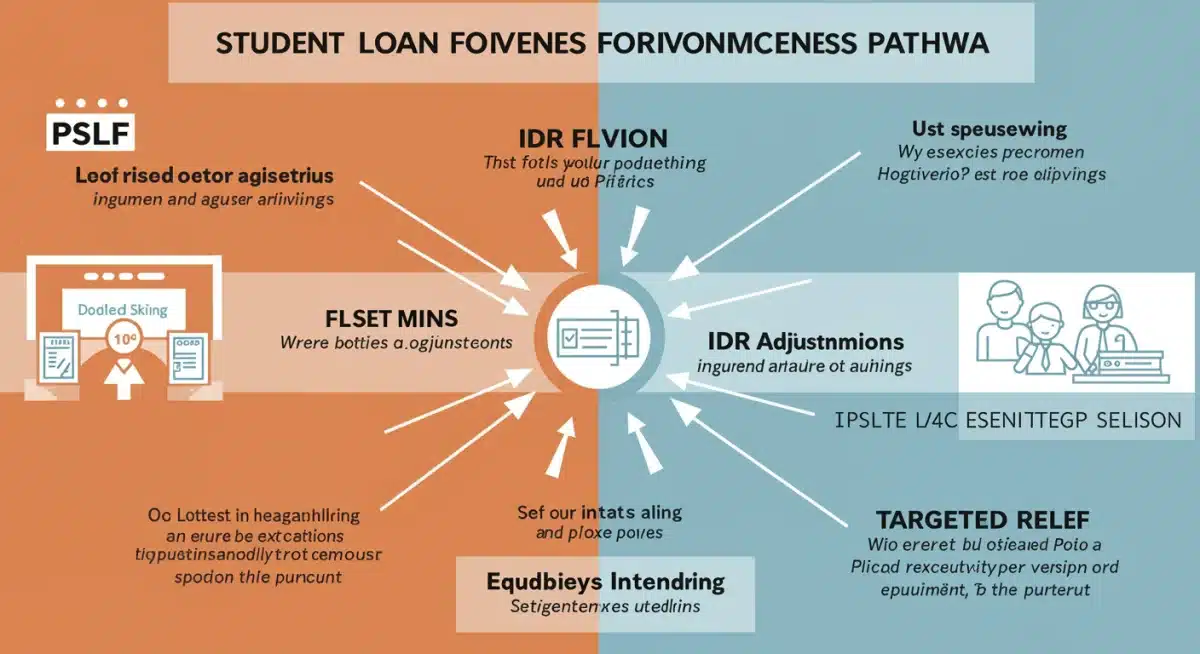
- Public Service Loan Forgiveness (PSLF): This program offers forgiveness for eligible federal loans after 120 qualifying payments made while working full-time for a qualifying employer. Recent changes have made it easier to count past payments.
- Income-Driven Repayment (IDR) Plan Adjustments: The Department of Education has been implementing adjustments to IDR plans, which could lead to forgiveness for many borrowers, especially those who have been in repayment for 20 years or more.
- Targeted Forgiveness Initiatives: Specific relief efforts have been rolled out for borrowers who were defrauded by their schools or those with total and permanent disabilities.
Staying updated on these programs and their evolving rules is paramount. Many of the adjustments and expanded eligibility criteria are time-sensitive, emphasizing the need for prompt action from borrowers. The goal is to ensure that eligible individuals do not miss out on opportunities for substantial debt reduction.
Eligibility Requirements for Up to $20,000 in Relief
While the highly publicized broad student loan forgiveness plan faced legal challenges, targeted relief efforts remain active and can provide substantial financial benefits. Many borrowers are unaware that they might qualify for significant reductions in their student loan debt through existing or newly adjusted programs. Understanding the specific criteria is the first step toward claiming these benefits.
The $20,000 relief figure often refers to specific scenarios, such as certain Pell Grant recipients under previous proposals or through cumulative benefits from IDR plan adjustments. It is crucial to distinguish between broad forgiveness proposals and the ongoing, active programs that currently offer debt relief. Borrowers must verify their individual loan types and repayment history.
Who Qualifies and What to Check
Eligibility often hinges on several factors:
- Type of Federal Loan: Only certain types of federal student loans are eligible for specific forgiveness programs. Direct Loans are generally eligible, while FFEL Program loans may require consolidation.
- Income and Family Size: For income-driven repayment plans, your adjusted gross income and family size play a significant role in determining your monthly payment and potential forgiveness timeline.
- Employment Sector: Public Service Loan Forgiveness requires employment with a qualifying government or non-profit organization.
Borrowers should actively check their loan servicers’ websites and the Federal Student Aid (FSA) website for the most accurate and up-to-date information. Missing a critical detail could mean missing out on thousands in potential relief. The June 2025 deadline is particularly relevant for those needing to consolidate FFEL loans to benefit from IDR account adjustments.
Key Deadlines and Time-Sensitive Actions by June 2025
The June 2025 timeline is critical for many borrowers seeking to maximize their student loan forgiveness opportunities. This deadline primarily pertains to the Income-Driven Repayment (IDR) Account Adjustment, which can provide a one-time revision of payment counts for many federal student loan borrowers. Failure to act by this date could mean forfeiting years of qualifying payments toward forgiveness.
This adjustment is designed to correct past administrative errors and ensure that borrowers receive proper credit for payments made under various repayment plans. It’s an unprecedented opportunity to accelerate progress toward forgiveness, potentially leading to immediate discharge for some or significantly shortening the path for others.
Actions Required Before June 2025
- Consolidate FFEL, Perkins, and HEAL Loans: If you have older federal loans (such as FFEL, Perkins, or HEAL loans) that are not Direct Loans, you must consolidate them into a Direct Consolidation Loan by April 30, 2024, to benefit from the IDR Account Adjustment. While the official deadline for this specific consolidation benefit has passed, the broader June 2025 deadline for overall IDR adjustments remains crucial for those already with Direct Loans or those who consolidated in time. (Note: The original deadline for FFEL consolidation was April 30, 2024, but the broader IDR adjustment benefits continue to be processed through 2025 for eligible Direct Loans.)
- Review Your Payment History: Access your loan history on the Federal Student Aid website (StudentAid.gov) to understand your payment count and identify any discrepancies.
- Contact Your Loan Servicer: If you believe there are errors in your payment count or have questions about eligibility, reach out to your loan servicer promptly.
The IDR Account Adjustment is a one-time opportunity, and its benefits are substantial. Borrowers who act proactively by understanding their loan types and taking the necessary steps before the June 2025 processing completion could see their balances significantly reduced or even eliminated. This period is a window of opportunity that will not be repeated.
Public Service Loan Forgiveness (PSLF) and Temporary Waivers
The Public Service Loan Forgiveness (PSLF) program has undergone significant reforms in recent years, making it more accessible to public servants. Historically, PSLF was notoriously difficult to navigate, with many borrowers mistakenly believing they qualified only to find out years later that their payments or loan types were ineligible. The temporary waivers, which largely concluded, provided a crucial window to rectify these issues and bring more borrowers closer to forgiveness.
Even though the original PSLF Waiver has ended, the benefits of the IDR Account Adjustment can still impact PSLF-eligible borrowers. This means that past payments that might not have counted under previous strict PSLF rules could now be credited towards the 120 required payments, bringing many closer to achieving forgiveness. It is vital for those in public service to understand how these adjustments interact with their PSLF progress.
Maximizing PSLF Eligibility
For those pursuing PSLF, several actions are critical:
- Certify Employment Regularly: Submit the PSLF form annually or whenever you change employers to ensure your qualifying employment is tracked.
- Understand Eligible Loans: Ensure all your federal student loans are Direct Loans. If not, consider consolidation, keeping in mind the IDR adjustment deadlines and how they might affect your PSLF count.
- Track Payments: Keep meticulous records of your payments and employment history.
The PSLF program continues to be a powerful tool for those dedicated to public service. While the temporary waivers have concluded, the IDR Account Adjustment provides ongoing benefits for PSLF-eligible borrowers by ensuring a more accurate and generous count of qualifying payments. Public servants should not overlook this opportunity to advance their path to loan forgiveness.
Income-Driven Repayment (IDR) Plan Adjustments and Their Impact
Income-Driven Repayment (IDR) plans are designed to make student loan payments affordable by capping them at a percentage of a borrower’s discretionary income. Over the years, administrative issues led to many borrowers not receiving proper credit for their payments, extending their repayment timelines unnecessarily. The IDR Account Adjustment is a monumental effort to rectify these historical problems and provide a fresh start for millions.
This one-time adjustment is reviewing payment histories for all Direct Loan and federally held FFEL Program loans. It aims to count more periods of repayment toward forgiveness, including certain periods of deferment and forbearance that previously did not qualify. The impact of this adjustment is expected to be significant, with thousands of borrowers already seeing their loans discharged.
How the IDR Adjustment Works
The IDR adjustment can benefit borrowers in several ways:
- Expanded Payment Counts: It counts months toward forgiveness that previously didn’t qualify, such as certain periods in forbearance or deferment.
- Shorter Path to Forgiveness: For many, this adjustment will significantly reduce the time until they reach the 20 or 25 years of payments required for IDR forgiveness.
- Automatic Discharges: Some borrowers with very old loans or extensive repayment histories may see their loans automatically discharged once the adjustment is applied.
Borrowers do not need to apply for the IDR Account Adjustment if they have Direct Loans. However, as previously mentioned, those with eligible FFEL Program loans must have consolidated them into a Direct Consolidation Loan by the specified deadline to receive the full benefits. The Department of Education is expected to complete the processing of these adjustments by June 2025, making this a critical period for borrowers to monitor their accounts.
New SAVE Plan: A Game Changer for Borrowers
The Saving on a Valuable Education (SAVE) Plan is the newest income-driven repayment plan, replacing the Revised Pay As You Earn (REPAYE) Plan. The SAVE Plan offers significant benefits that could drastically reduce monthly payments for many borrowers and prevent interest capitalization, making it a game-changer in the student loan landscape. It represents a substantial improvement over previous IDR plans, particularly for lower and middle-income borrowers.
Under the SAVE Plan, payments for undergraduate loans are calculated at 5% of discretionary income, down from 10% under REPAYE. This reduction can lead to significantly lower monthly payments, freeing up income for other essential expenses. Furthermore, the plan includes a provision that prevents unpaid interest from capitalizing, meaning your loan balance won’t grow as long as you make your reduced monthly payments.
Key Benefits of the SAVE Plan
The SAVE Plan offers several advantages:
- Lower Monthly Payments: Many borrowers will see their monthly payments cut in half, especially those with only undergraduate loans.
- No Interest Growth: As long as you make your required payments, your loan balance will not increase due to unpaid interest.
- Faster Forgiveness for Smaller Balances: Borrowers with original principal balances of $12,000 or less could receive forgiveness after just 10 years of payments.
Enrolling in the SAVE Plan is a strategic move for many borrowers, especially those struggling with high monthly payments or those concerned about their loan balance growing due to interest. The plan is designed to make higher education more affordable and manageable in the long term, aligning with the broader goal of reducing student loan burden. Borrowers should assess if the SAVE Plan is the right choice for their financial situation.
Actionable Steps to Take Before June 2025
With the various programs and deadlines in mind, taking concrete, actionable steps before June 2025 is paramount for any borrower seeking student loan relief. Procrastination could lead to missed opportunities for significant financial savings. The process can seem daunting, but breaking it down into a few key actions can make it manageable and effective.
The most important aspect is active engagement with your loan information and understanding your eligibility. Do not assume you are ineligible without thoroughly investigating all available options. Many resources are available to help guide you, including government websites and non-profit organizations. The goal is to empower yourself with knowledge and take decisive action.
Your Checklist for Loan Forgiveness
- Check Your Loan Types: Determine if your loans are federal Direct Loans, FFEL, or Perkins Loans. This is crucial for understanding which programs you qualify for.
- Review Your Payment History: Log in to StudentAid.gov to view your official payment counts and identify any discrepancies that the IDR Account Adjustment might resolve.
- Consolidate if Necessary: If you have eligible FFEL or Perkins loans and haven’t already, consolidate them into a Direct Consolidation Loan. While the specific deadline for FFEL consolidation for the IDR adjustment has passed, ensuring all loans are Direct Loans is generally beneficial for future programs.
- Enroll in an IDR Plan: If you are not already, consider enrolling in an income-driven repayment plan, especially the new SAVE Plan, to ensure your payments are affordable and count towards forgiveness.
- Certify PSLF Employment: If you work in public service, regularly submit your PSLF Employment Certification Form.
By diligently following these steps, borrowers can position themselves to benefit from the ongoing student loan forgiveness initiatives. The June 2025 timeframe is a critical marker for the completion of the IDR Account Adjustment, making the coming months a golden opportunity to secure financial relief. Don’t wait; start exploring your options today to potentially save thousands on your student loans.
| Key Program/Action | Brief Description & Impact |
|---|---|
| IDR Account Adjustment | One-time review of payment histories for Direct Loans, counting more periods towards forgiveness. Processing by June 2025. |
| Public Service Loan Forgiveness (PSLF) | Forgiveness after 120 qualifying payments for public service employees. Benefits from IDR adjustment. |
| New SAVE Plan | Newest IDR plan offering lower monthly payments (5% of discretionary income for undergrads) and prevents interest growth. |
| Consolidation for Older Loans | Consolidating FFEL, Perkins, and HEAL loans into Direct Loans was crucial to benefit from the IDR adjustment. |
Frequently Asked Questions About Student Loan Forgiveness
The primary deadline to be aware of is June 2025, which marks the expected completion of the IDR Account Adjustment. This adjustment can significantly alter payment counts towards forgiveness for many federal loan borrowers, especially those with Direct Loans.
While broad forgiveness proposals were challenged, targeted relief through programs like PSLF, IDR adjustments, and the new SAVE Plan can lead to significant reductions, potentially totaling $20,000 or more for eligible borrowers, depending on their individual circumstances and loan types.
No, if you have Direct Loans, the IDR Account Adjustment is generally automatic. However, if you have older FFEL, Perkins, or HEAL loans, you needed to consolidate them into a Direct Loan by the specified deadline for the adjustment to apply to those loans.
The SAVE Plan is the newest Income-Driven Repayment plan. It significantly lowers monthly payments for many borrowers, particularly those with undergraduate loans, to 5% of discretionary income, and prevents your loan balance from growing due to unpaid interest.
You should visit StudentAid.gov to review your loan types, payment history, and explore eligibility for various programs like PSLF and IDR plans. Contacting your loan servicer directly for personalized guidance is also a crucial step.
Conclusion
The landscape of student loan relief is continually evolving, presenting both challenges and opportunities for borrowers. Understanding the critical deadlines, particularly the June 2025 timeframe for the IDR Account Adjustment, and knowing the specifics of programs like PSLF and the new SAVE Plan, are essential. By taking proactive steps to review loan types, consolidate if necessary, and engage with available resources, millions of Americans have the potential to significantly reduce their student loan burden. This time-sensitive financial impact requires diligence and informed action to secure the relief you may be entitled to.