Locking in Under 7%: 2025 Mortgage Rate Fluctuations Explained
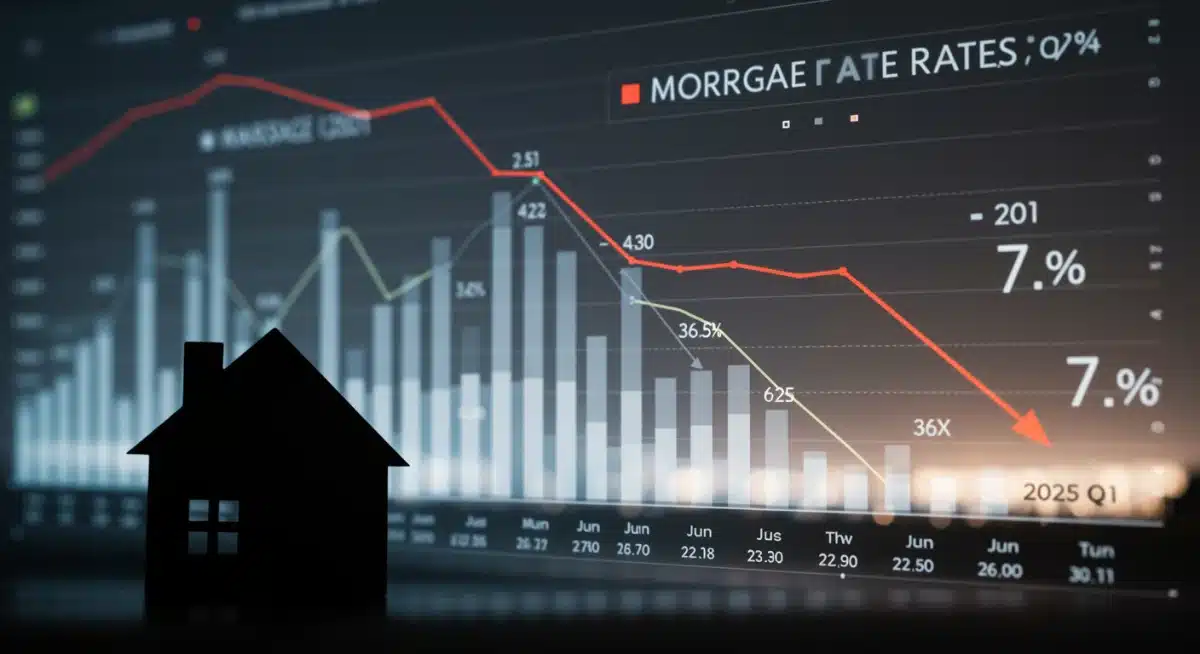
Navigating 2025 mortgage rate fluctuations: expert tips for locking in under 7% this quarter requires understanding market dynamics and proactive strategies to secure favorable financing amidst economic shifts.
As we approach 2025, the housing market continues its dynamic dance with interest rates, making the prospect of Navigating 2025 Mortgage Rate Fluctuations: Expert Tips for Locking in Under 7% This Quarter a critical concern for many prospective homebuyers and those considering refinancing. Understanding the forces at play and adopting strategic approaches can empower you to secure a favorable rate, potentially below the often-cited 7% threshold. This article delves into the anticipated economic landscape, offers practical advice, and highlights key considerations to help you make informed decisions in the coming months.
Understanding the Economic Landscape Influencing 2025 Mortgage Rates
The trajectory of mortgage rates in 2025 is intricately linked to broader economic indicators. Factors such as inflation, Federal Reserve policy, and global economic stability all play significant roles in shaping the cost of borrowing. A nuanced understanding of these elements is crucial for anyone looking to secure a mortgage.
Inflation and Federal Reserve Actions
Inflation remains a primary driver of interest rate decisions. When inflation is high, the Federal Reserve typically raises its benchmark interest rate to cool down the economy. While mortgage rates don’t directly mirror the Fed’s rate, they are heavily influenced by it, particularly the yield on the 10-year Treasury note. Expectations are that the Fed will likely continue to monitor inflation closely, adjusting policies as needed. If inflation shows signs of sustained moderation, there’s a greater chance for rates to stabilize or even slightly decline, creating opportunities for borrowers.
- Inflation Outlook: Monitoring Consumer Price Index (CPI) and Personal Consumption Expenditures (PCE) data.
- Federal Reserve Stance: Paying attention to FOMC meeting minutes and public statements for clues on future rate hikes or cuts.
- Market Sentiment: How investors perceive economic stability directly impacts bond yields, which in turn affect mortgage rates.
Moreover, geopolitical events and international trade relations can introduce volatility. Any significant global disruption can lead to a ‘flight to safety’ in bond markets, potentially lowering yields and, consequently, mortgage rates, as investors seek stability in U.S. government bonds. Conversely, periods of strong economic growth might lead to higher rates as demand for credit increases.
In conclusion, staying informed about economic forecasts and central bank communications is paramount. These insights provide a foundational understanding of the environment in which 2025 mortgage rates will operate, enabling more strategic decision-making for locking in under 7%.
Proactive Strategies for Securing a Lower Mortgage Rate
To successfully navigate the anticipated 2025 mortgage rate fluctuations and aim for a rate under 7%, a proactive and well-informed approach is essential. This involves preparing your finances, understanding various loan products, and timing your application effectively.
Improving Your Credit Score
One of the most impactful steps you can take is to optimize your credit score. Lenders view higher credit scores as indicative of lower risk, which translates to more favorable interest rates. Begin by reviewing your credit report for any inaccuracies and dispute them promptly. Focus on reducing existing debt, especially high-interest credit card balances, and make all payments on time. A strong credit profile can significantly reduce your mortgage rate, potentially moving you closer to that sub-7% goal.
- Check Credit Reports: Annually review reports from Equifax, Experian, and TransUnion.
- Pay Bills On Time: Payment history is a major factor in credit scoring.
- Reduce Debt: Lowering your credit utilization ratio can boost your score.
Beyond credit scores, building a substantial down payment can also improve your rate. A larger down payment reduces the loan-to-value (LTV) ratio, making the loan less risky for the lender. This often results in access to better rates and can also help you avoid private mortgage insurance (PMI).
Another crucial strategy involves exploring different loan types. While fixed-rate mortgages offer stability, adjustable-rate mortgages (ARMs) might initially offer lower rates. However, ARMs come with the risk of rate increases after an introductory period. Carefully weigh the pros and cons of each, considering your financial stability and long-term plans. Consulting with a mortgage professional who understands the 2025 market outlook can provide tailored advice on which loan product best suits your needs.
In essence, securing a lower mortgage rate in 2025 is about presenting yourself as the most attractive borrower possible. This holistic approach, combining financial optimization with strategic loan product selection, significantly enhances your chances of locking in a rate below 7%.
Leveraging Lender Relationships and Rate Locks
Building strong relationships with lenders and understanding the nuances of rate locks are critical components of successfully Navigating 2025 Mortgage Rate Fluctuations: Expert Tips for Locking in Under 7% This Quarter. The right lender can offer invaluable guidance, and a well-timed rate lock can protect you from adverse market movements.
Shopping Around for Lenders
Do not settle for the first offer you receive. Different lenders have varying rate structures, fees, and eligibility requirements. Contact multiple banks, credit unions, and mortgage brokers. Each will have unique programs and incentives, and comparing their offers can reveal significant savings. A mortgage broker, in particular, can be a valuable asset, as they work with numerous lenders and can often find competitive rates that might not be advertised directly to consumers. Be transparent about other offers you’ve received; this can sometimes encourage lenders to sharpen their pencils and provide a more competitive rate.
- Compare Offers: Obtain quotes from at least three different lenders.
- Utilize Brokers: Mortgage brokers can access a wider range of loan products and rates.
- Negotiate: Don’t be afraid to ask if they can beat a competitor’s offer.
Once you’ve found a favorable rate, consider a rate lock. A rate lock guarantees your interest rate for a specific period, typically 30, 45, or 60 days, while your loan application is processed. This protects you if rates rise before closing. However, be aware of the lock period and its cost. Some lenders charge a fee for longer lock periods, and if your loan doesn’t close within the locked timeframe, you might lose your locked rate or incur extension fees. Discuss potential closing delays with your lender and loan officer to choose an appropriate lock duration.
Furthermore, inquire about a ‘float-down’ option. Some lenders offer this feature, which allows you to secure a rate lock but still benefit if rates drop before your closing. While it might come with an additional cost or specific conditions, it offers flexibility in a volatile market. Engaging proactively with lenders and understanding the mechanics of rate locks can significantly enhance your ability to secure the desired rate in 2025.
Refinancing Opportunities and Market Timing in 2025
For current homeowners, 2025 could present significant refinancing opportunities, especially if rates trend downwards, making Navigating 2025 Mortgage Rate Fluctuations: Expert Tips for Locking in Under 7% This Quarter equally relevant. Strategic timing and a clear understanding of your financial goals are key to leveraging these moments effectively.
When to Consider Refinancing
Refinancing makes sense when the potential savings outweigh the closing costs. A common rule of thumb is to consider refinancing if you can reduce your interest rate by at least 0.75% to 1%. However, with rates potentially hovering around 7%, even a smaller reduction could yield substantial long-term savings. Evaluate your current mortgage terms, including the remaining loan balance and term, to determine if refinancing aligns with your financial objectives, such as lowering monthly payments, shortening your loan term, or tapping into home equity.
Market timing is inherently challenging, as predicting rate movements with absolute certainty is impossible. However, paying close attention to economic indicators and expert forecasts can help you identify potential windows of opportunity. Subscribe to financial news, consult with mortgage professionals, and monitor the 10-year Treasury yield, which often serves as a bellwether for fixed mortgage rates. If the Federal Reserve signals a more dovish stance or if inflation shows clear signs of receding, it could indicate a period of lower rates.

Another aspect of timing involves your personal financial readiness. Ensure your credit score is optimized, and you have sufficient funds for closing costs. Even if rates dip, being unprepared financially can cause delays, potentially missing the best window. Consider a ‘rate watch’ program offered by some lenders, which alerts you when rates hit a predetermined target.
In summary, refinancing in 2025 requires a blend of market awareness and personal financial preparedness. By carefully assessing your situation and staying vigilant about market trends, you can position yourself to capitalize on favorable rate environments and potentially lock in a mortgage well under 7%.
Impact of Housing Market Dynamics on Mortgage Rates
The interplay between the housing market and mortgage rates is cyclical and complex. Understanding these dynamics is essential for Navigating 2025 Mortgage Rate Fluctuations: Expert Tips for Locking in Under 7% This Quarter, particularly as supply and demand pressures can influence not only home prices but also the appetite for mortgage lending.
Supply and Demand in Housing
A tight housing supply, coupled with strong buyer demand, typically puts upward pressure on home prices. While this doesn’t directly dictate mortgage rates, it can indirectly affect them. When home prices are high and demand is robust, lenders may perceive the market as more stable, potentially leading to more competitive lending practices. Conversely, a slowdown in the housing market, perhaps due to high rates, can sometimes prompt lenders to offer more attractive rates to stimulate demand.
- Inventory Levels: Low housing inventory can sustain higher prices, influencing buyer behavior.
- Buyer Demand: Strong demand, often fueled by demographics or economic growth, can absorb higher rates.
- Home Prices: Stable or appreciating home values provide collateral for lenders, potentially offering better terms.
Additionally, regional housing market variations can play a role. Some areas may experience more intense competition and price appreciation than others, leading to different lending dynamics. It’s important to research local market conditions and understand how they might impact your ability to secure a favorable rate. For instance, in highly competitive markets, lenders might be more willing to offer aggressive rates to capture market share among well-qualified borrowers.
The overall health of the housing market can also influence investor confidence in mortgage-backed securities (MBS), which are a key component of how mortgage rates are set. A robust and stable housing market makes MBS more attractive to investors, which can help keep mortgage rates lower. Conversely, concerns about housing market stability can lead to higher MBS yields, pushing mortgage rates upward. Therefore, keeping an eye on housing market reports, such as those from the National Association of Realtors or the Census Bureau, provides valuable context for predicting rate movements.
In conclusion, the dynamics of the housing market, from local inventory levels to national price trends, are integral to the broader mortgage rate environment. A holistic view that incorporates these factors will bolster your strategy for securing a mortgage under 7% in 2025.
Government Programs and Assistance for Homebuyers
For many aspiring homeowners, particularly first-time buyers, understanding and utilizing available government programs and assistance can be instrumental in Navigating 2025 Mortgage Rate Fluctuations: Expert Tips for Locking in Under 7% This Quarter. These programs often come with more lenient qualification criteria or direct financial aid, making homeownership more accessible.
Federal Housing Administration (FHA) Loans
FHA loans, backed by the Federal Housing Administration, are a popular option, especially for buyers with lower credit scores or smaller down payments. While FHA loans require mortgage insurance premiums (MIP), they often offer more flexible underwriting standards and competitive interest rates compared to conventional loans. For those aiming for a sub-7% rate, FHA loans can provide a viable pathway, particularly if your credit profile isn’t pristine enough for the absolute best conventional rates.
- Eligibility: Lower credit score requirements, typically 580 with 3.5% down.
- Down Payment: Minimum 3.5% down payment, making homeownership more accessible.
- Mortgage Insurance: Required for the life of the loan or until LTV reaches a certain threshold.
Another significant federal program is the VA loan, available to eligible service members, veterans, and their spouses. VA loans are renowned for offering 100% financing (no down payment required) and often come with some of the lowest interest rates on the market, as they are backed by the Department of Veterans Affairs. This can be a game-changer for qualifying individuals looking to lock in a rate below 7% without the burden of a substantial upfront payment.
Beyond federal programs, many states and local municipalities offer various forms of down payment assistance, closing cost assistance, or even grants. These programs are designed to help moderate-income individuals and families overcome financial hurdles to homeownership. Researching what’s available in your specific area is crucial. Websites of state housing finance agencies or local government housing departments are excellent resources for discovering these opportunities. Combining these forms of assistance with a well-chosen mortgage product can significantly reduce your overall cost of borrowing and help achieve a lower effective rate.
In conclusion, government programs and assistance are powerful tools for enhancing affordability and securing favorable mortgage terms. By exploring FHA, VA, and local aid options, many buyers can effectively navigate the 2025 market and achieve their homeownership dreams with a mortgage rate under 7%.
Long-Term Planning: Beyond Locking in a Rate
While securing a favorable mortgage rate in the short term is important, Navigating 2025 Mortgage Rate Fluctuations: Expert Tips for Locking in Under 7% This Quarter also involves a comprehensive long-term financial plan. A mortgage is a significant commitment, and thoughtful planning can ensure financial stability for years to come.
Financial Health and Future Goals
Even after you’ve locked in your rate, maintaining strong financial health is paramount. This includes building an emergency fund, continuing to pay down debt, and consistently saving for retirement and other long-term goals. A robust financial foundation provides a buffer against unexpected expenses and allows for greater flexibility if future economic conditions or personal circumstances change. Review your budget regularly to ensure your mortgage payments remain affordable and that you’re on track with other financial objectives.
- Emergency Fund: Aim for 3-6 months of living expenses.
- Debt Management: Prioritize paying off high-interest debt.
- Retirement Savings: Continue contributing to 401(k)s or IRAs.
Consider the potential for future refinancing. While you’re aiming for under 7% now, market conditions could shift again in the future, presenting even lower rates. Keep an eye on economic forecasts and your personal financial situation. If rates drop significantly, or if your income increases and your credit score improves further, another refinance could be a strategic move to reduce your overall interest payments even more. This ongoing vigilance is part of being a savvy homeowner.
Finally, factor in property taxes, home insurance, and potential maintenance costs. These expenses can significantly impact your monthly housing budget and should be accounted for in your long-term financial planning. Don’t let the excitement of a low interest rate overshadow the complete cost of homeownership. A comprehensive understanding of all associated costs will prevent financial surprises and ensure your mortgage remains a manageable part of your financial life.
In essence, successfully navigating the mortgage landscape in 2025 and beyond extends beyond the initial rate lock. It encompasses continuous financial stewardship, strategic foresight, and a holistic view of your financial well-being, ensuring your home remains a source of security and not stress.
| Key Strategy | Brief Description |
|---|---|
| Credit Score Optimization | Improve your credit score to qualify for better interest rates. |
| Lender Shopping | Compare offers from multiple lenders to find the most competitive rates. |
| Rate Lock Utilization | Secure your interest rate for a period to protect against market increases. |
| Government Programs | Explore FHA, VA, and local assistance for advantageous terms. |
Frequently Asked Questions About 2025 Mortgage Rates
2025 mortgage rates will primarily be driven by inflation trends, Federal Reserve monetary policy decisions (especially regarding the federal funds rate), global economic stability, and the overall health of the U.S. housing market. Geopolitical events can also introduce volatility.
To improve your chances, focus on boosting your credit score, reducing debt, and saving for a larger down payment. Comparing multiple lenders and understanding various loan products, including government-backed options, are also crucial steps for securing a lower rate.
The best choice depends on your financial stability and market outlook. Fixed-rate mortgages offer payment predictability, while ARMs may start lower but can fluctuate. If you anticipate moving within a few years, an ARM might be appealing; otherwise, a fixed rate offers more security.
A rate lock guarantees your mortgage interest rate for a set period (e.g., 30-60 days) during your loan processing. You should use it when you’ve secured a favorable rate and anticipate potential market increases before your loan closes. Be mindful of the lock duration and any associated fees.
Yes, programs like FHA and VA loans offer more accessible terms, often with lower down payments or no down payment for eligible individuals. Many states and local agencies also provide down payment assistance or grants to help first-time homebuyers. Research local resources thoroughly.
Conclusion
Successfully Navigating 2025 Mortgage Rate Fluctuations: Expert Tips for Locking in Under 7% This Quarter requires a blend of informed decision-making, proactive financial management, and strategic engagement with lenders. By staying abreast of economic trends, optimizing your credit profile, thoroughly comparing loan offers, and leveraging available government programs, you can significantly enhance your prospects of securing a favorable mortgage rate. Remember that a mortgage is a long-term commitment, and a holistic approach that considers both immediate rate opportunities and future financial health will lead to the most beneficial outcome for your homeownership journey.