Student Loan Forgiveness 2025: Policy Watch & Legislative Changes
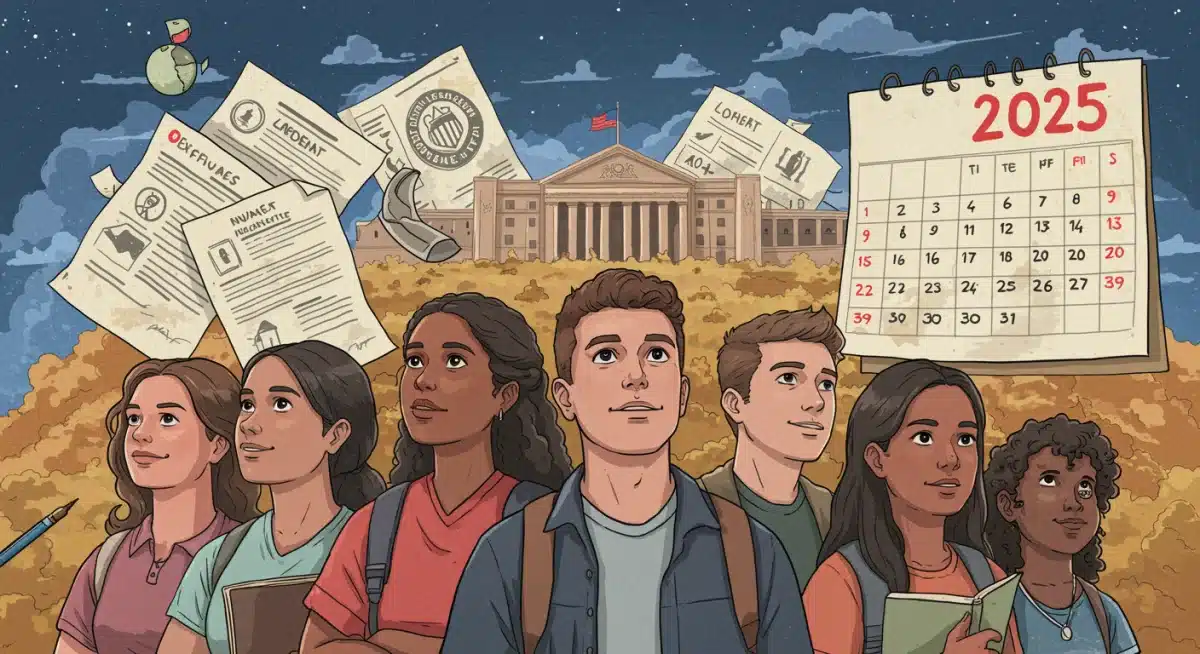
The future of student loan forgiveness in 2025 is being actively shaped by a series of proposed legislative changes and ongoing policy debates, reflecting a dynamic effort to address the nation’s soaring student debt crisis.
The conversation around student loan forgiveness in 2025 continues to be a pivotal topic for millions of Americans grappling with educational debt. Over the last three months, the policy landscape has seen a flurry of activity, with various legislative proposals emerging to reshape how and if borrowers might find relief. This article delves into these recent developments, offering an in-depth look at what the future might hold for student loan forgiveness.
Understanding the Current Student Loan Landscape
Before we explore the proposed changes, it’s essential to grasp the current state of student loan debt in the United States. The figures are staggering, with over 43 million Americans holding federal student loans, totaling over $1.7 trillion. This immense burden affects individuals from all walks of life, often delaying major life milestones such as homeownership, starting a family, or saving for retirement.
Existing forgiveness programs, while helpful to some, have often been criticized for their complexity, limited scope, and administrative hurdles. Programs like Public Service Loan Forgiveness (PSLF) and income-driven repayment (IDR) plans offer pathways to relief, but many borrowers find themselves navigating a labyrinth of paperwork and eligibility requirements, leading to frustration and, in some cases, missed opportunities for forgiveness.
The Economic and Social Impact of Student Debt
The widespread student debt crisis extends beyond individual financial stress, impacting the broader economy. High debt levels can depress consumer spending, hinder entrepreneurship, and contribute to wealth inequality. Policymakers are increasingly recognizing these systemic effects, prompting a more urgent push for comprehensive solutions that go beyond incremental adjustments.
- Delayed Economic Milestones: Many graduates postpone buying homes or starting businesses.
- Reduced Consumer Spending: Debt payments limit disposable income for other goods and services.
- Mental Health Burden: Financial stress from loans can significantly impact well-being.
- Exacerbated Inequality: Disproportionately affects low-income and minority communities.
The need for effective and equitable student loan forgiveness policies in 2025 is not just a matter of individual relief; it’s a critical component of national economic health and social justice. The debates surrounding these issues are complex, involving considerations of fiscal responsibility, fairness to taxpayers, and the long-term implications for higher education funding.
Key Legislative Proposals and Debates Over the Last Quarter
The past three months have been particularly active regarding legislative efforts to address student loan debt. Several key proposals have gained traction, each offering a distinct approach to forgiveness and relief. These initiatives reflect a growing bipartisan, though often contentious, recognition that the status quo is unsustainable.
One prominent proposal involves expanding the eligibility criteria for existing forgiveness programs, making them more accessible to a wider range of borrowers. Another approach focuses on direct, broad-based loan cancellation, often tied to income levels or specific loan types. These discussions are happening against a backdrop of ongoing legal challenges to previous administrative actions on student loan forgiveness, adding an layer of uncertainty to the legislative process.
Proposed Expansions to Existing Programs
Some lawmakers advocate for strengthening and simplifying programs like PSLF and IDR. This could involve automatic enrollment in IDR plans, clearer pathways to forgiveness for public servants, and reducing the number of years required for forgiveness under these plans. The goal is to ensure that these programs fulfill their original intent more effectively.
Recent legislative drafts have also explored mechanisms to retroactively apply certain benefits, such as counting past payments that were previously ineligible due to administrative errors. These types of changes could provide significant relief to borrowers who have been making payments for years but have yet to see their balances reduced.
New Approaches to Broad-Based Forgiveness
Beyond refining existing programs, more ambitious proposals for broad-based student loan forgiveness have been introduced. These often involve canceling a fixed amount of debt for all borrowers or for those below a certain income threshold. The arguments for such measures center on stimulating the economy and providing a fresh start for millions of Americans.
The specifics of these proposals vary widely, ranging from $10,000 to $50,000 or more in cancellation per borrower. Funding mechanisms and the potential impact on inflation are central to the debate surrounding these more extensive forgiveness plans. As we look towards student loan forgiveness in 2025, the balance between broad relief and fiscal prudence remains a key challenge for legislators.
The Role of Executive Action vs. Congressional Legislation
The debate over student loan forgiveness often intertwines with the question of how such relief should be implemented: through executive action or congressional legislation. Both avenues have their proponents and drawbacks, and recent months have highlighted the complexities of each.
Executive actions, while potentially quicker to implement, often face legal challenges and can be reversed by subsequent administrations, leading to uncertainty for borrowers. Congressional legislation, though typically a slower and more arduous process, tends to offer more durable and comprehensive solutions. The push for student loan forgiveness in 2025 is increasingly leaning towards legislative solutions to ensure long-term stability.
The Limitations of Executive Authority
Recent court battles have underscored the limits of presidential authority in enacting large-scale student loan forgiveness. While the administration has utilized existing statutory authority to provide targeted relief, such as through the PSLF waiver or adjustments to IDR plans, broad debt cancellation faces significant legal hurdles. This has intensified calls for Congress to act, providing a clearer legal framework for any future forgiveness initiatives.
The Path Through Congress
Legislative proposals currently under consideration aim to overcome these legal challenges by codifying forgiveness programs into law. This would involve amendments to the Higher Education Act or new standalone legislation. While the legislative process is slow and requires bipartisan consensus, it offers the most stable and comprehensive route for implementing significant changes to student loan policy.
The legislative efforts over the last three months have focused on building coalitions and finding common ground among diverse political viewpoints. The goal is to create a sustainable framework for student loan forgiveness that can withstand changes in administration and political tides, ensuring predictability for borrowers.
Impact on Borrowers: Who Stands to Benefit Most?
As discussions around student loan forgiveness in 2025 evolve, a key consideration is who would benefit most from the proposed changes. Different legislative approaches target different segments of the borrower population, with varying levels of impact.
Broad-based forgiveness, for example, would offer relief to a wide array of borrowers, potentially boosting economic activity across the board. Targeted forgiveness, on the other hand, might focus on specific groups, such as low-income borrowers, those with older loans, or graduates from certain programs. Understanding these distinctions is crucial for assessing the equity and effectiveness of any new policy.
Targeted vs. Universal Relief
Many proposals include income caps, ensuring that relief is directed towards those who arguably need it most. This approach aims to address concerns about fairness and the potential for forgiveness to disproportionately benefit higher earners. However, critics argue that income caps can add administrative complexity and exclude some middle-income borrowers who are also struggling.
Universal relief, while simpler to administer, raises questions about its cost and whether it provides sufficient targeting to address the most pressing financial hardships. The current legislative debates are actively trying to strike a balance between these two philosophies, seeking a solution that is both effective and equitable.

Beyond direct financial relief, student loan forgiveness can have profound psychological effects. The burden of debt can be a significant source of stress and anxiety, impacting mental health and overall well-being. Forgiveness can provide a sense of liberation, allowing individuals to pursue personal and professional goals without the constant pressure of loan payments.
Challenges and Criticisms of Proposed Forgiveness Plans
Despite the widespread support for addressing student loan debt, proposed forgiveness plans are not without their challenges and criticisms. These concerns often revolve around fiscal responsibility, fairness to those who have already paid off their loans, and the potential for moral hazard.
Opponents of broad forgiveness often highlight the significant cost to taxpayers and the potential for inflationary pressures. There are also arguments that forgiveness could incentivize future borrowing, exacerbating the underlying issues in higher education finance. These criticisms are central to the legislative debates and are actively shaping the final form of any policies related to student loan forgiveness in 2025.
Fiscal Concerns and Economic Impact
The cost of large-scale student loan forgiveness is a major point of contention. Estimates vary widely depending on the scope of the program, but even conservative figures run into the hundreds of billions of dollars. Critics argue that such expenditures could add to the national debt and potentially fuel inflation, especially if not offset by other budget cuts or revenue increases.
- Increased National Debt: Significant federal spending requires careful fiscal planning.
- Inflationary Pressure: Injecting large sums into the economy could drive up prices.
- Taxpayer Burden: The cost of forgiveness is ultimately borne by taxpayers.
Proponents, however, argue that the economic benefits of forgiveness, such as increased consumer spending and economic growth, could offset some of these costs in the long run. They also point to the existing costs of loan defaults and administrative overhead as reasons to consider a more streamlined approach to debt relief.
Fairness and Moral Hazard Arguments
Another common criticism centers on fairness to borrowers who have diligently paid off their loans or chose not to pursue higher education due to cost concerns. These individuals often feel penalized by forgiveness programs, viewing them as unjust. The concept of moral hazard also arises, with some arguing that forgiveness could encourage future students to take on more debt with the expectation of eventual cancellation.
Legislators are attempting to address these criticisms by exploring options such as targeted forgiveness based on income or need, or by coupling forgiveness with broader reforms to higher education funding. The aim is to create a system that is perceived as fair and sustainable, preventing a cycle of debt and forgiveness that does not address the root causes of the problem.
The Future Outlook for Student Loan Forgiveness in 2025
Looking ahead to 2025, the future of student loan forgiveness remains a dynamic and evolving policy area. While significant progress has been made in recent months in identifying potential legislative pathways, the exact form and scope of future forgiveness programs are still under negotiation.
The political climate, economic conditions, and ongoing legal developments will all play a crucial role in determining the ultimate outcome. However, the sustained focus on this issue suggests that some form of enhanced student loan relief is highly probable. Borrowers should stay informed about legislative progress and prepare for potential changes that could impact their financial futures.
What Borrowers Should Monitor
As these policies develop, borrowers should pay close attention to several key areas. Changes to income-driven repayment plans, potential new broad-based forgiveness initiatives, and adjustments to existing programs like PSLF are all on the table. Staying updated through reliable news sources and official government channels will be essential for understanding eligibility and application processes.
It is also advisable for borrowers to continue making payments if they are able, unless specifically instructed otherwise by official guidance. The landscape can shift quickly, and being proactive in managing current loan obligations will help ensure a smoother transition should new forgiveness opportunities arise. The discussion around student loan forgiveness in 2025 is not just theoretical; it’s a practical concern for millions.
Potential Long-Term Reforms
Beyond immediate forgiveness, many legislative proposals also address the underlying issues contributing to student debt. These include reforms to college tuition costs, increased funding for Pell Grants, and improvements to financial literacy programs. The hope is that by tackling these systemic problems, future generations of students can avoid accumulating unsustainable levels of debt.
The current legislative efforts are therefore not just about providing relief for past debt, but also about building a more sustainable and equitable higher education financing system for the future. These long-term reforms are critical for ensuring that any forgiveness initiatives lead to lasting positive change rather than merely temporary solutions.
| Key Policy Area | Brief Description of Changes |
|---|---|
| Legislative Proposals | Discussions on expanding existing programs and introducing new broad-based forgiveness initiatives. |
| Executive vs. Congressional | Emphasis shifting towards more durable legislative solutions over executive actions. |
| Borrower Impact | Focus on targeted relief for low-income borrowers and broader economic stimulation. |
| Challenges Ahead | Fiscal concerns, fairness arguments, and potential moral hazard remain key criticisms. |
Frequently Asked Questions About Student Loan Forgiveness in 2025
The likelihood of broad student loan forgiveness in 2025 depends heavily on congressional action. While executive actions face legal challenges, legislative proposals are gaining momentum. The political climate and bipartisan negotiations will be crucial in determining the scope and implementation of any new forgiveness programs.
Yes, there are ongoing discussions and legislative proposals aimed at expanding and simplifying existing programs like Public Service Loan Forgiveness (PSLF) and Income-Driven Repayment (IDR) plans. These changes could include broader eligibility, simpler application processes, and faster pathways to forgiveness for eligible borrowers.
Many proposed forgiveness plans include income caps to target relief towards borrowers with greater financial need. This means that individuals earning above a certain threshold might receive less or no forgiveness. These caps aim to ensure equity and address concerns about the fiscal impact of broad relief.
Borrowers should stay informed by following official government announcements and reputable news sources. Continue making payments if financially able, and ensure your loan servicer has up-to-date contact information. Review your current loan types and repayment plans to understand how potential changes might apply to your specific situation.
Absolutely. Beyond immediate forgiveness, legislators are also exploring long-term reforms to address the root causes of student debt. These include proposals for tuition cost controls, increased federal funding for grants, and improvements to financial literacy education. The goal is to create a more sustainable higher education financing system for future generations.
Conclusion
The discourse surrounding student loan forgiveness in 2025 is a complex tapestry of economic necessity, political negotiation, and social equity. While the path forward remains intricate, the sustained legislative activity over the past three months underscores a clear commitment to finding meaningful solutions to the nation’s student debt crisis. Borrowers, policymakers, and educational institutions alike are watching closely as these proposed changes move through the legislative process, hoping for a future where higher education is more accessible and less financially burdensome. The ultimate goal is to foster an environment where pursuing knowledge does not necessitate a lifetime of debt, ensuring a brighter financial future for millions of Americans.