Student Loan Forgiveness 2025: 10-Year Plan Eligibility

Understanding the new 10-year repayment plan under the student loan forgiveness updates 2025 is crucial for borrowers to assess their eligibility and navigate the evolving landscape of federal student aid programs.
The landscape of federal student loans is continually evolving, and staying informed about the latest changes is paramount for millions of borrowers. With the anticipated student loan forgiveness updates 2025, many are wondering about their eligibility for new repayment options, particularly the highly discussed 10-year repayment plan. These changes could significantly impact your financial future, offering potential relief or requiring a strategic adjustment to your repayment strategy.
understanding the new 10-year repayment plan in 2025
The year 2025 is poised to bring significant alterations to federal student loan repayment, with a particular focus on a new 10-year repayment plan. This initiative aims to streamline the forgiveness process for certain borrowers, offering a clearer path to debt relief. It’s a response to years of complex and often confusing repayment options that left many feeling overwhelmed.
This plan is not a blanket forgiveness but rather a structured approach designed to benefit specific demographics and loan types. Understanding its nuances is critical for determining if it aligns with your financial situation and long-term goals. The government’s intent is to make student loan repayment more manageable and predictable.
key features of the new plan
The new 10-year repayment plan introduces several key features that differentiate it from previous programs. These include revised income-driven repayment (IDR) calculations, potentially lower monthly payments for some, and a more defined timeline for forgiveness. The emphasis is on accelerating the path to forgiveness for eligible borrowers who meet specific criteria.
- Reduced Repayment Period: For certain loan types and borrower circumstances, the period to achieve forgiveness can be shortened to 10 years.
- Enhanced IDR Benefits: The plan often works in conjunction with improved IDR programs, making payments more affordable.
- Automatic Enrollment Possibilities: Some borrowers might be automatically enrolled or pre-qualified based on existing federal data.
A crucial aspect of this plan is its focus on transparency and accessibility. The Department of Education is working to simplify the application and enrollment process, ensuring that eligible borrowers can easily navigate the requirements. This shift represents a move towards more borrower-friendly policies, acknowledging the economic burden of student debt.
In conclusion, the 2025 updates to the 10-year repayment plan are designed to offer a more direct and potentially faster route to student loan forgiveness for a segment of borrowers. Its success hinges on understanding the specific criteria and leveraging the new tools and resources provided by the federal government.
eligibility criteria for student loan forgiveness in 2025
Determining your eligibility for the new 10-year repayment plan and associated forgiveness in 2025 requires a careful review of several factors. These criteria are designed to target borrowers who are most in need of relief or who have consistently met their repayment obligations under specific programs. It’s not a one-size-fits-all solution, and individual circumstances will play a significant role.
The government is attempting to refine its approach to student loan debt, moving towards more equitable and sustainable solutions. This means that while some broad categories of borrowers might be eligible, specific conditions related to income, loan type, and repayment history will be paramount.
who qualifies for accelerated forgiveness?
The primary beneficiaries of the accelerated 10-year forgiveness are often those who have been enrolled in income-driven repayment (IDR) plans or who have worked in public service. The Public Service Loan Forgiveness (PSLF) program, in particular, is expected to see continued refinements that could align with the new 10-year timeline for certain federal loans.
- Public Service Workers: Teachers, nurses, government employees, and other qualifying non-profit workers remain a key focus.
- Long-Term IDR Participants: Borrowers who have made payments for an extended period under IDR plans might see their remaining balances forgiven sooner.
- Specific Loan Types: Primarily federal Direct Loans are eligible; older FFELP or Perkins loans might need to be consolidated.
Furthermore, income levels and family size will continue to be critical components of eligibility, especially for IDR-related forgiveness. The new plan aims to adjust these calculations to provide more relief to lower and middle-income borrowers, ensuring that monthly payments are truly affordable before any forgiveness is applied.
It’s important to remember that active enrollment and consistent adherence to program requirements are non-negotiable. Missing payments or failing to recertify income annually can jeopardize eligibility. The government emphasizes proactive engagement from borrowers to take advantage of these opportunities.
In essence, eligibility for the 2025 student loan forgiveness updates hinges on a combination of loan type, repayment history, income, and profession. Borrowers should meticulously review their records and the detailed program guidelines to ascertain their qualification.
navigating income-driven repayment (IDR) and new provisions
Income-driven repayment (IDR) plans have been a cornerstone of federal student loan management for years, and they are central to the student loan forgiveness updates 2025. The new provisions aim to make IDR plans more effective and accessible, ultimately leading to faster forgiveness for many. These changes are designed to address the shortcomings of previous IDR structures, which often left borrowers with growing balances despite making payments.
The goal is to ensure that monthly payments are truly affordable, preventing interest capitalization that can make repayment feel like an endless uphill battle. Borrowers need to understand how these new provisions integrate with existing IDR options and how they can leverage them for maximum benefit.
impact of the SAVE plan and other IDR changes
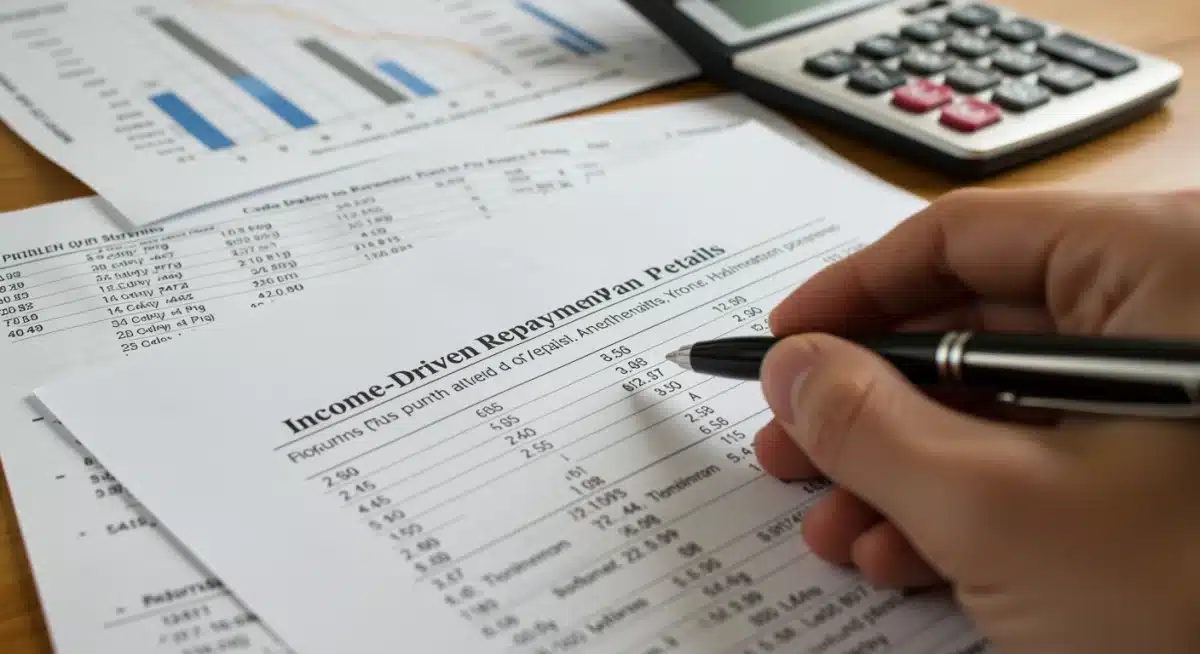
The Saving on a Valuable Education (SAVE) Plan, introduced prior to 2025, is expected to continue playing a pivotal role, with further enhancements that align with the 10-year forgiveness initiative. SAVE, and other updated IDR plans, calculate monthly payments based on a lower percentage of discretionary income and offer significant interest subsidies. These features are critical for borrowers striving for forgiveness.
- Lower Discretionary Income Calculation: Payments are based on a smaller portion of your income, leading to reduced monthly obligations.
- Interest Subsidies: Unpaid interest may not accrue, preventing your loan balance from growing even if your payments are low.
- Shorter Forgiveness Timeline: For specific loan amounts, forgiveness under IDR can now occur as early as 10 years, a significant reduction from the previous 20 or 25 years.
These IDR changes are particularly beneficial for borrowers with smaller loan balances, as the accelerated forgiveness timeline means they can potentially clear their debt much faster than under older IDR plans. The key is to ensure you are enrolled in the most advantageous IDR plan for your specific financial situation and that your income and family size are recertified annually.
The government is also working to simplify the process of identifying and enrolling in the best IDR plan, providing clearer guidance and tools for borrowers. This proactive approach aims to prevent borrowers from falling through the cracks due to complex administrative hurdles.
In summary, the confluence of updated IDR plans, particularly the SAVE Plan, and the new 10-year forgiveness provisions represents a substantial opportunity for borrowers to manage their student debt more effectively and achieve forgiveness sooner. Staying informed and actively managing your enrollment is crucial.
the role of public service loan forgiveness (PSLF) in 2025
Public Service Loan Forgiveness (PSLF) has long been a beacon of hope for individuals dedicated to careers in public service, and its role is expected to be further solidified and potentially streamlined with the student loan forgiveness updates 2025. While the new 10-year repayment plan offers broader forgiveness opportunities, PSLF remains a distinct and vital pathway for those meeting specific employment criteria.
The program’s core principle—forgiving federal student loan debt after 120 qualifying payments while working full-time for an eligible employer—is likely to stay intact, but with potential administrative improvements. These improvements aim to address historical challenges, such as difficulties in tracking qualifying payments and employer eligibility.
streamlining PSLF and overlapping benefits
One of the anticipated developments for PSLF in 2025 is a greater integration with the broader goals of student loan relief, potentially making the process more intuitive for public service workers. This could include better communication between loan servicers and employers, or enhanced online tools for tracking progress towards forgiveness.
- Improved Payment Tracking: Efforts to automatically track qualifying payments could reduce administrative burdens for borrowers.
- Clearer Employer Definitions: More precise guidelines for what constitutes an eligible employer may prevent confusion and disqualification.
- Integration with IDR: PSLF participants already benefit from IDR plans, and the new IDR provisions could further reduce their monthly payments while qualifying for forgiveness.
The new 10-year repayment plan, while distinct from PSLF, shares the goal of providing debt relief. For public service workers, the question becomes which pathway offers the most advantageous route. Often, PSLF remains the faster option if all criteria are met, as it doesn’t depend on the same income-based thresholds for the 10-year forgiveness under IDR for all loan types.
It is crucial for public service employees to ensure their employment is certified annually and that they are enrolled in a qualifying repayment plan, typically an IDR plan. The Department of Education continues to emphasize the importance of these steps to avoid delays or loss of eligibility.
Ultimately, PSLF in 2025 is expected to continue its mission of supporting those who serve our communities, with ongoing efforts to make the program more efficient and accessible. Public service borrowers should remain vigilant about updates and proactively manage their loan status.
consolidation and its impact on 2025 forgiveness
For many borrowers, understanding the role of loan consolidation is paramount when considering the student loan forgiveness updates 2025. Consolidation, specifically federal Direct Loan Consolidation, can be a strategic move to unlock eligibility for certain forgiveness programs and the new 10-year repayment plan, especially for those holding older or less common loan types. It’s not just about simplifying payments; it’s about aligning your loans with the most beneficial federal programs.
Without consolidation, some older loans, such as Federal Family Education Loan (FFEL) Program loans or Perkins Loans, might not qualify directly for the most advantageous IDR plans or the new forgiveness timelines. Consolidation transforms these into Direct Loans, making them eligible.
strategic consolidation for optimal benefits
The decision to consolidate should be made carefully, as it can have both advantages and disadvantages. While it can open doors to forgiveness, it also means a new interest rate (a weighted average of your existing rates) and potentially restarting your payment count for forgiveness programs if not handled correctly under current rules.
- Eligibility for IDR and Forgiveness: Consolidating older federal loans into a Direct Consolidation Loan makes them eligible for IDR plans and, consequently, the new 10-year forgiveness pathway.
- Simplified Payments: Combining multiple loans into one simplifies your monthly payments and interactions with a single loan servicer.
- Access to Newer Benefits: Direct Loans are typically eligible for the newest federal student aid benefits and protections, including the SAVE Plan.
Borrowers considering consolidation should pay close attention to any temporary waivers or provisions that might allow past payments on unconsolidated loans to count towards forgiveness, even after consolidation. These waivers are often time-sensitive and can significantly benefit those with a long repayment history.
It is advisable to consult with your loan servicer or a trusted financial advisor before consolidating, ensuring you fully understand the implications for your specific loan portfolio and forgiveness goals. The goal is to maximize your benefits under the 2025 updates, not inadvertently reset your progress.
In conclusion, federal loan consolidation can be a powerful tool for unlocking the benefits of the 2025 student loan forgiveness updates, particularly for borrowers with older loan types. Strategic planning and careful consideration of the timing and terms are essential to leveraging this option effectively.
what to do now: preparing for 2025 updates
With the forthcoming student loan forgiveness updates 2025, proactive preparation is key to ensuring you can take full advantage of any new eligibility or revised repayment plans. Waiting until the last minute could mean missing out on crucial opportunities or facing unnecessary delays in accessing benefits. This period offers a chance to review your current financial standing and loan details, setting the stage for strategic decisions.
The government is working to disseminate information, but ultimately, the responsibility falls on borrowers to stay informed and take action. This involves understanding your loan types, payment history, and current repayment plan.
actionable steps for borrowers
There are several concrete steps you can take now to prepare for the 2025 updates. These actions will help you gather necessary information, assess your current situation, and position yourself to apply for or transition into new programs seamlessly.
- Review Your Loan Details: Access your account on StudentAid.gov to confirm your loan types, current balances, and payment history.
- Update Contact Information: Ensure your loan servicer and StudentAid.gov have your most current contact details to receive important updates.
- Understand IDR Options: Familiarize yourself with current income-driven repayment plans, especially the SAVE Plan, and consider if you should enroll or switch.
- Explore Consolidation: If you have FFEL or Perkins loans, investigate federal Direct Loan Consolidation to potentially qualify for more programs.
- Track PSLF Progress (if applicable): If you are in public service, regularly certify your employment and track your qualifying payments.
Staying informed means regularly checking official sources, such as the Department of Education’s website and your loan servicer’s communications. Be wary of third-party solicitations that promise immediate forgiveness for a fee, as these are often scams. All legitimate federal student aid programs are free to apply for.
Consider speaking with a non-profit credit counselor or a financial advisor specializing in student loans if your situation is particularly complex. Their expertise can help you navigate the intricacies of federal programs and make informed decisions.
In conclusion, preparing for the 2025 student loan forgiveness updates involves diligent self-assessment, proactive information gathering, and strategic planning. By taking these steps now, you can ensure you are well-positioned to benefit from any new or improved repayment and forgiveness opportunities.
potential challenges and considerations
While the student loan forgiveness updates 2025 offer promising avenues for borrowers, it’s crucial to approach them with an understanding of potential challenges and important considerations. No federal program is entirely without complexities, and navigating these can be just as important as understanding the benefits themselves. Being aware of these hurdles can help borrowers prepare and mitigate risks.
The sheer volume of borrowers, coupled with the administrative load on loan servicers and government agencies, can sometimes lead to delays or miscommunications. Furthermore, policy changes can be subject to political shifts, which might introduce uncertainty.
common pitfalls and how to avoid them
Borrowers often encounter several common issues when pursuing student loan forgiveness. These range from administrative errors to misunderstanding eligibility requirements, all of which can delay or even prevent access to benefits.
- Administrative Delays: High application volumes can lead to slow processing times. Submit applications and required documents well in advance of deadlines.
- Incorrect Information: Ensure all personal, income, and employment information is accurate and up-to-date with your servicer and StudentAid.gov.
- Misunderstanding Loan Types: Not all loans are eligible for all programs. Confirm your loan types and consolidate if necessary.
- Scam Alerts: Be vigilant against fraudulent companies promising guaranteed forgiveness for a fee. Official programs do not charge for applications.
- Policy Changes: Student loan policies can evolve. Stay informed through official government channels rather than relying on rumors.
Another significant consideration is the potential tax implications of forgiven debt. While some types of federal student loan forgiveness are currently tax-free, this is not always the case, and tax laws can change. Borrowers should consult with a tax professional to understand any potential tax liability associated with their forgiven loan amount.
Furthermore, the long-term impact on your credit score, while generally positive after debt is discharged, can be affected by the process if not managed carefully. Maintaining consistent payments (even if minimal under an IDR plan) throughout the application process is vital.
In conclusion, navigating the 2025 student loan forgiveness updates requires not just an understanding of the benefits but also a keen awareness of potential challenges. Proactive management, due diligence, and seeking professional advice can help borrowers overcome these hurdles and successfully achieve their forgiveness goals.
| Key Update | Brief Description |
|---|---|
| 10-Year Repayment Plan | New pathway to forgiveness, potentially faster for certain loan types and borrowers under IDR. |
| IDR Enhancements | Improved income-driven repayment plans (e.g., SAVE) offer lower payments and interest subsidies. |
| PSLF Streamlining | Ongoing efforts to simplify and improve the Public Service Loan Forgiveness program. |
| Loan Consolidation | Key for making older federal loans eligible for new forgiveness and IDR plans. |
frequently asked questions about 2025 student loan forgiveness
The new 10-year repayment plan is an initiative aiming to provide a faster path to student loan forgiveness for certain federal loan borrowers, often those with lower original loan balances or enrolled in specific income-driven repayment (IDR) plans. It’s designed to make debt relief more accessible and reduce the overall repayment period required before forgiveness.
Eligibility varies based on loan type (primarily federal Direct Loans), income, family size, and repayment history. Public service workers may qualify through PSLF, while other borrowers might qualify via enhanced IDR plans. It’s essential to check official government resources like StudentAid.gov for specific criteria that apply to your situation.
IDR plans, such as the SAVE Plan, are crucial for the new forgiveness initiatives. They determine your monthly payments based on your income and family size. The new 10-year forgiveness often works in conjunction with these plans, allowing borrowers to achieve forgiveness sooner if their payments meet specific thresholds or after a certain number of payments.
Consolidating older federal loans (like FFEL or Perkins Loans) into a Direct Consolidation Loan can make them eligible for the new 10-year forgiveness plan and enhanced IDR benefits. However, consolidation can affect your interest rate and payment counts. It’s advisable to carefully evaluate your options and consult with your loan servicer before proceeding.
Start by reviewing your loan details on StudentAid.gov, ensuring your contact information is current. Research current IDR options, especially the SAVE Plan, and consider if consolidation is right for you. Stay informed through official Department of Education communications and be wary of scams. Proactive preparation is key to maximizing your benefits.
conclusion
The student loan forgiveness updates 2025, particularly the new 10-year repayment plan, represent a significant evolution in federal student aid. These changes aim to provide more accessible and accelerated pathways to debt relief for millions of borrowers. Understanding the nuanced eligibility criteria, leveraging enhanced income-driven repayment plans, and strategically considering loan consolidation are crucial steps. While challenges exist, informed and proactive engagement with these programs can lead to substantial financial benefits. Borrowers are encouraged to remain vigilant, consult official resources, and seek personalized advice to navigate this evolving landscape effectively and secure their financial future.