2026 Tax Code Changes: Impact on Investments & Savings

The 2026 tax code changes introduce new IRS regulations poised to significantly impact personal investments and savings, potentially altering financial outcomes by an average of 15% for many U.S. taxpayers.
As the calendar turns towards 2026, a wave of significant legislative adjustments is on the horizon, promising to reshape the financial landscape for millions of Americans. The upcoming 2026 tax code changes, driven by new IRS regulations, are not merely minor tweaks; they represent a fundamental shift that could impact your investments and savings by an average of 15%.
Understanding the Genesis of 2026 Tax Reforms
The impending 2026 tax reforms are not emerging from a vacuum but are the culmination of evolving economic priorities and legislative mandates. These changes are largely influenced by sunsetting provisions from previous tax acts and a renewed focus on fiscal sustainability, aiming to rebalance the federal budget and address long-term financial challenges. Understanding their origins is crucial for appreciating their potential impact.
Initial discussions surrounding these reforms began several years ago, with policymakers debating various approaches to tax revenue generation and wealth distribution. The current proposals reflect a consensus on certain key areas, particularly those concerning capital gains, retirement accounts, and estate planning.
Legislative Drivers Behind the Changes
Several legislative drivers are pushing these tax code adjustments forward. The expiration of certain provisions from the Tax Cuts and Jobs Act of 2017 (TCJA) is a primary catalyst, necessitating new rules for individual income taxes, deductions, and credits. Additionally, there’s a growing emphasis on ensuring tax fairness and potentially increasing revenue streams to fund public services and infrastructure projects.
- Sunset Provisions: Expiration of key TCJA elements affecting individual tax rates.
- Fiscal Responsibility: Efforts to reduce national debt and stabilize the economy.
- Revenue Generation: Aiming to fund new government initiatives and programs.
- Economic Equity: Rebalancing the tax burden across different income brackets.
These drivers collectively create a complex tapestry of legislative intent, making it imperative for taxpayers to stay informed and anticipate the adjustments. The goal is to create a more resilient and equitable tax system, though the immediate effects on individual financial planning can be substantial.
Ultimately, the genesis of these 2026 tax code changes lies in a combination of expiring laws and a proactive legislative agenda designed to adapt the nation’s financial framework to contemporary economic realities. This foundational understanding helps in navigating the specifics of the new regulations.
Direct Impact on Individual Income Taxes
The 2026 tax code changes are poised to bring significant alterations to individual income tax rates and brackets. Many of the adjustments will directly affect how much of your earned income you retain, influencing everything from your monthly budget to your ability to save for future goals. These shifts are designed to address various economic objectives, but their practical implications for everyday Americans are paramount.
Understanding these changes now allows for proactive financial planning. The adjustments could mean a higher or lower tax liability depending on your income level, filing status, and available deductions. It’s not just about the top tax rate; the entire structure of the tax brackets is under review.
Revised Tax Brackets and Rates
One of the most anticipated aspects of the 2026 reforms is the potential revision of federal income tax brackets and rates. While specific percentages are still being finalized, early indications suggest a recalibration that could see some brackets shift, potentially placing more individuals into higher tax tiers or altering their marginal tax rates. This could directly impact your take-home pay.
- Bracket Adjustments: New income thresholds for each tax bracket.
- Rate Changes: Potential increases or decreases in marginal tax rates.
- Standard Deduction: Possible modifications to the standard deduction amounts.
- Personal Exemptions: Reconsideration of personal exemptions, which were eliminated under TCJA.
These changes are not uniform and will affect different income groups disparately. High-income earners might face higher marginal rates, while middle-income families could see adjustments in their deductions or credits. The goal is often to simplify the tax code while ensuring a certain level of progressivity.
The direct impact on individual income taxes extends beyond just the rates; it also encompasses how various forms of income, such as wages, salaries, and even some passive income, are treated. Staying abreast of these changes is essential for optimizing your tax strategy and ensuring compliance.
Changes Affecting Investment Portfolios and Capital Gains
For investors, the 2026 tax code changes introduce particularly critical considerations regarding capital gains and investment income. These new IRS regulations could substantially alter the after-tax returns on your stock market investments, real estate holdings, and other capital assets. A thorough review of your portfolio strategy will be essential to mitigate adverse effects and capitalize on any new opportunities.
The proposals aim to adjust how long-term and short-term capital gains are taxed, potentially closing loopholes and ensuring a more consistent application of tax law across different asset classes. This could mean a significant difference in your net profits from selling assets.
Capital Gains Tax Rate Adjustments
One of the most significant changes expected is to the capital gains tax rates. Currently, long-term capital gains are taxed at preferential rates compared to ordinary income. The 2026 reforms might narrow this gap or introduce new thresholds for these rates, especially for high-net-worth individuals. Short-term capital gains, already taxed at ordinary income rates, may also see adjustments in their applicable brackets.
- Long-Term Capital Gains: Potential rate increases or new income thresholds.
- Short-Term Capital Gains: Impacted by changes to ordinary income tax brackets.
- Qualified Dividends: Possible reclassification or altered tax treatment.
- Net Investment Income Tax (NIIT): Expansion of its applicability to more types of income.
These adjustments could lead investors to reconsider their holding periods for assets or their overall asset allocation strategies. For instance, if long-term capital gains rates increase significantly, the incentive to hold assets for over a year might diminish for some, or conversely, it might encourage even longer-term holding to defer gains.
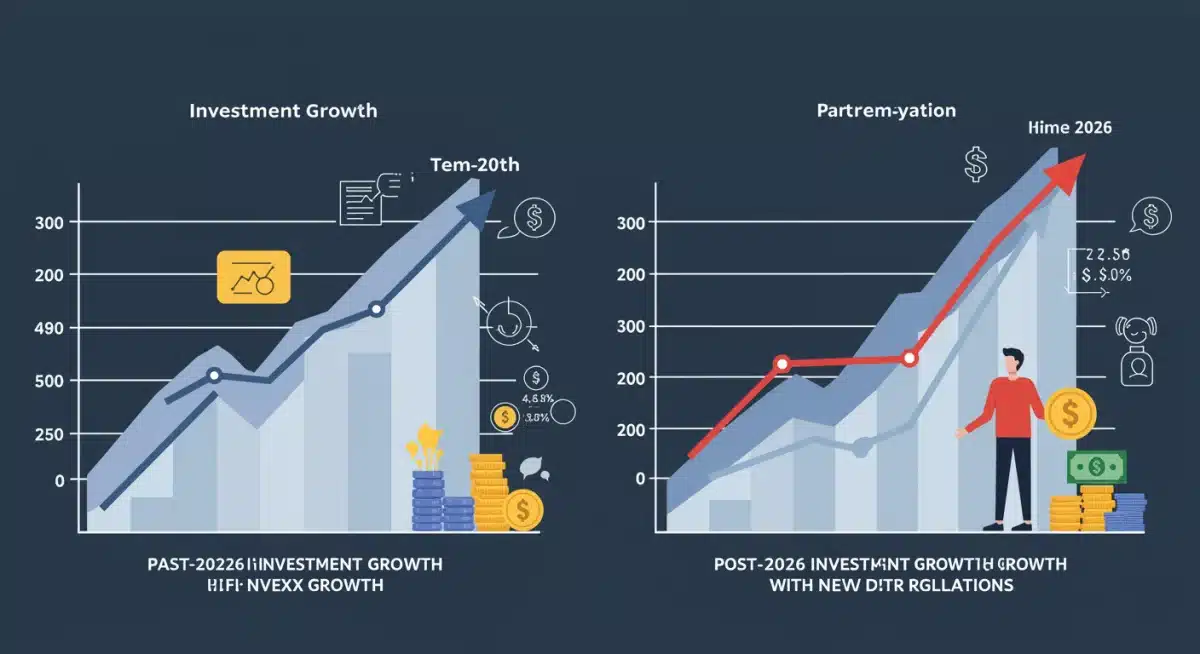
Furthermore, the treatment of carried interest and certain real estate investments might also be under scrutiny, potentially leading to higher tax liabilities for those involved in these sectors. The goal is often to broaden the tax base and ensure that all forms of investment income contribute equitably to federal revenues. Therefore, understanding these nuances is key to protecting your investment returns.
Revisions to Retirement and Savings Vehicles
The 2026 tax code changes are not limited to income and capital gains; they also extend to how Americans save for retirement and other long-term goals. New IRS regulations could introduce significant modifications to 401(k)s, IRAs, and other tax-advantaged savings accounts. These revisions could influence contribution limits, withdrawal rules, and the overall tax benefits associated with these crucial financial tools, potentially impacting your future financial security.
Individuals relying on these vehicles for retirement planning will need to reassess their strategies to ensure they continue to maximize their benefits under the new regime. The aim is often to encourage broad-based savings while also addressing concerns about wealth concentration.
Adjustments to 401(k)s and IRAs
Among the most prominent changes are those likely to affect defined contribution plans like 401(k)s and Individual Retirement Accounts (IRAs). Potential modifications include altered contribution limits, which could either increase or decrease the amount individuals can save on a pre-tax basis. There might also be changes to catch-up contributions for older workers or new rules regarding required minimum distributions (RMDs).
- Contribution Limits: Potential changes to annual maximum contributions for 401(k)s and IRAs.
- Roth Conversions: New regulations or restrictions on Roth conversions for high-income earners.
- RMD Rules: Adjustments to the age or calculation of Required Minimum Distributions.
- Saver’s Credit: Possible expansion or modification of tax credits for low- and moderate-income savers.
These adjustments could necessitate a strategic re-evaluation of your retirement savings plan. For example, if Roth conversions become less favorable for high earners, alternative strategies for after-tax savings might become more appealing. Conversely, increased contribution limits could offer new opportunities for accelerating retirement savings.
Beyond traditional retirement accounts, other savings vehicles like Health Savings Accounts (HSAs) and 529 college savings plans might also see minor adjustments, though these are typically less drastic than those affecting primary retirement plans. The overarching goal is to create a more dynamic and responsive tax system for long-term savings, reflecting evolving economic demographics and national priorities.
Business Tax Implications and Indirect Effects on Individuals
While much of the focus is on direct individual tax changes, the 2026 tax code changes will also bring significant revisions to business taxation. These changes, though seemingly distant from personal finance, can have profound indirect effects on individuals through their employment, investments in businesses, and the overall economy. Understanding these ripple effects is crucial for a complete picture of the new tax landscape.
New IRS regulations for corporations and small businesses can influence job creation, wage growth, and the pricing of goods and services. Therefore, even if you are not a business owner, these adjustments can still impact your financial well-being.
Corporate Tax Rate and Deductions
One of the most debated areas of business tax reform is the corporate tax rate. While the TCJA significantly reduced the corporate rate, there’s ongoing discussion about potential adjustments to this rate, either upwards or downwards, depending on prevailing economic philosophies. Changes to corporate deductions, such as those for research and development or interest expenses, are also on the table.
- Corporate Tax Rate: Potential adjustments from current levels.
- Depreciation Rules: Modifications to how businesses can deduct asset depreciation.
- International Taxation: New rules affecting multinational corporations and offshore profits.
- Small Business Credits: Introduction of new or expanded credits for small enterprises.
These business-level changes can indirectly affect individuals in several ways. For instance, if corporate tax rates increase, companies might have less capital for expansion, potentially impacting job growth or wage increases. Conversely, tax incentives for certain industries could stimulate growth and create new employment opportunities.
Moreover, individuals who own shares in corporations will see their investment returns influenced by these business tax changes. Higher corporate taxes could reduce corporate profits and, consequently, dividend payouts or stock valuations. Conversely, favorable tax treatment for businesses could boost investor confidence and market performance. Therefore, monitoring business tax reforms is an integral part of personal financial planning.
Strategic Planning for the New Tax Landscape
Navigating the 2026 tax code changes effectively requires proactive and informed strategic planning. The new IRS regulations necessitate a comprehensive review of your financial situation, from investment portfolios to retirement savings. Generic advice will likely fall short, emphasizing the need for personalized strategies tailored to your unique circumstances and financial goals.
Ignoring these impending changes could result in missed opportunities or unexpected tax liabilities. Therefore, developing a robust plan now is not just advisable, but essential to safeguard and potentially enhance your financial standing.
Key Steps for Proactive Financial Management
The first step in strategic planning is to gain a clear understanding of how the 2026 tax code changes specifically apply to your income, investments, and savings. This involves assessing your current financial structure against the backdrop of the new rules. Consulting with a qualified financial advisor or tax professional is highly recommended to receive tailored guidance.
- Portfolio Review: Evaluate your investment holdings for potential capital gains tax impacts.
- Retirement Contribution Strategy: Adjust 401(k) and IRA contributions based on new limits and rules.
- Estate Planning Update: Revisit wills, trusts, and gift strategies in light of potential estate tax changes.
- Income Tax Projections: Forecast your tax liability under the new individual income tax brackets.
- Deduction Optimization: Identify new or modified deductions and credits you may qualify for.
Beyond these immediate steps, it’s crucial to consider long-term implications. For example, if tax rates are expected to rise in the future, accelerating certain income or deferring deductions might be a smart move. Conversely, if rates are projected to fall, deferring income into later years could be beneficial. These are complex decisions that require careful analysis.
Ultimately, strategic planning for the new tax landscape involves a continuous process of monitoring legislative developments, adapting your financial strategies, and seeking expert advice. By taking these proactive steps, you can transform potential challenges into opportunities for greater financial resilience and growth. The goal is to remain agile and informed in an ever-evolving tax environment.
| Key Impact Area | Brief Description of Change |
|---|---|
| Individual Income Taxes | Revisions to tax brackets and rates, potentially impacting take-home pay. |
| Capital Gains | Adjustments to long-term and short-term capital gains tax rates. |
| Retirement Savings | Changes to 401(k) and IRA contribution limits and withdrawal rules. |
| Business Taxes | Indirect effects on individuals via corporate rates and economic shifts. |
Frequently Asked Questions About 2026 Tax Changes
The main drivers include the sunsetting of provisions from the Tax Cuts and Jobs Act of 2017 (TCJA), alongside ongoing efforts to achieve fiscal responsibility, generate federal revenue, and promote economic equity across different income levels in the United States.
Individual income tax will be affected by revised tax brackets and rates. Depending on your income and filing status, you might experience higher or lower marginal tax rates, and adjustments to standard deductions or personal exemptions could also impact your final tax liability.
The changes are expected to adjust capital gains tax rates, particularly for long-term gains. This could narrow the preferential treatment for certain assets or introduce new income thresholds, directly influencing the after-tax returns on your investment portfolio and real estate holdings.
Yes, 401(k)s and IRAs may see modifications to contribution limits, catch-up contribution rules, and Required Minimum Distributions (RMDs). These changes could alter your retirement savings strategy and the overall tax benefits associated with these accounts, requiring careful planning.
To prepare, review your investment portfolio, re-evaluate retirement contribution strategies, update estate plans, project your income tax liability, and optimize deductions. Consulting a financial advisor or tax professional for personalized guidance is highly recommended to navigate these complex changes effectively.
Conclusion
The 2026 tax code changes represent a pivotal moment for personal finance in the United States, with new IRS regulations poised to significantly impact investments and savings. From individual income tax rates and capital gains adjustments to revisions in retirement accounts, the forthcoming shifts demand careful attention and proactive planning. Understanding these changes is not just about compliance; it’s about optimizing your financial future, mitigating potential risks, and seizing new opportunities. Engaging with financial professionals and staying informed will be key to navigating this evolving landscape successfully, ensuring your financial strategies remain robust and aligned with your long-term goals.