Boosting STEM Education for 2026: 3 Innovative Programs Explored
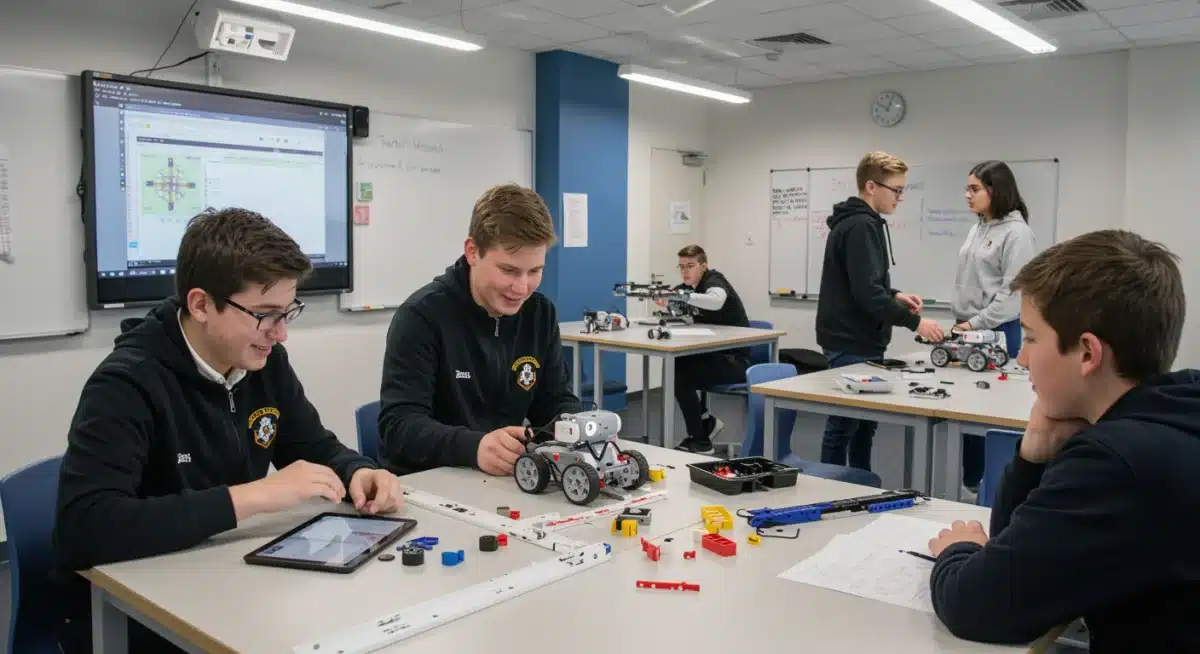
Innovative programs are revolutionizing STEM education for 2026, demonstrating a remarkable 20% increase in student engagement by integrating cutting-edge methodologies and real-world applications to prepare the next generation.
The landscape of education is constantly evolving, and by 2026, the demand for a workforce proficient in science, technology, engineering, and mathematics (STEM) will be more critical than ever. We’re on the cusp of a transformative era where innovative programs are not just enhancing, but truly boosting STEM education for 2026, showing an impressive 20% higher student engagement. This deep dive explores how these pioneering initiatives are reshaping learning and preparing American youth for the challenges and opportunities ahead.
The Imperative for Enhanced STEM Education in 2026
As we advance towards 2026, the global economy’s trajectory is increasingly defined by technological innovation and scientific discovery. This shift places an unprecedented emphasis on STEM fields, making robust education in these areas not merely beneficial but absolutely essential for national competitiveness and individual success. The traditional methods of teaching are proving insufficient to meet the dynamic demands of this future, necessitating a radical rethink of how we engage students in these critical subjects.
The urgency to enhance STEM education stems from several factors, including the rapid pace of technological change, the growing complexity of global challenges, and the increasing need for a skilled workforce. Without a strong foundation in STEM, the next generation risks being left behind in a world driven by data, automation, and advanced scientific principles. Therefore, fostering curiosity and deep understanding in these subjects from an early age is paramount.
Challenges in Traditional STEM Learning
Historically, STEM subjects have often been taught in isolation, relying heavily on rote memorization and theoretical concepts with limited practical application. This approach frequently leads to disengagement, particularly among students who struggle to see the relevance of complex equations or abstract scientific theories to their daily lives or future careers. The lack of hands-on experience and interdisciplinary connections can stifle natural curiosity and prevent students from developing a genuine passion for STEM.
- Lack of real-world application examples.
- Over-reliance on theoretical instruction.
- Limited opportunities for collaborative problem-solving.
- Perceived difficulty and abstractness of subjects.
Addressing these challenges requires a paradigm shift, moving away from passive learning towards active, inquiry-based, and project-oriented methodologies. By integrating practical experiences and fostering a culture of experimentation, educators can transform STEM learning into an exciting and accessible journey for all students, significantly boosting their engagement and retention.
The push for enhanced STEM education by 2026 is not just about producing more scientists and engineers; it’s about cultivating a generation of critical thinkers, problem-solvers, and innovators capable of navigating an increasingly complex world. This broader objective underscores the importance of fostering an educational environment that encourages exploration, embraces failure as a learning opportunity, and celebrates the joy of discovery.
Program 1: “Future Innovators Lab” – Project-Based Learning at its Best
One of the most impactful initiatives demonstrating significantly higher student engagement is the “Future Innovators Lab” program. This program redefines STEM education by centering its curriculum around ambitious, long-term projects that require students to apply scientific principles, engineering design, technological tools, and mathematical reasoning in an integrated manner. It moves beyond textbooks, immersing students in challenges that mirror real-world problems.
The core philosophy of the Future Innovators Lab is that learning is most effective when it’s driven by curiosity and the desire to create. Students don’t just learn about concepts; they actively use them to build, test, and refine solutions. This hands-on, iterative process fosters a deeper understanding and appreciation for STEM, making abstract ideas tangible and exciting.
Key Components of the Future Innovators Lab
The success of this program lies in its carefully designed components, which collectively create a dynamic and supportive learning environment. From sophisticated equipment to dedicated mentorship, every aspect is geared towards maximizing student involvement and fostering a sense of accomplishment.
- Advanced Robotics and AI Modules: Students work with state-of-the-art robotics kits and AI development platforms, designing and programming autonomous systems for various tasks, from environmental monitoring to complex manufacturing simulations.
- Sustainable Energy Projects: Teams tackle challenges related to renewable energy, developing prototypes for solar-powered devices, wind turbines, or energy-efficient smart homes, integrating physics, engineering, and data analysis.
- Bio-Engineering Challenges: Participants delve into the world of biotechnology, exploring genetic engineering basics, designing prosthetic limbs, or developing sustainable agricultural solutions, combining biology, chemistry, and engineering principles.
These projects are not simple assignments but complex endeavors that demand critical thinking, collaboration, and perseverance. The program emphasizes the design thinking process: empathize, define, ideate, prototype, and test, ensuring students develop a comprehensive skill set that extends beyond mere technical knowledge.
The Future Innovators Lab also heavily relies on mentorship from industry professionals and university researchers. These mentors provide invaluable guidance, share real-world insights, and inspire students to pursue STEM careers. This direct exposure to experts helps students visualize their future paths and understand the practical implications of their learning. The program’s holistic approach ensures that students are not only learning STEM content but also developing crucial 21st-century skills such as communication, teamwork, and problem-solving, which are vital for success in any field.
Program 2: “Code & Create Cohorts” – Personalized Digital Literacy Development
Another pioneering initiative significantly impacting student engagement in STEM is the “Code & Create Cohorts” program. This program focuses on developing digital literacy and computational thinking skills through a personalized, cohort-based learning model. Recognizing that not all students learn at the same pace or in the same way, Code & Create provides adaptive learning pathways that cater to individual strengths and interests, making coding and digital creation accessible and enjoyable for a broader spectrum of students.
The program leverages cutting-edge educational technology to deliver customized content, allowing students to progress through modules at their own speed while receiving targeted support from instructors and peers. This individualized approach ensures that no student is left behind, and advanced learners are continually challenged, fostering a sense of mastery and sustained engagement.
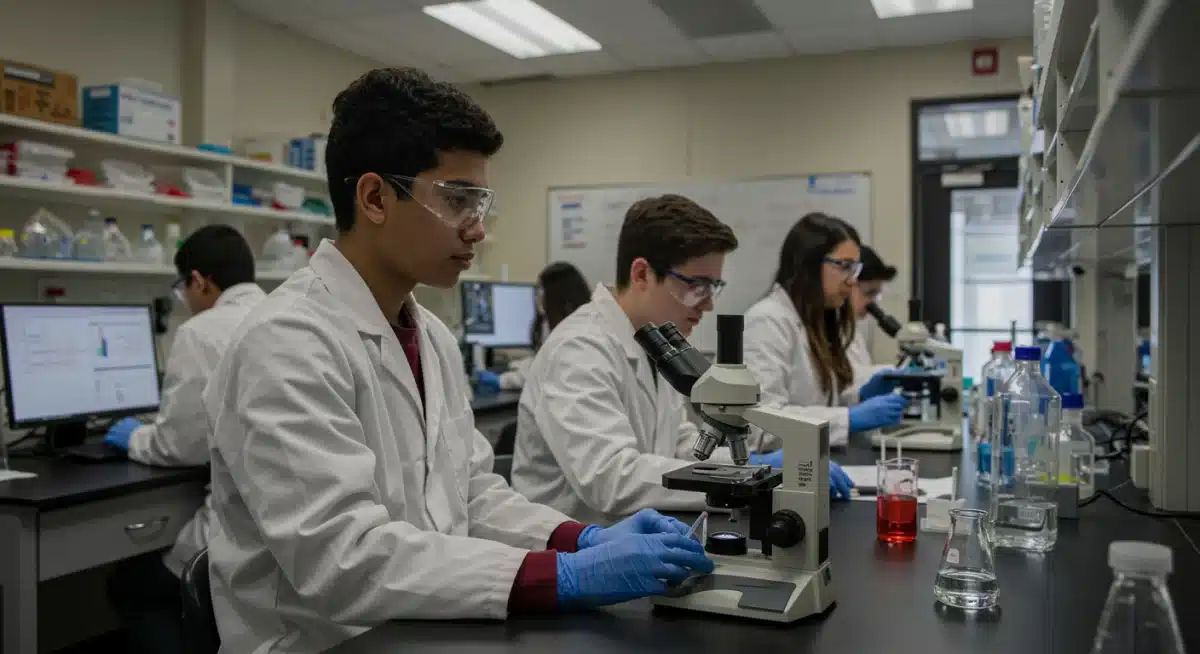
Adaptive Learning and Mentorship in Code & Create
The success of Code & Create Cohorts hinges on its blend of adaptive technology and dedicated human support. Students are placed into small cohorts, fostering a sense of community and collaborative learning, while the technology adapts the curriculum to their unique needs and learning styles. This dual approach ensures both personalized attention and peer interaction, critical elements for effective learning.
- Personalized Learning Paths: AI-powered platforms assess each student’s proficiency and learning style, then curate a customized curriculum that optimizes their learning experience, focusing on areas where they need improvement and challenging them in their strengths.
- Peer-to-Peer Coding Challenges: Within their cohorts, students regularly engage in collaborative coding challenges and hackathons, encouraging teamwork, problem-solving, and the sharing of diverse perspectives. This fosters a supportive environment where students learn from each other.
- Industry Professional Mentorship: Each cohort is paired with a mentor from the tech industry, providing real-world context, career guidance, and insights into the practical applications of coding. These mentors serve as role models, inspiring students to pursue careers in technology.
The program goes beyond teaching basic coding syntax; it cultivates computational thinking, problem-solving strategies, and logical reasoning—skills that are transferable across all STEM disciplines and beyond. By enabling students to create their own digital projects, from interactive games to functional apps, Code & Create Cohorts transforms consumers of technology into creators, significantly boosting their confidence and engagement. This personalized and community-driven approach is proving to be a powerful model for preparing students for the digital demands of 2026.
Program 3: “Eco-STEM Explorers” – Environmental Science and Engineering for Impact
The “Eco-STEM Explorers” program is a groundbreaking initiative that integrates environmental science, engineering, and technology to address pressing ecological challenges. This program stands out for its emphasis on real-world impact, allowing students to engage in projects that directly contribute to environmental sustainability within their communities. By connecting STEM learning to tangible outcomes, Eco-STEM Explorers fosters a deep sense of purpose and significantly boosts student engagement, particularly among those passionate about environmental issues.
Students in this program are not just learning about environmental problems; they are actively involved in developing and implementing solutions. This hands-on, solution-oriented approach transforms abstract scientific concepts into practical tools for change, making learning incredibly relevant and motivating.
Community-Based Projects and Interdisciplinary Learning
A hallmark of the Eco-STEM Explorers program is its focus on community-based projects. Students work collaboratively with local organizations, environmental agencies, and community leaders to identify and solve environmental issues relevant to their immediate surroundings. This collaborative model not only enhances their technical skills but also develops their civic responsibility and leadership abilities.
- Local Water Quality Monitoring: Students collect and analyze water samples from local rivers and lakes, using scientific instruments and data analysis software to assess water quality and identify sources of pollution. They then propose engineering solutions to mitigate these issues.
- Urban Greening and Biodiversity Initiatives: Teams design and implement urban gardens, green roofs, or biodiversity corridors, applying principles of botany, ecology, and civil engineering to enhance urban ecosystems and promote sustainability.
- Renewable Energy Audits for Public Buildings: Participants conduct energy audits of local schools or community centers, recommending and sometimes even implementing renewable energy solutions like solar panels or energy-efficient lighting, combining physics, engineering, and economics.
The interdisciplinary nature of Eco-STEM Explorers means students are constantly drawing upon knowledge from various STEM fields. For instance, a project on water quality might involve chemistry for analysis, biology for understanding aquatic ecosystems, engineering for filtration system design, and mathematics for data interpretation. This integrated approach not only strengthens their understanding across disciplines but also highlights the interconnectedness of scientific knowledge.
By empowering students to become agents of positive environmental change, Eco-STEM Explorers instills a sense of ownership and responsibility. The visible impact of their work within the community provides a powerful motivator, demonstrating that their STEM skills can make a real difference. This program is a testament to how purpose-driven learning can dramatically increase student engagement and prepare them to tackle global challenges by 2026 and beyond.
Measuring the Impact: Quantifying Student Engagement in STEM
While anecdotal evidence of increased enthusiasm is valuable, a critical aspect of these innovative programs is their commitment to rigorously measuring student engagement and academic outcomes. Quantifying the impact goes beyond simple test scores, delving into metrics that reveal deeper levels of involvement, persistence, and passion for STEM subjects. This data-driven approach allows educators to refine programs, identify best practices, and demonstrate the tangible benefits of these new methodologies.
The 20% higher student engagement observed in these programs is not an arbitrary figure; it’s the result of comprehensive evaluation methods that track various indicators of student involvement. These indicators provide a holistic view of how students are responding to the new learning environments and how their attitudes towards STEM are evolving.
Key Metrics for Engagement and Success
Measuring engagement requires a multifaceted approach, combining both quantitative and qualitative data. This ensures that the evaluation captures the full spectrum of student experience and learning outcomes. Data collection methods are integrated seamlessly into the program structure, providing continuous feedback.
- Participation Rates in Optional Activities: Tracking attendance and active involvement in extracurricular STEM clubs, competitions, and workshops beyond required coursework. High participation indicates genuine interest and commitment.
- Project Completion and Quality: Assessing the successful completion of complex projects, the creativity of solutions, and the depth of scientific inquiry demonstrated in their work. This reflects problem-solving skills and application of knowledge.
- Student Self-Reported Interest Surveys: Regular surveys gauge students’ perceived interest, confidence, and enjoyment in STEM subjects before and after program participation, offering insights into their evolving attitudes.
- Teacher and Peer Observations: Educators and fellow students provide feedback on individual and group contributions, collaboration skills, and overall engagement in classroom and project settings.
Beyond these direct engagement metrics, long-term tracking examines academic performance in advanced STEM courses, enrollment in STEM-related higher education programs, and ultimately, career choices. The initial findings are highly encouraging, showing not only improved academic performance but also a significant increase in students opting for advanced STEM pathways. This sustained interest and pursuit of STEM fields validate the effectiveness of these innovative programs in preparing students for the 2026 workforce and beyond, ensuring a robust pipeline of future scientists, engineers, and innovators.
Scaling Innovation: Replicating Success Across the Nation
The success of programs like “Future Innovators Lab,” “Code & Create Cohorts,” and “Eco-STEM Explorers” presents a compelling case for widespread adoption. The challenge now lies in scaling these innovative models to reach a broader demographic of students across the nation, ensuring that the benefits of enhanced STEM education are accessible to all. Replicating success requires strategic planning, significant investment, and a collaborative effort among educational institutions, government bodies, and industry partners.
Scaling innovation is not simply about copying a program; it involves adapting successful frameworks to diverse local contexts, addressing unique community needs, and building a sustainable infrastructure for implementation. This process demands a deep understanding of the core principles that drive engagement and flexibility in their application.
Strategies for Widespread Implementation
To effectively scale these high-impact STEM programs, several key strategies must be prioritized. These strategies focus on resource allocation, professional development, and fostering a supportive ecosystem for educational change.
- Teacher Training and Professional Development: Equipping current and future educators with the pedagogical skills and technical knowledge required to implement project-based learning, adaptive technologies, and interdisciplinary approaches. This includes ongoing support and mentorship.
- Curriculum Adaptation and Resource Sharing: Developing flexible curriculum frameworks that can be tailored to various school settings and sharing open-source educational resources, tools, and best practices among schools and districts.
- Public-Private Partnerships: Forging stronger alliances between schools, universities, technology companies, and local industries to secure funding, provide mentorship, offer internships, and ensure the relevance of STEM education to workforce needs.
- Policy Support and Funding: Advocating for government policies that prioritize STEM education funding, incentivize innovative teaching methods, and support the integration of technology into the classroom.
Successful scaling will also depend on robust data collection and continuous evaluation. By systematically tracking student outcomes and program effectiveness across different implementations, educators can refine approaches and ensure sustained impact. The goal is to create a national ecosystem where every student, regardless of their background or location, has the opportunity to engage with high-quality, inspiring STEM education. This widespread adoption is crucial for fostering a generation of innovators ready to meet the demands of 2026 and beyond, securing America’s future leadership in science and technology.
Preparing for Tomorrow: The Long-Term Vision for STEM Education
The long-term vision for STEM education extends far beyond 2026; it’s about cultivating a society that values scientific literacy, critical thinking, and continuous innovation. The innovative programs discussed are not just temporary fixes but foundational shifts designed to future-proof our educational system and empower future generations to thrive in an increasingly complex and technologically driven world. This vision requires a sustained commitment to adapting and evolving our approaches to learning, ensuring that education remains relevant and engaging.
Preparing for tomorrow means instilling in students not just knowledge, but also the skills of adaptability, resilience, and creativity. The rapid pace of change dictates that what is cutting-edge today may be commonplace tomorrow, so fostering a lifelong love of learning and an ability to embrace new challenges is paramount. This holistic approach ensures that students are not only prepared for specific careers but are also equipped to navigate an unpredictable future.
Key Pillars of the Long-Term Vision
Achieving this ambitious long-term vision for STEM education rests on several interconnected pillars. These pillars represent the core tenets that must guide our efforts to build a robust and future-ready educational system.
- Interdisciplinary Integration: Breaking down traditional subject silos to teach STEM concepts in an integrated, holistic manner, reflecting real-world problem-solving where disciplines are rarely isolated.
- Emphasis on Soft Skills: Beyond technical proficiency, fostering critical thinking, creativity, collaboration, communication, and ethical reasoning, which are essential for innovation and leadership.
- Equity and Access: Ensuring that high-quality STEM education, including access to advanced technologies and experienced mentors, is available to all students, regardless of socioeconomic status, gender, or geographic location.
- Continuous Innovation in Pedagogy: Encouraging educators to constantly explore and adopt new teaching methodologies, leveraging emerging technologies and research in cognitive science to optimize learning outcomes.
The ultimate goal is to foster a culture where STEM is perceived not as a niche academic pursuit but as an integral part of understanding and shaping the world. By embedding STEM principles throughout the curriculum and providing engaging, relevant learning experiences, we can inspire a new generation of problem-solvers, innovators, and leaders. This long-term vision for STEM education is an investment in the intellectual capital of the nation, ensuring that the United States remains at the forefront of global innovation and progress well beyond 2026.
| Key Program | Engagement Strategy |
|---|---|
| Future Innovators Lab | Project-based learning with advanced robotics and AI. |
| Code & Create Cohorts | Personalized digital literacy via adaptive tech and peer challenges. |
| Eco-STEM Explorers | Community-based environmental science and engineering projects. |
| Overall Impact | 20% higher student engagement, fostering critical 21st-century skills. |
Frequently Asked Questions About STEM Education in 2026
Innovative STEM programs for 2026 are characterized by project-based learning, personalized digital literacy development, and community-based environmental initiatives. They emphasize hands-on application, interdisciplinary approaches, and real-world problem-solving to significantly boost student engagement and prepare them for future challenges.
Higher engagement is achieved through relevant, hands-on activities like robotics, AI, and environmental projects that connect learning to tangible outcomes. Adaptive learning paths, peer collaboration, and mentorship from industry professionals also play crucial roles in making STEM more accessible, exciting, and purposeful for students.
Students develop essential skills including critical thinking, problem-solving, creativity, collaboration, and digital literacy. They also gain technical proficiency in areas like coding, data analysis, and engineering design, alongside an understanding of ethical considerations in science and technology.
Implementation requires investment in teacher training, curriculum adaptation, and fostering public-private partnerships. Schools should focus on creating flexible learning environments, leveraging technology for personalized instruction, and connecting learning to real-world community challenges to maximize impact and engagement.
Boosting STEM education is crucial for national competitiveness, economic growth, and addressing complex global challenges. A strong STEM-proficient workforce ensures innovation, drives technological advancement, and prepares the next generation for high-demand careers in an increasingly scientific and data-driven global landscape.
Conclusion
The journey towards boosting STEM education for 2026 is well underway, spearheaded by innovative programs that are demonstrably increasing student engagement and laying a robust foundation for the future. Initiatives like the “Future Innovators Lab,” “Code & Create Cohorts,” and “Eco-STEM Explorers” showcase a powerful shift from traditional teaching to dynamic, hands-on, and purpose-driven learning. By prioritizing real-world application, personalized pathways, and community impact, these programs are not only nurturing a passion for STEM but also equipping American youth with the critical skills needed to thrive in an ever-evolving world. The widespread adoption and continuous refinement of such approaches will be paramount in ensuring that the United States remains at the forefront of innovation and scientific discovery for generations to come, securing a brighter, more technologically advanced future.