Universal Pre-K Funding: Congress Debates 2025-2026

The congressional debate surrounding universal pre-kindergarten funding for the 2025-2026 academic year is a critical legislative priority, aiming to determine the scope and mechanisms for expanding access to early childhood education across the United States.
The legislative spotlight shines brightly on Capitol Hill as the debate surrounding universal pre-k funding for the 2025-2026 academic year gains momentum. This crucial discussion aims to shape the future of early childhood education in the United States, impacting millions of families and the foundational learning experiences of young children. As lawmakers deliberate, various proposals, economic considerations, and educational philosophies are being meticulously weighed.
The evolving landscape of early childhood education
Early childhood education (ECE) has long been recognized as a cornerstone for individual development and societal progress. The period from birth to age five is critical for cognitive, social, and emotional growth, setting the stage for future academic success and overall well-being. Advocates for universal pre-kindergarten argue that providing high-quality ECE to all children, regardless of socioeconomic status, can significantly reduce achievement gaps and foster a more equitable society. The current landscape, however, remains fragmented, with access often depending on state-level initiatives, private programs, and family income.
Over the past decade, there has been a growing bipartisan consensus on the importance of early learning, yet the path to universal access remains contentious. Different states have adopted varying models, from fully funded state-wide programs to targeted initiatives for low-income families. This patchwork approach creates disparities, leaving many children without the benefits of structured pre-k experiences. The congressional debate over funding for the 2025-2026 academic year seeks to address these inconsistencies, proposing federal frameworks that could standardize and expand access nationwide.
State-level successes and challenges
- Oklahoma’s pioneering model: A widely cited example of successful universal pre-k, demonstrating positive long-term outcomes for students.
- Florida’s voluntary pre-k: Offers free pre-k to all four-year-olds, highlighting broad access but sometimes facing quality control questions.
- New York City’s expansion: A significant urban initiative that dramatically increased pre-k enrollment, showing the logistical complexities of large-scale implementation.
Despite these successes, challenges persist, including funding sustainability, teacher shortages, and ensuring program quality. The federal role, therefore, becomes pivotal in providing the necessary resources and setting national standards to support these efforts. The ongoing discussions in Congress are not just about allocating funds; they are about establishing a unified vision for early learning in America.
The evolving understanding of brain development in early years further reinforces the urgency of this debate. Neuroscientific research consistently shows that experiences during early childhood profoundly influence brain architecture and function. Investing in quality pre-k is, therefore, an investment in the nation’s future human capital, leading to a more skilled workforce and reduced social costs in the long run. As the 2025-2026 academic year approaches, policymakers are under pressure to craft a legislative solution that balances fiscal responsibility with educational imperatives.
Key legislative proposals and their proponents
Several legislative proposals are currently on the table, each with distinct approaches to achieving universal pre-k. These proposals reflect differing philosophies on federal involvement, funding mechanisms, and program implementation. Understanding these variations is crucial to grasping the complexities of the congressional debate for the 2025-2026 academic year.
One prominent proposal centers on a federal-state partnership model, where the federal government provides significant matching funds to states that commit to offering universal pre-k. This approach aims to incentivize states to expand their programs while allowing for local flexibility in curriculum design and operational management. Proponents argue this model respects state autonomy while ensuring a baseline level of quality and access across the country.
Major proposals under consideration
- The Early Learning for All Act: Advocates for a comprehensive federal grant program, prioritizing high-quality, full-day pre-k for all 3- and 4-year-olds.
- Child Care for Working Families Act: While broader in scope, it includes substantial investments in pre-k and child care, aiming to make these services more affordable and accessible.
- Targeted expansion initiatives: Some proposals focus on expanding existing Head Start programs or increasing funding for specific demographics, rather than a fully universal approach.
Each proposal faces scrutiny regarding its potential cost, administrative burden, and effectiveness. Democratic lawmakers generally favor a more robust federal role, citing equity and national interest in early education. They often emphasize the long-term economic benefits and social returns on investment, arguing that federal funding is essential to overcome existing disparities.
Conversely, many Republican members express concerns about federal overreach, preferring states and local communities to lead ECE initiatives. Their proposals often focus on block grants, tax credits for families, or expanding school choice options that include private pre-k providers. The debate often boils down to the balance between federal guidance and local control, and how best to ensure accountability for public funds while fostering innovation in early learning environments. The outcome for 2025-2026 will likely be a compromise reflecting these diverse viewpoints.
Economic implications and budget considerations
The economic implications of universal pre-k funding are a central point of contention in the congressional debate. While proponents highlight the long-term economic benefits, opponents often focus on the immediate fiscal costs. For the 2025-2026 academic year, Congress must grapple with a national budget already facing numerous demands, making every new spending proposal subject to intense scrutiny.
Advocates for universal pre-k often cite studies demonstrating a significant return on investment. These studies suggest that every dollar invested in high-quality early childhood education can yield between $4 and $9 in long-term benefits. These benefits include higher tax revenues due to increased adult earnings, reduced welfare dependence, lower crime rates, and decreased healthcare costs. By improving educational outcomes and workforce readiness, pre-k can boost economic productivity and reduce intergenerational poverty.
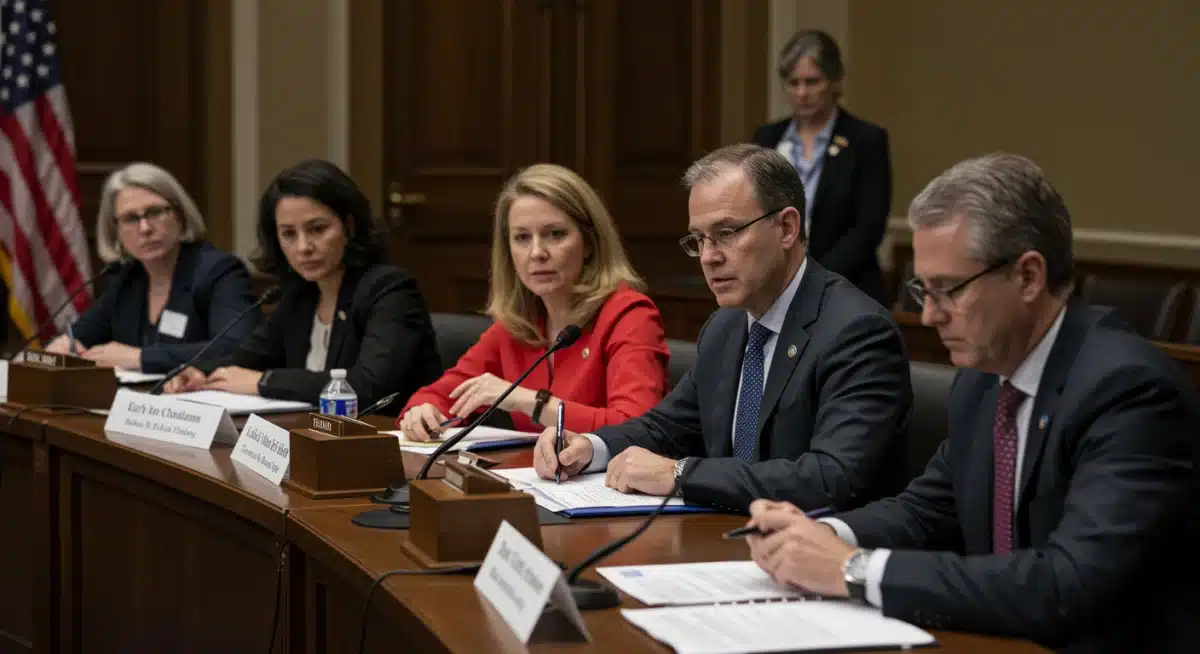
However, the initial investment required for a truly universal program is substantial, potentially running into tens of billions of dollars annually. Critics raise concerns about the source of these funds, the potential for increased national debt, and whether such large-scale federal programs can be efficiently managed. They also question the accuracy of some return-on-investment figures, arguing that the quality of programs can vary widely, affecting actual outcomes.
Funding sources and economic debates
- Proposed tax increases: Some proposals suggest funding through increased corporate or high-income individual taxes.
- Reallocation of existing funds: Others advocate for redirecting funds from less effective federal programs.
- State and local contributions: The federal-state partnership model relies heavily on significant financial commitments from states, which can be challenging for some.
The debate also touches upon the impact on the existing childcare market. Universal pre-k could significantly alter the landscape for private childcare providers, potentially leading to closures or shifts in business models. Policymakers are exploring ways to integrate existing providers into any new federal framework to mitigate negative impacts and leverage existing infrastructure.
Ultimately, the economic argument for universal pre-k funding in the 2025-2026 academic year is a balancing act between initial costs and projected long-term gains. Lawmakers must weigh the immediate budgetary pressures against the potential for a more educated, productive, and equitable society. Finding a sustainable and politically viable funding mechanism will be key to any successful legislative outcome.
The impact on families and educators
The outcome of the congressional debate on universal pre-k funding for the 2025-2026 academic year will have far-reaching consequences for families and educators across the nation. For families, the promise of free or significantly subsidized pre-kindergarten could alleviate immense financial burdens and provide critical support for working parents. Access to quality early education means children are better prepared for kindergarten, fostering a smoother transition into formal schooling.
For many low-income families, universal pre-k represents an opportunity to break cycles of poverty by providing their children with a strong educational foundation that might otherwise be out of reach. It can also enable parents, particularly mothers, to re-enter the workforce or pursue further education, boosting family income and economic stability. The availability of reliable, high-quality pre-k can also reduce stress for parents struggling to find affordable and safe childcare options.
Benefits and challenges for stakeholders
- Increased parental workforce participation: Access to pre-k can free up parents, especially mothers, to work or pursue education.
- Improved child development: Children gain crucial social, emotional, and cognitive skills before kindergarten.
- Teacher recruitment and retention: Universal programs require a substantial increase in qualified early childhood educators, necessitating competitive salaries and professional development.
However, the impact on the education workforce also presents challenges. A rapid expansion of pre-k programs would necessitate a significant increase in the number of qualified early childhood educators. This raises concerns about teacher shortages, the need for competitive salaries to attract and retain talent, and the provision of adequate professional development. Ensuring that new programs maintain high quality standards requires a robust and well-supported teaching force.
Educators and childcare providers are closely watching the debate. While many welcome the potential for expanded resources and professional recognition, there are also anxieties about federal mandates, standardized curricula, and the impact on existing smaller programs. The legislative framework for 2025-2026 must carefully consider how to support and empower educators, rather than simply imposing new requirements. A successful universal pre-k system depends not only on funding but also on a thriving and well-compensated ECE workforce.
Ultimately, the goal is to create a system that benefits both children and the adults who care for and educate them. By ensuring robust funding and thoughtful implementation, universal pre-k can transform lives, offering a brighter future for the youngest generation and strengthening communities nationwide.
Quality standards and curriculum development
A critical component of the debate surrounding universal pre-k funding for the 2025-2026 academic year revolves around establishing and maintaining high-quality standards and effective curriculum development. Simply expanding access without ensuring quality would undermine the very purpose of such an investment. Policymakers are acutely aware that the benefits of early childhood education are directly tied to the quality of the programs offered.
High-quality pre-k programs typically feature small class sizes, low student-teacher ratios, well-trained and adequately compensated teachers, and a research-based curriculum that fosters holistic child development. These programs prioritize active learning, social-emotional skill-building, and age-appropriate academic readiness. The challenge for Congress is to design a federal framework that encourages these quality indicators without imposing a one-size-fits-all model that might stifle local innovation or fail to address diverse community needs.
Key elements of high-quality pre-k
- Credentialed teachers: Requiring bachelor’s degrees and specialized training in early childhood education.
- Developmentally appropriate curriculum: Focusing on play-based learning, social-emotional skills, and individualized instruction.
- Ongoing professional development: Ensuring educators stay current with best practices and research in early learning.
- Family engagement: Actively involving parents and guardians in their child’s educational journey.
The curriculum debate often centers on the balance between academic readiness and a play-based approach. While some advocate for a more structured, academic focus to prepare children for elementary school, others emphasize the importance of play as the primary vehicle for learning in early childhood. Expert consensus generally supports a blend, recognizing that play is fundamental to cognitive, social, and emotional development.
Furthermore, accountability mechanisms are a significant part of the discussion. How will the federal government ensure that states and local providers are adhering to quality standards? This could involve regular program evaluations, data collection on child outcomes, and transparent reporting requirements. The legislative proposals for 2025-2026 must outline clear expectations for quality and provide the necessary resources for states to meet them. Without robust quality assurance, the substantial investment in universal pre-k would yield diminished returns, making this aspect a cornerstone of the entire legislative effort.
Political hurdles and bipartisan efforts
Navigating the political landscape is undoubtedly one of the most significant challenges facing universal pre-k funding in Congress for the 2025-2026 academic year. Despite growing recognition of early childhood education’s importance, partisan divides often complicate the path to comprehensive legislation. The ideological differences concerning federal versus state control, spending priorities, and the role of government in social programs frequently lead to legislative stalemates.
Democratic lawmakers have generally been strong proponents of federal investment in universal pre-k, viewing it as a critical equity issue and an economic stimulus. They often advocate for robust funding and national standards to ensure widespread access and quality. However, securing the necessary votes requires bridging the gap with Republican colleagues who often prioritize fiscal conservatism, local control, and market-based solutions.
Obstacles to legislative consensus
- Federal vs. state control: Disagreement over the extent of federal mandates and oversight in education.
- Funding mechanisms: Debates over tax increases versus reallocation of existing funds.
- Role of private providers: Differing views on how private and faith-based childcare providers should be integrated into a universal system.
Bipartisan efforts, though challenging, are not unprecedented in education policy. Successful initiatives often involve finding common ground on shared goals, such as improving educational outcomes and supporting working families. One potential area for compromise could be a hybrid model that offers federal incentives and guidance while allowing states significant flexibility in implementation. Another avenue could be focusing on proven interventions and demonstrating tangible results, which can appeal to a broader range of political viewpoints.
Lobbying efforts from various advocacy groups, ranging from early childhood education organizations to business leaders, also play a vital role in shaping the debate. These groups provide data, share success stories, and exert pressure on lawmakers to prioritize early learning. As the 2025-2026 academic year draws closer, the ability of congressional leaders to forge bipartisan alliances and compromise on key provisions will determine the fate of universal pre-k funding. The political will to invest in the youngest generation will be a true test of legislative effectiveness.
Future outlook and potential long-term impacts
The future outlook for universal pre-k funding in Congress for the 2025-2026 academic year remains uncertain, yet the potential long-term impacts of such an investment are clear and compelling. Should comprehensive legislation pass, the United States could see a transformative shift in its educational landscape, with profound implications for individuals, communities, and the national economy for decades to come.
One of the most significant long-term impacts would be a substantial reduction in educational achievement gaps. Children who attend high-quality pre-k programs are more likely to perform better in elementary school, graduate from high school, and pursue higher education. This foundational advantage can lead to increased earning potential, greater civic engagement, and improved health outcomes throughout their lives. Essentially, universal pre-k could serve as a powerful engine for social mobility and equity.
Projected long-term benefits
- Enhanced workforce readiness: A more educated population leads to a more skilled and competitive workforce.
- Reduced social costs: Lower rates of crime, welfare dependence, and special education needs.
- Improved public health: Early interventions can lead to healthier lifestyles and reduced healthcare expenditures.
Economically, a universal pre-k system could significantly boost the national GDP. By enabling more parents to participate in the workforce and by creating a more educated workforce overall, the country’s economic output would likely increase. The long-term tax revenues generated from higher-earning individuals would also help offset the initial investment, creating a self-sustaining cycle of economic growth and educational advancement.
Beyond individual and economic benefits, universal pre-k could also strengthen communities. By providing a common, high-quality early learning experience, it can foster greater social cohesion and reduce disparities that often lead to social fragmentation. It underscores a collective commitment to the well-being and potential of every child. The debate for the 2025-2026 academic year is not merely about funding a program; it is about investing in the very fabric of American society, shaping a more prosperous, equitable, and educated future for all.
The legislative decisions made now will resonate through generations, determining whether the nation fully embraces the transformative power of early childhood education. The stakes are high, and the discussions in Congress will ultimately define the trajectory of millions of young lives.
| Key Point | Brief Description |
|---|---|
| Legislative Focus | Congressional debate on universal pre-k funding for the 2025-2026 academic year. |
| Economic Impact | Balancing significant initial investment with long-term societal and economic returns. |
| Quality Standards | Emphasis on high-quality programs, teacher training, and developmentally appropriate curriculum. |
| Political Hurdles | Overcoming partisan divides on federal vs. state control and funding mechanisms. |
Frequently Asked Questions about Pre-K Funding
Universal pre-kindergarten (pre-k) refers to publicly funded early childhood education programs available to all children within a specific age range, typically three or four years old, regardless of family income or background. The goal is to provide equitable access to high-quality early learning experiences.
The debate is timely due to increasing evidence of pre-k’s long-term benefits, expiring federal programs, and the need to establish a comprehensive framework for the upcoming academic year. Lawmakers are assessing various proposals to expand and standardize early learning nationwide.
Proponents argue that investments in pre-k yield significant long-term economic returns, including increased tax revenues, reduced welfare dependence, and lower crime rates. It boosts workforce participation and creates a more educated, productive population.
It would likely increase demand for qualified educators, potentially leading to better salaries and professional development opportunities. However, it also presents challenges in recruiting and retaining enough personnel to meet the expanded needs while ensuring program quality.
Quality standards are crucial; simply expanding access without ensuring high-quality programs would diminish benefits. The debate includes discussions on teacher qualifications, curriculum design, class sizes, and accountability to maximize positive child outcomes.
Conclusion
The congressional debate surrounding universal pre-k funding for the 2025-2026 academic year represents a pivotal moment for early childhood education in the United States. While challenges persist, including budgetary constraints and political divides, the compelling evidence of pre-k’s long-term benefits for children, families, and the economy continues to drive legislative efforts. The outcome of these discussions will not only determine the allocation of resources but also shape the foundational learning experiences of a generation, ultimately impacting the nation’s future prosperity and equity. As lawmakers deliberate, the focus remains on crafting a sustainable, high-quality, and accessible early learning system that serves the best interests of all American children.