Veterans’ Benefits 2025: Disability Rates & Application Guide

Understanding the new disability compensation rates and application process for veterans’ benefits in 2025 is essential for eligible service members to access vital support and financial assistance.
For those who have honorably served our nation, navigating the complexities of veterans’ benefits can often feel like a daunting task. As we approach 2025, it’s crucial to have a clear understanding of the new disability compensation rates and how to apply, ensuring you receive the support you rightfully deserve. This article provides essential insights into veterans benefits 2025, offering a comprehensive guide to help you through the process.
The Evolution of Veterans’ Benefits: A 2025 Perspective
Veterans’ benefits programs are continually evolving, reflecting changes in economic conditions, healthcare needs, and legislative priorities. For 2025, several key adjustments are anticipated that will directly impact disability compensation rates and the overall application landscape. Staying informed about these changes is not just beneficial; it’s a necessity for maximizing your entitlements.
Understanding the historical context of these benefits helps to appreciate their current structure. From post-World War II initiatives to modern-day support for service-connected disabilities, the Department of Veterans Affairs (VA) strives to provide comprehensive care and financial aid. The annual adjustments, often tied to the Cost of Living Adjustment (COLA), aim to ensure that veterans’ purchasing power is maintained against inflation.
Key Legislative Updates Affecting 2025 Rates
Several legislative actions and economic forecasts influence the annual recalculation of disability compensation. While the exact COLA for 2025 will be announced later in the year, it is typically based on the Consumer Price Index for Urban Wage Earners and Clerical Workers (CPI-W). This adjustment ensures that the value of your benefits does not erode over time. Furthermore, specific policy changes might broaden eligibility criteria or introduce new categories of benefits.
- Anticipated COLA adjustments based on economic indicators.
- Potential legislative changes expanding criteria for certain conditions.
- Focus on mental health and toxic exposure-related claims.
These updates are critical for both current beneficiaries and those planning to apply. A proactive approach to understanding these shifts can significantly streamline the application process and prevent potential delays. The VA often publishes detailed guides and fact sheets as these changes are finalized, making it important to monitor official channels.
In essence, 2025 brings with it a renewed focus on ensuring veterans receive fair and adequate compensation. Being aware of the mechanisms behind these changes empowers you to make informed decisions regarding your benefits. This section lays the groundwork for a deeper dive into the specific rates and application procedures.
Decoding Disability Compensation Rates for 2025
One of the most significant aspects of veterans’ benefits is disability compensation, which provides monthly tax-free payments to veterans with service-connected disabilities. The rates vary significantly based on the severity of the disability, the veteran’s dependency status, and other specific factors. For 2025, these rates will undergo their annual adjustment, making it imperative to understand how these calculations are made.
The VA assigns a disability rating from 0% to 100% in increments of 10%, based on the evidence provided in your claim. This rating directly correlates with the amount of compensation you receive. Higher ratings naturally result in higher monthly payments. Dependency status, such as having a spouse, children, or dependent parents, also plays a crucial role in increasing the base compensation rate.
Understanding the Rating Schedule
The VA’s Schedule for Rating Disabilities outlines specific criteria for various conditions, detailing how each is rated. This schedule is periodically reviewed and updated to reflect medical advancements and current understanding of conditions. For 2025, while the core structure remains, minor modifications to specific ratings or diagnostic codes might occur.
- 0% Disability: While no monthly payment, it can still qualify veterans for other benefits like VA healthcare.
- 10% to 20% Disability: Fixed monthly rates, typically without additional allowances for dependents.
- 30% to 100% Disability: Base monthly rates increase with each 10% increment, with additional compensation for eligible dependents.
It’s important to note that if you have multiple service-connected disabilities, the VA uses a combined ratings table, not a simple addition, to determine your overall disability percentage. This method often results in a slightly lower combined percentage than a direct sum, but it accurately reflects the VA’s assessment of combined impairment.
The 2025 rates will be officially released towards the end of 2024, following the Social Security Administration’s COLA announcement. However, veterans can prepare by understanding the current rating system and gathering necessary medical documentation. Being informed about these rates helps in financial planning and ensures you are aware of your potential entitlements.
Eligibility Criteria: Who Qualifies for VA Disability Benefits?
Before diving into the application process, it’s fundamental to understand the core eligibility requirements for VA disability compensation. Not all service members qualify, and meeting specific criteria is paramount to a successful claim. The VA primarily focuses on three key elements: honorable service, a current disability, and a service connection.
First and foremost, you must have served in the active military, naval, or air service and have been separated or discharged under any condition other than dishonorable. This foundational requirement ensures that only those who met their service obligations are eligible for these benefits.
Establishing Service Connection
The most critical component of eligibility is proving a service connection. This means demonstrating that your current disability was caused or made worse by your active-duty service. There are generally four ways to establish service connection:
- Direct Service Connection: The disability occurred during your active military service.
- Presumptive Service Connection: Certain conditions are presumed to be service-connected if you served in specific locations or during specific time periods (e.g., Agent Orange exposure, Gulf War illnesses, burn pit exposure under the PACT Act).
- Secondary Service Connection: A disability that resulted from another service-connected condition.
- Aggravated Service Connection: A pre-existing condition that was worsened by your military service.
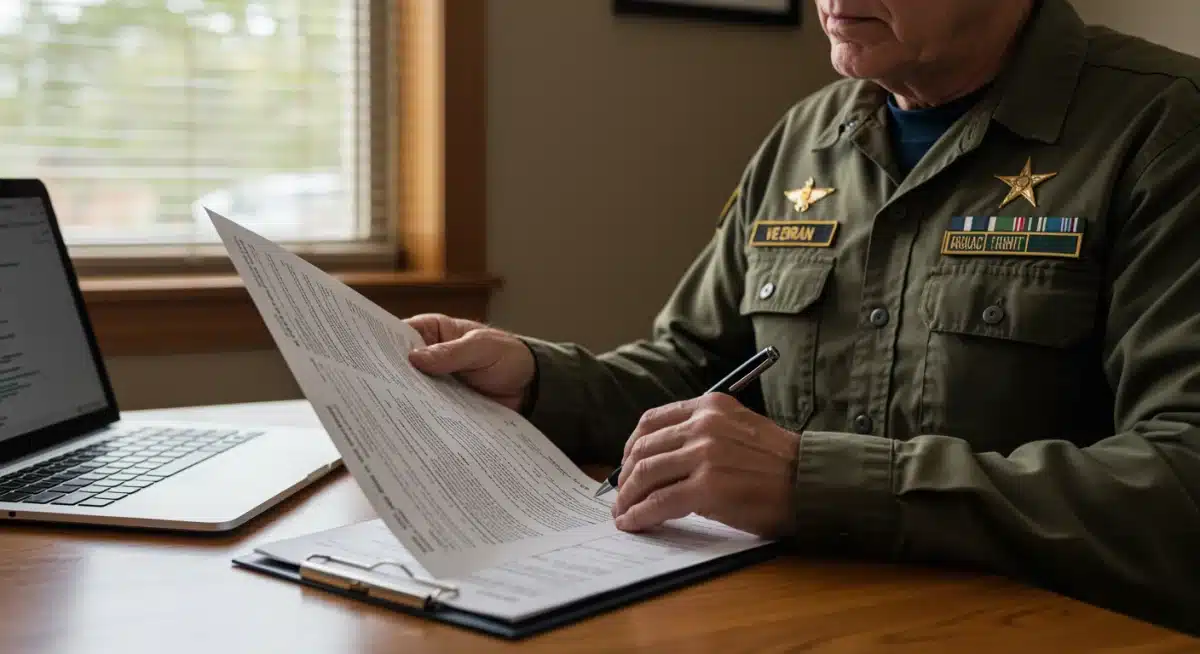
Furthermore, you must have a current diagnosis of a disability. This requires medical evidence from a qualified healthcare professional. Without a current diagnosis, even a clear service connection might not lead to compensation. The VA will often schedule a Compensation and Pension (C&P) exam to verify your condition and its severity.
Understanding these eligibility parameters is the first step towards a successful claim. Many veterans overlook certain connections or do not have adequate documentation, leading to denials. Consulting with a Veterans Service Officer (VSO) can provide invaluable guidance in this initial assessment phase.
The Application Process: A Step-by-Step Guide for 2025
Applying for VA disability benefits can be a lengthy and intricate process, but with proper preparation and understanding, it can be navigated effectively. For 2025, while the core steps remain consistent, emphasis on digital applications and comprehensive evidence submission continues to grow. Starting early and being meticulous are key to a successful outcome.
The primary method for applying is through the VA’s online portal, eBenefits, or by mail using VA Form 21-526EZ, ‘Application for Disability Compensation and Related Compensation Benefits.’ Both methods require a substantial amount of documentation, so it’s advisable to gather everything before you begin.
Essential Steps for a Successful Claim
The application journey involves several critical stages, each requiring attention to detail:
- Gathering Documentation: Collect all relevant medical records (both military and private), service records, and any other evidence that supports your claim. This includes DD214, medical treatment records, and personal statements.
- Filing Your Intent to File: This crucial step preserves your effective date for benefits, meaning you can potentially get back pay from the date you filed your intent, even if your claim takes months to process.
- Submitting Your Application: Complete VA Form 21-526EZ accurately, attaching all supporting documents. Be thorough and provide as much detail as possible about your condition and its connection to service.
- Attending C&P Exams: The VA may schedule you for one or more Compensation and Pension exams. These exams are vital for the VA to assess your current condition and its link to your service. Attend all scheduled exams and be honest and detailed about your symptoms.
- Monitoring Your Claim Status: Regularly check the status of your claim through eBenefits or by contacting the VA directly. Be prepared to respond promptly to any requests for additional information.
Seek assistance from accredited representatives, such as VSOs, who can help you understand the requirements, review your application, and advocate on your behalf. Their expertise can significantly improve your chances of a favorable decision. The application process, while challenging, is a manageable endeavor with the right approach and resources.
Insider Knowledge: Tips for Maximizing Your VA Claim
Beyond the standard application steps, there’s valuable insider knowledge that can significantly enhance your chances of a successful and appropriately rated VA disability claim. These insights come from understanding the VA’s adjudication process and knowing how to present your case most effectively. It’s about being strategic and thorough.
One common mistake veterans make is understating their symptoms or failing to connect all their current health issues to their service. The VA can only rate what is clearly documented and presented. Therefore, detailed and continuous medical records are your strongest allies.
Leveraging Personal Statements and Buddy Letters
While medical records are paramount, personal statements and ‘buddy letters’ can provide compelling evidence, especially for conditions that are difficult to quantify medically, such as mental health issues or chronic pain. A personal statement allows you to describe how your disability affects your daily life, work, and relationships in your own words.
- Personal Statements: Detail the onset, progression, and current impact of your symptoms. Be honest and specific about how your service led to or worsened your condition.
- Buddy Letters: Obtain statements from fellow service members, family, or friends who witnessed the event that caused your injury or experienced the changes in your health firsthand. Their corroborating accounts can strengthen your claim significantly.
- Nexus Letters: In complex cases, a nexus letter from a private doctor explicitly stating that your disability is ‘at least as likely as not’ due to your service can be incredibly persuasive. This is often worth the investment.
Furthermore, understanding the VA’s presumptive conditions list is crucial. If your condition falls under a presumptive category (e.g., related to Agent Orange, Gulf War Syndrome, or burn pits under the PACT Act), the burden of proof for service connection is significantly reduced. Ensure your claim clearly references these presumptions if applicable.
Finally, don’t be afraid to appeal a denied claim or a low rating. Many initial decisions are overturned on appeal, especially when new evidence is presented or a VSO helps refine the argument. Persistence and expert guidance are often the difference between a denial and a successful claim.
Beyond Disability: Other Important Veterans’ Benefits in 2025
While disability compensation is a cornerstone of VA support, it is by no means the only benefit available to veterans. In 2025, a wide array of other programs and services will continue to provide critical assistance in various aspects of life, from healthcare to education and housing. Understanding the full spectrum of available benefits is essential for comprehensive support.
These benefits are designed to address the unique challenges veterans face as they transition back to civilian life or continue to live with the impacts of their service. Many of these programs are interconnected, meaning eligibility for one might open doors to others.
Comprehensive VA Services for Veterans and Families
The VA offers extensive support that goes far beyond monetary compensation:
- Healthcare: Enrollment in the VA healthcare system provides access to medical services, mental health support, and specialized care for service-connected conditions.
- Education Benefits: The GI Bill programs (Post-9/11 GI Bill, Montgomery GI Bill) provide financial assistance for tuition, housing, and books for qualifying veterans and their dependents pursuing higher education or vocational training.
- Home Loan Guaranty: VA home loans offer significant advantages, including no down payment requirements and competitive interest rates, making homeownership more accessible.
- Life Insurance: Various life insurance programs are available to veterans, some specifically designed for those with service-connected disabilities.
- Burial and Memorial Benefits: The VA provides benefits to help cover burial and funeral costs, as well as headstones and markers for eligible veterans.
- Vocational Rehabilitation and Employment (VR&E): This program assists veterans with service-connected disabilities in preparing for, finding, and keeping suitable employment.
Many of these benefits also extend to eligible dependents and survivors, underscoring the VA’s commitment to supporting the entire military family. Regularly checking the VA website or consulting with a VSO can help you discover new or underutilized benefits that apply to your specific situation. The goal is to ensure that every veteran and their family can access the resources necessary for a stable and fulfilling life.
| Key Aspect | Brief Description |
|---|---|
| 2025 Disability Rates | Annual adjustment based on COLA, impacting monthly tax-free payments for service-connected disabilities. |
| Eligibility Criteria | Requires honorable service, a current disability, and a direct or presumptive service connection. |
| Application Process | Includes gathering documents, filing intent, submitting Form 21-526EZ, and attending C&P exams. |
| Maximizing Claims | Utilize personal statements, buddy letters, nexus letters, and understand presumptive conditions. |
Frequently Asked Questions About 2025 Veterans’ Benefits
The exact Cost of Living Adjustment (COLA) for 2025 VA disability rates will be announced by the Social Security Administration in late 2024. The VA typically adopts this same percentage to ensure veterans’ benefits keep pace with inflation.
You can prove service connection through direct evidence (injury during service), presumptive conditions (specific exposures), secondary conditions (resulting from another service-connected issue), or by showing a pre-existing condition was aggravated by service.
Yes, you can apply for VA disability benefits online through the VA’s eBenefits portal. This is often the most efficient method, but you can also submit a paper application via mail.
An Intent to File is a formal notification to the VA that you plan to submit a claim. It’s crucial because it preserves your effective date for benefits, potentially leading to back pay from the date the intent was filed.
You can seek assistance from accredited Veterans Service Officers (VSOs) who offer free, expert guidance. Organizations like the American Legion, DAV, VFW, and state veteran affairs offices provide VSO services.
Conclusion
Navigating the landscape of veterans’ benefits for 2025 requires diligence and a clear understanding of the updated disability compensation rates, eligibility criteria, and the application process. By staying informed about legislative changes, meticulously gathering documentation, and utilizing available resources like Veterans Service Officers, veterans can significantly improve their chances of securing the benefits they have earned. The VA’s commitment to supporting those who served remains steadfast, offering a comprehensive array of services beyond just disability compensation. Empower yourself with this knowledge to ensure you and your family receive the full spectrum of support available.