2026 Housing Market Forecast: Navigating a Projected 6% Mortgage Rate Rise
2026 Housing Market Forecast: Navigating a Projected 6% Mortgage Rate Rise
The year 2026 looms on the horizon, bringing with it a confluence of economic factors poised to reshape the real estate landscape. Among the most significant predictions currently circulating within financial circles is a projected 6% rise in mortgage rates. This isn’t just a number; it’s a potential game-changer that could redefine affordability, demand, and investment strategies for millions. Understanding the nuances of this forecast is crucial for anyone with a stake in the 2026 Housing Market – from first-time homebuyers and seasoned investors to real estate professionals and policymakers.
The housing market is a complex ecosystem, influenced by a myriad of variables including inflation, economic growth, employment rates, and, critically, interest rates. Mortgage rates, in particular, act as a powerful lever, directly impacting the cost of borrowing and, consequently, the purchasing power of prospective homeowners. A 6% increase in these rates is not a minor adjustment; it represents a substantial shift that demands careful consideration and strategic planning. This comprehensive analysis will delve deep into the potential ramifications of such a rise, exploring its origins, its likely effects on various segments of the market, and offering actionable insights for navigating the challenges and opportunities it presents.
Our exploration begins by dissecting the underlying economic forces that could drive mortgage rates to this projected level. We will then examine how these higher rates might impact housing affordability, particularly for those on the cusp of homeownership. Furthermore, we’ll consider the implications for existing homeowners, the rental market, and the broader economic stability. The goal is to provide a clear, data-driven perspective on what to expect in the 2026 Housing Market, empowering you to make informed decisions in an evolving economic climate.
Understanding the Drivers Behind a 6% Mortgage Rate Increase
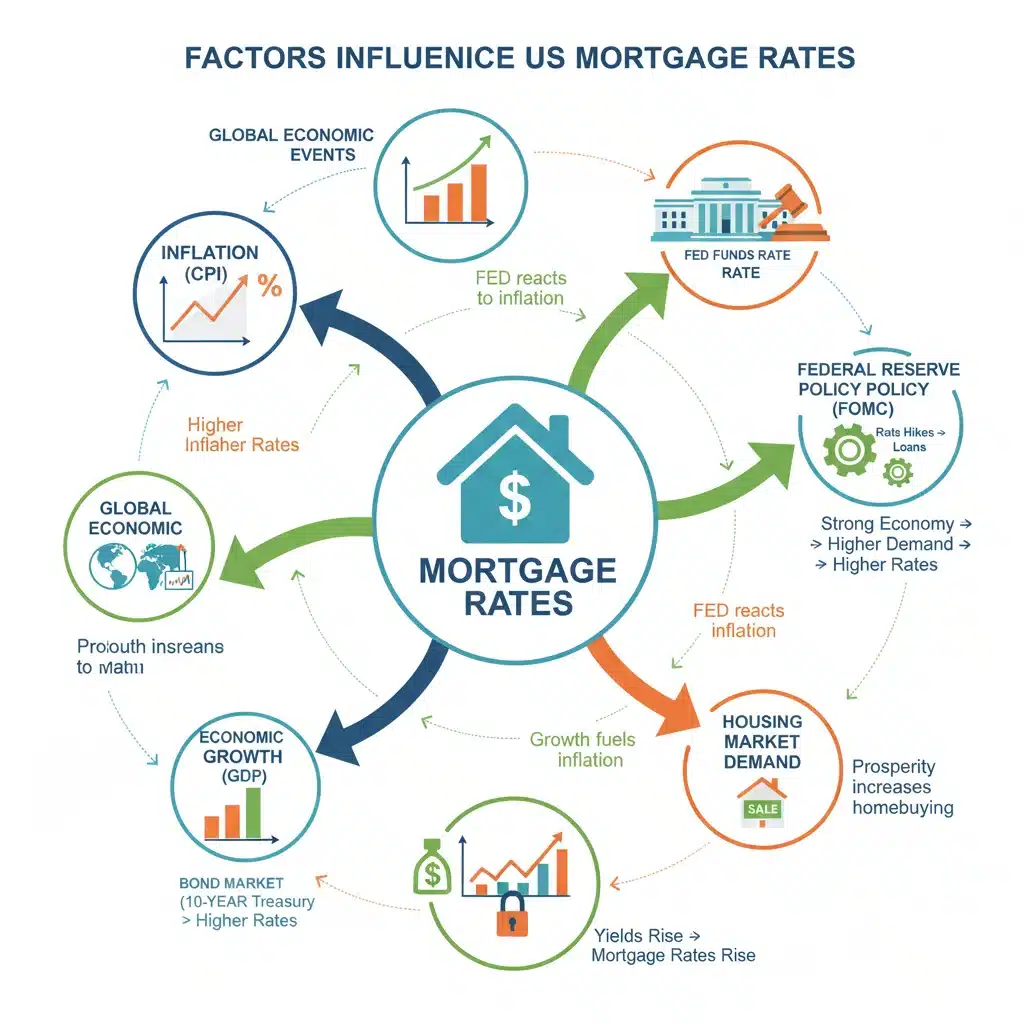
To fully grasp the significance of a projected 6% mortgage rate in the 2026 Housing Market, it’s essential to understand the primary forces that influence these rates. Mortgage rates are not set in a vacuum; they are a reflection of broader economic conditions and monetary policy decisions. Several key factors contribute to their fluctuations, and a sustained increase often points to specific underlying trends.
Inflationary Pressures and Federal Reserve Policy
One of the most significant drivers of mortgage rates is inflation. When inflation is high, the purchasing power of money erodes, prompting lenders to demand higher interest rates to compensate for the reduced value of future repayments. Central banks, particularly the Federal Reserve in the United States, play a crucial role in managing inflation through their monetary policy. If inflation remains stubbornly elevated or is expected to rise, the Fed is likely to continue or even accelerate its rate-hiking cycle, which directly impacts the federal funds rate. This, in turn, influences other interest rates, including those for mortgages.
The projected 6% rise in mortgage rates for 2026 suggests that analysts anticipate continued inflationary pressures, potentially coupled with a Federal Reserve that remains committed to its inflation-fighting mandate. This could mean a period of tighter monetary policy, leading to a higher cost of borrowing across the board. Understanding the Fed’s stance and inflation outlook is paramount for predicting mortgage rate trajectories.
Economic Growth and Employment
A strong economy, characterized by robust GDP growth and low unemployment, often correlates with higher interest rates. When the economy is performing well, there is increased demand for capital, which can push up borrowing costs. Furthermore, a strong job market typically leads to higher wages, contributing to consumer spending and, potentially, inflationary pressures. Lenders view a healthy economy as a sign of reduced risk, but the overall demand for credit can still drive rates upward.
Conversely, a weakening economy might lead the Fed to lower rates to stimulate growth, but this is less likely to be the scenario driving a 6% mortgage rate increase. Instead, the forecast for 2026 implies a resilient, perhaps even overheated, economy that necessitates higher rates to maintain equilibrium and prevent runaway inflation. The interplay between economic growth, employment figures, and central bank actions is a delicate balance that significantly shapes the mortgage landscape.
Global Economic Conditions and Geopolitical Events
The global economy is interconnected, and events in one part of the world can have ripple effects everywhere. Geopolitical tensions, international trade disputes, and economic downturns or booms in major global economies can all influence capital flows and investor sentiment. For instance, if global investors perceive higher risk in certain markets, they might flock to the relative safety of U.S. Treasury bonds, which can indirectly affect mortgage rates. Conversely, a strong global economic outlook might lead to increased demand for capital, pushing rates higher.
While harder to predict with certainty, these external factors add another layer of complexity to the 2026 Housing Market forecast. Any significant global shifts between now and then could either exacerbate or mitigate the projected rise in mortgage rates. Analysts often factor in these broader global trends when making long-term interest rate predictions, acknowledging their potential to disrupt domestic economic forecasts.
Impact on Housing Affordability and Buyer Behavior
A 6% rise in mortgage rates will undoubtedly have a profound impact on housing affordability, which in turn will significantly alter buyer behavior in the 2026 Housing Market. For many prospective homeowners, especially first-time buyers, even a modest increase in rates can mean the difference between qualifying for a loan and being priced out of the market.
Reduced Purchasing Power
The most immediate and tangible effect of higher mortgage rates is a reduction in purchasing power. A higher interest rate means a larger portion of the monthly mortgage payment goes towards interest, rather than principal. This effectively reduces the amount of home a buyer can afford for the same monthly payment. For example, a buyer who could afford a $400,000 home at a 3% interest rate might only be able to afford a $300,000 home at a 6% rate, assuming the same monthly budget. This significant decrease in what buyers can qualify for will force many to either lower their expectations regarding home size or location, or postpone their homeownership dreams altogether.
This shift will be particularly challenging in areas that have already experienced substantial home price appreciation. The combination of high home prices and elevated mortgage rates creates a formidable barrier to entry, exacerbating existing affordability crises in many desirable markets. The 2026 Housing Market will likely see a recalibration of what is considered ‘affordable’ by a large segment of the population.
Increased Demand for Smaller Homes and Condos
As purchasing power diminishes, there will likely be a noticeable shift in buyer preferences. Larger, single-family homes may become less accessible for a broader demographic, leading to increased demand for smaller residences, townhouses, and condominiums. These property types typically come with lower price tags, making them more attainable in a higher interest rate environment. Developers may also adjust their building strategies to focus on more compact, affordable housing options to meet this evolving demand.
This trend could also revitalize urban core areas, as buyers seek properties that offer more value per square foot and potentially lower overall costs. The suburban sprawl that characterized previous low-rate periods might slow down, with a renewed focus on denser, more walkable communities that provide access to amenities without the need for larger, more expensive homes.
Impact on First-Time Homebuyers
First-time homebuyers are often the most sensitive to changes in mortgage rates, as they typically have less equity, fewer savings for a down payment, and are more reliant on favorable lending conditions. A 6% mortgage rate could significantly delay their entry into the housing market, forcing them to save for longer periods or re-evaluate their financial goals. This could lead to a ‘missing generation’ of homeowners, or at least a significant postponement of homeownership for many.
Government programs and down payment assistance initiatives may become even more critical in helping this demographic achieve homeownership. However, even with assistance, the higher monthly payments associated with increased rates will present a considerable hurdle. The 2026 Housing Market will test the resilience and adaptability of first-time buyers more than ever before.

Implications for Home Sellers and Existing Homeowners
While higher mortgage rates primarily impact buyers, their effects ripple through the entire market, significantly influencing home sellers and existing homeowners in the 2026 Housing Market.
Reduced Buyer Pool and Longer Time on Market
With diminished purchasing power and increased affordability challenges, the pool of eligible buyers is likely to shrink. This means sellers may face a market with fewer competitive offers and potentially longer periods for their homes to remain on the market. The days of bidding wars and lightning-fast sales, which characterized the low-rate environment, could become a distant memory in many regions. Sellers may need to adjust their pricing expectations and be prepared for more negotiation.
Homes that are not competitively priced, or those requiring significant repairs, might struggle to attract buyers. The emphasis will shift towards well-maintained, move-in-ready properties that offer good value. This will require sellers to be more strategic about their listing prices and potentially invest in minor upgrades to enhance their home’s appeal.
"Golden Handcuffs" for Existing Homeowners
Many existing homeowners secured their mortgages at historically low interest rates over the past decade. A projected 6% mortgage rate in 2026 could create a phenomenon often referred to as "golden handcuffs." Homeowners with rates of 3% or 4% will be reluctant to sell their current homes and buy a new one, as doing so would mean trading their low-rate mortgage for a significantly higher one. This effectively ‘locks in’ homeowners, reducing inventory on the market.
This reluctance to sell could lead to a further constriction of housing supply, even as demand softens due to higher rates. While reduced inventory might, in theory, support prices, the lack of affordable buyer demand could counteract this, leading to a more stagnant market rather than a booming one. Homeowners who need to relocate for work or family reasons might face a difficult decision: either absorb the higher mortgage payment or consider alternative housing solutions like renting.
Impact on Home Equity and Refinancing
For existing homeowners, higher rates also affect the ability to refinance. Those looking to tap into their home equity through cash-out refinances or adjust their loan terms will find it more expensive to do so. While property values may have appreciated significantly in recent years, the higher interest rates will make it less attractive to refinance unless absolutely necessary. This could limit financial flexibility for some homeowners who rely on their home equity for other investments or expenses.
The overall impact on home equity will depend on a delicate balance between price appreciation and market liquidity. If prices hold steady or continue to rise modestly despite higher rates, homeowners will still benefit from increased equity. However, if the market experiences a significant downturn due to lack of demand, equity gains could diminish. The 2026 Housing Market will be a test of how sticky home prices are in the face of rising borrowing costs.
The Rental Market and Investment Opportunities in 2026
The ripple effects of a 6% mortgage rate extend beyond buying and selling, profoundly impacting the rental market and presenting new considerations for real estate investors in the 2026 Housing Market.
Increased Demand for Rentals
As homeownership becomes less accessible for a larger segment of the population due to higher mortgage rates, demand for rental properties is almost certain to increase. Individuals and families who are priced out of buying will continue to need housing, turning to the rental market as their primary option. This surge in demand could lead to upward pressure on rental prices, particularly in desirable urban and suburban areas.
Landlords and property management companies may find themselves in a favorable position, with higher occupancy rates and the ability to command stronger rents. However, this also means increased competition among renters, potentially making it harder for individuals to find affordable rental housing. Policymakers might face renewed pressure to address rental affordability and supply issues as the homeownership rate faces headwinds.
Shifting Investment Strategies
For real estate investors, a 6% mortgage rate necessitates a re-evaluation of strategies. While the cost of borrowing for investment properties will increase, the potential for higher rental income could offset some of these costs. Investors might shift their focus from ‘fix and flip’ strategies, which are often sensitive to interest rates and quick sales, to ‘buy and hold’ strategies, focusing on long-term rental income and appreciation.
Properties that offer strong rental yields and are located in areas with robust tenant demand will become particularly attractive. Investors might also explore alternative investment vehicles, such as real estate investment trusts (REITs) or commercial real estate, which may respond differently to interest rate fluctuations. The 2026 Housing Market will likely favor investors with a long-term perspective and a keen understanding of local rental dynamics.
Development and Supply Side Adjustments
Higher borrowing costs also impact developers and builders. Construction loans become more expensive, potentially slowing down new housing starts. If developers face higher costs and anticipate softer buyer demand due to elevated mortgage rates, they may scale back projects or delay new developments. This could lead to a further tightening of housing supply in the long run, even as demand from buyers decreases.
However, if rental demand remains strong, developers might pivot to building more multi-family rental units rather than single-family homes for sale. This adjustment on the supply side would be a direct response to the changing market dynamics, aiming to meet the most pressing housing needs in the 2026 Housing Market. The balance between for-sale and for-rent housing construction will be a critical trend to watch.
Navigating the 2026 Housing Market: Strategies for Buyers, Sellers, and Investors
Given the projected 6% mortgage rate, proactive planning and strategic adjustments will be essential for success in the 2026 Housing Market. Here are tailored strategies for various market participants.
For Prospective Homebuyers: Patience and Preparation
1. Enhance Your Financial Health: With higher rates, lenders will be even more scrutinizing. Focus on improving your credit score, reducing debt, and increasing your savings for a larger down payment. A stronger financial profile can help you secure the best possible rate and terms.
2. Adjust Expectations: Be realistic about what you can afford. You may need to consider smaller homes, different neighborhoods, or even delay your purchase if the numbers don’t align with your budget. Prioritize your needs over wants.
3. Explore Adjustable-Rate Mortgages (ARMs) with Caution: While ARMs often offer lower initial rates, they come with the risk of future rate increases. If you plan to stay in the home for a short period or anticipate your income will grow substantially, an ARM might be an option, but proceed with a clear understanding of the risks.
4. Consider "House Hacking": If possible, look for multi-family properties where you can live in one unit and rent out the others. The rental income can help offset your mortgage payments, making homeownership more attainable in a high-rate environment.
5. Don’t Overlook Government Programs: Research federal, state, and local first-time homebuyer programs that offer down payment assistance, favorable loan terms, or tax credits. These can be crucial lifelines in a challenging market.
For Home Sellers: Strategic Pricing and Presentation
1. Price Competitively from Day One: In a market with higher rates and fewer buyers, overpricing your home can lead to it languishing on the market. Work with a knowledgeable real estate agent to set a realistic and attractive price that reflects current market conditions.
2. Focus on "Move-In Ready": Buyers facing higher mortgage payments will be less inclined to take on renovation projects. Invest in necessary repairs and cosmetic updates to make your home as appealing and turn-key as possible. Professional staging can also make a significant difference.
3. Be Flexible with Negotiations: Expect buyers to be more assertive in their negotiations. Be prepared to consider concessions, such as covering closing costs or offering home warranties, to sweeten the deal.
4. Highlight Value and Efficiency: Emphasize any energy-efficient upgrades, smart home technology, or recent renovations that add tangible value and reduce ongoing costs for the buyer. These features can be powerful differentiators in a competitive market.
5. Understand Your Equity Position: If you have substantial equity, you might have more flexibility in pricing and negotiations. If your equity is limited, you’ll need to be even more strategic to ensure a successful sale.
For Real Estate Investors: Adaptability and Long-Term Vision
1. Prioritize Cash Flow: With higher borrowing costs, cash flow becomes even more critical. Focus on properties that can generate strong rental income to cover expenses and provide a positive return, rather than relying solely on appreciation.
2. Explore Different Property Types: Consider diversifying your portfolio beyond traditional single-family rentals. Multi-family units, small commercial properties, or even niche segments like short-term rentals (depending on local regulations) might offer better returns.
3. Deep Dive into Local Markets: Research specific neighborhoods and submarkets that show strong rental demand, stable employment, and good growth potential. Micro-market analysis will be more important than ever.
4. Consider Seller Financing or Creative Deals: In a slower market, some sellers might be more open to creative financing options, including seller financing or lease-options. These can reduce your upfront capital outlay and mitigate the impact of high mortgage rates.
5. Stay Informed on Economic Trends: Continuously monitor inflation data, Federal Reserve announcements, and local economic indicators. Being ahead of the curve on economic shifts will allow you to adjust your investment strategy proactively in the evolving 2026 Housing Market.
The Broader Economic Impact and Potential Scenarios
The projected 6% rise in mortgage rates in the 2026 Housing Market is not an isolated event; it’s a significant economic variable with far-reaching consequences that could influence everything from consumer spending to overall economic stability.
Consumer Spending and Economic Growth
Higher housing costs, whether through increased mortgage payments or rising rents, consume a larger portion of household budgets. This leaves less discretionary income for other goods and services, potentially leading to a slowdown in consumer spending. Given that consumer spending is a major component of GDP, a significant contraction could temper overall economic growth. Businesses might see reduced demand, potentially leading to slower hiring or even layoffs, creating a negative feedback loop.
Conversely, if the rise in mortgage rates is a direct result of strong economic growth and robust wage increases, the impact on consumer spending might be less severe. However, the delicate balance between managing inflation and sustaining growth will be a primary challenge for policymakers leading up to and during the 2026 Housing Market.
Risk of Recession
A rapid and sustained increase in interest rates has historically been a precursor to economic slowdowns or recessions. While the Federal Reserve aims for a ‘soft landing’ – bringing inflation down without triggering a recession – achieving this balance is incredibly difficult. If higher mortgage rates, combined with other economic pressures, lead to a significant contraction in housing activity and broader consumer demand, the risk of a recession increases.
A housing-led recession, while less likely than in 2008 due to stronger lending standards, is still a possibility if affordability issues become too severe and homeowners are forced to sell en masse. However, the current market features strong homeowner equity, which provides a buffer against widespread foreclosures. The key will be how the market adjusts to the new interest rate reality and whether economic resilience can absorb the shock.
Government and Regulatory Responses
As the 2026 Housing Market evolves under the weight of higher mortgage rates, governments and regulatory bodies may step in with various interventions. This could include expanding first-time homebuyer assistance programs, implementing rental control measures in certain areas, or exploring policies aimed at increasing housing supply and reducing construction costs. The political pressure to address housing affordability will likely intensify, prompting legislative action.
Furthermore, regulatory bodies might adjust lending guidelines to ensure responsible lending practices, preventing a return to the lax standards that contributed to past housing crises. The objective will be to stabilize the market, ensure access to housing, and mitigate the broader economic risks associated with a significant shift in interest rates.
Conclusion: Adapting to the New Reality of the 2026 Housing Market
The projected 6% rise in mortgage rates for the 2026 Housing Market represents a significant inflection point, signaling a departure from the ultra-low rate environment that has characterized much of the recent past. This shift will undoubtedly reshape the real estate landscape, presenting both challenges and opportunities for all participants.
For prospective homebuyers, the path to homeownership will require greater financial discipline, realistic expectations, and a willingness to explore creative solutions. Sellers will need to adopt more strategic pricing and presentation tactics to attract a more discerning buyer pool. Real estate investors, meanwhile, will find success by prioritizing cash flow, diversifying portfolios, and maintaining a keen eye on micro-market trends and long-term value.
The broader economic implications are substantial, with potential impacts on consumer spending, economic growth, and even the risk of recession. However, a well-informed and adaptable approach from individuals, businesses, and policymakers can help mitigate the negative effects and foster a more stable and sustainable housing market.
Ultimately, the 2026 Housing Market will be defined by its ability to adapt to this new interest rate reality. Those who understand the underlying drivers, anticipate the impacts, and strategically position themselves will be best equipped to navigate the evolving dynamics and find success in this new chapter of real estate.