2026 Inflation Outlook: Protecting Savings with Smart Investments
The global economic landscape is a dynamic and ever-evolving entity, constantly shaped by a myriad of factors ranging from geopolitical tensions to technological advancements. As we cast our gaze towards 2026, one economic phenomenon consistently commands attention and concern from individuals, investors, and policymakers alike: inflation. Understanding the 2026 Inflation Outlook is not merely an academic exercise; it is a critical prerequisite for anyone serious about protecting their savings and ensuring their financial future. The erosion of purchasing power due to inflation can silently yet significantly diminish wealth, making proactive and informed financial planning absolutely essential.
Inflation, at its core, is the rate at which the general level of prices for goods and services is rising, and consequently, the purchasing power of currency is falling. While a moderate level of inflation is often considered a sign of a healthy, growing economy, persistently high or unexpected inflation can create significant economic instability. For individuals, this translates to everyday expenses becoming more costly, and the value of their hard-earned money decreasing over time. Therefore, developing robust Inflation Protection Strategies becomes paramount.
This comprehensive guide aims to dissect the anticipated 2026 Inflation Outlook, examining the key drivers and potential scenarios that could unfold. More importantly, it will equip you with actionable insights and smart investment choices designed to not only shield your assets from inflationary pressures but also to potentially foster their growth. We will delve into various investment vehicles, explore their suitability in an inflationary environment, and discuss broader financial planning considerations to help you navigate the complexities of the economic future.
The journey to financial security in an inflationary world requires vigilance, adaptability, and a strategic approach. By the end of this article, you will have a clearer understanding of the challenges ahead and a well-defined roadmap for implementing effective Inflation Protection Strategies to secure your financial well-being.
Understanding the Current Economic Climate: Precursors to the 2026 Inflation Outlook
Before we project into 2026, it’s crucial to understand the economic forces currently at play. The years leading up to our forecast have been marked by unprecedented events, including global pandemics, supply chain disruptions, significant fiscal and monetary stimuli, and evolving geopolitical landscapes. These factors have collectively contributed to the inflationary pressures observed recently, setting the stage for what we might expect in the coming years.
Global Supply Chain Dynamics
The fragility of global supply chains was starkly exposed during the recent past. Lockdowns, labor shortages, and logistical bottlenecks led to significant disruptions, increasing production costs and transportation expenses. These higher costs are often passed on to consumers in the form of elevated prices, directly fueling inflation. While some of these issues have begun to ease, the potential for future disruptions, perhaps due to climate events or geopolitical conflicts, remains a persistent threat that could influence the 2026 Inflation Outlook.
Fiscal and Monetary Policies
Governments worldwide responded to economic downturns with massive fiscal spending packages, and central banks implemented ultra-loose monetary policies, including quantitative easing and near-zero interest rates. While these measures were intended to stimulate economic recovery, they also injected significant liquidity into the system, which, in conjunction with supply constraints, has been a major driver of inflation. The unwinding of these policies, through interest rate hikes and quantitative tightening, is a delicate balancing act that will heavily shape the future inflation trajectory. Any misstep could either stifle economic growth or allow inflation to become entrenched.
Labor Market Trends
Labor market dynamics also play a crucial role. Wage growth, particularly in sectors experiencing labor shortages, can contribute to a wage-price spiral, where rising wages lead to higher costs for businesses, which then raise prices, prompting demands for even higher wages. Understanding these trends will be vital in forecasting the persistence of inflation towards 2026 and identifying effective Inflation Protection Strategies.
Geopolitical Tensions and Commodity Prices
Geopolitical events, such as conflicts or trade disputes, can have an immediate and profound impact on commodity prices, especially energy and food. Spikes in oil, natural gas, or agricultural product prices directly feed into inflation, affecting everything from transportation costs to grocery bills. The volatility stemming from these global uncertainties makes accurate inflation forecasting challenging but underscores the need for adaptable financial planning.
The 2026 Inflation Outlook: Scenarios and Projections
Forecasting inflation is inherently complex, given the multitude of interconnected variables. However, based on current trends and expert analyses, we can outline several plausible scenarios for the 2026 Inflation Outlook. These scenarios are not mutually exclusive but represent potential pathways the global economy might take.
Scenario 1: Moderate and Stable Inflation
In this scenario, central banks successfully navigate the process of normalizing monetary policy, bringing inflation back towards their target rates (typically around 2%). Supply chain issues largely resolve, and geopolitical tensions either stabilize or have a contained impact on global markets. Economic growth continues at a healthy pace, supported by innovation and productivity gains. Under this outlook, while inflation remains a factor, it is manageable, and traditional investment strategies might suffice for protecting savings.
Scenario 2: Persistent High Inflation
This scenario envisions inflation remaining stubbornly high, above central bank targets, due to a combination of factors. These could include continued supply-side constraints, a persistent wage-price spiral, or a loss of confidence in central banks’ ability to control prices. Geopolitical events could also exacerbate commodity price volatility. In this environment, the erosion of purchasing power would be significant, making robust Inflation Protection Strategies absolutely critical for investors.
Scenario 3: Disinflation or Deflationary Pressures
While less likely given current trends, a disinflationary or even deflationary scenario cannot be entirely ruled out. This could arise from a severe global economic downturn, leading to a significant drop in demand. Overly aggressive monetary policy tightening could also tip economies into recession, leading to falling prices. While deflation might sound appealing, it often signals deep economic distress, with falling wages, unemployment, and reduced corporate profits. Each of these scenarios carries distinct implications for investors and requires different approaches to smart investment choices.
Protecting Your Savings: Essential Inflation Protection Strategies
Regardless of the specific path inflation takes, the fundamental goal for individuals is to implement effective Inflation Protection Strategies. This involves more than just selecting the right investments; it encompasses a holistic approach to financial planning. Here are key strategies to consider:
1. Diversification Across Asset Classes
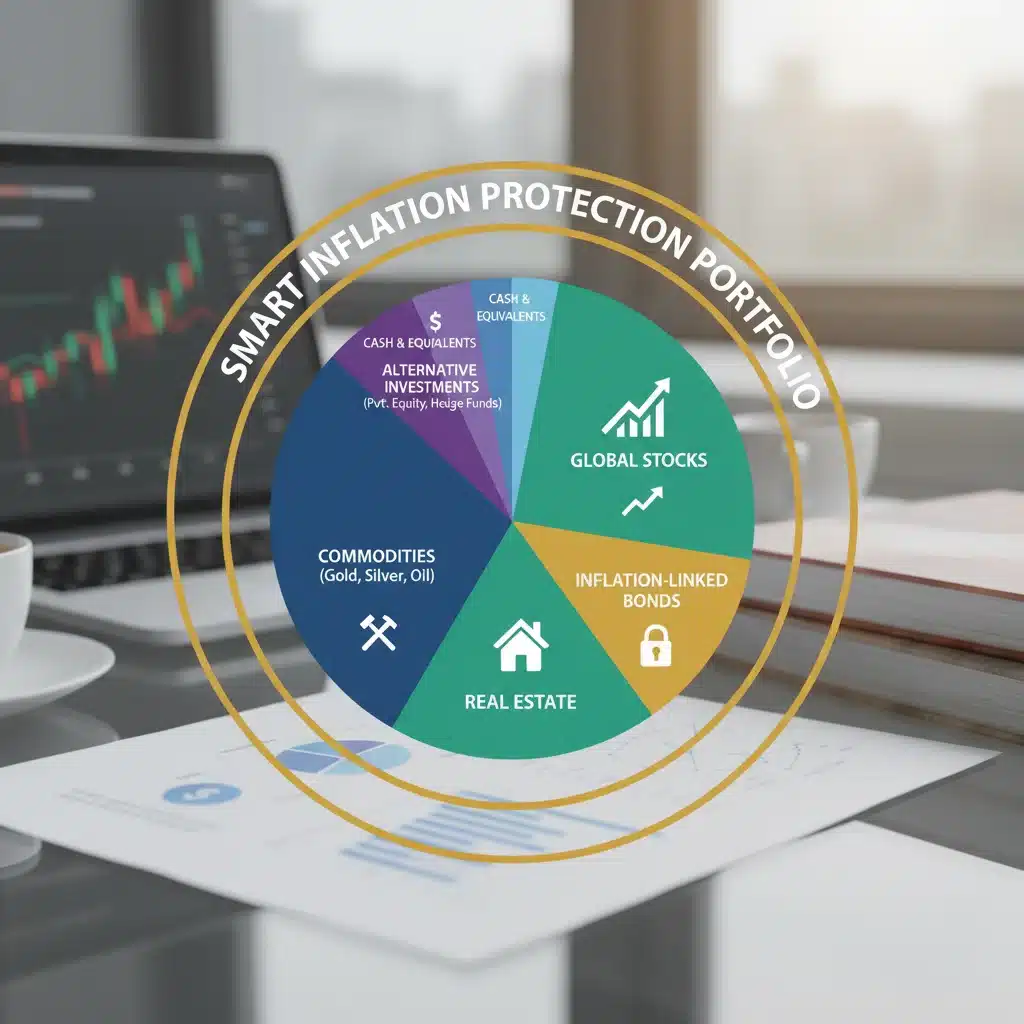
One of the golden rules of investing, diversification becomes even more critical in an inflationary environment. Spreading your investments across various asset classes helps mitigate risk and ensures that your portfolio isn’t overly reliant on any single sector that might underperform during inflation. This includes a mix of stocks, bonds, real estate, commodities, and potentially alternative assets. A well-diversified portfolio is your first line of defense in protecting savings.
2. Investing in Real Assets
Real assets, by their nature, tend to hold their value or even appreciate during inflationary periods. These include:
- Real Estate: Property values and rental income often rise with inflation, making real estate a traditional hedge. However, rising interest rates can impact mortgage costs and property demand, so careful selection is key.
- Commodities: Raw materials like gold, silver, oil, and agricultural products often see their prices increase as inflation rises. Investing directly in commodities or through commodity-linked ETFs can offer significant Inflation Protection Strategies.
- Infrastructure: Investments in infrastructure projects (e.g., utilities, toll roads) can provide stable, inflation-linked cash flows, as their revenues often adjust with inflation.
3. Inflation-Indexed Securities
Treasury Inflation-Protected Securities (TIPS) are government bonds whose principal value adjusts with the Consumer Price Index (CPI). This means that as inflation rises, the principal value of your TIPS also increases, providing a direct hedge against inflation. They are a reliable component of any robust set of Inflation Protection Strategies.
4. Equities in Companies with Pricing Power
Not all stocks perform equally during inflation. Companies with strong brand recognition, essential products or services, and limited competition often possess ‘pricing power.’ This allows them to pass on increased costs to consumers without significantly impacting demand, thereby maintaining profit margins. Identifying such companies is a key aspect of making smart investment choices.
5. Short-Duration Bonds and Floating-Rate Notes
While long-term fixed-rate bonds are generally vulnerable to inflation (as their fixed payments lose purchasing power), short-duration bonds are less sensitive to interest rate hikes. Floating-rate notes, whose interest payments adjust periodically based on a benchmark rate, can also offer better protection than fixed-rate alternatives in a rising interest rate environment.
6. Reviewing Your Budget and Spending Habits
Beyond investments, personal finance management is crucial. Regularly reviewing your budget, identifying areas where you can cut unnecessary expenses, and increasing your savings rate can create a stronger financial buffer against inflation’s effects. This fundamental step is often overlooked but forms the bedrock of effective Inflation Protection Strategies.
Smart Investment Choices for the 2026 Inflation Outlook
Building on the general strategies, let’s explore specific smart investment choices that align with the potential 2026 Inflation Outlook. These options are designed to offer a balance of growth potential and inflation resistance.
Gold and Precious Metals
Historically, gold has been a safe haven asset during times of economic uncertainty and inflation. Its value tends to rise when traditional currencies are perceived as losing purchasing power. While it doesn’t generate income, it acts as a store of value. Silver and other precious metals can also serve a similar purpose, though often with higher volatility. Including a modest allocation to gold can be a prudent part of your Inflation Protection Strategies.
Dividend-Paying Stocks
Companies that consistently pay and grow their dividends can offer a dual benefit during inflation. Not only do you get potential capital appreciation, but the growing income stream from dividends can help offset the rising cost of living. Focus on companies with strong balance sheets and a history of increasing dividends, especially those with pricing power. This is a classic example of making smart investment choices.
Real Estate Investment Trusts (REITs)
REITs allow you to invest in diverse portfolios of income-generating real estate without directly owning physical property. They often provide strong dividend yields and can benefit from rising property values and rental income, making them an attractive option for inflation hedging. Different types of REITs (e.g., residential, industrial, retail) can offer varying levels of inflation sensitivity, so diversification within REITs can also be beneficial.
Infrastructure Funds
Investing in infrastructure funds provides exposure to essential services like utilities, transportation, and communication networks. Many infrastructure assets have contracts that include inflation escalators, meaning their revenues automatically adjust upwards with inflation. This provides a stable and often growing income stream, making them a compelling component of Inflation Protection Strategies.
Private Equity and Venture Capital (for Accredited Investors)
For accredited investors, private equity and venture capital can offer exposure to companies and assets that are not traded publicly. These investments often have a longer time horizon and can provide significant returns that outpace inflation, particularly in innovative sectors. However, they come with higher risks and illiquidity, requiring careful consideration.
Cryptocurrencies (with Caution)
The role of cryptocurrencies like Bitcoin as an inflation hedge is a subject of ongoing debate. Some argue that their decentralized nature and finite supply make them a digital form of gold, capable of retaining value during inflation. Others point to their extreme volatility, suggesting they are not yet a reliable hedge. While they might offer significant upside, they should be approached with extreme caution and only as a small, speculative portion of a well-diversified portfolio, not a primary Inflation Protection Strategy.
Foreign Currencies and International Investments
If domestic inflation is particularly high, investing in foreign currencies or international assets in countries with lower inflation rates or appreciating currencies can be a way to diversify and protect purchasing power. However, this introduces currency risk and requires a deep understanding of global economic trends.
Long-Term Financial Planning in an Inflationary Environment
Beyond specific investments, a holistic approach to long-term financial planning is crucial for navigating the 2026 Inflation Outlook and beyond. This involves:
Regular Portfolio Review and Rebalancing
Economic conditions change, and so should your portfolio. Regularly review your investments to ensure they still align with your risk tolerance, financial goals, and the prevailing inflationary environment. Rebalancing your portfolio periodically helps maintain your desired asset allocation and ensures your Inflation Protection Strategies remain effective.
Managing Debt Wisely
Inflation can have a complex effect on debt. While fixed-rate debt can become easier to repay with inflated dollars (as the real value of future payments decreases), variable-rate debt can become more expensive as interest rates rise. Prioritize paying down high-interest, variable-rate debt, and consider refinancing fixed-rate debt if advantageous. Smart debt management is a crucial, often overlooked, aspect of protecting savings.
Saving for Retirement
Inflation is a significant threat to retirement savings, as the purchasing power of a fixed income stream diminishes over time. Maximize contributions to inflation-protected retirement accounts (like 401(k)s or IRAs) and ensure your retirement portfolio is structured with assets that can grow faster than inflation. Consider annuities that offer inflation-adjusted payouts. This is a critical area for implementing robust Inflation Protection Strategies.
Emergency Fund Management
Your emergency fund should ideally be held in easily accessible, low-risk accounts. While inflation can erode its value, the primary purpose of an emergency fund is liquidity and safety, not growth. However, explore options like high-yield savings accounts or short-term CDs to minimize the impact of inflation where possible.
Professional Financial Advice
The complexities of the global economy and the nuances of investment strategies can be daunting. Consulting with a qualified financial advisor can provide personalized guidance tailored to your specific situation, helping you develop and implement the most appropriate Inflation Protection Strategies for your goals. They can assist in making smart investment choices and adapting your plan as conditions evolve.

The Psychological Impact of Inflation and How to Counter It
Beyond the direct financial implications, inflation can also have a significant psychological impact. The feeling of constantly rising prices can lead to anxiety, uncertainty, and a sense of losing control over one’s financial future. This emotional toll can sometimes lead to irrational financial decisions, such as panic selling or chasing speculative investments.
To counter this, it’s vital to maintain a long-term perspective and avoid knee-jerk reactions. Education about inflation and its effects, coupled with a well-thought-out financial plan, can significantly reduce stress and empower you to make rational decisions. Regularly reviewing your progress and understanding that your Inflation Protection Strategies are actively working can provide peace of mind. Remember, financial resilience is built not just on smart investments, but also on emotional fortitude and a disciplined approach to your financial goals.
Conclusion: Navigating the Future with Confidence
The 2026 Inflation Outlook presents both challenges and opportunities for investors and savers. While the precise trajectory of inflation remains uncertain, the importance of proactive financial planning and robust Inflation Protection Strategies is undeniable. By understanding the underlying economic forces, exploring a range of smart investment choices, and adopting a disciplined approach to long-term financial planning, you can significantly enhance your ability to protect your savings and even grow your wealth in an inflationary environment.
The key lies in diversification, a focus on real assets and inflation-indexed securities, and a willingness to adapt your strategy as economic conditions evolve. Regular review of your portfolio, wise debt management, and seeking professional advice when needed will serve as cornerstones of your financial resilience. By taking these steps, you can face the future with greater confidence, knowing that you have implemented comprehensive measures to safeguard your financial well-being against the silent erosion of inflation.