2026 Tax Reforms: Impact on Middle-Income Earners

Government Policy Watch: Upcoming 2026 Tax Reforms and What They Mean for Middle-Income Earners
As the calendar pages turn, so too do the legislative gears, bringing with them the inevitable discussions and eventual implementation of new government policies. For many, few policy changes hold as much direct and immediate impact as shifts in taxation. The year 2026 is poised to be a significant one for tax policy, as several key provisions from the Tax Cuts and Jobs Act (TCJA) of 2017 are set to expire. These expirations, coupled with potential new legislative initiatives, could fundamentally reshape the financial landscape for millions of Americans, particularly those in the middle-income bracket. Understanding the upcoming 2026 tax reforms is not just about staying informed; it’s about proactive financial planning and safeguarding your economic well-being.
The TCJA, enacted under the Trump administration, introduced a sweeping overhaul of the U.S. tax code, bringing about lower individual income tax rates, increased standard deductions, and changes to various credits and exemptions. While some of these changes were made permanent, many of the provisions affecting individual taxpayers were set to sunset at the end of 2025. This means that without congressional action, the tax code will revert to its pre-TCJA state in 2026, or perhaps be modified by new legislation. For middle-income earners, this presents a complex scenario. Will tax rates go up? Will deductions shrink? What strategies can be employed to mitigate potential negative impacts or capitalize on new opportunities?
This comprehensive guide aims to demystify the impending 2026 tax reforms. We will delve into the specific provisions set to expire, analyze the potential impact on middle-income households, and explore the various legislative proposals currently on the table. More importantly, we will provide actionable insights and strategies to help you navigate these changes, ensuring you are well-prepared for what lies ahead. From understanding your current tax situation to making informed financial decisions, this article will serve as your essential resource for the coming tax season and beyond.
Understanding the Sunset Provisions: What Expires in 2025?
The core of the anticipated 2026 tax reforms stems from the expiration of several key individual income tax provisions from the TCJA. These provisions significantly altered the tax burden for many Americans, and their potential reversion could lead to substantial changes in take-home pay and financial planning. Let’s break down the most impactful sunsets:
Individual Income Tax Rates
One of the most widely felt changes from the TCJA was the reduction in individual income tax rates across most brackets. For 2025, the seven ordinary income tax rates are 10%, 12%, 22%, 24%, 32%, 35%, and 37%. Without congressional intervention, these rates are scheduled to revert to their pre-TCJA levels in 2026, which were 10%, 15%, 25%, 28%, 33%, 35%, and 39.6%. For middle-income earners, who often fall into the 12%, 22%, or 24% brackets, this could mean a noticeable increase in their tax liability. For example, someone currently in the 22% bracket could see their marginal rate jump to 25%, impacting their disposable income.
Standard Deduction Amounts
The TCJA dramatically increased the standard deduction, nearly doubling it for many taxpayers. This move simplified tax filing for millions and reduced the number of people who itemized deductions. For 2025, the standard deduction for single filers is $14,600, married couples filing jointly is $29,200, and heads of household is $21,900. In 2026, these amounts are set to revert to their pre-TCJA levels, adjusted for inflation. This means a significant decrease in the standard deduction, which could push more taxpayers back into itemizing, or simply result in a higher taxable income for those who don’t itemize enough to exceed the lower standard deduction.
Personal Exemptions
Prior to the TCJA, taxpayers could claim a personal exemption for themselves, their spouse, and each dependent, which reduced their taxable income. The TCJA eliminated personal exemptions entirely, largely offsetting this by the increased standard deduction and expanded child tax credit. If personal exemptions are reinstated in 2026, it could provide a tax benefit for larger families, but the exact impact would depend on the exemption amount and how it interacts with other provisions.
Child Tax Credit
The TCJA significantly expanded the Child Tax Credit (CTC), increasing it from $1,000 to $2,000 per qualifying child and making a portion of it refundable. It also introduced a new $500 credit for other dependents. In 2026, the CTC is set to revert to $1,000 per child, with stricter refundability rules. This change could have a profound impact on middle-income families with children, potentially reducing their tax refunds or increasing their tax liability considerably. The loss of the ‘other dependent’ credit would also affect families supporting older children or other relatives.
State and Local Tax (SALT) Deduction Cap
One of the most contentious provisions of the TCJA was the $10,000 cap on the deduction for state and local taxes (SALT). This cap disproportionately affected taxpayers in high-tax states. If the SALT cap expires, or is significantly modified, it could provide substantial tax relief for many middle-income homeowners in these regions, allowing them to deduct a larger portion of their property and state income taxes. However, the political will to remove or modify this cap is a subject of ongoing debate.
Alternative Minimum Tax (AMT)
The TCJA significantly raised the exemption amounts and phase-out thresholds for the Alternative Minimum Tax (AMT), effectively reducing the number of taxpayers subject to it. The AMT is a parallel tax system designed to ensure that higher-income individuals pay a minimum amount of tax, regardless of deductions and credits. If the AMT thresholds revert to lower levels, more middle-income earners could find themselves subject to this complex tax, adding an unexpected layer to their tax planning.
Potential Impact on Middle-Income Earners
The cumulative effect of these expiring provisions could be substantial for middle-income households. While the term “middle income” can vary by region and definition, it generally encompasses households earning enough to be comfortable but not wealthy, typically falling into the middle tax brackets. For these individuals and families, even small changes in tax rates, deductions, or credits can have a noticeable impact on their annual budget and long-term financial goals.
Increased Tax Liability
The most immediate and widespread impact is likely to be an increase in overall tax liability. Higher marginal tax rates, lower standard deductions, and a reduced Child Tax Credit all point towards a scenario where many middle-income earners will owe more in taxes than they did under the TCJA. This could translate to smaller tax refunds, or even an unexpected tax bill, requiring adjustments to household budgets.
Complexity in Tax Preparation
With the potential reinstatement of personal exemptions and a lower standard deduction, more taxpayers might find it advantageous to itemize their deductions. This reversion could make tax preparation more complex for those accustomed to the simpler process enabled by the higher standard deduction. Understanding which deductions and credits are available and how they apply will become even more crucial.
Changes to Financial Planning Strategies
The 2026 tax reforms could necessitate a re-evaluation of current financial planning strategies. Decisions related to retirement contributions (e.g., traditional vs. Roth IRAs), investment strategies, and even major life purchases (like buying a home) could be influenced by the new tax landscape. For instance, if tax rates are expected to be higher in the future, accelerating income or deductions into the current year might be a viable strategy.
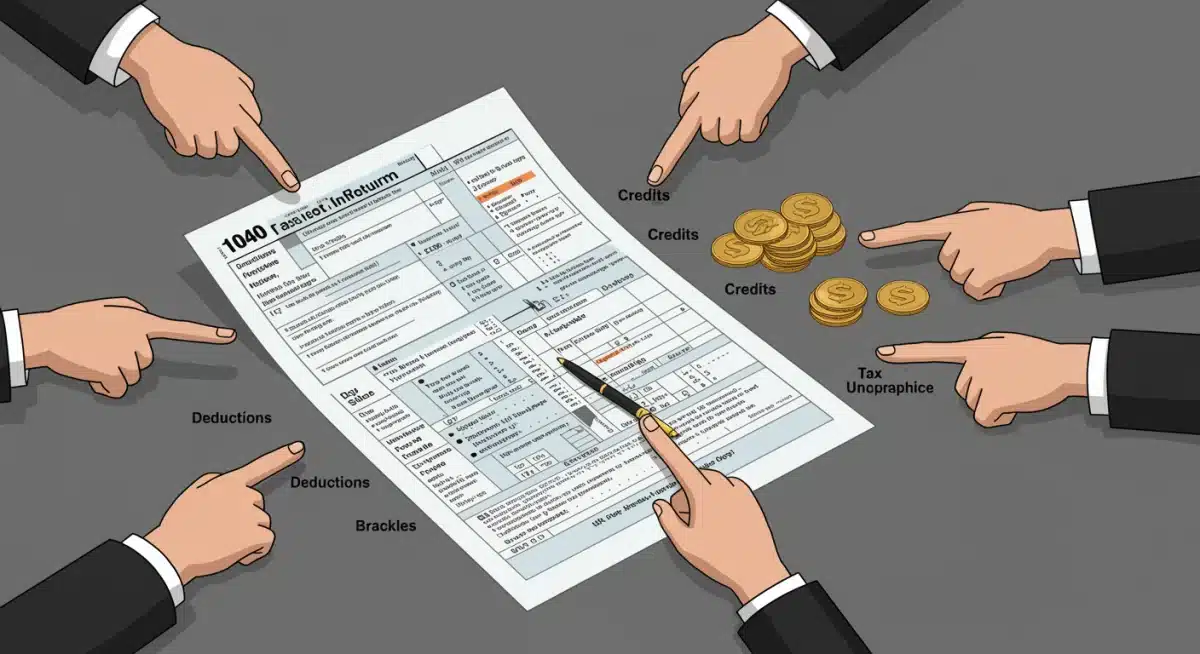
Beyond the Sunset: New Legislative Proposals and Political Landscape
While the expiration of TCJA provisions forms the baseline for the 2026 tax reforms, it’s crucial to remember that Congress has the power to act. The political climate leading up to 2026 will undoubtedly be charged with debates over tax policy, with various proposals likely to emerge from both sides of the aisle. Understanding these potential legislative directions is key to a comprehensive view of what might transpire.
Democratic Proposals
Historically, Democratic proposals have often focused on increasing taxes on corporations and high-income earners to fund social programs, reduce inequality, or address the national debt. For middle-income earners, this could mean some relief through expanded social safety nets or targeted tax credits, but it could also involve a broader tax base or changes to specific deductions. For example, some Democratic proposals have suggested expanding the Child Tax Credit beyond its TCJA levels, which would be a significant benefit to middle-income families.
Republican Proposals
Republicans generally advocate for lower taxes, reduced government spending, and policies that stimulate economic growth. While the original TCJA lowered rates for most, it’s possible that future Republican proposals might seek to extend some of the expiring provisions, potentially making some of the individual tax cuts permanent or introducing new tax-reducing measures. However, the fiscal implications of such extensions would also be a major point of discussion.
Bipartisan Compromise?
The most likely scenario might involve some form of bipartisan compromise, especially if control of Congress remains divided. This could lead to a mix of extensions for certain popular provisions, modifications to others, and perhaps the introduction of new targeted tax relief or revenue-generating measures. The ultimate shape of the 2026 tax reforms will depend heavily on the political will and negotiation skills of elected officials.
Strategies for Middle-Income Earners to Prepare for 2026 Tax Reforms
Given the uncertainty surrounding the exact nature of the 2026 tax reforms, proactive planning is paramount. Middle-income earners can take several steps now to position themselves favorably, regardless of the final legislative outcome.
1. Review Your Current Tax Situation
The first step is to thoroughly understand your current tax liability. Review your past tax returns (2022, 2023, 2024) to identify your marginal tax rate, the deductions and credits you currently utilize, and how these impact your overall tax burden. Pay close attention to your adjusted gross income (AGI), as many tax provisions are tied to income thresholds. This baseline understanding will help you project the impact of potential changes.
2. Maximize Tax-Advantaged Accounts
Regardless of what the 2026 tax reforms bring, contributing to tax-advantaged retirement accounts like 401(k)s, 403(b)s, and IRAs remains a cornerstone of sound financial planning. Traditional contributions reduce your taxable income in the present, which can be particularly beneficial if tax rates are expected to rise. Roth contributions, on the other hand, allow for tax-free withdrawals in retirement, which is advantageous if you anticipate being in a higher tax bracket later in life. Consider diversifying your retirement savings across both traditional and Roth accounts to hedge against future tax changes.
3. Optimize Deductions and Credits Before 2026
If you anticipate a lower standard deduction or reduced credits in 2026, consider accelerating certain deductions into 2025 where possible. For example, if you itemize, you might prepay property taxes or make larger charitable contributions in 2025. Similarly, review your eligibility for any expiring credits and ensure you claim them fully in the years leading up to the reforms.
4. Consider Tax-Loss Harvesting
For those with taxable investment accounts, tax-loss harvesting can be a valuable strategy. This involves selling investments at a loss to offset capital gains and potentially a limited amount of ordinary income. If capital gains rates are projected to increase in 2026, realizing losses in 2025 to offset future gains could be a smart move.
5. Evaluate Your Withholding
If your tax liability is expected to increase, you may need to adjust your W-4 form with your employer to ensure adequate tax withholding. This will help prevent an unexpected tax bill or underpayment penalties. Use the IRS Tax Withholding Estimator tool to fine-tune your withholding.
6. Estate Planning Review
The TCJA significantly increased the estate tax exemption, meaning fewer estates are subject to federal estate taxes. This provision is also set to expire, reverting to much lower pre-TCJA levels. While this primarily affects wealthier individuals, middle-income earners with substantial assets (including real estate, life insurance, and investments) should review their estate plans to understand potential implications and make necessary adjustments.
7. Stay Informed and Consult Professionals
The tax landscape is dynamic, and legislative discussions are ongoing. Continuously monitor reliable news sources and government announcements regarding the 2026 tax reforms. More importantly, consult with a qualified tax advisor or financial planner. They can provide personalized advice based on your specific financial situation, help you understand the nuances of the reforms, and develop a tailored strategy to navigate the changes effectively.

Long-Term Financial Resilience Amidst Tax Changes
The impending 2026 tax reforms underscore the importance of building long-term financial resilience. While specific tax laws may change, the principles of sound financial management remain constant. Diversifying income streams, maintaining an emergency fund, managing debt prudently, and investing wisely are all strategies that will serve you well, regardless of the tax environment.
For middle-income earners, the ability to adapt to changes in tax policy is crucial. This means not only understanding the immediate impact but also thinking strategically about how tax changes might influence your long-term goals, such as retirement, education savings, and wealth transfer. Consider stress-testing your financial plan against various tax reform scenarios to identify potential vulnerabilities and opportunities.
The Role of Advocacy
Beyond personal financial planning, middle-income earners also have a voice in shaping future tax policy. Engaging with elected officials, participating in public discourse, and supporting organizations that advocate for fair and equitable tax policies can contribute to outcomes that better serve the interests of the middle class. Understanding the proposals and their potential impacts allows for informed advocacy.
Conclusion: Preparing for a New Tax Era
The 2026 tax reforms represent a pivotal moment for individual taxpayers, especially those in the middle-income bracket. The expiration of key TCJA provisions means that significant changes to tax rates, deductions, and credits are on the horizon. While the exact contours of the future tax code remain subject to legislative debate and potential compromise, the prudent approach is to prepare now.
By understanding the expiring provisions, analyzing their potential impact on your household, and implementing proactive financial strategies, you can mitigate risks and position yourself for financial stability. Review your current tax situation, maximize tax-advantaged savings, optimize deductions, and, most importantly, seek professional guidance. The journey into the new tax era may seem daunting, but with careful planning and informed decision-making, middle-income earners can navigate these changes successfully and maintain their financial well-being. Stay vigilant, stay informed, and take control of your financial future.