The landscape of family financial support in the United States is constantly evolving, and few pieces of legislation have as profound an impact on American households as the Child Tax Credit (CTC). As we look ahead to 2026, significant discussions and legislative efforts are underway to expand this vital credit, with projections indicating that a more robust Child Tax Credit 2026 could provide much-needed relief and stability for an estimated 30 million families across the nation. This potential expansion is not merely a technical adjustment to the tax code; it represents a critical lifeline for millions, influencing everything from daily household budgets to long-term economic well-being.
The Child Tax Credit has a rich history, evolving from a modest provision to a cornerstone of federal support for families. Its most recent significant iteration, under the American Rescue Plan Act of 2021, saw a temporary but impactful expansion that demonstrated its immense potential to combat child poverty and stimulate local economies. This temporary expansion increased the maximum credit amount, made it fully refundable, and introduced advance monthly payments, drastically altering the financial outlook for millions of low- and middle-income families. While that expansion has since expired, the positive effects observed have fueled a strong push for a permanent or at least a renewed expansion of the Child Tax Credit 2026.
Understanding the nuances of the proposed Child Tax Credit 2026 expansion requires a deep dive into the legislative debates, economic implications, and the lived experiences of families who stand to benefit most. This article aims to provide a comprehensive overview, shedding light on what these changes could mean for your family, the broader economy, and the future of child welfare in America.
The Current State of the Child Tax Credit: A Foundation for Change
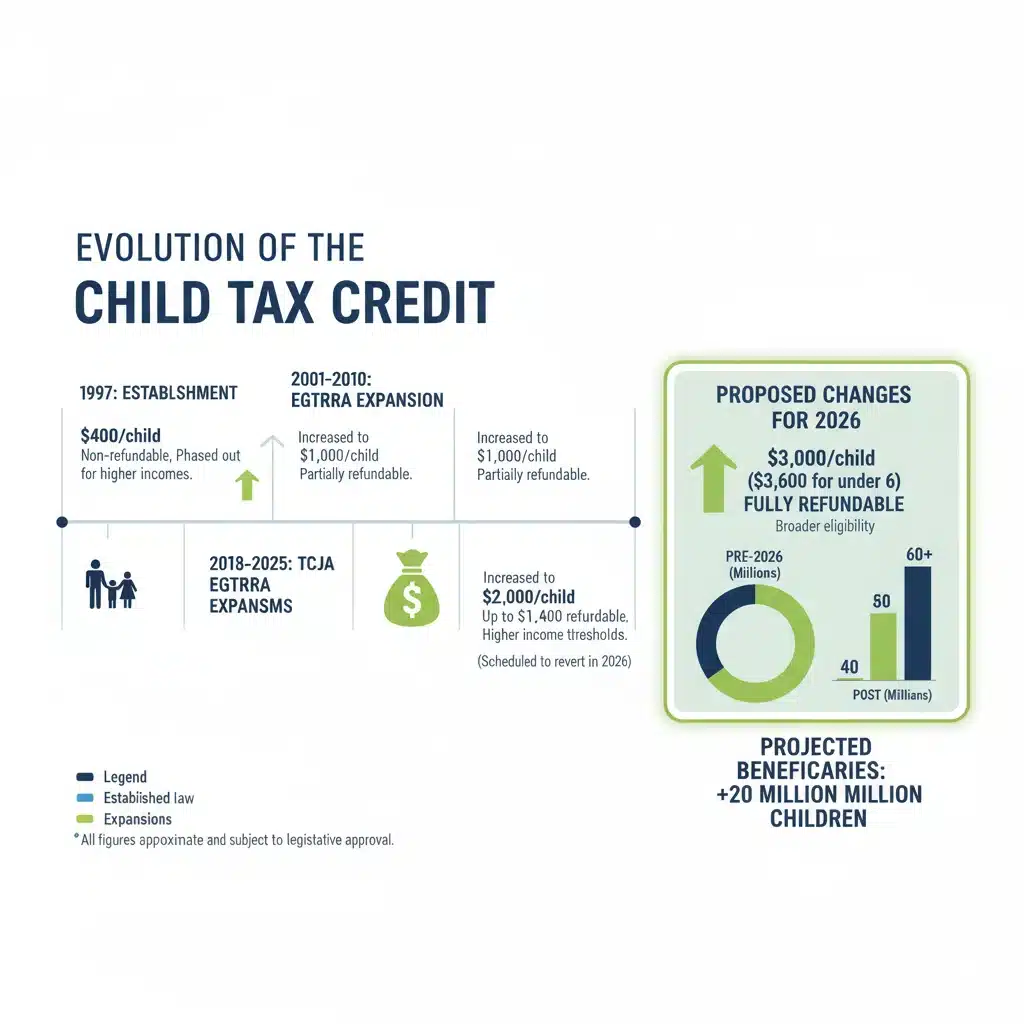
Before delving into the specifics of the Child Tax Credit 2026 proposals, it’s crucial to understand the current framework. As of now, the Child Tax Credit largely reverts to its pre-2021 structure. This means a maximum credit of $2,000 per qualifying child, with up to $1,600 of that credit being refundable for 2023 (indexed for inflation). The refundability threshold is tied to earned income, meaning that families with very low or no income often receive a reduced credit or no credit at all. This is a significant point of contention for advocates pushing for expansion, as it leaves many of the poorest families without full access to the credit’s benefits.
Eligibility for the current Child Tax Credit generally requires the child to be under 17 at the end of the tax year, a U.S. citizen, national, or resident alien, and to have lived with the taxpayer for more than half the year. Income limitations also apply, with the credit beginning to phase out for single filers with adjusted gross incomes (AGI) above $200,000 and married couples filing jointly with AGIs above $400,000. These thresholds are considerably higher than the phase-out levels for other tax benefits, making the CTC accessible to a broad range of middle-income families.
The return to this more restrictive structure after the 2021 expansion highlighted the disparities in how the credit impacts different income groups. While middle-income families continue to benefit, those at the lowest end of the income spectrum, who often need the support most, are frequently left behind due to the partial refundability rules. This discrepancy is a primary driver behind the legislative push for a more inclusive Child Tax Credit 2026.
Proposed Changes for Child Tax Credit 2026: What’s on the Table?
The discussions surrounding the Child Tax Credit 2026 are multifaceted, with various proposals vying for legislative attention. While specific details are still being negotiated, several key themes consistently emerge:
Increased Credit Amount
One of the most common proposals is to increase the maximum credit amount per child. The 2021 expansion temporarily raised the credit to $3,600 for children under six and $3,000 for children aged six to 17. Advocates argue that returning to these higher amounts is essential to truly alleviate financial burdens on families given rising inflation and cost of living. A higher credit would directly translate into more disposable income for families, allowing them to cover essential expenses like food, housing, childcare, and healthcare.
<
Full Refundability
Perhaps the most impactful proposed change for the Child Tax Credit 2026 is the reintroduction of full refundability. Under a fully refundable system, even families with no federal tax liability would receive the full credit amount. This is a critical component for addressing child poverty, as it ensures that the lowest-income families, who often pay little to no federal income tax, can still access the full benefit. The 2021 expansion demonstrated the profound effect of full refundability, significantly reducing child poverty rates during its implementation. Making the Child Tax Credit 2026 fully refundable would be a monumental step towards ensuring that all children, regardless of their parents’ income, receive the support they need.
Advance Monthly Payments
Another key feature of the 2021 expansion that proponents hope to revive for the Child Tax Credit 2026 is the system of advance monthly payments. Instead of receiving a lump sum at tax time, families received half of their estimated credit in monthly installments. This provided a steady stream of income, helping families manage their budgets more effectively and respond to immediate financial needs. For many, these monthly payments were crucial for covering recurring expenses like rent and groceries, offering a level of financial stability that a single annual payment could not match.
<
Lowering the Age Threshold
Some proposals also suggest lowering the age threshold for the higher credit amount, similar to the 2021 model where younger children received a larger credit. This acknowledges the higher costs associated with caring for infants and toddlers, such as childcare expenses and specialized supplies. While not as universally discussed as full refundability, this adjustment could provide targeted relief to families with very young children.
Indexing for Inflation
To ensure the long-term effectiveness of the Child Tax Credit, many proposals advocate for indexing the credit amount to inflation. This would prevent the credit’s value from eroding over time due to rising costs of living, ensuring that its purchasing power remains consistent and continues to provide meaningful support to families in the years to come.
Who Stands to Benefit? The 30 Million Families
The core promise of an expanded Child Tax Credit 2026 is its potential to uplift millions of families. Estimates suggest that a robust expansion, particularly one that includes full refundability and increased credit amounts, could directly benefit over 30 million families. This includes a diverse cross-section of American households:
- Low-Income Families: These families would see the most significant impact from full refundability. Many currently receive little to no credit due to insufficient tax liability. An expanded CTC would provide them with direct financial assistance, helping to lift children out of poverty and improve their overall well-being.
- Working-Class Families: Families earning modest incomes often struggle to make ends meet amidst rising costs. The CTC would supplement their wages, making it easier to afford necessities and invest in their children’s futures.
- Single-Parent Households: Single parents often face unique financial challenges, balancing work and childcare responsibilities. An enhanced Child Tax Credit 2026 would offer crucial support, easing the burden and providing greater stability.
- Families with Multiple Children: The per-child nature of the credit means that larger families would receive proportionally more support, helping to offset the increased expenses associated with raising several children.
- Rural and Urban Communities: The benefits of the CTC are not confined to specific geographic areas. Families in both rural and urban settings across all states would experience the positive effects, leading to a broad-based economic stimulus.
The expansion of the Child Tax Credit 2026 is fundamentally about investing in the next generation. By providing families with the resources they need, children are more likely to have access to better nutrition, stable housing, quality education, and healthcare, all of which contribute to improved long-term outcomes.
The Economic and Social Impact of an Expanded Child Tax Credit
The arguments for expanding the Child Tax Credit 2026 extend far beyond individual family benefits; they encompass significant economic and social implications for the nation as a whole.
Poverty Reduction
The most direct and celebrated impact of the 2021 CTC expansion was its dramatic effect on child poverty. Studies from Columbia University’s Center on Poverty and Social Policy found that the expanded credit reduced child poverty by nearly 40% during its implementation. A renewed Child Tax Credit 2026 with similar features would likely replicate this success, pulling millions of children out of poverty and providing them with a stronger foundation for life. Reducing child poverty has cascading benefits, including improved health outcomes, higher educational attainment, and reduced crime rates in the long run.
Economic Stimulus
Direct financial aid to families, especially those with lower incomes, tends to be spent quickly on essential goods and services. This injection of funds into local economies acts as a powerful economic stimulus. Businesses see increased demand, potentially leading to job creation and further economic growth. The money circulates within communities, strengthening local economies from the ground up. This makes the Child Tax Credit 2026 not just a social program but also an economic investment.
Improved Child Development and Health
When families have more financial resources, they can provide better nutrition, access to healthcare, and a more stable home environment for their children. Research consistently shows a strong link between family income and child development outcomes. An expanded CTC can lead to healthier children, better school performance, and greater opportunities for future success. This is an investment in human capital that pays dividends for society as a whole.
Reduced Income Inequality
The current tax system, in many ways, exacerbates income inequality. The Child Tax Credit, particularly when fully refundable, serves as a powerful tool to counteract this trend by directing resources to those who need them most. By leveling the playing field, an expanded Child Tax Credit 2026 can help create a more equitable society where opportunities are less dependent on one’s socioeconomic background.
Long-Term Societal Benefits
The benefits of investing in children are not immediate but accrue over decades. Children who grow up in less stressful, more financially secure environments are more likely to become productive members of society, contribute to the workforce, and rely less on public assistance in adulthood. This means that the Child Tax Credit 2026 represents a strategic long-term investment in the nation’s future prosperity and social cohesion.

Legislative Hurdles and Political Landscape
Despite the compelling evidence of its benefits, the path to an expanded Child Tax Credit 2026 is fraught with legislative challenges. The primary obstacle often revolves around the cost of such a program and how it would be funded. Critics frequently raise concerns about the national debt and the potential for increased government spending.
Political divisions also play a significant role. While there is bipartisan support for the idea of supporting families, the specifics of how to do so, particularly regarding refundability and work requirements, often become sticking points. Some lawmakers advocate for linking the credit more closely to work, while others prioritize full access for all low-income families, regardless of work status. These philosophical differences make reaching a consensus difficult.
The upcoming elections and shifts in congressional power will undoubtedly influence the trajectory of the Child Tax Credit 2026. Advocates are working tirelessly to build broad coalitions and highlight the widespread benefits of the expansion, hoping to garner enough support to pass meaningful legislation. Public opinion and advocacy from various organizations also play a crucial role in shaping the debate and pushing lawmakers towards action.
How Families Can Prepare for Potential Changes
While the specifics of the Child Tax Credit 2026 are still under negotiation, there are steps families can take to stay informed and prepare for potential changes:
- Stay Informed: Follow reputable news sources, government websites (like the IRS), and advocacy groups that track tax legislation. Understanding the current proposals and their potential impact is the first step.
- Organize Financial Records: Ensure all relevant financial documents, including income statements, tax returns, and records of dependents, are well-organized. This will make it easier to determine eligibility and apply for benefits once new legislation is passed.
- Consult a Tax Professional: If you have complex financial situations or questions about how potential changes might affect your specific circumstances, consider consulting a tax advisor. They can provide personalized guidance and help you navigate new tax laws.
- Understand Eligibility Criteria: Familiarize yourself with the general eligibility requirements for the Child Tax Credit, such as age limits, residency rules, and income thresholds. While these may change, having a basic understanding will be beneficial.
- Advocate for Change: If you believe in the importance of the Child Tax Credit, consider contacting your elected officials to express your support for its expansion. Public engagement can significantly influence legislative outcomes.
The discussions around the Child Tax Credit 2026 are dynamic and subject to ongoing political negotiations. However, the underlying need for robust family support remains constant. As the debate continues, the focus will undoubtedly remain on how best to provide meaningful assistance to American families and ensure a brighter future for the nation’s children.
Conclusion: A Brighter Future with Child Tax Credit 2026?
The potential expansion of the Child Tax Credit 2026 represents a pivotal moment for American families and the broader economy. With the capacity to benefit over 30 million households, this legislation has the power to significantly reduce child poverty, stimulate economic growth, and foster improved outcomes for children across the nation. The lessons learned from the 2021 expansion clearly demonstrate the profound positive impact that a more generous and accessible CTC can have.
While legislative hurdles and political disagreements persist, the compelling evidence of the Child Tax Credit’s effectiveness provides a strong foundation for continued advocacy. As lawmakers deliberate, the voices of families, economists, and child welfare advocates will be crucial in shaping the final form of this vital credit. A successful expansion of the Child Tax Credit 2026 would not only offer immediate financial relief but also serve as a long-term investment in the health, education, and prosperity of future generations, building a more equitable and resilient society for all.
Staying informed and engaged in this ongoing conversation is essential for every American who cares about the well-being of children and the economic stability of families. The future of the Child Tax Credit 2026 holds immense promise, and its successful implementation could mark a significant step forward in our collective commitment to supporting every child’s potential.