Student Loan Repayment 2026: Up to 25% Reduction for Families

In an ever-evolving economic landscape, student loan debt remains a significant burden for millions of American families. As we look towards 2026, new initiatives and adjustments are on the horizon, promising potential relief. This comprehensive guide will delve into the latest developments concerning student loan repayment 2026, focusing specifically on new programs offering up to a 25% payment reduction for families. Understanding these changes is crucial for effective financial planning and securing a brighter future.
The Latest on Student Loan Repayment for Families in 2026: New Programs Offering Up to 25% Payment Reduction
Navigating the Evolving Landscape of Student Loan Repayment
Student loan debt has long been a national concern, impacting not just individual borrowers but entire families. The cost of higher education continues to rise, making robust and flexible repayment options more critical than ever. The year 2026 is poised to introduce significant shifts in how these loans are managed, particularly for families grappling with multiple loans or substantial debt. These changes aim to alleviate financial stress, prevent defaults, and ensure that education remains an accessible dream rather than an unbearable financial burden.
For many families, the prospect of managing student loans for years, or even decades, can be daunting. Parents often co-sign loans or take out Parent PLUS loans, adding their own financial stability to the equation. The new programs for student loan repayment 2026 are designed with this family-centric approach in mind, recognizing that the financial health of one member often directly impacts the others. These initiatives represent a concerted effort to create a more sustainable and equitable system for educational financing.
This article will serve as your essential guide to understanding these upcoming changes. We will break down the specifics of the new programs, explain who qualifies, and illustrate how families can potentially reduce their monthly student loan payments by up to 25%. Our goal is to equip you with the knowledge needed to make informed decisions and take full advantage of the opportunities available in 2026.
Understanding the Core Changes in Student Loan Repayment for 2026
The landscape of federal student loan repayment is constantly subject to legislative and administrative revisions. The changes anticipated for 2026 are a direct response to ongoing economic pressures and a desire to improve borrower outcomes. While specific details can evolve, the overarching goal is to make repayment more manageable and less punitive. Key among these changes are expanded eligibility for income-driven repayment (IDR) plans, more generous subsidy provisions, and streamlined application processes.
Expanded Income-Driven Repayment (IDR) Options
Income-Driven Repayment plans have been a cornerstone of federal student loan relief for years, linking monthly payments to a borrower’s income and family size. For 2026, we expect to see further enhancements to these plans. This could include a lower discretionary income percentage used to calculate payments, making monthly obligations even more affordable. For instance, if a current IDR plan bases payments on 10% of discretionary income, a new plan might reduce this to 5% or even less for certain borrowers or loan types. This reduction directly translates to lower monthly payments, which is a significant part of how families can achieve the promised 25% reduction.
Furthermore, the definition of ‘discretionary income’ itself might be revised to be more favorable to borrowers. By increasing the income threshold that is considered non-discretionary (e.g., 225% of the poverty line instead of 150%), a larger portion of a borrower’s income would be protected, leading to lower calculated payments. These adjustments are particularly beneficial for families with lower incomes or those supporting multiple dependents, as their payments would be based on a smaller portion of their earnings.
Enhanced Subsidy Provisions
Another critical area of improvement for student loan repayment 2026 is expected to be in the realm of interest subsidies. Under many current IDR plans, unpaid interest can accrue, leading to a ballooning loan balance even if a borrower is making their required payments. This can be incredibly disheartening and can trap borrowers in a cycle of debt. The new programs are anticipated to offer more robust interest subsidies, potentially covering 100% of the unpaid interest after scheduled payments are made, especially for those with low incomes.
This means that if your income-driven payment isn’t enough to cover the interest that accrues each month, the government might pay the difference, preventing your principal balance from growing. This is a monumental change that could save families thousands of dollars over the life of the loan and provide a clear path to eventual loan forgiveness. For families, this means less worry about the loan balance increasing, even during periods of financial hardship.
Streamlined Application and Recertification Processes
Historically, applying for and recertifying IDR plans has been a complex and often frustrating process, leading many eligible borrowers to miss out on benefits. For 2026, there is a strong push towards simplifying these administrative hurdles. This could involve automatic enrollment options for eligible borrowers, pre-filled applications using tax data, and more frequent communication from loan servicers regarding recertification deadlines. A more user-friendly system ensures that more families can access the relief they are entitled to without unnecessary bureaucratic obstacles.

Who Qualifies for the 25% Payment Reduction?
The promise of a 25% payment reduction is significant, and understanding who is eligible is the first step towards realizing these savings. While specific criteria will be detailed closer to 2026, the general principles of eligibility are expected to revolve around loan type, income levels, and family size.
Federal Student Loan Borrowers
The new programs for student loan repayment 2026 are primarily designed for federal student loan borrowers. This includes Direct Loans (subsidized, unsubsidized, PLUS loans for parents and graduate students, and consolidation loans). Borrowers with Federal Family Education Loan (FFEL) Program loans or Perkins Loans may need to consolidate them into a Direct Consolidation Loan to become eligible for the most favorable terms of these new IDR plans. Private student loans are typically not covered by federal repayment programs, so borrowers with these loans will need to explore options directly with their private lenders.
Income and Family Size Considerations
Eligibility for the most substantial payment reductions, including the potential 25% decrease, will largely depend on a borrower’s adjusted gross income (AGI) relative to the federal poverty line for their family size. The lower your income relative to your family size, the lower your calculated monthly payment will be. The new programs are likely to be particularly beneficial for:
- Lower-income families: Those whose incomes are at or below a certain percentage of the poverty line may see their payments drastically reduced, potentially even to $0 per month.
- Families with multiple dependents: A larger family size directly impacts the calculation of discretionary income, leading to lower monthly payments.
- Borrowers with high debt-to-income ratios: Individuals or families carrying a significant amount of student loan debt relative to their earnings will find these programs especially helpful in making their payments more manageable.
The 25% reduction isn’t a blanket discount for all borrowers but rather the potential maximum reduction achievable through the enhanced IDR plans and interest subsidies. For some, the reduction could be even greater, leading to $0 payments, while for others with higher incomes, the reduction might be less but still substantial.
How to Calculate Your Potential Savings for Student Loan Repayment 2026
Estimating your potential savings requires understanding how income-driven repayment plans work and how the new provisions will alter the calculation. While exact figures will depend on the final regulations, we can outline the general methodology.
Understanding Discretionary Income
Your monthly payment under an IDR plan is typically a percentage of your discretionary income. Discretionary income is defined as the difference between your adjusted gross income (AGI) and a certain percentage of the federal poverty line for your family size. For example, if the protected income threshold is 225% of the poverty line, and your AGI is $50,000 with a poverty line of $20,000 for your family size, your protected income would be $45,000 (225% of $20,000). Your discretionary income would then be $5,000 ($50,000 – $45,000).
If the new program for student loan repayment 2026 reduces the payment percentage from 10% to 5% of discretionary income, your payment would drop from $500 per year (or ~$42/month) to $250 per year (or ~$21/month). This alone is a 50% reduction in this hypothetical scenario. When combined with interest subsidies, the overall financial relief can be profound.
Utilizing Online Calculators and Resources
As 2026 approaches, the Department of Education and various financial aid organizations will likely update their online calculators to reflect the new rules. These tools will be invaluable for families to input their specific financial details and estimate their new monthly payments. It’s recommended to:
- Gather your most recent tax returns to determine your AGI.
- Know your current family size.
- Have details about your federal student loan balances and interest rates.
By using these resources, you can get a clearer picture of how much you stand to save. Remember, the 25% reduction is an average or maximum potential; your individual savings will vary based on your unique financial situation.
Key Programs and Initiatives Driving the Changes in 2026
The push for significant changes in student loan repayment 2026 is not arbitrary. It stems from ongoing efforts to reform the federal student aid system. While new legislation can always emerge, many of the anticipated changes are expected to build upon existing frameworks, such as the Saving on a Valuable Education (SAVE) Plan, or introduce entirely new, more borrower-friendly initiatives.
The SAVE Plan and its Evolution
The SAVE Plan, which launched in 2023, already represents a significant step towards more affordable student loan repayment. It offers the lowest monthly payments of any IDR plan, calculates discretionary income more favorably, and includes a generous interest subsidy. The anticipated changes for 2026 are likely to either enhance the SAVE Plan further or introduce a successor program that incorporates its most beneficial features while expanding on them.
For example, if the SAVE Plan currently caps undergraduate loan payments at 10% of discretionary income, a 2026 iteration might reduce this to 5% for all borrowers, or introduce a tiered system where lower-income borrowers pay an even smaller percentage. The goal is to make the payment burden more proportional to a borrower’s ability to pay, ensuring that student loans do not prevent individuals from achieving other life goals, such as buying a home or starting a family.
Targeted Forgiveness Programs
Beyond monthly payment reductions, 2026 could also see the expansion or introduction of new targeted loan forgiveness programs. While broad-based forgiveness has been a topic of much debate, more specific programs, such as those for public service workers, teachers, or individuals in critical shortage professions, might see their eligibility criteria broadened or their forgiveness timelines shortened. These programs, while not directly reducing monthly payments, offer the ultimate relief by eliminating the debt altogether, which indirectly contributes to family financial stability.
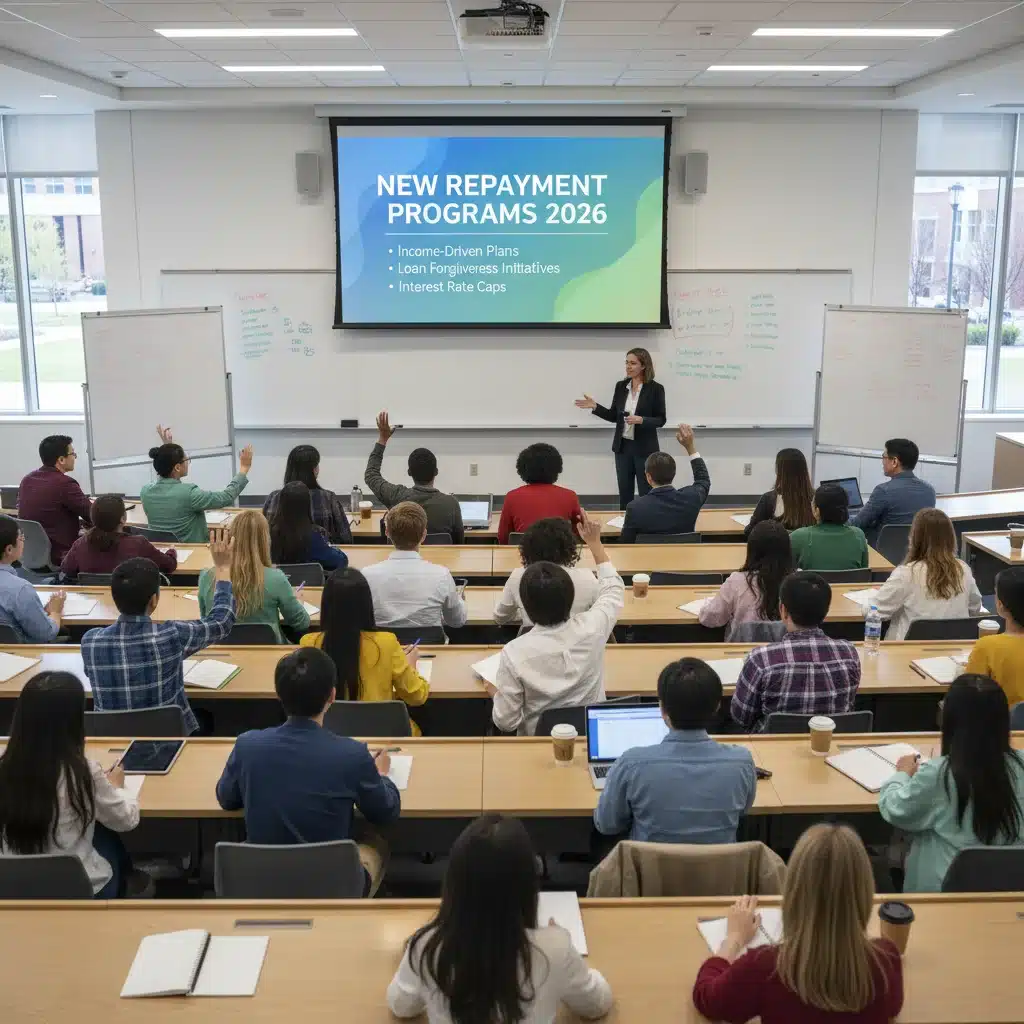
Actionable Steps for Families to Prepare for 2026
Preparing for the changes in student loan repayment 2026 now can put your family in a stronger financial position. Proactive engagement is key to maximizing potential savings and ensuring a smooth transition into the new repayment landscape.
1. Stay Informed and Monitor Official Sources
The most crucial step is to regularly check official government websites, such as StudentAid.gov, and reliable financial news outlets for updates. Policies can shift, and specific implementation details will be released closer to 2026. Subscribe to email alerts from the Department of Education or your loan servicer to receive timely notifications.
2. Understand Your Current Loan Portfolio
Familiarize yourself with your current federal student loans. Know your loan types (Direct, FFEL, Perkins), interest rates, and current repayment plan. This information is readily available on StudentAid.gov by logging into your account. Understanding your current situation will help you assess how the new 2026 programs might benefit you.
3. Consider Loan Consolidation (If Applicable)
If you have FFEL Program loans or Perkins Loans, consolidating them into a Direct Consolidation Loan might be a strategic move. This can make you eligible for federal IDR plans, including the new ones anticipated for 2026, and potentially for Public Service Loan Forgiveness (PSLF). Be aware that consolidation can sometimes reset your payment count for IDR or PSLF, so research this carefully or consult a financial advisor.
4. Review Your Income and Family Size Annually
Income-driven repayment plans require annual recertification of your income and family size. Ensure this information is always up-to-date. As your income changes or your family grows, your payments can be adjusted accordingly. For 2026, these annual reviews will be even more critical to capture the full benefits of any new programs.
5. Explore Other Financial Aid and Scholarship Opportunities
While this article focuses on repayment, reducing the amount borrowed initially is always the best strategy. Encourage current and future students in your family to actively pursue scholarships, grants, and other forms of financial aid that do not need to be repaid. Every dollar secured upfront is a dollar less to repay later.
6. Seek Professional Financial Advice
For complex financial situations or substantial loan balances, consulting a certified financial planner or a student loan expert can be invaluable. They can help you navigate the intricacies of the new programs, assess your eligibility, and develop a personalized repayment strategy tailored to your family’s specific needs and goals.
The Broader Impact of Reduced Student Loan Payments on Families
A 25% reduction, or even more, in monthly student loan payments can have a ripple effect on a family’s overall financial health and well-being. This isn’t just about saving money; it’s about freeing up resources for other critical needs and investments.
Increased Disposable Income
With lower student loan payments, families will have more disposable income. This can be used for essential expenses, such as groceries, healthcare, or housing, or it can be directed towards savings goals like retirement, a down payment on a home, or a child’s education fund. This increased financial flexibility can significantly reduce stress and improve quality of life.
Boost to the Economy
On a macro level, putting more money back into the hands of consumers can stimulate economic growth. When families have more to spend or invest, it can lead to increased demand for goods and services, supporting businesses and creating jobs. The broader impact of more affordable student loan repayment 2026 programs extends far beyond individual households.
Improved Credit Scores and Financial Stability
Lower, more manageable payments reduce the risk of delinquency and default, which in turn protects and can even improve borrowers’ credit scores. A strong credit score is vital for obtaining favorable rates on mortgages, car loans, and other forms of credit. This enhanced financial stability can open doors to greater economic opportunities for families.
Mental and Emotional Well-being
Perhaps one of the most underestimated benefits is the positive impact on mental and emotional well-being. The constant pressure of student loan debt can take a heavy toll. Knowing that payments are more affordable and that there’s a clear path to eventual loan forgiveness can significantly reduce stress, anxiety, and feelings of being overwhelmed. This allows families to focus on thriving rather than just surviving.
Potential Challenges and Considerations
While the outlook for student loan repayment 2026 is largely positive, it’s essential to approach these changes with a realistic understanding of potential challenges and considerations.
Political and Legislative Volatility
Student loan policies are often subject to political debate and legislative changes. While the current trajectory points towards more borrower-friendly options, future administrations or legislative bodies could alter or even reverse some of these provisions. Staying informed and advocating for policies that support borrowers will remain important.
Awareness and Accessibility
Despite efforts to streamline processes, a significant challenge remains in ensuring that all eligible borrowers are aware of and can easily access these new programs. Outreach and education initiatives will be crucial to prevent families from missing out on benefits due to a lack of information or complex application procedures.
Impact on Future Borrowing
While current borrowers stand to benefit, it’s also worth considering the long-term implications for future student loan programs. Efforts to reduce repayment burdens may lead to discussions about the overall cost of higher education and how it is funded, potentially influencing future loan availability or terms.
Conclusion: A Brighter Future for Student Loan Repayment in 2026
The upcoming changes to student loan repayment 2026 offer a beacon of hope for millions of families burdened by educational debt. With new programs promising up to a 25% payment reduction, enhanced interest subsidies, and more accessible income-driven repayment options, the financial landscape for borrowers is set to become significantly more manageable.
These reforms recognize the profound impact student debt has on family finances and aim to create a more equitable and sustainable system. By staying informed, understanding your loan portfolio, and proactively engaging with available resources, families can effectively navigate these changes and unlock substantial financial relief. The journey towards financial freedom from student loans is a marathon, not a sprint, but with these new programs, the path ahead looks considerably clearer and less arduous.
Embrace these opportunities, plan strategically, and look forward to a future where educational achievement is not synonymous with overwhelming financial strain. The year 2026 could mark a pivotal moment in your family’s financial journey, offering the chance to redirect funds towards growth, security, and peace of mind.