
Family Debt Management in 2026: Consolidating High-Interest Loans to Save 8-12% on Monthly Payments
As we navigate the ever-evolving financial landscape of 2026, many families find themselves grappling with the persistent challenge of managing various forms of debt. From credit card balances that seem to grow exponentially to personal loans with daunting interest rates, the cumulative burden can feel overwhelming. However, there’s a powerful strategy that continues to stand out as a beacon of hope for financial relief: family debt consolidation. This approach, when executed wisely, can lead to significant savings, often reducing monthly payments by a substantial 8-12% or even more, providing much-needed breathing room and a clearer path to financial stability.
The goal of this comprehensive guide is to empower your family with the knowledge and tools to effectively manage and reduce your debt. We’ll delve into the intricacies of consolidating high-interest loans, explore the various options available, and provide practical steps to implement a successful family debt management plan. By understanding the nuances of this strategy, you can transform your financial outlook, reduce stress, and build a more secure future for your loved ones.
Understanding the Debt Landscape in 2026
Before diving into solutions, it’s crucial to understand the current debt environment. In 2026, economic shifts, inflation, and varying interest rates continue to impact household budgets. Many families accumulate debt through a combination of factors: unexpected emergencies, educational expenses, home improvements, or simply the conveniences offered by credit cards. When these debts carry high interest rates, they become financial quicksand, making it incredibly difficult to make progress on the principal amount.
Common Types of High-Interest Family Debt
- Credit Card Debt: Often the most insidious due to revolving balances and notoriously high Annual Percentage Rates (APRs), frequently ranging from 18% to 25% or even higher. This is a prime target for family debt consolidation.
- Personal Loans: While sometimes offering lower rates than credit cards, unsecured personal loans can still carry significant interest, especially for those with less-than-perfect credit scores.
- Payday Loans: These short-term, high-cost loans are designed to be repaid quickly but can trap borrowers in a cycle of debt due to exorbitant fees and interest rates.
- Medical Debt: Unexpected health crises can leave families with substantial bills that, if not managed, can accrue interest or be sent to collections.
- Retail Store Cards: Similar to credit cards, these often come with deferred interest promotions that can lead to high rates if the balance isn’t paid off within the promotional period.
The key takeaway here is that not all debt is created equal. High-interest debt is the most damaging to your family’s financial health, as a larger portion of your monthly payment goes towards interest rather than reducing the actual amount you owe. This is precisely where family debt consolidation shines as a strategic intervention.
What is Family Debt Consolidation?
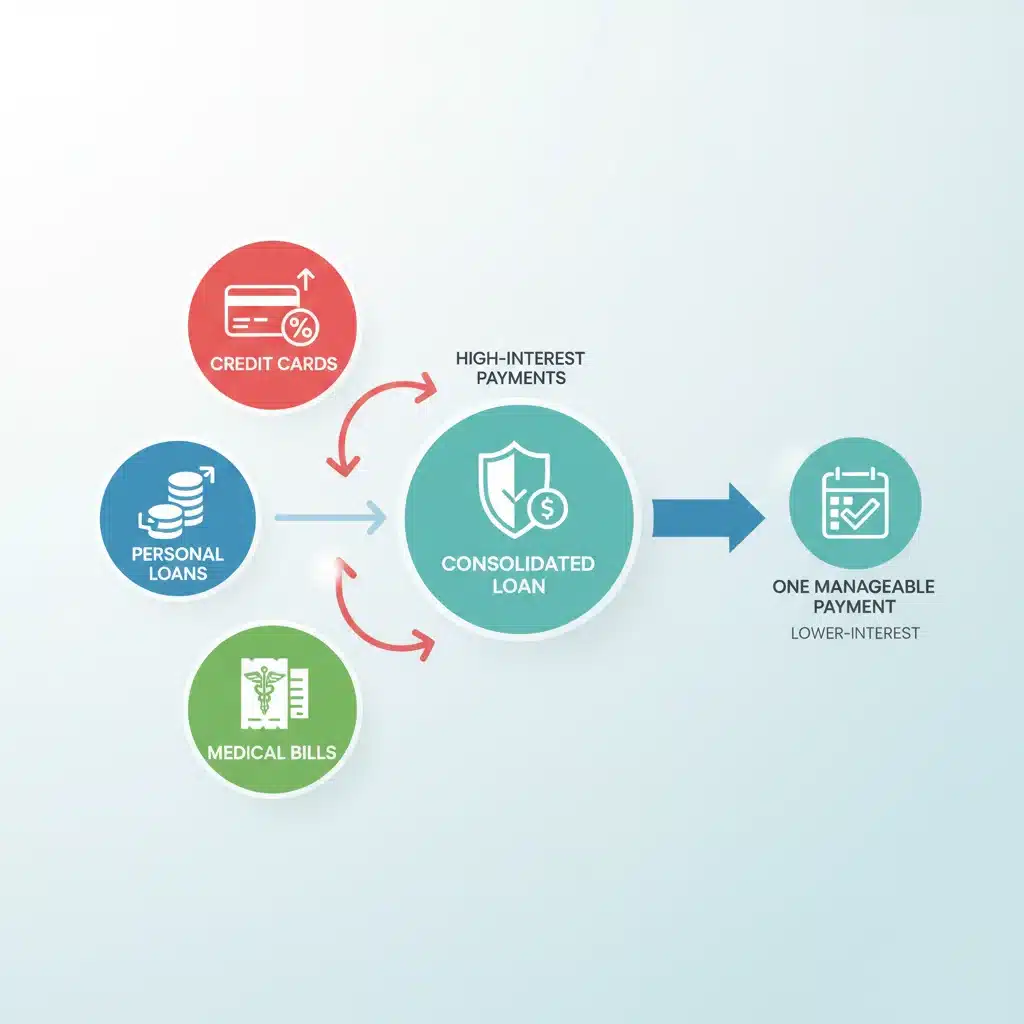
Family debt consolidation is a financial strategy where multiple high-interest debts are combined into a single, new loan, often with a lower interest rate and a more manageable monthly payment. Instead of making several payments to different creditors each month, you make one payment to a single lender. This simplifies your financial life and, more importantly, can significantly reduce the total amount of interest you pay over the life of the loan.
How Family Debt Consolidation Works
Imagine your family has several credit cards, a personal loan, and perhaps some medical bills, each with different payment due dates and varying high-interest rates. With family debt consolidation, you would take out a new loan (or use an existing asset) to pay off all these individual debts. The new loan would ideally have a lower interest rate and a fixed payment schedule, making it easier to budget and predict your financial outflow. This move is particularly beneficial for managing family debt, as it brings clarity and predictability to household finances.
The Benefits of Consolidating High-Interest Loans
The advantages of family debt consolidation extend far beyond just simplifying payments. For families struggling with multiple high-interest obligations, the benefits can be transformative.
1. Significant Interest Rate Savings (8-12% or More)
This is arguably the most compelling reason to consider consolidation. By securing a new loan with a lower interest rate, you reduce the overall cost of your debt. For example, if you’re paying 20% on credit card debt and consolidate it into a personal loan at 10%, you immediately cut your interest cost in half. Over time, these savings compound, freeing up hundreds or even thousands of dollars that can be redirected towards other family needs or savings goals. Our research indicates that many families achieve an 8-12% reduction in their effective interest rate, leading to substantial monthly payment savings.
2. Lower Monthly Payments
A lower interest rate often translates directly into a lower monthly payment. This can alleviate significant financial strain, making it easier for your family to meet essential expenses, save for emergencies, or invest in your future. Having a predictable, reduced monthly outlay is a cornerstone of effective family debt management.
3. Simplified Debt Management
Juggling multiple due dates, minimum payments, and interest rates can be a source of constant stress and can easily lead to missed payments. With consolidation, you have just one payment to remember each month, streamlining your financial routine and reducing the risk of late fees and damage to your credit score. This simplification is invaluable for busy families.
4. Clear Path to Becoming Debt-Free
A consolidated loan typically comes with a fixed repayment schedule. This means you know exactly when your debt will be paid off, providing a clear finish line and a powerful motivator. This clarity helps families set realistic financial goals and work towards them together.
5. Potential Credit Score Improvement
While the initial credit inquiry for a new loan might cause a temporary dip, successful debt consolidation can improve your credit score over time. By reducing your credit utilization ratio (the amount of credit you’re using compared to your total available credit) and making consistent, on-time payments, you demonstrate responsible financial behavior, which positively impacts your creditworthiness.
Popular Methods for Family Debt Consolidation in 2026
Several avenues exist for families looking to consolidate their high-interest debt. Each has its own advantages and considerations.
1. Personal Loans
Unsecured personal loans are a common and effective way to consolidate debt. You borrow a lump sum from a bank, credit union, or online lender, use it to pay off your existing high-interest debts, and then repay the personal loan in fixed monthly installments over a set period (e.g., 3-5 years). The interest rate is typically lower than credit cards, and the fixed term provides a clear repayment schedule.
Pros: Predictable payments, often lower interest rates than credit cards, no collateral required.
Cons: Requires good credit for the best rates, interest rates can still be high if your credit is fair.
2. Balance Transfer Credit Cards
Some credit cards offer introductory 0% APR periods on balance transfers, typically lasting 12 to 21 months. If your family can pay off the transferred balance within this promotional period, you can effectively pay zero interest on that debt. This is an excellent option for those with good credit and the discipline to pay off the balance quickly.
Pros: 0% interest for a limited time, significant savings if paid off quickly.
Cons: Requires excellent credit, balance transfer fees (typically 3-5% of the transferred amount), high APR kicks in after the promotional period if the balance isn’t fully paid.
3. Home Equity Loan or Home Equity Line of Credit (HELOC)
If your family owns a home with significant equity, you can use a home equity loan (a lump sum loan) or a HELOC (a revolving line of credit) to consolidate debt. These are secured loans, meaning your home serves as collateral, which often results in much lower interest rates than unsecured options.
Pros: Very low interest rates, potentially tax-deductible interest (consult a tax advisor), large loan amounts.
Cons: Your home is at risk if you default, closing costs and fees, can extend the repayment period significantly.
4. Debt Management Plans (DMPs) through Credit Counseling Agencies
A non-profit credit counseling agency can help you create a Debt Management Plan. They negotiate with your creditors on your behalf to potentially lower interest rates and waive fees. You then make one monthly payment to the agency, which distributes the funds to your creditors. This isn’t a loan but a structured repayment plan.
Pros: Lower interest rates, waived fees, structured repayment, no new loan required, helps improve financial habits.
Cons: May close existing credit accounts, requires commitment to the plan, minor fees for the service.
Steps to Successfully Implement Family Debt Consolidation
Embarking on a family debt consolidation journey requires careful planning and execution. Here’s a step-by-step guide to help your family achieve financial freedom.
Step 1: Assess Your Current Debt Situation
The first crucial step is to get a clear picture of your family’s total debt. Gather all statements for credit cards, personal loans, medical bills, and any other high-interest obligations. Create a spreadsheet or use a financial app to list:
- Creditor name
- Current balance
- Interest rate (APR)
- Minimum monthly payment
- Due date
Prioritize debts by interest rate – typically, those with the highest APR should be targeted first for consolidation, as they are costing your family the most money.
Step 2: Evaluate Your Credit Score
Your credit score plays a significant role in the interest rate you’ll be offered for a new consolidation loan. Obtain your credit reports from all three major bureaus (Equifax, Experian, TransUnion) and check your scores. A higher credit score (generally above 670) will qualify you for better terms and lower interest rates. If your score is low, consider taking steps to improve it before applying for a new loan, such as paying down small balances or disputing inaccuracies on your report.
Step 3: Research Consolidation Options and Lenders
Based on your debt profile and credit score, research the various consolidation methods discussed above. Compare offers from multiple lenders for personal loans, balance transfer cards, or home equity products. Look beyond just the interest rate; also consider:
- Fees: Origination fees, balance transfer fees, annual fees.
- Repayment Terms: How long is the loan term? A longer term might mean lower monthly payments but more interest paid overall.
- Eligibility Requirements: Do you meet the credit score and income requirements?
- Customer Service: Read reviews and check the lender’s reputation.
For families, involving all adult members in this research process can foster a shared understanding and commitment to the plan.
Step 4: Create a Detailed Family Budget
Before committing to a consolidation plan, it’s essential to understand your family’s monthly income and expenses. A realistic budget will help you determine how much you can comfortably afford to pay towards your consolidated debt each month. Look for areas where you can cut unnecessary spending to free up more money for debt repayment. This is a critical step for long-term family debt management success.

Step 5: Apply for the Chosen Consolidation Option
Once you’ve selected the best option for your family, proceed with the application. Be prepared to provide financial documentation, including income verification, debt statements, and potentially asset information for secured loans. Be honest and thorough in your application to avoid delays.
Step 6: Pay Off Your High-Interest Debts
Once your consolidation loan is approved and funded, use the funds to immediately pay off your high-interest debts. It is crucial to ensure these accounts are closed or at least have a zero balance. Resist the temptation to use these newly freed-up credit lines, as this can lead to accumulating new debt and undermining your consolidation efforts.
Step 7: Stick to Your Repayment Plan and Avoid New Debt
This is perhaps the most critical step. Make your consolidated loan payments on time, every time. Set up automatic payments to avoid missing due dates. More importantly, commit as a family to avoid accumulating new high-interest debt. This might mean adjusting spending habits, building an emergency fund, and living within your means. Ongoing family debt management requires discipline and communication.
Potential Pitfalls to Avoid in Family Debt Consolidation
While family debt consolidation offers significant advantages, it’s not a magic bullet. There are potential downsides and traps to be aware of.
1. Not Addressing Underlying Spending Habits
Consolidating debt without addressing the behaviors that led to its accumulation is like putting a band-aid on a gaping wound. If your family doesn’t change its spending habits, you might find yourselves accumulating new debt on top of the consolidated loan, leading to an even worse financial situation. A robust family debt management plan includes behavioral changes.
2. Extending the Repayment Period Too Much
While a longer repayment term can result in lower monthly payments, it often means paying more interest over the life of the loan. Strive for the shortest repayment period you can comfortably afford to minimize total interest paid.
3. High Fees
Be vigilant about fees. Balance transfer fees, loan origination fees, and closing costs can eat into your savings. Always calculate the total cost of the consolidation option, not just the interest rate.
4. Risking Collateral (Home Equity Loans)
Using your home as collateral for a debt consolidation loan carries the risk of foreclosure if you fail to make payments. Understand this significant risk before opting for a secured loan.
5. Impact on Credit Score
While long-term effects can be positive, applying for a new loan or closing old accounts can temporarily impact your credit score. Be prepared for a slight dip initially.
Building a Financially Resilient Family in 2026 and Beyond
Family debt consolidation is a powerful tool, but it’s just one component of overall financial health. To build a truly resilient financial future for your family, consider these additional strategies:
1. Establish an Emergency Fund
One of the primary reasons families fall into debt is unexpected expenses. Building an emergency fund with 3-6 months’ worth of living expenses can act as a financial buffer, preventing you from relying on high-interest credit cards when unforeseen events occur. Make this a priority after consolidating your family debt.
2. Regular Family Financial Meetings
Open and honest communication about finances is vital for families. Schedule regular meetings to discuss your budget, progress on debt repayment, savings goals, and any upcoming financial decisions. This fosters shared responsibility and keeps everyone on the same page regarding family debt management.
3. Educate Your Children About Money
Start teaching financial literacy to your children early. Understanding the value of money, the concept of saving, and the dangers of debt can equip them with essential skills for their future, breaking potential cycles of debt for generations to come.
4. Explore Additional Income Streams
If your budget is tight, consider ways to increase your family’s income. This could involve side hustles, part-time work, or leveraging skills for freelance opportunities. Any extra income can be directed towards accelerating debt repayment or building savings.
5. Review and Adjust Your Plan Periodically
Life changes, and so should your financial plan. Periodically review your budget, debt repayment progress, and savings goals. Adjust your strategy as needed to adapt to new circumstances, ensuring your family debt management plan remains effective.
The Future of Family Finance: 2026 and Beyond
As we look towards the rest of 2026 and into the future, financial literacy and proactive debt management will only become more critical. Economic conditions can shift rapidly, and being prepared means having a solid financial foundation. Family debt consolidation is not just about paying off old debts; it’s about resetting your financial trajectory and instilling healthier money habits that will benefit your family for years to come.
The goal is not just to save 8-12% on monthly payments, though that is a significant and tangible benefit. The ultimate goal is to reduce financial stress, free up cash flow for investments in your family’s future (education, retirement, experiences), and build a legacy of financial prudence. By taking control of your family debt today, you are investing in a more secure and prosperous tomorrow.
Conclusion: Empower Your Family’s Financial Future with Smart Debt Consolidation
In conclusion, for families burdened by high-interest debt in 2026, consolidating those loans presents a powerful and often essential strategy for regaining financial control. By carefully assessing your debt, understanding your options, and committing to a disciplined repayment plan, your family can significantly reduce monthly payments, save a substantial amount on interest, and accelerate your journey to becoming debt-free. Remember, effective family debt management is a collective effort that requires communication, planning, and consistent action.
Don’t let the weight of multiple high-interest debts hold your family back. Take the proactive step towards exploring family debt consolidation. The potential savings of 8-12% on monthly payments are a clear incentive, but the peace of mind and financial freedom you gain are truly invaluable. Start your family’s journey towards a brighter, debt-free future today.