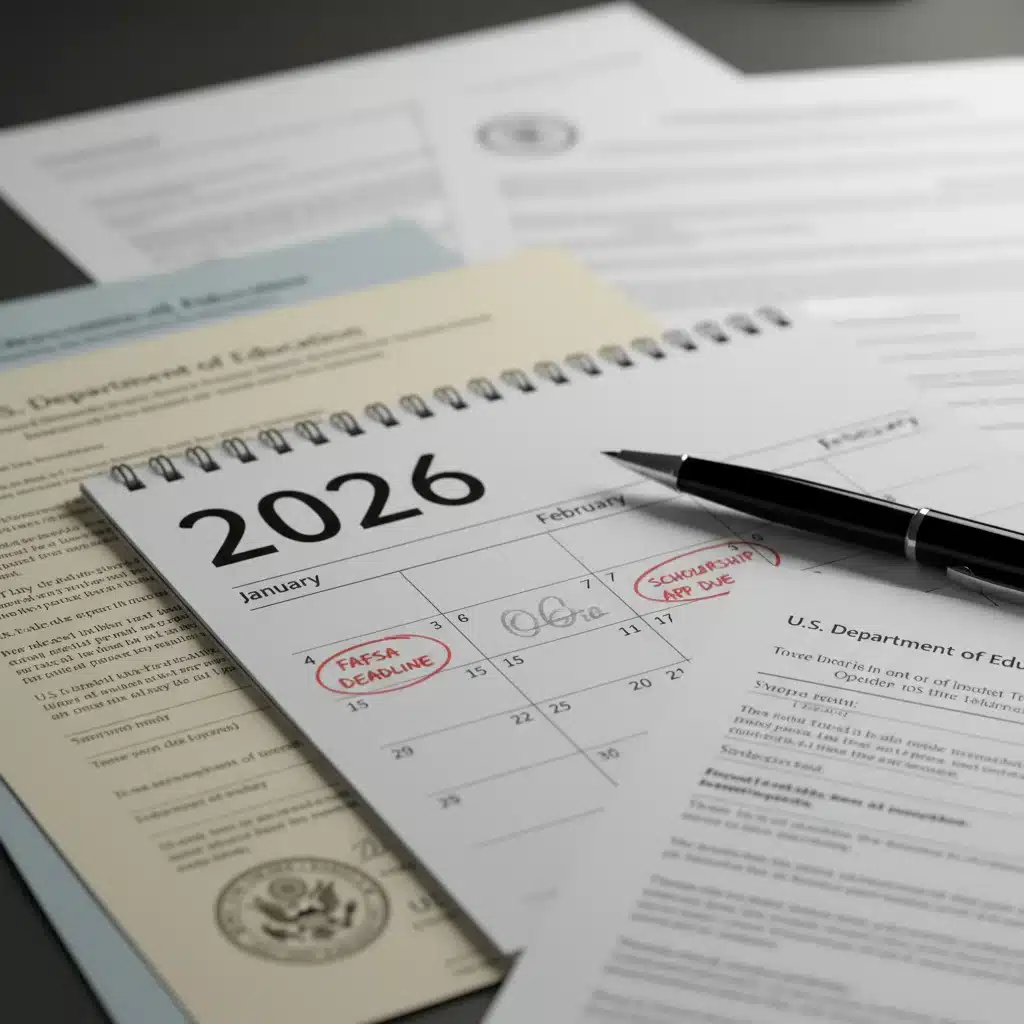
Deadline Alert: Key Dates for 2026 Federal Student Aid Applications You Cannot Miss (TIME-SENSITIVE)
Are you or someone you know planning to attend college or vocational school in the 2026-2027 academic year? If so, understanding the critical deadlines for 2026 Federal Student Aid is not just important – it’s absolutely essential. Missing a deadline could mean missing out on thousands of dollars in grants, scholarships, and low-interest loans that can make higher education affordable. This comprehensive guide will walk you through everything you need to know, from FAFSA changes to state-specific deadlines, ensuring you’re fully prepared to secure the financial assistance you deserve.
The Unmissable Cornerstone: The FAFSA for 2026 Federal Student Aid
The Free Application for Federal Student Aid (FAFSA) is the gateway to virtually all federal student aid, and often, state and institutional aid as well. For the 2026-2027 academic year, the FAFSA will open on October 1, 2025. While this might seem like a long way off, procrastinating is the biggest mistake you can make. The earlier you submit your FAFSA, the better your chances of receiving aid, especially for programs with limited funding that are awarded on a first-come, first-served basis.
The FAFSA process has undergone significant modernization in recent years, aiming to simplify the application and expand eligibility. While the exact details for the 2026-2027 FAFSA will be finalized closer to its release, it’s safe to assume that the changes introduced in prior cycles, such as a streamlined form and updated methodology for calculating the Student Aid Index (SAI), will continue to evolve and refine the application experience. Staying informed about these changes is crucial for anyone applying for 2026 Federal Student Aid.
Key takeaways for the FAFSA:
- Opening Date: October 1, 2025 (for the 2026-2027 academic year). Mark your calendars!
- "First-Come, First-Served" Aid: Some federal, state, and institutional aid programs have limited funds. Submitting early significantly increases your chances.
- Required Information: You’ll need tax information (for both students and parents/guardians, if applicable), records of untaxed income, asset information, and social security numbers. Gather these documents well in advance.
- FSA ID: Both the student and one parent (if dependent) will need an FSA ID to access and sign the FAFSA electronically. Create these ahead of time if you don’t already have them.
Understanding Federal Student Aid Deadlines: A Multi-Layered Approach
Unlike a single, universal deadline, 2026 Federal Student Aid operates under several layers of deadlines. Missing any of these could jeopardize your financial aid package. Here’s a breakdown:
1. Federal FAFSA Deadlines
The federal deadline for submitting the FAFSA for the 2026-2027 academic year is June 30, 2027. While this date seems very late, it’s important to understand that this is the absolute final deadline for federal aid eligibility. As mentioned, waiting this long is highly discouraged due to the nature of first-come, first-served aid. This federal deadline primarily impacts Pell Grants and federal student loans.
2. State Financial Aid Deadlines
This is where things get more complex and location-specific. Most states have their own financial aid programs, and they almost always have earlier FAFSA deadlines than the federal one. These state deadlines can vary significantly, ranging from late fall 2025 to spring 2026. Some states operate on a "priority" basis, meaning that while you can submit later, your chances of receiving aid diminish significantly after the priority deadline.
Example: A state might have a FAFSA deadline of March 1, 2026, for state grants. If you submit after this date, you might still be eligible for federal aid, but you’ll likely miss out on state-specific funding. It’s imperative to check your specific state’s higher education agency website for their definitive deadlines for 2026 Federal Student Aid and state aid.
3. College/University Financial Aid Deadlines
Individual colleges and universities often have their own institutional financial aid deadlines, which can be even earlier than state deadlines. These deadlines are crucial for receiving aid directly from the school itself, such as institutional scholarships, grants, and work-study programs. Many schools require the FAFSA (and sometimes the CSS Profile) to be submitted by their admissions application deadline, or shortly thereafter.
Pro Tip: When researching colleges, pay close attention to their financial aid section. Create a personalized spreadsheet or calendar with each school’s specific FAFSA, CSS Profile (if required), and institutional scholarship deadlines. This proactive approach is vital for maximizing your 2026 Federal Student Aid and overall financial package.
Key Dates for Your 2026 Federal Student Aid Calendar: A Snapshot
While specific dates will vary by state and institution, here’s a general timeline to help you plan for 2026 Federal Student Aid:
- Fall 2025 (October 1): FAFSA opens for the 2026-2027 academic year. This is your cue to begin the application process immediately.
- Fall 2025 – Spring 2026: State financial aid deadlines. These will be the earliest deadlines for many applicants. Verify your state’s specific date.
- Winter 2025 – Spring 2026: College-specific financial aid deadlines. These often align with or are soon after admissions deadlines.
- Summer 2027 (June 30): Federal FAFSA deadline. This is the absolute last day to submit your FAFSA, but again, aim for much earlier.

Preparing for the FAFSA: Documents and Information You’ll Need
To ensure a smooth FAFSA application process for your 2026 Federal Student Aid, gather the following documents and information well in advance:
- FSA ID: If you don’t have one, create it at studentaid.gov. Both the student and a parent (if dependent) will need one.
- Social Security Number: For both the student and parents (if applicable).
- Driver’s License Number: If the student has one.
- Alien Registration Number: If the student is not a U.S. citizen but is an eligible non-citizen.
- Federal Tax Returns: For the 2024 tax year (since the 2026-2027 FAFSA uses "prior-prior year" tax data). This includes Form 1040 and any relevant schedules.
- W-2 Forms: From all employers for the 2024 tax year.
- Records of Untaxed Income: Such as child support received, interest income, and veterans noneducation benefits.
- Information on Cash, Savings, and Checking Account Balances: As of the day you complete the FAFSA.
- Investment Records: Including stocks, bonds, mutual funds, and other investment accounts (excluding retirement accounts like 401(k)s and 403(b)s).
- Real Estate Investment Records: (Excluding the family home).
- Business and Farm Assets: If applicable.
The FAFSA uses "prior-prior year" tax information. For the 2026-2027 FAFSA, this means you will report income and tax information from the 2024 tax year. This change helps families apply earlier, as they typically have their tax information ready by October 1st.
Recent FAFSA Simplification Act Changes and Their Impact on 2026 Federal Student Aid
The FAFSA Simplification Act brought about significant changes that will continue to affect applicants for 2026 Federal Student Aid. While the full impact rolls out over several years, here are some key areas to be aware of:
- Streamlined Application: The FAFSA form has been significantly shortened and simplified, making it easier and faster to complete.
- Student Aid Index (SAI) Replaced EFC: The Expected Family Contribution (EFC) has been replaced by the Student Aid Index (SAI). The SAI calculation is different and aims to provide a more accurate measure of a student’s financial need.
- Expanded Pell Grant Eligibility: More students will be eligible for Pell Grants, and some may receive a maximum Pell Grant based on adjusted gross income (AGI) and family size, regardless of their SAI.
- Direct Data Exchange with IRS: The FAFSA now uses a direct data exchange with the IRS, making it easier and more accurate to import tax information. This also means that parental consent to pull tax data is now mandatory for dependent students to receive federal student aid.
- Number of Students in College No Longer a Factor: The previous formula considered the number of children in college. The new SAI calculation removes this factor, which could impact larger families.
- Child Support Treatment: Child support received is now reported as an asset, rather than untaxed income, which may affect SAI calculations for some families.
These changes are designed to improve the FAFSA experience and expand access to federal student aid. However, it’s crucial for applicants and their families to understand how these modifications might specifically affect their eligibility for 2026 Federal Student Aid.
Types of 2026 Federal Student Aid Available
When you complete the FAFSA, you’re opening the door to several types of federal financial assistance. Understanding these options will help you make informed decisions about your college funding:
- Grants: This is "free money" that typically doesn’t need to be repaid. The most common federal grant is the Pell Grant, awarded based on financial need. Other federal grants include the Federal Supplemental Educational Opportunity Grant (FSEOG) and Teacher Education Assistance for College and Higher Education (TEACH) Grant.
- Work-Study: This program allows students to earn money to help pay for educational expenses through part-time jobs, either on or off campus. These jobs are often related to your field of study or community service.
- Loans: Federal student loans are borrowed money that must be repaid with interest. They generally offer more favorable terms than private loans, including fixed interest rates, income-driven repayment plans, and potential for deferment or forbearance. Types include Direct Subsidized Loans (for undergraduate students with financial need), Direct Unsubsidized Loans (available to all students regardless of need), and Direct PLUS Loans (for graduate students and parents of undergraduates).
It’s important to remember that most federal student aid is awarded based on financial need, as determined by your FAFSA data and the resulting Student Aid Index (SAI).
Beyond the FAFSA: Other Avenues for 2026 Financial Aid
While the FAFSA is paramount for 2026 Federal Student Aid, it’s not the only source of funding. To build a robust financial aid package, consider these additional avenues:
1. The CSS Profile
Some private colleges and universities, especially highly selective ones, require the CSS Profile in addition to the FAFSA. The CSS Profile collects more detailed financial information than the FAFSA, allowing institutions to award their own non-federal financial aid. Check the requirements for each school on your list. The CSS Profile also typically opens on October 1st of the year prior to enrollment.
2. Institutional Scholarships and Grants
Many colleges offer their own scholarships and grants based on merit (academics, athletics, talents), specific interests, or demonstrated need. These often have separate application processes and deadlines from the FAFSA. Be sure to explore each school’s financial aid website thoroughly.
3. Private Scholarships
A vast array of scholarships are available from private organizations, foundations, businesses, and community groups. These can be based on academic achievement, extracurricular activities, specific majors, ethnic backgrounds, religious affiliations, or even unusual hobbies. Start your scholarship search early – often as early as your junior year of high school – and use reputable scholarship search engines.
Tips for Private Scholarship Hunting:
- Local Focus: Don’t overlook local scholarships from community organizations, businesses, and your high school. These often have fewer applicants and higher chances of winning.
- Niche Scholarships: Look for scholarships tailored to your unique interests, background, or intended major.
- Essay Matters: Many scholarships require essays. Start drafting compelling essays that highlight your achievements and aspirations.
- Beware of Scams: Never pay for scholarship information or application services. Legitimate scholarships do not charge fees.
4. State-Specific Programs
Beyond state grants tied to FAFSA, many states offer specialized programs for specific fields (e.g., teaching, nursing), students from certain backgrounds, or those attending in-state institutions. Research your state’s higher education agency website for these opportunities.
Tips for a Successful 2026 Federal Student Aid Application Cycle
Navigating the financial aid process can feel overwhelming, but with a strategic approach, you can maximize your chances of securing the funding you need. Here are some expert tips:
- Start Early: This cannot be stressed enough. The FAFSA opens October 1, 2025. Aim to complete it as soon as possible after this date. This is the single most important action you can take to maximize your access to 2026 Federal Student Aid.
- Gather Documents Ahead of Time: Don’t wait until October 1st to start looking for your tax returns. Have all necessary documents organized and ready to go.
- Create Your FSA ID Early: Both the student and one parent (if dependent) need an FSA ID. Create these well before you plan to fill out the FAFSA, as it can take a few days to verify.
- Use the IRS Direct Data Exchange: When completing the FAFSA, use the IRS Direct Data Exchange (formerly Data Retrieval Tool) to import your tax information directly from the IRS. This saves time, reduces errors, and is often required for verification purposes.
- Review Carefully: Before submitting your FAFSA, double-check every entry for accuracy. Even small errors can cause delays or reduce your aid eligibility.
- Monitor Your Email and Student Portals: After submission, keep a close eye on your email and the financial aid portals of the colleges you’ve applied to. They may request additional documents or clarification. Respond promptly to all requests.
- Understand Your Financial Aid Offer Letters: Once you receive aid offers, compare them carefully. Understand the difference between grants (free money), work-study, and loans. Don’t just look at the total amount; analyze the composition of the aid.
- Appeal if Necessary: If your family’s financial situation has changed significantly since the 2024 tax year (e.g., job loss, medical expenses), contact the financial aid office at your prospective colleges. You may be able to appeal your aid decision based on "special circumstances."
- Stay Informed: Financial aid policies can change. Regularly check official sources like studentaid.gov and your state’s higher education authority website for the latest updates regarding 2026 Federal Student Aid.
- Seek Help When Needed: Don’t hesitate to reach out to your high school counselor, a college financial aid office, or a trusted financial aid advisor if you have questions or encounter difficulties.

Common Misconceptions About Federal Student Aid
There are several myths surrounding federal student aid that can deter eligible students from applying. Let’s debunk a few:
- "My family makes too much money to qualify." This is a common misconception. Many factors go into determining aid eligibility, not just income. Furthermore, all students, regardless of income, are eligible for unsubsidized federal student loans. You won’t know what you qualify for until you apply.
- "Only students with perfect grades get aid." While merit-based scholarships often consider grades, federal financial aid (like Pell Grants and federal loans) is primarily based on financial need, not academic performance.
- "The FAFSA is too complicated." While it requires some documentation, the FAFSA has been significantly streamlined. With preparation and the IRS Direct Data Exchange, it’s more manageable than ever.
- "I only need to fill out the FAFSA once." You must complete a new FAFSA each academic year you wish to receive federal student aid.
- "Applying for aid means I’ll be in debt forever." Federal student aid includes grants (free money) and work-study, not just loans. Federal loans also offer more flexible repayment options and protections compared to private loans.
Don’t let these myths prevent you from applying for 2026 Federal Student Aid. The potential benefits far outweigh the effort.
Conclusion: Your Path to Affordable Higher Education Starts Now
Securing 2026 Federal Student Aid is a crucial step toward making your higher education dreams a reality. By understanding the critical deadlines, preparing your documents, staying informed about FAFSA changes, and exploring all available aid avenues, you can significantly reduce the financial burden of college.
Remember, the financial aid process for the 2026-2027 academic year officially kicks off on October 1, 2025, with the opening of the FAFSA. Proactive planning and timely submission are your greatest assets. Don’t leave money on the table – start your preparation today and set yourself up for financial success in your academic journey!