
The landscape of federal support for families in the United States is perennially under review, with the Child Tax Credit (CTC) often at the forefront of policy debates. As we look towards 2026, new proposals are emerging that could significantly reshape this vital program, potentially impacting over 30 million families across the nation. These discussions are not merely academic; they represent tangible changes that could influence household budgets, child well-being, and the broader economic stability of American families. Understanding the nuances of these Child Tax Credit 2026 proposals is crucial for parents, guardians, and anyone invested in the future of our nation’s children.
The Child Tax Credit has a rich history, evolving from a modest tax break to a powerful tool in poverty reduction. Its temporary expansion during the COVID-19 pandemic, which made it fully refundable and increased the maximum credit amount, offered a glimpse into its potential to dramatically reduce child poverty. While that expansion has since expired, its positive effects have fueled renewed calls for similar, or even more expansive, reforms. The current proposals for Child Tax Credit 2026 aim to build upon these lessons, offering a blend of increased financial support and broadened access to those who need it most.
This comprehensive article will delve into the specifics of the new federal Child Tax Credit 2026 proposals, examining the key changes being considered, the potential eligibility requirements, and the profound impact these reforms could have on millions of families. We will explore the arguments for and against the proposed changes, discuss the economic implications, and provide a roadmap for what families can expect as these discussions progress. Our goal is to equip you with the knowledge needed to understand this critical legislative development.
Understanding the Current Child Tax Credit Landscape
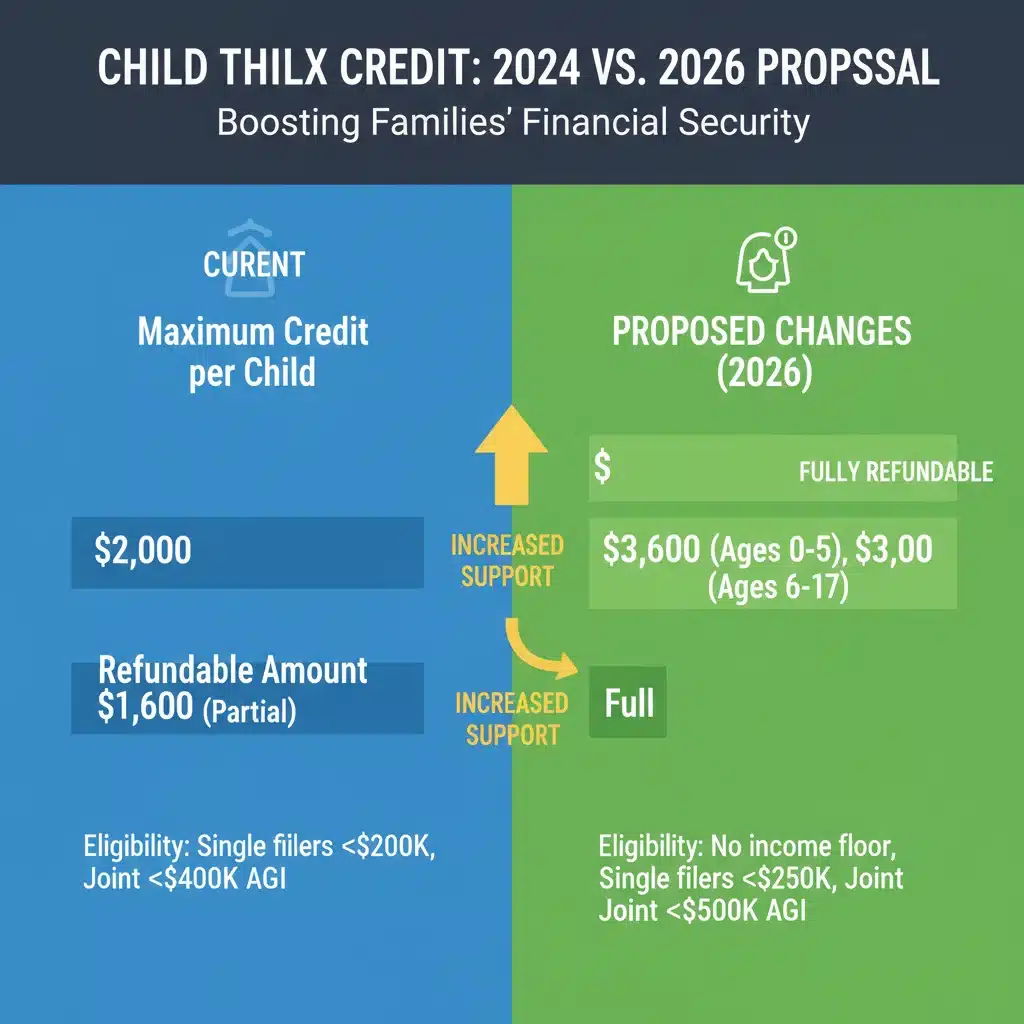
Before we dissect the potential changes for Child Tax Credit 2026, it’s important to understand the existing framework. Currently, the Child Tax Credit is worth up to $2,000 per qualifying child under the age of 17. Of this amount, up to $1,600 (for the 2023 tax year, indexed for inflation) is refundable, meaning eligible families can receive it even if they owe no federal income tax. This refundability is a critical component, as it ensures that lower-income families who pay little to no federal income tax can still benefit from the credit.
However, the credit begins to phase out for higher-income earners, specifically for single filers with a modified adjusted gross income (MAGI) over $200,000 and married couples filing jointly with a MAGI over $400,000. There’s also an earnings floor for the refundable portion, meaning families must earn a certain amount of income to qualify for the full refundable credit. This design has been a point of contention for many advocates who argue it excludes the poorest families from receiving the full benefit, thus limiting its effectiveness in combating child poverty.
The temporary expansion enacted through the American Rescue Plan Act in 2021 significantly altered these parameters. It increased the maximum credit to $3,600 for children under 6 and $3,000 for children aged 6 to 17. Crucially, it made the credit fully refundable, removing the earnings floor and ensuring that even families with no income could receive the full amount. This change alone lifted millions of children out of poverty, demonstrating the profound potential of a more expansive CTC. The expiration of this expansion led to a sharp increase in child poverty rates, underscoring the urgent need for long-term reform.
The current system, while providing some relief, is often criticized for not reaching the families who need it most due to the refundability limitations and the income thresholds. These limitations are precisely what the new Child Tax Credit 2026 proposals aim to address, seeking to create a more equitable and impactful program that truly supports vulnerable children and their families.
Key Elements of the New Child Tax Credit 2026 Proposals
While specific details are still being debated and ironed out, several recurring themes and key provisions are emerging in the Child Tax Credit 2026 proposals. These proposals generally seek to enhance the credit’s value, expand its reach, and simplify its administration. Here are some of the most prominent elements being discussed:
1. Increased Credit Amount per Child
One of the most significant changes proposed is an increase in the maximum credit amount per child. Lawmakers are considering raising the credit to levels similar to, or even exceeding, the 2021 expansion. This could mean a credit of $3,000 to $3,600 per child, or potentially even higher, depending on the child’s age. An increased credit directly translates to more financial relief for families, helping them cover essential expenses like food, housing, childcare, and education.
2. Full Refundability and Elimination of Earnings Floor
Perhaps the most impactful change being advocated for in the Child Tax Credit 2026 proposals is the return to full refundability without an earnings floor. This would ensure that the lowest-income families, including those with little to no taxable income, can receive the full benefit of the credit. This provision is seen by many as essential for effectively combating child poverty, as it targets support directly to families struggling the most. The 2021 expansion proved the efficacy of this approach in reducing poverty rates.
3. Indexing for Inflation
Many proposals include provisions to index the credit amount for inflation. This is a crucial long-term measure that would prevent the value of the CTC from eroding over time due to rising costs of living. By tying the credit to inflation, policymakers aim to ensure that its real purchasing power remains consistent, providing stable and predictable support for families year after year.
4. Age Eligibility Adjustments
While the current credit applies to children under 17, some Child Tax Credit 2026 proposals might consider adjustments to the age eligibility, potentially extending it to older teenagers or offering differentiated amounts based on age brackets, similar to the 2021 structure. This could reflect the varying costs associated with raising children at different developmental stages.
5. Periodic Payments
Another element under consideration is the reintroduction of periodic payments, such as monthly or quarterly disbursements, instead of a single lump sum at tax time. The 2021 expansion demonstrated that advance payments significantly helped families manage their budgets and meet ongoing expenses. This approach provides a more consistent safety net and helps prevent families from falling into financial distress between tax filing seasons.
6. Simpler Administration and Outreach
Recognizing the challenges some families faced in accessing the expanded CTC in 2021, new proposals for Child Tax Credit 2026 may also focus on streamlining the application process and improving outreach efforts. This could involve automatic enrollment for eligible families or more user-friendly portals to claim the credit, ensuring that all eligible families can easily receive their benefits.
Impact on 30 Million Families: A Closer Look
The potential impact of these Child Tax Credit 2026 proposals on 30 million families cannot be overstated. This represents a significant portion of American households with children, and the changes could have far-reaching effects on their financial stability, health, and overall well-being.
Alleviating Child Poverty
The most direct and celebrated impact of an expanded and fully refundable CTC is its proven ability to reduce child poverty. The 2021 expansion, even for a short period, cut child poverty by nearly half. If the Child Tax Credit 2026 proposals include full refundability and increased amounts, millions of children could be lifted out of poverty, providing them with better access to nutrition, healthcare, and educational resources. This has long-term benefits for individuals and society as a whole.
Boosting Household Incomes
For families hovering above the poverty line, an enhanced CTC would provide a substantial boost to their household income. This additional financial cushion can help families afford essential goods and services, pay down debt, or save for future needs. It can reduce financial stress, allowing parents to focus more on their children’s development and less on daily survival.
Economic Stimulation
Injecting billions of dollars directly into the hands of families, especially lower and middle-income families, tends to stimulate local economies. When families have more disposable income, they spend it on goods and services, supporting local businesses and creating jobs. This economic multiplier effect can be a significant benefit of a robust Child Tax Credit 2026.
Improved Child Outcomes
Research consistently shows that increased family income leads to better outcomes for children. This includes improved academic performance, better physical and mental health, and greater opportunities for future success. By investing in children through the CTC, society invests in its future workforce and citizenry. The proposals for Child Tax Credit 2026 are therefore not just about tax policy; they are about human capital development.
Reduced Inequality
An expanded and fully refundable CTC can also play a vital role in reducing income inequality. By providing more significant support to lower-income families, it helps to narrow the gap between the wealthiest and poorest households. This can lead to a more equitable society with broader opportunities for all.
The Political Landscape and Hurdles for Child Tax Credit 2026
While the benefits of an expanded Child Tax Credit 2026 are widely recognized by proponents, the path to enacting these proposals is fraught with political challenges. The debates often center on cost, fiscal responsibility, and the philosophical role of government in providing social welfare.
Cost Concerns
One of the primary objections to a more generous CTC is its potential cost. Fully refunding the credit and increasing its amount would represent a significant federal expenditure. Opponents often raise concerns about the national debt and the long-term fiscal implications of such a program. Finding a way to pay for these expansions, whether through tax increases or reallocations from other programs, is a major hurdle.
Work Requirements Debate
Another contentious point is the inclusion or exclusion of work requirements. Some lawmakers argue that the CTC should be tied to employment, believing it incentivizes work and self-sufficiency. They may advocate for an earnings floor or other conditions for receiving the full credit. Conversely, advocates for a fully refundable credit argue that children should not be penalized for their parents’ employment status and that the credit should function as a universal benefit for families with children, regardless of their work income, especially since many parents face barriers to employment like lack of affordable childcare.
Bipartisan Support
Historically, the CTC has enjoyed some bipartisan support, but the extent of its expansion and refundability often divides parties. Finding a compromise that satisfies both sides is critical for the Child Tax Credit 2026 proposals to move forward. This might involve negotiating on the credit amount, refundability thresholds, or other program parameters to secure enough votes for passage.
Legislative Priorities
The CTC proposals will also compete with other legislative priorities in Congress. The political calendar, upcoming elections, and other pressing national issues can influence how much attention and political capital are dedicated to tax reform. Advocates for the Child Tax Credit 2026 will need to maintain strong advocacy and public awareness to keep it high on the legislative agenda.

What Families Should Do Now: Preparing for Child Tax Credit 2026
While the Child Tax Credit 2026 proposals are still under consideration, there are steps families can take now to stay informed and prepare for potential changes:
1. Stay Informed
Keep a close eye on news from Congress, the Treasury Department, and reputable financial news outlets. Policy discussions can evolve rapidly, and staying informed will help you understand the latest developments. Follow organizations that advocate for families and children, as they often provide timely updates and analysis.
2. Understand Current Eligibility
Even as new proposals are discussed, the current CTC rules remain in effect for the 2024 and 2025 tax years. Ensure you understand the current eligibility requirements and claim any credits you are entitled to when filing your taxes. This knowledge will also help you compare the current system with any proposed changes for Child Tax Credit 2026.
3. Maintain Accurate Records
Always keep meticulous records of your income, dependents, and other relevant financial information. This will be essential for claiming any tax credits, regardless of the specific rules in place. Good record-keeping simplifies the tax filing process and helps prevent errors.
4. Consult with a Tax Professional
If you have complex financial situations or are unsure about your eligibility for the CTC, consider consulting with a qualified tax professional. They can provide personalized advice and help you navigate the intricacies of tax law, ensuring you maximize your benefits under both current and future regulations related to the Child Tax Credit 2026.
5. Advocate for Change
If you believe an expanded Child Tax Credit would benefit your family and community, consider contacting your elected officials. Sharing your personal story and expressing your support for these proposals can help influence legislative outcomes. Public engagement plays a crucial role in shaping policy decisions.
Long-Term Vision for Child Tax Credit Reform
The discussions surrounding the Child Tax Credit 2026 proposals are part of a broader, ongoing conversation about how the U.S. supports its families and addresses child poverty. Many advocates envision a CTC that is not just a temporary measure but a permanent, robust, and fully refundable program that provides a stable foundation for all children.
A long-term vision often includes a CTC that serves as a universal benefit, similar to child allowance programs in other developed countries. Such a program would significantly reduce administrative burdens, ensure nearly all eligible families receive the credit, and provide consistent, predictable income support. This approach recognizes that investing in children is an investment in the nation’s future productivity, health, and social cohesion.
The 2021 expansion provided a compelling case study for the effectiveness of such a model. The data unequivocally showed that when the CTC was made fully refundable and delivered in advance, it had an immediate and profound positive impact on child well-being and family financial stability. The proposals for Child Tax Credit 2026 represent an opportunity to learn from that experience and to move closer to a permanent, impactful solution.
Moreover, a stable and predictable CTC can help families plan for the future, make informed decisions about childcare and work, and ultimately break cycles of poverty. It’s an investment that pays dividends through healthier, better-educated, and more productive citizens. As lawmakers deliberate, the focus remains on crafting a policy that is not only fiscally responsible but also deeply effective in supporting the backbone of our society: its families and children.
Conclusion: The Road Ahead for Child Tax Credit 2026
The emerging federal Child Tax Credit 2026 proposals signal a critical juncture in U.S. social policy. With the potential to impact over 30 million families, these reforms could significantly alter the economic landscape for millions of children and their parents. From increasing the credit amount and ensuring full refundability to streamlining administration, the discussions are aimed at creating a more effective and equitable system of support.
While the political journey to enact these changes will undoubtedly involve negotiations and compromises, the evidence from past expansions highlights the transformative power of a robust Child Tax Credit. Addressing child poverty, boosting household incomes, and stimulating the economy are just some of the profound benefits that could arise from these proposed changes.
As these proposals move through the legislative process, it is essential for families to remain informed, understand their current entitlements, and prepare for potential future adjustments. The future of the Child Tax Credit 2026 is not just about numbers on a tax form; it’s about the well-being and opportunities available to the next generation of Americans. The coming months will be crucial in determining what this vital program will look like and how it will shape the lives of millions.