Future of Online Learning: 3 Critical Shifts in US Higher Education by 2026
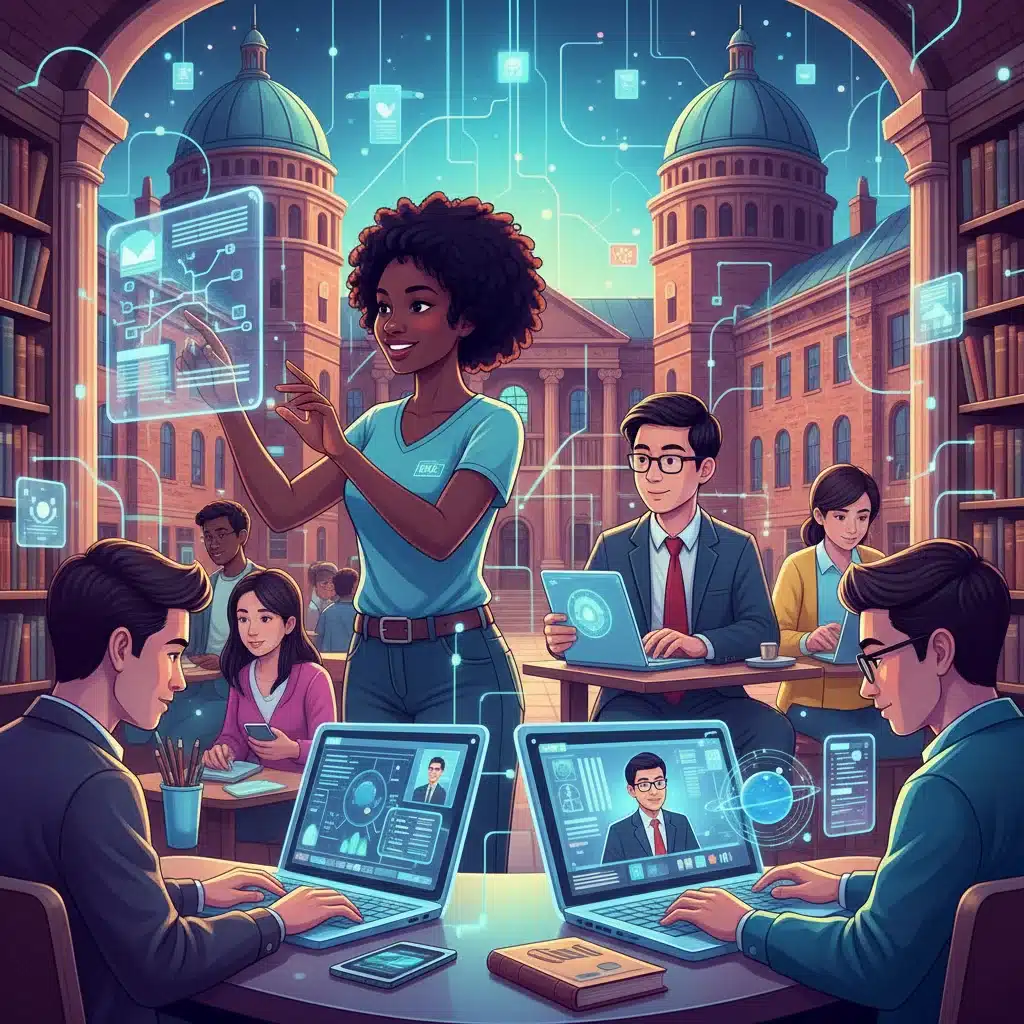
The landscape of education is perpetually evolving, but few periods have witnessed such accelerated transformation as the current era. Online learning, once a niche alternative, has firmly entrenched itself as a cornerstone of higher education, especially within the United States. As we look towards 2026, it’s clear that the foundational shifts we’ve observed are not merely temporary adaptations but rather harbingers of a new educational paradigm. Understanding these critical shifts is not just an academic exercise; it’s essential for institutions, educators, and students alike to navigate the future successfully. This article will delve into three pivotal transformations that will define the future of online learning in US higher education by 2026, offering insights into how these changes will reshape the educational experience.
The journey of online learning has been remarkable. From its nascent stages of correspondence courses delivered via mail to the sophisticated digital platforms we see today, each decade has brought about significant advancements. The COVID-19 pandemic, while challenging, acted as an unprecedented catalyst, forcing institutions to pivot rapidly to remote instruction. This global experiment, albeit involuntary, provided invaluable data and insights into the capabilities and limitations of digital education. Now, with a clearer understanding of what works and what doesn’t, US higher education is poised for a more deliberate and strategic evolution in its online offerings. The future of online learning is not just about replicating the classroom experience online; it’s about reimagining education itself.
Our exploration will focus on three interconnected areas: the profound impact of advanced technological integration, the innovative pedagogical approaches that are emerging, and the enhanced focus on accessibility and inclusivity. These pillars will collectively sculpt the educational environment of 2026, making online learning more engaging, effective, and equitable than ever before. For institutions striving for relevance and excellence, embracing these shifts is not an option but a necessity. For students, these changes promise a more personalized, flexible, and ultimately more rewarding educational journey. Let’s unpack these critical shifts and understand their implications for the future of online learning.
Shift 1: Hyper-Personalization Through AI and Adaptive Learning
One of the most significant shifts defining the future of online learning is the move towards hyper-personalization, largely driven by advancements in Artificial Intelligence (AI) and adaptive learning technologies. Traditional education, even in its online format, often operates on a ‘one-size-fits-all’ model, where content delivery and assessment are standardized across all students. However, AI-powered adaptive learning systems are dismantling this uniformity, ushering in an era where educational pathways are tailored to individual student needs, learning styles, and paces.
The Role of AI in Customizing Learning Paths
By 2026, AI will be deeply integrated into online learning platforms, acting as an intelligent tutor, mentor, and curriculum designer. These systems will analyze vast amounts of student data – from performance on assignments and quizzes to engagement levels with course materials and even eye-tracking data (where ethically permissible) – to construct a dynamic profile of each learner. Based on this profile, AI algorithms can:
- Identify Knowledge Gaps: Pinpoint specific areas where a student struggles or has incomplete understanding, then provide targeted resources to address these gaps.
- Recommend Resources: Suggest supplementary readings, videos, interactive simulations, or practice problems that align with the student’s preferred learning style and current proficiency level.
- Adjust Pacing: Allow students to progress at their own speed, accelerating through familiar topics and spending more time on challenging concepts, thereby optimizing learning efficiency.
- Provide Real-time Feedback: Offer immediate, constructive feedback on assignments, helping students understand their mistakes and learn from them instantaneously, rather than waiting for instructor grading.
- Predict Performance: Proactively identify students at risk of falling behind and trigger interventions, such as personalized outreach from instructors or recommendations for additional support services.
This level of customization goes far beyond simply allowing students to choose modules. It’s about creating a truly dynamic learning environment that continuously adapts to the learner, making education more efficient and effective. The future of online learning will be characterized by these intelligent systems working in concert with human educators.
Adaptive Assessment and Skill-Based Learning
Beyond content delivery, AI will revolutionize assessment. Adaptive assessments will present questions that adjust in difficulty based on a student’s previous answers, providing a more accurate measure of true understanding rather than just memorization. This also facilitates a shift towards skill-based learning, where AI can track a student’s mastery of specific competencies rather than just course completion. This has profound implications for workforce development, allowing institutions to certify students based on demonstrated skills, making graduates more directly employable and bridging the gap between academia and industry needs.
Furthermore, AI-driven analytics will empower educators with deeper insights into student learning patterns, enabling them to refine their teaching strategies and course designs based on empirical data. This feedback loop will create a continuously improving educational ecosystem, where both technology and human ingenuity collaborate to foster superior learning outcomes. The personalized experience offered by this evolution of online learning will make it an even more attractive option for a diverse student body.
Shift 2: Immersive and Experiential Learning Through XR Technologies
The second critical shift in the future of online learning involves the widespread adoption and integration of Extended Reality (XR) technologies – encompassing Virtual Reality (VR), Augmented Reality (AR), and Mixed Reality (MR). These technologies are moving beyond novelty to become powerful pedagogical tools, transforming passive consumption of information into active, immersive, and experiential learning.
Virtual Reality: Creating Digital Worlds for Learning
By 2026, VR will allow students to step into fully simulated environments that would be impossible, too expensive, or too dangerous to access in the real world. Imagine medical students practicing complex surgeries in a virtual operating room, history students walking through ancient Rome, or engineering students disassembling and reassembling virtual engines. VR offers:
- Risk-Free Practice: Students can make mistakes and learn from them without real-world consequences, crucial for fields like healthcare, aviation, and hazardous materials handling.
- Enhanced Engagement: The immersive nature of VR significantly boosts student engagement and retention, as learning becomes an active exploration rather than a static presentation.
- Global Field Trips: Students can virtually visit remote geographical locations, archaeological sites, or even other planets, bringing abstract concepts to life.
The development of more affordable and accessible VR headsets, coupled with increasingly sophisticated content creation tools, will make VR a standard component of many online courses, particularly in STEM fields and vocational training. This evolution will allow for a truly transformative online learning future.
Augmented Reality: Blending Digital with Physical
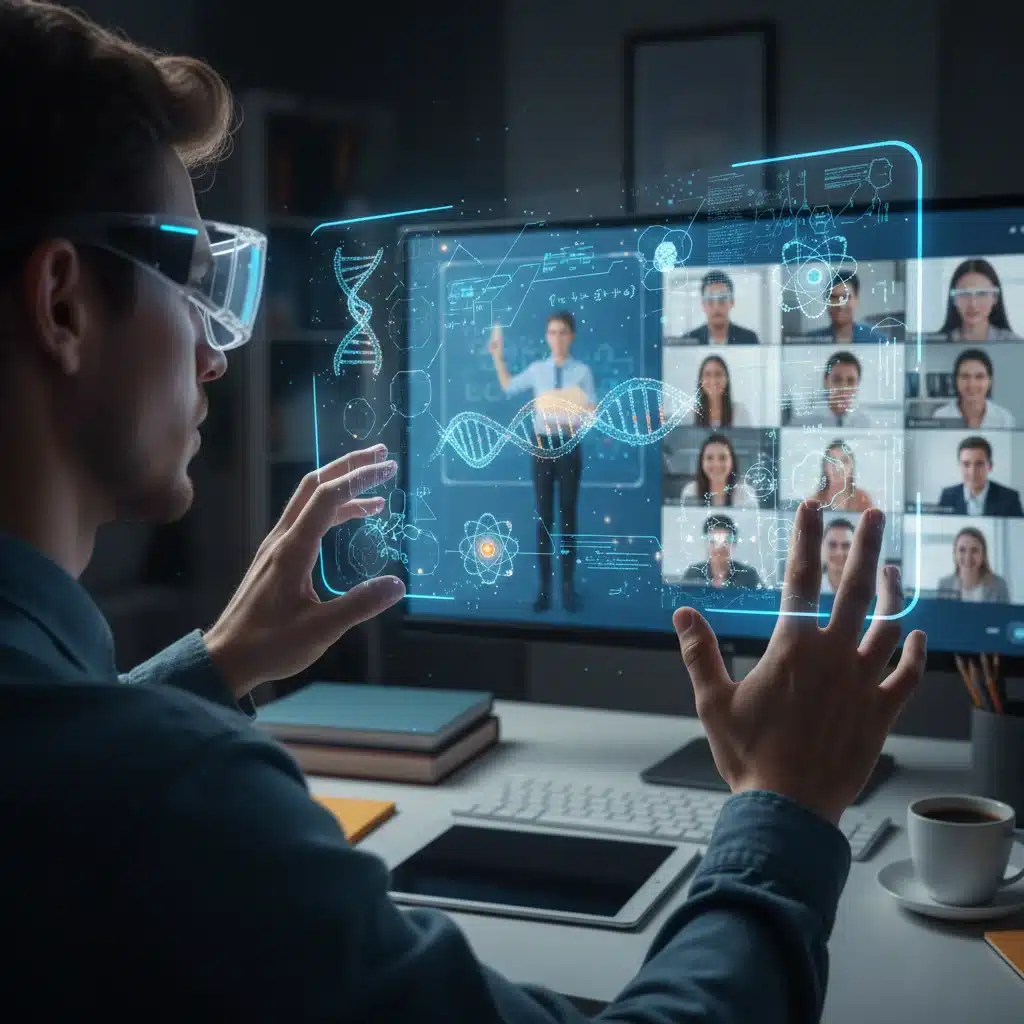
AR, which overlays digital information onto the real world, offers a different but equally powerful dimension to online learning. Students can use AR apps on their smartphones, tablets, or specialized glasses to:
- Visualize Complex Concepts: Project 3D models of molecules, anatomical structures, or architectural designs onto their physical environment, allowing for hands-on manipulation and deeper understanding.
- Interactive Textbooks: Textbooks can come alive with AR, displaying videos, animations, and interactive elements directly on the page.
- Real-world Problem Solving: Field-based learning can be enhanced, with AR providing contextual information about plants, geological formations, or historical landmarks in real-time.
AR’s ability to augment existing environments makes it highly versatile and easily deployable, integrating seamlessly into everyday learning scenarios. It bridges the gap between theoretical knowledge and practical application, a critical aspect of effective online learning.
Mixed Reality and the Metaverse in Education
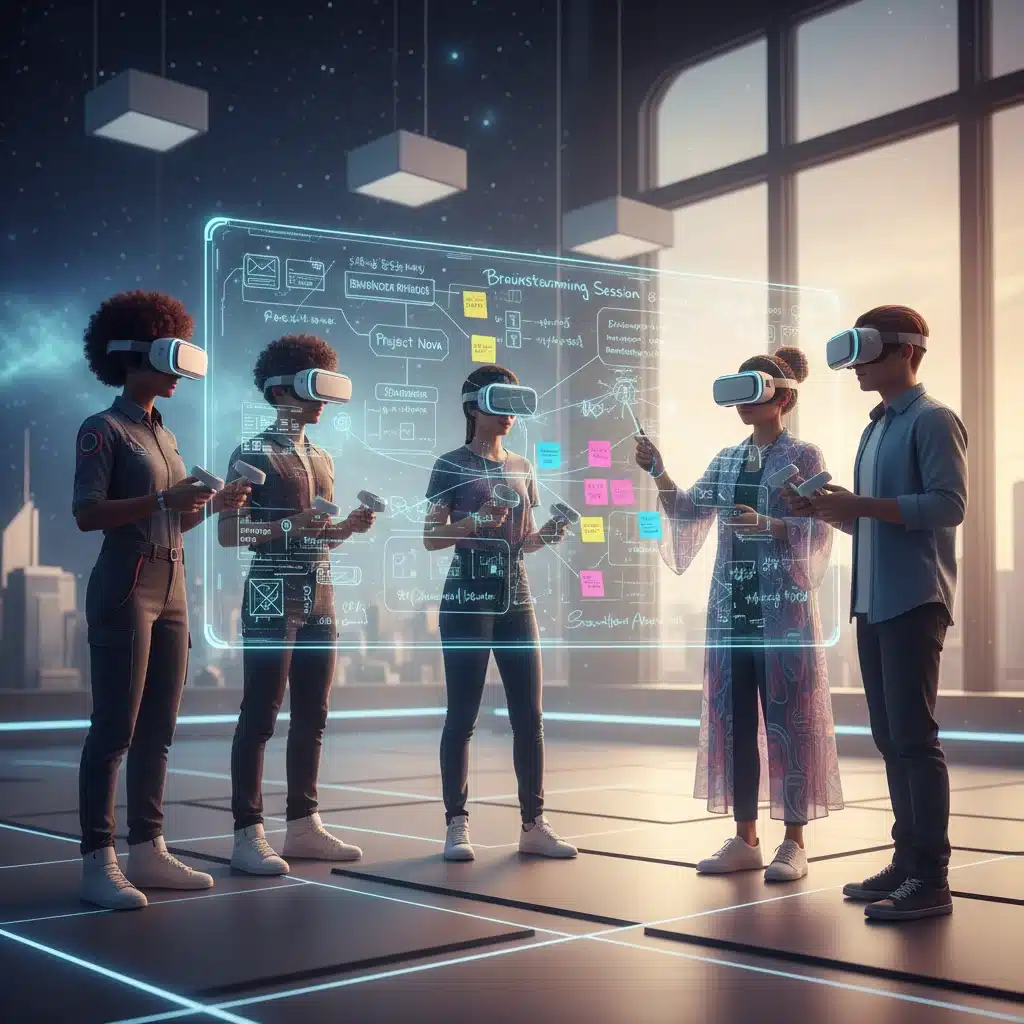
Looking further ahead, Mixed Reality (MR) will combine the best of VR and AR, allowing digital objects to interact with the real world in real-time. This opens up possibilities for collaborative learning spaces where students, regardless of their physical location, can interact with shared holographic content. The burgeoning concept of the educational metaverse, a persistent, interconnected virtual world for learning, will begin to take shape, offering unparalleled opportunities for social learning, networking, and skill development in a truly global context. The future of online learning will see these immersive technologies become commonplace, redefining engagement and collaboration.
Shift 3: Democratization of Education and Flexible Learning Models
The third critical shift revolves around the continued democratization of education, driven by flexible learning models and an unwavering focus on accessibility. Online learning has already broken down geographical barriers, but by 2026, it will significantly reduce other impediments to higher education, making learning more inclusive and adaptable to diverse life circumstances. This is a crucial aspect of the future of online learning.
Micro-credentials and Stackable Degrees
The traditional four-year degree model is increasingly being complemented, and in some cases, challenged, by more agile and responsive credentialing systems. Online learning platforms are ideal vehicles for delivering micro-credentials, badges, and certificates that focus on specific skills or competencies. By 2026, we will see a surge in:
- Stackable Degrees: Students can earn smaller credentials over time, which can then be combined or ‘stacked’ to form larger qualifications, such as associate’s or bachelor’s degrees. This offers greater flexibility and allows individuals to upskill or reskill throughout their careers without committing to a lengthy traditional program.
- Industry-Aligned Certifications: Online programs will increasingly partner with industry leaders to offer certifications directly relevant to current job market demands, ensuring graduates possess immediately applicable skills.
- Lifelong Learning Ecosystems: Universities will transition from being one-time degree providers to lifelong learning partners, offering continuous opportunities for professional development and personal enrichment through online modules.
This model empowers learners to acquire knowledge and skills on demand, responding quickly to evolving career paths and personal interests. It makes higher education a continuous journey, not just a destination, which is paramount for the future of online learning.
Enhanced Accessibility and Inclusivity
True democratization requires robust accessibility. By 2026, online learning platforms will be designed with universal accessibility principles at their core, ensuring that students with disabilities have equal opportunities to learn. This includes:
- AI-Powered Accessibility Features: Automated captioning and transcription services for video content, real-time sign language interpretation via AI avatars, and advanced text-to-speech functionalities will become standard.
- Inclusive Design: Course materials, interfaces, and tools will be developed with diverse user needs in mind, accommodating various learning styles, cognitive abilities, and sensory requirements.
- Affordable Access: Efforts to reduce the cost of online education, through open educational resources (OER), innovative scholarship models, and scalable digital infrastructure, will continue to expand, making higher education attainable for a broader demographic.
Furthermore, flexible scheduling and asynchronous learning options will cater to working adults, parents, and individuals with other commitments, making higher education a viable option for those who cannot participate in traditional, on-campus programs. This flexibility is a hallmark of the future of online learning.
Challenges and Opportunities in the Evolving Landscape
While the shifts towards hyper-personalization, immersive experiences, and democratization present immense opportunities, they are not without challenges. Institutions must grapple with significant investments in technology infrastructure, faculty training for new pedagogical approaches, and the ethical implications of data privacy and AI usage. Ensuring digital equity, where all students have access to reliable internet and necessary devices, remains a crucial hurdle.
However, the opportunities far outweigh the challenges. For institutions, embracing these shifts can lead to increased enrollment, enhanced reputation, and the ability to serve a global student body. For educators, it means more powerful tools to inspire and guide learners. For students, it promises an education that is more relevant, engaging, and aligned with their individual aspirations and the demands of the modern world. The future of online learning is bright, but it requires proactive engagement from all stakeholders.
Conclusion: A Glimpse into the Future of Online Learning
The future of online learning in US higher education by 2026 is one marked by unprecedented innovation and accessibility. The three critical shifts – hyper-personalization through AI and adaptive learning, immersive and experiential learning via XR technologies, and the continued democratization of education through flexible models – are not isolated trends but interconnected forces shaping a more dynamic, effective, and inclusive educational ecosystem. Institutions that proactively embrace these changes will not only survive but thrive, positioning themselves at the forefront of educational excellence. Students, in turn, will benefit from learning experiences that are tailored to their unique needs, highly engaging, and directly relevant to their future success.
The journey towards this future is ongoing, requiring continuous adaptation, investment, and a collaborative spirit among educators, technologists, policymakers, and learners. As technology continues to advance and our understanding of effective pedagogy deepens, the potential for online learning to transform lives and societies will only grow. The year 2026 will not be an endpoint but a significant milestone in this exciting evolution, solidifying online learning’s role as a powerful engine for progress and opportunity in higher education. Embracing these shifts is key to unlocking the full potential of the future of online learning.