
The New Era of Standardized Testing: What Parents Need to Know for 2026 (RECENT UPDATES)
The landscape of education is constantly evolving, and perhaps nowhere is this more evident than in the realm of standardized testing. As we approach 2026, significant shifts are on the horizon, promising a new era for how student achievement is measured and evaluated. For parents, understanding these changes is not just beneficial; it’s essential for effectively supporting their children’s academic journeys. This comprehensive guide will delve into the latest updates regarding Standardized Testing 2026, offering insights, strategies, and peace of mind.
Standardized tests have long been a cornerstone of educational assessment, designed to provide a consistent measure of student learning and school performance across various districts and states. However, the methods, content, and philosophy behind these tests are far from static. Influenced by educational research, technological advancements, and societal demands for a more holistic evaluation of student capabilities, the tests of tomorrow are being reshaped today. These upcoming changes for Standardized Testing 2026 are not merely cosmetic; they reflect a deeper re-evaluation of what skills and knowledge are most crucial for students in the 21st century.
The goal of this article is to demystify these impending changes, providing parents with a clear roadmap to navigate the future of standardized assessments. We’ll explore the ‘why’ behind these updates, dissect the ‘what’ of the new test formats and content, and most importantly, equip you with the ‘how’ – practical strategies to prepare your child for success. Whether you have a child just beginning their academic career or one approaching critical testing years, the information presented here will be invaluable.
Understanding the Rationale Behind the Changes in Standardized Testing 2026
Before we dive into the specifics, it’s crucial to grasp the underlying reasons driving these modifications. The educational community, policymakers, and parents alike have voiced concerns and suggestions over the years, leading to a collective push for more relevant and equitable assessment tools. Several key factors are at play:
Focus on Deeper Learning and 21st-Century Skills
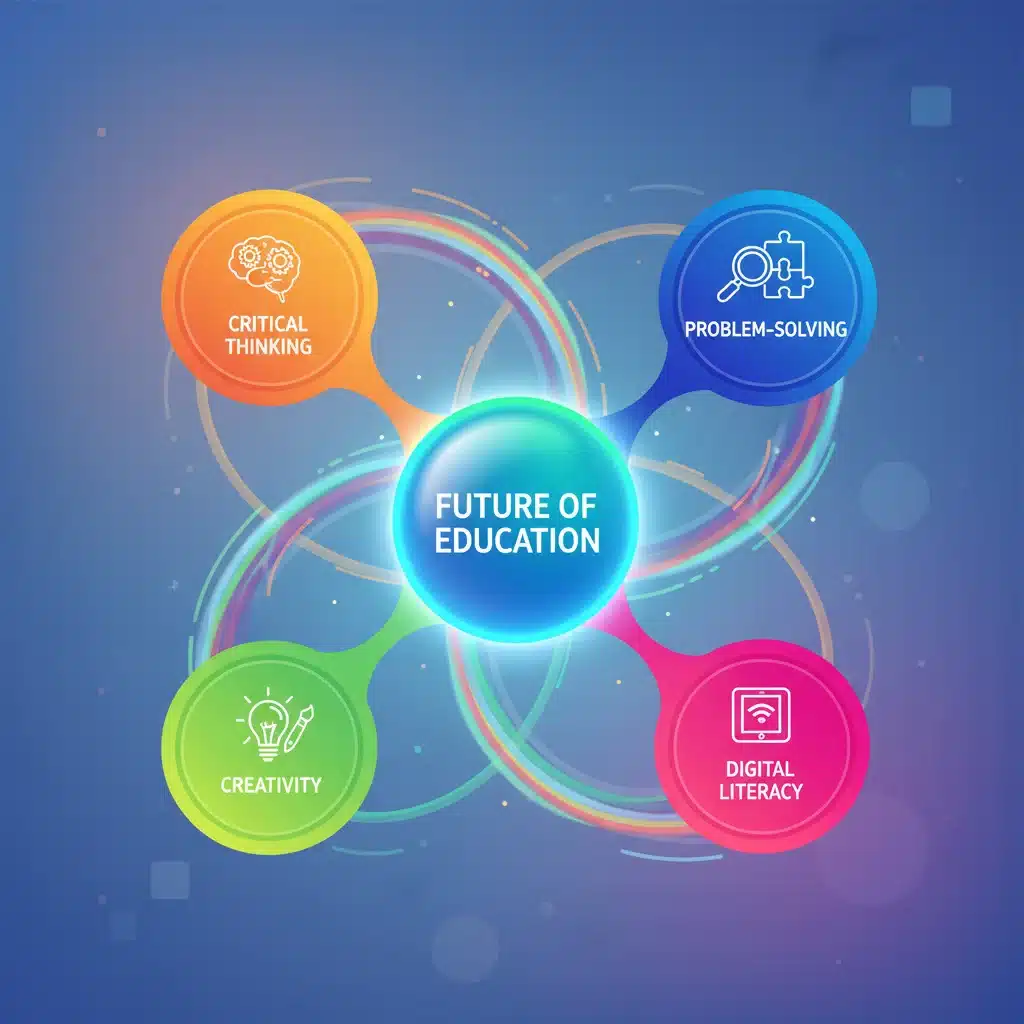
Traditional standardized tests have often been criticized for emphasizing rote memorization over deeper understanding and critical thinking. The modern educational paradigm, however, champions skills such as problem-solving, analytical reasoning, creativity, and digital literacy – competencies vital for success in higher education and the contemporary workforce. The changes in Standardized Testing 2026 aim to better reflect these priorities, moving towards assessments that require students to apply knowledge in complex scenarios rather than simply recall facts.
Technological Integration and Adaptive Testing
The digital revolution has transformed nearly every aspect of our lives, and education is no exception. The move towards computer-based testing has been gradual but is accelerating. By 2026, we can anticipate a more widespread adoption of adaptive testing models. These systems adjust the difficulty of questions based on a student’s performance, offering a more precise measure of their abilities and potentially reducing testing time. This technological shift also allows for new question types that cannot be administered on paper, such as interactive simulations or multimedia analysis, making tests more engaging and relevant.
Equity and Accessibility Enhancements
Ensuring that standardized tests are fair and accessible to all students, regardless of their background, learning style, or disability, is a paramount concern. The updates for Standardized Testing 2026 are expected to include enhanced features for students with disabilities, English language learners, and other diverse populations. This might involve more flexible timing, built-in accommodations like text-to-speech, and questions designed to minimize cultural bias. The goal is to create assessments that accurately reflect what every student knows and can do, providing a more equitable playing field.
Alignment with Evolving Curricula
As state and national curricula evolve to meet new educational standards, standardized tests must follow suit. The new tests will be carefully aligned with current learning objectives, ensuring that what is taught in the classroom is what is assessed on the exam. This alignment is critical for maintaining the validity and relevance of the tests, preventing a disconnect between instruction and evaluation. Parents should be aware that these curriculum shifts directly impact the content and format of Standardized Testing 2026.
Key Changes to Expect in Standardized Testing 2026
While specific details may vary by state and testing organization, several overarching trends and concrete changes are expected to define Standardized Testing 2026. Here’s what parents should anticipate:
Shift Towards Digital and Adaptive Formats
As mentioned, the transition to digital platforms will be a major hallmark. This means fewer paper-and-pencil tests and more computer-based assessments. Adaptive testing, where the test adjusts to the student’s performance in real-time, will become more prevalent. This isn’t just about efficiency; it allows for more accurate measurement of student proficiency across a wider range of abilities. Students who perform well might receive more challenging questions, while those struggling might get more foundational ones, ensuring the test is appropriately challenging for each individual.
Emphasis on Performance-Based Tasks
Gone are the days when multiple-choice questions dominated. The new tests will likely incorporate more performance-based tasks that require students to demonstrate skills in authentic ways. This could include:
- Constructed-response questions: Requiring students to write essays, provide detailed explanations, or show their work in math problems.
- Simulation-based items: Where students interact with virtual environments or tools to solve problems, particularly in science or vocational subjects.
- Research and analysis tasks: Asking students to evaluate sources, synthesize information, and present conclusions, mirroring real-world academic and professional demands.
These types of questions are designed to assess higher-order thinking skills, which are crucial for success beyond high school.
Integration of Interdisciplinary Content
The silos between subjects are breaking down. Standardized Testing 2026 is expected to feature more interdisciplinary questions that require students to draw upon knowledge from multiple subjects to answer. For instance, a reading passage might discuss a scientific concept, followed by questions that assess both reading comprehension and scientific understanding. This approach reflects the interconnectedness of knowledge in the real world and encourages students to make connections across different areas of study.
Focus on Growth Over Static Scores
While raw scores will still be important, there’s a growing emphasis on measuring student growth over time. This means that instead of just looking at a student’s score at one point, educators and parents will have access to data that shows how much a student has progressed academically. This shift allows for a more nuanced understanding of student learning and can help identify effective teaching practices and areas where additional support is needed. It moves away from a simplistic pass/fail mentality towards recognizing individual learning trajectories.

How Parents Can Prepare Their Children for Standardized Testing 2026
Facing new testing formats can feel daunting, but with the right approach, parents can empower their children to excel. Preparation for Standardized Testing 2026 goes beyond traditional test prep; it involves fostering a robust set of academic and life skills.
1. Embrace Digital Literacy and Computer Skills
Given the shift to digital and adaptive testing, proficiency with computers and common software is paramount. Encourage your child to:
- Practice typing: Fast and accurate typing will be essential for constructed-response questions.
- Navigate digital interfaces: Familiarize them with using a mouse, keyboard shortcuts, scrolling, and clicking through different sections of a digital test.
- Engage with educational software: Many schools use online learning platforms; encourage regular interaction with these tools.
- Understand online research: Teach them how to effectively search for information, evaluate sources, and navigate web pages, as these skills may be tested.
Early exposure and consistent practice will build confidence and reduce anxiety come test day.
2. Foster Critical Thinking and Problem-Solving
The new tests will reward students who can think critically and solve complex problems. You can cultivate these skills at home by:
- Asking open-ended questions: Instead of simple yes/no questions, encourage your child to explain their reasoning and justify their answers.
- Engaging in debates or discussions: Encourage them to articulate their viewpoints and consider different perspectives.
- Solving puzzles and brain teasers: These activities naturally develop logical reasoning.
- Encouraging project-based learning: Whether it’s a science fair project or building something at home, hands-on problem-solving is invaluable.
3. Promote Strong Reading Comprehension and Analytical Skills
With an emphasis on interdisciplinary content and performance tasks, the ability to read complex texts and analyze information will be more critical than ever. Help your child by:
- Encouraging diverse reading: Beyond school assignments, expose them to various genres, non-fiction, and challenging texts.
- Discussing what they read: Ask questions about plot, characters, themes, and author’s intent.
- Practicing summarizing and synthesizing information: Teach them how to identify main ideas and combine information from multiple sources.
- Annotating texts: This active reading strategy helps students engage more deeply with the material.
4. Develop Effective Writing Skills
Constructed-response questions will demand clear, coherent, and well-supported writing. Support your child’s writing development through:
- Regular writing practice: Encourage journaling, letter writing, or creative storytelling.
- Focusing on argumentation: Help them structure arguments, use evidence, and write persuasive essays.
- Grammar and vocabulary building: Strong foundational skills are essential for effective communication.
- Providing constructive feedback: Review their writing together, focusing on clarity, organization, and development of ideas.
5. Collaborate with Schools and Educators
Your child’s school and teachers are your best allies in navigating Standardized Testing 2026. Stay informed by:
- Attending parent-teacher conferences: Discuss your child’s progress and any specific areas of concern related to upcoming tests.
- Asking about curriculum alignment: Inquire how the school’s curriculum is adapting to the new testing standards.
- Understanding available resources: Many schools offer practice tests, workshops, or online resources to help students prepare.
- Communicating openly: Share any concerns or observations about your child’s learning with their teachers.
Addressing Common Parental Concerns About Standardized Testing 2026
It’s natural for parents to have questions and concerns about changes to something as important as standardized testing. Here, we address some common anxieties:
Will These Tests Be Fair?
The push for equity and accessibility is a core driver of the Standardized Testing 2026 updates. Test developers are actively working to minimize bias, provide accommodations, and design questions that are culturally and linguistically appropriate for a diverse student population. While perfection is an ongoing pursuit, the aim is to create fairer assessments than ever before.
Will My Child Be Overloaded with Testing?
While the format is changing, the total amount of testing time may not necessarily increase. Adaptive testing, for example, can often be more efficient, providing accurate results with fewer questions. The focus is shifting towards quality and relevance of assessment rather than sheer quantity. Many reforms also seek to reduce redundant testing.
How Do These Changes Affect College Admissions?
The impact on college admissions is a broader conversation, but generally, colleges are also adapting their admissions criteria. Many institutions have already moved towards test-optional policies, recognizing that standardized test scores are just one piece of a student’s profile. While Standardized Testing 2026 will still play a role, colleges are increasingly looking for evidence of critical thinking, problem-solving, and a well-rounded academic record, which these new tests are designed to measure more effectively.
What if My Child Struggles with Technology?
This is a valid concern, especially for younger students or those with limited access to technology at home. Schools are expected to play a crucial role in providing students with ample practice opportunities on digital platforms. If your child struggles, communicate with their teacher to explore additional support or resources available at school. Building digital literacy should be a collaborative effort between home and school.
Long-Term Benefits of the New Standardized Testing 2026 Approach
While adapting to change can be challenging, the shift in Standardized Testing 2026 is ultimately geared towards creating a more effective and equitable educational system. The long-term benefits for students, educators, and the educational system as a whole are significant:
More Accurate Measurement of Student Abilities
By moving beyond multiple-choice and incorporating performance-based tasks, the new tests will provide a richer, more accurate picture of what students truly know and can do. This allows for better identification of strengths and weaknesses, enabling more targeted instruction and support.
Promotion of Deeper Learning and Relevant Skills
When tests align with 21st-century skills like critical thinking, problem-solving, and digital literacy, it naturally incentivizes schools and teachers to prioritize these areas in their curriculum. This fosters a learning environment that prepares students for the challenges and opportunities of the future, rather than just for a test.
Enhanced Equity and Accessibility
The ongoing efforts to make tests more accessible and less biased mean that the results will be a truer reflection of a student’s potential, minimizing the impact of external factors. This is a crucial step towards ensuring that every child has the opportunity to demonstrate their knowledge fairly.
Better Data for Educational Improvement
With more nuanced data on student performance and growth, educators and policymakers will have better tools to evaluate programs, identify successful interventions, and make informed decisions about resource allocation. This continuous feedback loop is vital for ongoing improvement in educational outcomes.
Increased Engagement and Motivation for Students
Tests that are interactive, relevant, and require deeper engagement can be less intimidating and more motivating for students. When students see the connection between what they learn and how it’s applied, their intrinsic motivation to learn can increase, transforming testing from a dreaded obligation into an opportunity to demonstrate mastery.
Beyond the Test: A Holistic Approach to Education
It’s important to remember that standardized tests, even with their improvements, are just one component of a child’s educational journey. While preparing for Standardized Testing 2026 is important, it should be part of a broader, holistic approach to education. Encourage your child’s curiosity, foster a love of learning, and support their development in all areas – academic, social, emotional, and creative. The skills honed through diverse experiences and interests will ultimately contribute to their success, both on tests and in life.
Focus on creating a supportive home environment that values effort, perseverance, and learning from mistakes. Celebrate their progress, not just their scores. Help them develop strong study habits, time management skills, and resilience – qualities that will serve them well far beyond any single exam. The goal is not just to pass a test, but to cultivate lifelong learners who are well-equipped for an ever-changing world.
Conclusion: Navigating the Future of Standardized Testing 2026 with Confidence
The updates to Standardized Testing 2026 represent a significant evolution in how we measure student learning. These changes, driven by a desire for more relevant, equitable, and effective assessments, aim to better prepare students for the complexities of the 21st century. For parents, understanding these shifts is the first step towards confidently supporting their children.
By embracing digital literacy, fostering critical thinking, promoting strong reading and writing skills, and collaborating with schools, you can equip your child not just for the upcoming tests, but for a lifetime of learning and success. Remember, these tests are a tool, not the sole determinant of your child’s potential. With informed preparation and a supportive mindset, your family can navigate the new era of standardized testing with confidence and optimism.Stay informed, stay engaged, and together, let’s empower the next generation to thrive in an evolving educational landscape.