Family’s Future: Investing in Growth Stocks & ETFs for 7%+ Returns

Investing for Your Family’s Future in 2026: A Beginner’s Guide to Growth Stocks and ETFs with 7%+ Returns
Securing your family’s financial future is a paramount concern for many. In an ever-evolving economic landscape, traditional savings methods often fall short of keeping pace with inflation, let alone generating substantial wealth. This comprehensive guide will illuminate the path to building a robust financial foundation for your loved ones, focusing on strategic investments in growth stocks and Exchange Traded Funds (ETFs) with the potential to yield 7% or more in annual returns. We’ll delve into the nuances of family investment growth, making complex financial concepts accessible to beginners.
The year 2026 is just around the corner, and now is the opportune moment to lay down effective financial strategies. Whether you’re saving for your children’s education, a down payment on a larger home, or a comfortable retirement, understanding how to make your money work harder is crucial. This article is your starting point for understanding how to achieve significant family investment growth.
Understanding the Landscape: Why Growth Stocks and ETFs?
Before diving into specific strategies, it’s essential to understand why growth stocks and ETFs are often recommended for long-term family investment growth. Both offer distinct advantages that, when combined, can create a powerful portfolio aimed at capital appreciation.
Growth Stocks: The Engines of Capital Appreciation
Growth stocks belong to companies that are expected to grow at an above-average rate compared to other companies in the market. These companies typically reinvest their earnings back into the business to fuel further expansion, rather than distributing them as dividends. Think of innovative tech companies, burgeoning biotech firms, or disruptive consumer brands.
Advantages of Growth Stocks for Family Investment Growth:
- High Appreciation Potential: The primary draw of growth stocks is their potential for significant capital gains. A successful growth company can see its stock price multiply over several years, leading to substantial family investment growth.
- Innovation and Future Trends: Investing in growth stocks often means investing in the future. These companies are at the forefront of technological advancements and societal shifts, offering exposure to sectors with high future potential.
- Long-Term Horizon Benefits: For family investments, which typically have a long-term horizon (e.g., 10-20+ years for college savings or retirement), the volatility associated with growth stocks can be smoothed out, allowing ample time for growth to materialize.
Risks Associated with Growth Stocks:
While attractive, growth stocks come with higher risk. Their valuations can be speculative, and they are often more sensitive to market downturns and economic shifts. Thorough research and diversification are paramount when including growth stocks in your family investment growth strategy.
ETFs: Diversification and Accessibility
Exchange Traded Funds (ETFs) are a type of investment fund that holds a collection of assets, such as stocks, bonds, or commodities. They trade on stock exchanges like individual stocks, offering liquidity and flexibility. For beginners, ETFs are an excellent way to gain diversified exposure to various market segments without having to pick individual stocks.
Advantages of ETFs for Family Investment Growth:
- Instant Diversification: A single ETF can hold hundreds or even thousands of underlying securities. This inherent diversification significantly reduces risk compared to investing in individual stocks, making it a safer option for family investment growth.
- Lower Costs: ETFs generally have lower expense ratios than actively managed mutual funds, meaning more of your money stays invested and works for you.
- Liquidity: Like stocks, ETFs can be bought and sold throughout the trading day, offering greater flexibility than mutual funds.
- Thematic Investing: There are ETFs focused on specific sectors (e.g., technology, healthcare), geographic regions, or even investment styles (e.g., growth ETFs). This allows you to target areas with high growth potential while maintaining diversification.
Considerations for ETFs:
While ETFs offer numerous benefits, it’s crucial to understand their underlying holdings and expense ratios. Not all ETFs are created equal, and some may be more volatile or less diversified than others.
Setting Realistic Expectations: Achieving 7%+ Returns
A 7%+ annual return is an ambitious yet achievable goal for a well-structured family investment growth portfolio over the long term. Historically, the S&P 500 has averaged around 10-12% annual returns over extended periods, making 7% a conservative but strong target that factors in potential market fluctuations.
The Power of Compounding: Your Best Friend in Family Investment Growth
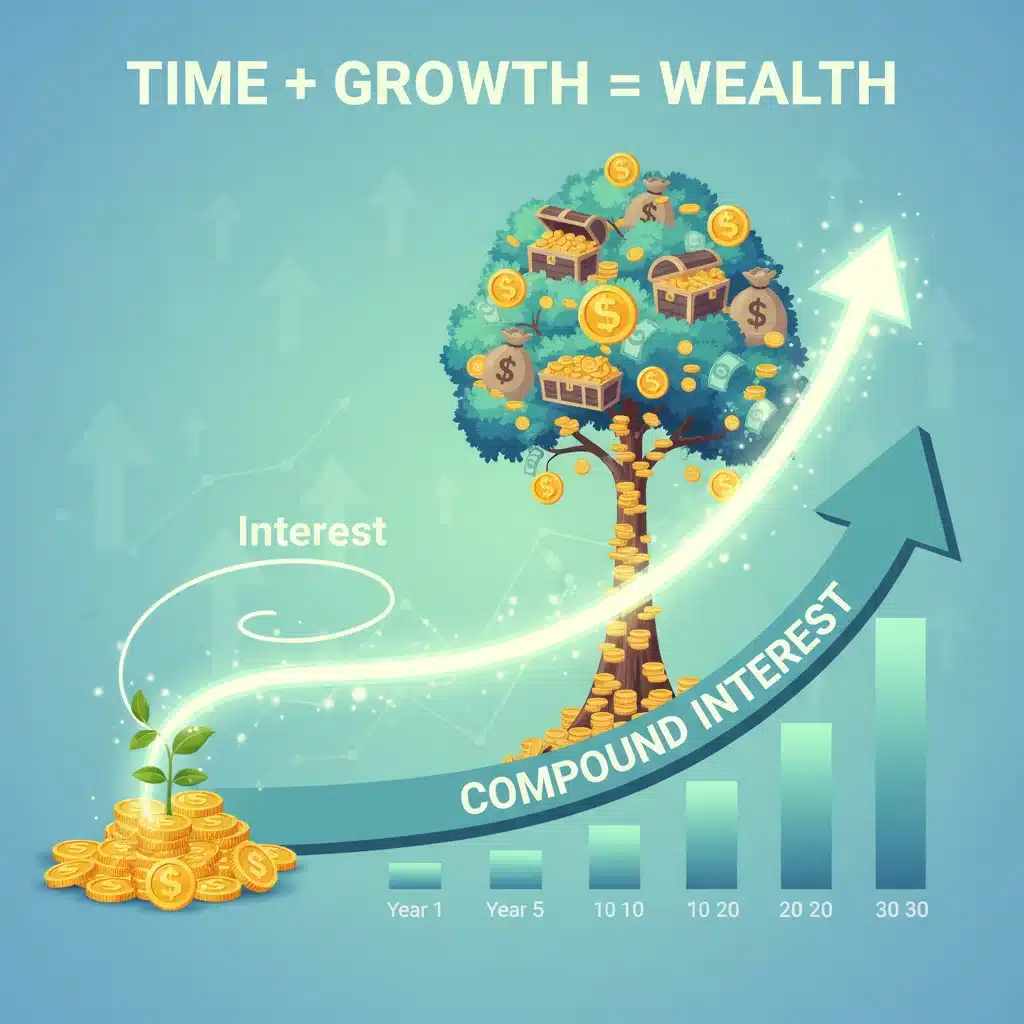
Albert Einstein reportedly called compound interest the "eighth wonder of the world." This phenomenon allows your earnings to generate their own earnings, leading to exponential family investment growth over time. The earlier you start investing, the more powerful compounding becomes. Even small, consistent contributions can grow into substantial sums over decades.
Building Your Family Investment Growth Portfolio: Step-by-Step
Step 1: Define Your Financial Goals and Time Horizon
Before investing a single dollar, clearly define what you’re saving for. Is it a college fund in 15 years? A retirement nest egg in 30 years? A down payment in 5 years? Your time horizon will dictate your risk tolerance and the appropriate asset allocation for your family investment growth strategy.
- Short-Term Goals (1-5 years): Generally, less aggressive investments like high-yield savings accounts, Certificates of Deposit (CDs), or short-term bond ETFs are suitable. Growth stocks might be too volatile for such a short horizon.
- Medium-Term Goals (5-15 years): A balanced approach with a mix of growth-oriented ETFs and some individual growth stocks might be appropriate.
- Long-Term Goals (15+ years): This is where growth stocks and growth-focused ETFs truly shine. The longer time horizon allows you to ride out market downturns and benefit from significant family investment growth.
Step 2: Assess Your Risk Tolerance
How comfortable are you with market fluctuations? Would a 20% drop in your portfolio keep you up at night? Your risk tolerance is a personal factor that should guide your investment choices. A higher tolerance for risk typically aligns with a greater allocation to growth assets, aiming for higher family investment growth.
Step 3: Diversify Your Portfolio
Diversification is the golden rule of investing. It means spreading your investments across different asset classes, industries, and geographies to minimize risk. For family investment growth, this is particularly important.
- Sector Diversification: Don’t put all your eggs in one basket (e.g., only tech stocks). Invest in various sectors like healthcare, consumer discretionary, industrials, and financials.
- Geographic Diversification: Consider international ETFs to gain exposure to global growth opportunities and reduce reliance on a single economy.
- Asset Class Diversification: While this guide focuses on growth stocks and ETFs, a truly diversified portfolio might also include a small percentage of bonds, real estate, or commodities, especially as you approach your financial goals.

Step 4: Research and Select Growth Stocks
For individual growth stocks, diligent research is key. Look for companies with:
- Strong Revenue and Earnings Growth: Consistent double-digit growth is a good indicator.
- Innovative Products or Services: Companies that are disrupting industries or creating new markets often have significant growth potential.
- Competitive Advantage (Moat): This could be a strong brand, proprietary technology, network effects, or economies of scale that protect their market position.
- Sound Financials: Healthy balance sheets, manageable debt, and positive cash flow are crucial.
- Visionary Management: A strong leadership team with a clear growth strategy.
Start with sectors you understand or are passionate about. Utilize financial news sites, analyst reports, and company investor relations pages to gather information. Remember, investing in individual stocks requires ongoing monitoring.
Step 5: Choose Growth-Oriented ETFs
ETFs are an excellent way to gain exposure to growth themes without the exhaustive research required for individual stocks. Look for ETFs that:
- Track Growth Indices: Examples include ETFs that follow the Nasdaq 100, which is heavily weighted towards technology and growth companies, or specific growth factor ETFs.
- Focus on High-Growth Sectors: Consider ETFs in areas like cloud computing, artificial intelligence, renewable energy, or biotechnology.
- Have Low Expense Ratios: Lower fees mean more of your money working for your family investment growth.
- Possess a Solid Track Record: While past performance is not indicative of future results, a consistent history of growth can be reassuring.
Some popular categories of growth ETFs include:
- Broad Market Growth ETFs: These track indices focused on large-cap growth stocks.
- Sector-Specific Growth ETFs: Target industries with high growth potential.
- Thematic ETFs: Invest in specific trends like cybersecurity, genomics, or clean energy.
Step 6: Implement a Dollar-Cost Averaging Strategy
Dollar-cost averaging (DCA) involves investing a fixed amount of money at regular intervals, regardless of market fluctuations. This strategy helps mitigate risk by averaging out your purchase price over time. When prices are high, your fixed investment buys fewer shares; when prices are low, it buys more. DCA is an excellent strategy for family investment growth, especially for those new to investing, as it removes the emotion from market timing.
Step 7: Rebalance Your Portfolio Periodically
Over time, your asset allocation may drift from your target due to differing returns of your investments. Rebalancing involves adjusting your portfolio back to your desired allocation. For instance, if growth stocks have performed exceptionally well, you might sell some to reinvest in other assets or ETFs that have lagged, maintaining your desired risk level and continuing your family investment growth strategy.
Maximizing Returns: Advanced Strategies for 2026 and Beyond
Leveraging Tax-Advantaged Accounts
One of the most effective ways to boost your family investment growth is by utilizing tax-advantaged accounts. These accounts offer significant tax benefits that can accelerate your compounding returns.
- 529 Plans (for Education): Contributions grow tax-free, and withdrawals for qualified education expenses are also tax-free. Many states also offer a tax deduction for contributions.
- Roth IRAs/401(k)s (for Retirement): Contributions are made with after-tax dollars, but qualified withdrawals in retirement are entirely tax-free. This is invaluable for long-term family investment growth.
- Traditional IRAs/401(k)s: Contributions are often tax-deductible, and taxes are deferred until retirement.
- Health Savings Accounts (HSAs): Often called a "triple tax-advantage" account, contributions are tax-deductible, growth is tax-free, and qualified withdrawals for medical expenses are tax-free. After age 65, it functions much like a traditional IRA.
Considering ESG Investing for Sustainable Growth
Environmental, Social, and Governance (ESG) investing is gaining traction. Many companies with strong ESG practices are proving to be more resilient and innovative, potentially offering sustainable family investment growth. You can find ESG-focused growth ETFs that align your values with your financial goals.
Staying Informed and Adapting
The market is dynamic. Staying informed about economic trends, technological advancements, and geopolitical events is crucial. While you shouldn’t react to every news headline, understanding the broader landscape can help you make informed decisions about your family investment growth portfolio. Regularly review your investments, perhaps annually, to ensure they still align with your goals and risk tolerance.
Common Pitfalls to Avoid in Family Investment Growth
Chasing Hot Stocks
Resist the temptation to jump on every "hot stock" tip you hear. True family investment growth comes from disciplined, long-term investing, not speculative gambles. Thorough research is always superior to hype.
Emotional Investing
Fear and greed are powerful emotions that can derail investment plans. During market downturns, panic selling can lock in losses, while during booms, excessive greed can lead to overconcentration in risky assets. Stick to your investment plan, and remember that market corrections are a normal part of the investment cycle.
Lack of Diversification
As mentioned, putting all your eggs in one basket is risky. Ensure your portfolio is adequately diversified across different companies, sectors, and asset types to protect against unforeseen events.
Ignoring Fees
Even small fees can significantly erode your returns over time. Pay attention to expense ratios for ETFs and any trading commissions. Opt for low-cost index funds and ETFs whenever possible to maximize your family investment growth.
Not Starting Early Enough
The biggest mistake many people make is delaying their investment journey. The earlier you start, the more time compounding has to work its magic. Even small contributions made consistently over a long period can lead to substantial wealth accumulation for your family.
Conclusion: Your Path to Sustainable Family Investment Growth
Investing for your family’s future in 2026 and beyond is not just about accumulating wealth; it’s about building a legacy of financial security and opportunity for generations to come. By understanding the fundamentals of growth stocks and ETFs, adopting a disciplined approach, and leveraging the power of compounding, you can confidently aim for and achieve 7%+ annual returns.
Remember, consistency, diversification, and a long-term perspective are your strongest allies in this journey. Start small, learn continuously, and watch your family investment growth flourish. The financial well-being of your family is a goal worth pursuing with diligence and strategic planning. Begin today, and empower your family’s future with smart investment choices.