Federal Reserve 2026 Projections: 0.75% Mortgage Impact
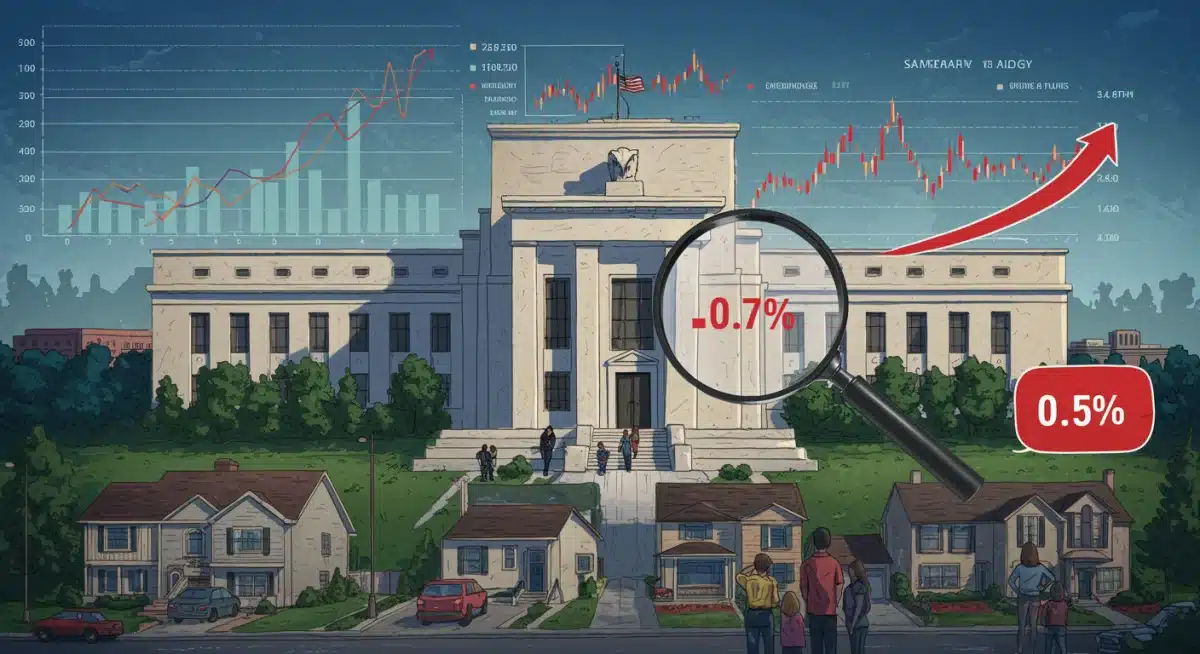
The Federal Reserve’s 2026 interest rate projections, specifically a potential 0.75% shift, are poised to significantly impact the U.S. mortgage market, affecting affordability and housing demand for millions.
The financial landscape of 2026 is already a topic of intense discussion, especially concerning the Federal Reserve’s potential actions. The Latest Developments: Federal Reserve’s 2026 Interest Rate Projections and Their 0.75% Impact on Mortgages suggest a significant shift that could reshape the American housing market. Understanding these intricate details is crucial for homeowners, prospective buyers, and financial planners alike.
Understanding the Federal Reserve’s Role and Projections
The Federal Reserve, often referred to as ‘the Fed,’ serves as the central banking system of the United States. Its primary mandates include maximizing employment, stabilizing prices, and moderating long-term interest rates. These goals are pursued through various monetary policy tools, with adjustments to the federal funds rate being among the most impactful. When the Fed signals changes in this key rate, it sends ripple effects throughout the entire economy, particularly influencing lending markets.
Forecasting the Fed’s moves requires an in-depth analysis of economic indicators, inflation trends, and global financial stability. In 2026, the projections for interest rates are not just numbers; they represent a carefully considered outlook based on anticipated economic conditions. These projections are communicated through various channels, including the Summary of Economic Projections (SEP), which offers insights into the expectations of Federal Open Market Committee (FOMC) participants regarding future interest rates, inflation, and economic growth.
The Mechanism of Federal Funds Rate
The federal funds rate is the target interest rate set by the FOMC. It is the rate at which commercial banks borrow and lend their excess reserves to each other overnight. While not directly controlling mortgage rates, changes in the federal funds rate influence the prime rate and, consequently, other consumer lending rates, including those for mortgages. A projected increase or decrease by the Fed often leads to a corresponding movement in long-term rates like those on 30-year fixed mortgages, albeit with some lag and other market factors at play.
- Inflation Control: Raising interest rates is a common strategy to combat inflation by increasing the cost of borrowing, thereby cooling economic activity.
- Economic Growth: Conversely, lowering rates aims to stimulate borrowing and investment, boosting economic expansion.
- Market Expectations: The Fed’s forward guidance plays a crucial role, shaping market expectations and influencing current interest rate movements even before actual changes occur.
The Fed’s projections for 2026 are a critical piece of the economic puzzle, offering a glimpse into future monetary policy. These forecasts are not set in stone, as they are subject to revision based on evolving economic data. However, they provide a strong indication of the central bank’s stance and its potential impact on sectors like housing.
The 0.75% Impact: What it Means for Mortgage Rates
A projected 0.75% shift in interest rates, whether an increase or decrease, carries substantial weight for the mortgage market. This seemingly small percentage point can translate into thousands of dollars over the lifetime of a loan, significantly altering the financial calculus for both new homebuyers and existing homeowners looking to refinance. It is a critical figure that warrants careful consideration and strategic planning.
When the Federal Reserve signals a rate hike, the cost of borrowing generally increases across the board. For mortgages, this means lenders will typically raise their rates to maintain profit margins, as their own cost of funds has increased. Conversely, a rate cut would make borrowing cheaper, potentially stimulating demand for housing. The 0.75% figure represents a notable adjustment, suggesting a deliberate policy action by the Fed to either rein in inflation or stimulate a sluggish economy in 2026.
Calculating the Cost of a 0.75% Rate Change
To truly grasp the implications, consider the financial impact on a typical mortgage. On a $400,000 30-year fixed-rate mortgage, a 0.75% increase could lead to a substantial rise in monthly payments. For instance, if the rate moves from 6.0% to 6.75%, the monthly payment could increase by approximately $190-$200. Over the life of the loan, this adds up to tens of thousands of dollars in additional interest paid, directly affecting a household’s disposable income and overall financial planning.
- Increased Monthly Payments: Higher rates mean a larger portion of income allocated to housing costs.
- Reduced Purchasing Power: Buyers may qualify for smaller loan amounts or be priced out of certain markets.
- Refinancing Considerations: Existing homeowners with adjustable-rate mortgages could see their payments rise, while those with fixed rates would be less affected unless they consider refinancing at higher rates.
The direct correlation between the Fed’s actions and mortgage rates is a cornerstone of the U.S. financial system. A 0.75% adjustment is not a minor tweak; it indicates a significant policy direction that will undoubtedly shape the housing sector in 2026 and beyond. Homebuyers and owners must factor these potential changes into their long-term financial strategies to mitigate risks and capitalize on opportunities.
Factors Influencing the Fed’s 2026 Rate Decisions
The Federal Reserve’s decisions are rarely made in isolation; they are the culmination of extensive analysis of a multitude of economic indicators and global trends. For 2026, several key factors will likely weigh heavily on the FOMC’s deliberations regarding interest rate adjustments. Understanding these influences provides crucial context for interpreting the Fed’s projections and their potential impact on the mortgage market.
One of the foremost considerations is inflation. The Fed has a dual mandate of achieving maximum employment and price stability, with the latter often translating to a target inflation rate. If inflationary pressures persist or intensify leading into 2026, the Fed might lean towards higher rates to cool down the economy. Conversely, if inflation is well under control, the central bank might have more flexibility to support growth through lower rates. Labor market conditions also play a pivotal role, as a strong job market can indicate overheating, while a weakening one might signal the need for monetary stimulus.
Key Economic Indicators Under Scrutiny
The Fed’s decision-making process is data-driven, relying on a comprehensive suite of economic reports and surveys. These indicators provide a snapshot of the economy’s health and help policymakers gauge the effectiveness of current policies and anticipate future trends.
- Consumer Price Index (CPI): A primary measure of inflation, tracking the average change over time in the prices paid by urban consumers for a market basket of consumer goods and services.
- Employment Report: Provides data on nonfarm payrolls, unemployment rates, and wage growth, offering insights into labor market strength.
- Gross Domestic Product (GDP): The broadest measure of economic activity, indicating the total value of goods and services produced in the country.
- Retail Sales: Reflects consumer spending patterns, a key driver of economic growth.

Beyond domestic economic data, global economic conditions, geopolitical stability, and supply chain dynamics can also influence the Fed’s outlook for 2026. A global slowdown, for example, could prompt a more dovish stance, while international conflicts might introduce inflationary pressures. Ultimately, the Fed’s 2026 interest rate decisions will be a delicate balancing act, aiming to steer the U.S. economy towards sustainable growth and stability amidst a complex and evolving landscape.
Navigating the Mortgage Market in 2026: Strategies for Homebuyers and Owners
With the Federal Reserve’s 2026 interest rate projections hinting at a potential 0.75% impact on mortgages, both prospective homebuyers and existing homeowners need to adopt proactive strategies. The housing market is dynamic, and understanding how to navigate it effectively in a changing interest rate environment can lead to significant financial advantages or help mitigate potential risks. Strategic planning is paramount to securing favorable terms and ensuring long-term financial stability.
For homebuyers, the prospect of higher rates means that affordability could become a greater challenge. It becomes even more critical to assess one’s financial position, including credit score, debt-to-income ratio, and down payment capabilities. Exploring different mortgage products, such as adjustable-rate mortgages (ARMs) if short-term savings are prioritized, or fixed-rate mortgages if long-term payment stability is desired, becomes essential. It is also wise to get pre-approved for a mortgage to lock in a rate if possible, especially if rates are on an upward trajectory.
Key Strategies for Different Market Participants
Approaches to the mortgage market in 2026 will vary depending on individual circumstances and financial goals. Tailoring these strategies to personal needs is crucial for success.
- For Prospective Homebuyers:
- Improve Credit Score: A higher credit score can qualify you for better interest rates, offsetting some of the Fed’s potential increases.
- Save for a Larger Down Payment: A substantial down payment reduces the loan amount, lessening the impact of higher interest rates on monthly payments.
- Get Pre-Approved: Securing pre-approval can lock in a rate for a certain period, providing certainty in a fluctuating market.
- For Current Homeowners:
- Review Existing Mortgage: Understand your current rate, term, and whether it’s fixed or adjustable.
- Consider Refinancing (if rates drop): If rates decline, refinancing could lower monthly payments or change loan terms.
- Accelerate Payments: Paying extra on your principal can reduce the total interest paid over the life of the loan, especially beneficial if rates are rising.
The housing market in 2026 will likely demand flexibility and informed decision-making. Staying abreast of the Fed’s announcements and economic forecasts, consulting with financial advisors, and continuously evaluating personal financial health will be vital for both homebuyers and existing homeowners to navigate the evolving landscape successfully.
Historical Context: Previous Fed Rate Changes and Mortgage Market Response
Understanding how the mortgage market has reacted to past Federal Reserve interest rate changes provides valuable insights into what might unfold in 2026. While every economic cycle has unique characteristics, historical patterns often offer a useful framework for anticipating future responses. The Fed’s history is replete with instances of rate adjustments, each leaving its mark on the housing sector and the broader economy.
Throughout various periods, the Fed has utilized interest rate hikes to curb inflation, as seen in the late 1970s and early 1980s, which led to significantly higher mortgage rates and a slowdown in housing activity. Conversely, during economic downturns, such as the 2008 financial crisis or the COVID-19 pandemic, the Fed has aggressively cut rates to stimulate economic growth, resulting in historically low mortgage rates that spurred refinancing booms and robust housing demand. These historical precedents underscore the profound influence the central bank wields over the housing market’s pulse.
Lessons from Past Cycles
Examining specific historical periods can illuminate the potential outcomes of the Fed’s 2026 projections.
- Periods of Rate Hikes:
- Typically lead to a cooling housing market, with reduced sales volume and slower price appreciation as affordability decreases.
- Can cause a shift from fixed-rate mortgages to adjustable-rate mortgages as borrowers seek lower initial payments.
- Periods of Rate Cuts:
- Often stimulate housing demand, leading to increased sales and price growth due to enhanced affordability.
- Encourage a wave of refinancing activity, allowing homeowners to lower their monthly payments or tap into home equity.
The 0.75% impact projected for 2026, whether an increase or decrease, falls within the range of historical adjustments that have demonstrably altered the trajectory of the mortgage market. While the specific conditions of 2026—including demographic shifts, housing supply, and technological advancements in lending—will contribute to a unique response, the fundamental principles of supply, demand, and affordability, heavily influenced by the Fed, will remain constant. Analyzing these historical responses equips market participants with a more informed perspective for navigating the future.
Regional Variations and Local Market Impact of Rate Changes
While the Federal Reserve’s interest rate decisions have a nationwide impact, their effects are not uniformly distributed across all regions and local housing markets within the United States. The 0.75% projected impact on mortgages in 2026 will manifest differently depending on specific local economic conditions, housing inventory, population growth, and existing affordability challenges. Understanding these regional variations is crucial for a nuanced perspective on the broader implications of monetary policy.
In highly competitive markets with robust job growth and limited housing supply, such as major tech hubs or desirable coastal cities, the impact of a 0.75% rate increase might be absorbed more readily due to persistent demand and higher-income earners. While affordability will still be affected, these markets might experience a slowdown in price appreciation rather than a significant decline. Conversely, in more price-sensitive markets, or those with less robust economic fundamentals, even a modest rate hike could lead to a more pronounced cooling of demand, potentially resulting in slower sales, increased inventory, and even slight price corrections.
Factors Driving Regional Differences
Several localized factors contribute to how a national interest rate change translates into regional mortgage market outcomes.
- Local Economic Strength: Regions with diverse economies and strong job markets tend to be more resilient to interest rate fluctuations.
- Housing Supply and Demand: Areas with chronic housing shortages may continue to see competitive conditions even with higher rates, whereas markets with ample supply might experience a more immediate slowdown.
- Demographic Trends: Influxes of new residents, particularly younger generations entering prime homebuying age, can sustain demand despite rising costs.
- Affordability Levels: Markets that are already at the edge of affordability for many residents will feel the pinch of higher rates more acutely.
For example, a 0.75% increase in mortgage rates could significantly deter first-time homebuyers in a market where median home prices are already stretched, whereas in an area with lower home values, the impact might be less severe on a monthly payment basis. Local governmental policies, such as zoning regulations and housing incentives, also play a role in shaping market responses. Therefore, while the Fed sets the national stage, the local actors and conditions ultimately determine the specific performance of the mortgage market in each community across the U.S. in 2026.
Preparing for 2026: Financial Planning and Expert Advice
As 2026 approaches with the Federal Reserve’s interest rate projections and their potential 0.75% impact on mortgages, proactive financial planning becomes indispensable. Individuals and families need to arm themselves with knowledge and seek expert advice to navigate the evolving economic landscape effectively. The goal is not just to react to market changes but to strategically position oneself to thrive, regardless of whether rates rise or fall.
A crucial first step in preparation is to conduct a thorough review of personal finances. This includes assessing current debt levels, analyzing income stability, and evaluating savings. Understanding your financial health provides a strong foundation for making informed decisions about homeownership or mortgage management. For those considering buying, this might involve stress-testing budgets against higher potential monthly payments. Existing homeowners should assess their mortgage terms and consider whether any adjustments, such as making extra principal payments or exploring refinancing options, would be beneficial if rates move favorably.
Essential Steps for Proactive Planning
Engaging with financial professionals and staying informed are cornerstones of effective preparation for 2026.
- Consult a Financial Advisor: A certified financial planner can offer personalized advice tailored to your specific situation, helping you understand the implications of rate changes on your overall financial portfolio.
- Engage with Mortgage Lenders: Speak to lenders about various mortgage products, pre-approval processes, and strategies to lock in rates or mitigate risks.
- Monitor Economic News: Stay updated on the Federal Reserve’s announcements, inflation reports, and broader economic indicators to anticipate potential shifts.
- Build a Strong Emergency Fund: A robust emergency fund provides a buffer against unexpected financial strains, including potential increases in mortgage payments or other living costs.
- Optimize Your Credit Score: A higher credit score can translate into better terms and lower interest rates, even in a rising rate environment.
The 2026 outlook, with its potential for a 0.75% shift in mortgage rates, underscores the importance of diligent financial preparation. By taking proactive steps, seeking expert guidance, and maintaining a vigilant eye on economic developments, individuals can confidently approach the future of the housing market. This strategic foresight ensures that financial goals remain achievable amidst the dynamic forces of monetary policy.
| Key Aspect | Brief Description |
|---|---|
| Fed’s 2026 Outlook | Projections indicate potential 0.75% rate shift, influencing economic stability. |
| Mortgage Impact | A 0.75% change significantly alters monthly mortgage payments and affordability. |
| Influencing Factors | Inflation, employment data, and global conditions guide Fed’s rate decisions. |
| Strategic Planning | Homebuyers and owners need proactive financial review and expert consultation. |
Frequently Asked Questions About 2026 Mortgage Rates
If you have a fixed-rate mortgage, your monthly payments will generally remain unchanged by the Federal Reserve’s 2026 projections. Fixed rates are locked in for the life of the loan. However, future refinancing opportunities might be influenced, so it’s wise to monitor market trends for potential advantages.
For new homebuyers, a 0.75% increase translates to higher monthly mortgage payments and potentially reduced purchasing power. It means you might qualify for a smaller loan amount or need to adjust your budget expectations, making financial pre-approval and credit score optimization even more critical.
An adjustable-rate mortgage (ARM) could offer lower initial payments, but they carry the risk of future payment increases if rates rise. While potentially attractive in the short term, it’s crucial to understand the adjustment periods and caps. Consult a financial advisor to assess if an ARM aligns with your risk tolerance and financial goals for 2026 and beyond.
To prepare, focus on improving your credit score, building a robust emergency fund, and reducing existing debt. Consider getting pre-approved for a mortgage if buying soon, and for homeowners, review your current loan terms. Staying informed about economic news and consulting financial experts are also key preparatory steps.
Inflation is a primary driver of the Federal Reserve’s monetary policy. If inflation remains elevated or accelerates into 2026, the Fed is more likely to raise interest rates to cool the economy and stabilize prices. Conversely, if inflation is under control, there might be less pressure for rate hikes, potentially leading to more stable mortgage rates.
Conclusion
The Federal Reserve’s 2026 interest rate projections, particularly the anticipated 0.75% impact on mortgages, underscore a pivotal moment for the U.S. housing market. These developments necessitate a comprehensive understanding and strategic approach from all stakeholders. From new homebuyers to existing homeowners, adapting to these potential shifts through informed financial planning, diligent market monitoring, and expert consultation will be essential. The intricate dance between monetary policy and economic realities will undoubtedly shape the landscape of homeownership in the coming years, making proactive engagement more critical than ever.