Future of STEM Education: 2026 Outlook & Program Comparison
The landscape of education is in a constant state of flux, driven by technological advancements, global challenges, and evolving societal needs. At the heart of this transformation lies STEM education future – an acronym for Science, Technology, Engineering, and Mathematics. As we advance towards 2026, the significance of STEM education is not merely growing; it is fundamentally reshaping how we prepare the next generation for a world that demands critical thinking, innovation, and adaptability. This article delves into the anticipated trajectory of STEM education, offering a comprehensive 2026 outlook and a comparative analysis of programs designed to meet these future demands.
The demand for STEM professionals continues to outpace supply across various industries. From artificial intelligence and cybersecurity to sustainable energy and biotechnology, the foundational skills imparted through STEM education are becoming indispensable. This growing demand necessitates a proactive approach to educational reform, ensuring that curricula, teaching methodologies, and resource allocation are aligned with future workforce needs. Understanding the key trends and effective program models is crucial for educators, policymakers, parents, and students alike.
Understanding the Imperative: Why STEM Education Future is Critical
The global economy is increasingly driven by knowledge and innovation. Countries that prioritize investment in STEM education are better positioned to foster economic growth, address complex global challenges, and maintain a competitive edge. The skills cultivated through STEM – problem-solving, critical analysis, creativity, and collaboration – are not just essential for scientific and technological fields but are universally applicable in an interconnected world. The STEM education future is about nurturing a generation capable of navigating and shaping an unpredictable future.
Consider the rapid advancements in fields like machine learning and quantum computing. These areas, once confined to the realm of science fiction, are now at the forefront of innovation, impacting everything from healthcare to finance. Without a robust foundation in STEM, individuals and nations risk being left behind. Therefore, the discussion around STEM education is not just academic; it is a strategic imperative for national prosperity and global well-being.
The Current State of STEM Education: A Foundation for 2026
Before peering into the future, it’s essential to understand the current state of STEM education. Over the past decade, there has been a significant push to integrate STEM concepts into K-12 curricula, establish specialized STEM schools, and promote STEM careers through various initiatives. However, challenges persist, including disparities in access to quality STEM education, a shortage of qualified STEM teachers, and the need for more engaging and relevant instructional materials.
Many educational systems are still grappling with traditional teaching methods that emphasize rote memorization over hands-on exploration and inquiry-based learning. While progress has been made, the transition to a truly integrated and interdisciplinary STEM approach is ongoing. The goal for 2026 and beyond is to overcome these hurdles and create an educational ecosystem that truly empowers students to thrive in STEM fields.
Key Trends Shaping the STEM Education Future by 2026
The year 2026 will see several transformative trends solidifying their presence in STEM education. These trends are not merely incremental changes but represent fundamental shifts in how STEM is taught, learned, and applied.
1. Increased Emphasis on Interdisciplinary Learning
Traditional subject silos are breaking down. The STEM education future will be characterized by a greater emphasis on interdisciplinary learning, where concepts from science, technology, engineering, and mathematics are woven together seamlessly. Real-world problems rarely fit neatly into a single academic discipline, and future professionals will need to draw upon diverse knowledge bases to find innovative solutions. This means projects that combine biology with coding, or physics with design thinking, will become more common.
For example, designing a sustainable city involves not just engineering principles but also ecological science, data analysis (mathematics), and urban planning technology. This integrated approach fosters a more holistic understanding and prepares students for complex, multidisciplinary challenges.
2. Personalization and Adaptive Learning Technologies
The advent of artificial intelligence and machine learning is revolutionizing personalized learning. By 2026, adaptive learning platforms will be more sophisticated, tailoring educational content and pace to individual student needs and learning styles. This allows students to progress at their own speed, focusing on areas where they need more support and accelerating through concepts they quickly grasp. This personalization is particularly crucial in STEM, where foundational understanding is paramount and misconceptions can hinder future learning.
Imagine an AI tutor that identifies a student’s specific struggle with algebra and provides targeted exercises and explanations, or a virtual lab simulation that adapts to a student’s experimental choices, providing real-time feedback. This is the promise of personalized learning in the STEM education future.
3. Integration of Emerging Technologies (AI, VR/AR, Robotics)
Emerging technologies will not just be subjects of study but also tools for learning. Virtual Reality (VR), Augmented Reality (AR), Artificial Intelligence (AI), and robotics will be increasingly integrated into STEM curricula. VR and AR can create immersive learning experiences, allowing students to explore complex scientific phenomena, conduct virtual experiments, or design engineering prototypes in a risk-free environment.
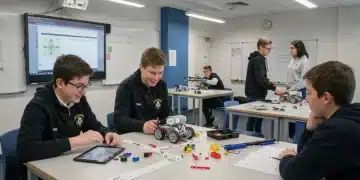
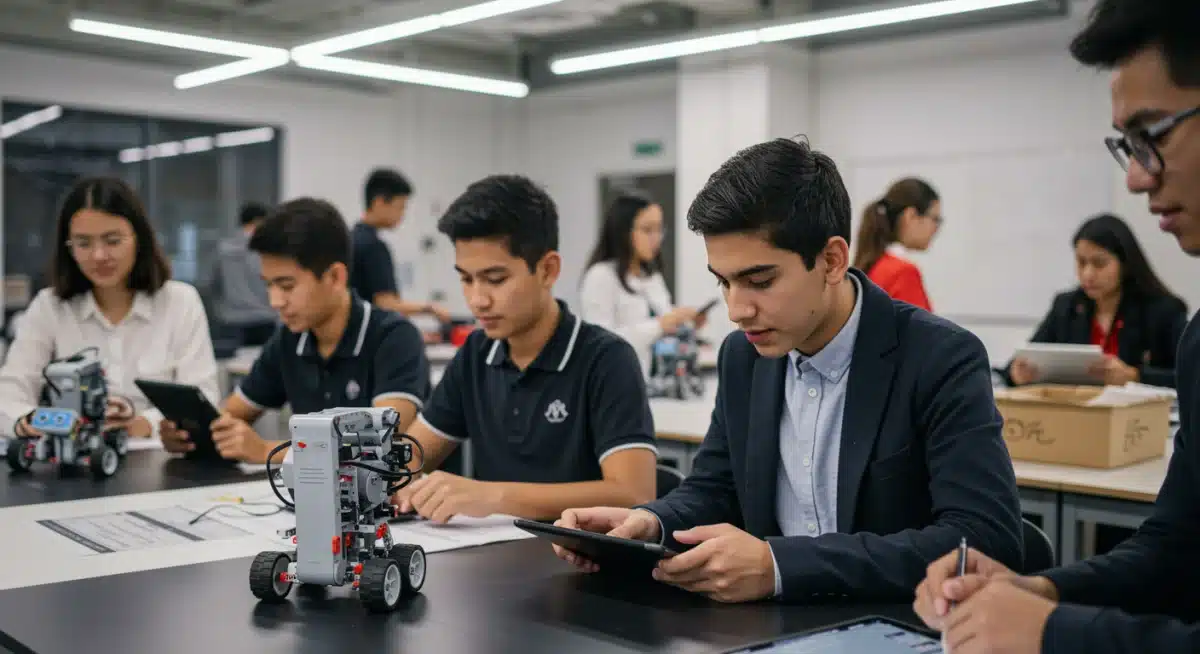
Robotics platforms will offer hands-on opportunities for students to apply engineering principles, coding, and problem-solving. AI-powered tools can assist with data analysis, scientific research, and even creative design. These technologies make learning more engaging, interactive, and directly relevant to the technological world students will inhabit.
4. Emphasis on Computational Thinking and Data Literacy
In an increasingly data-driven world, computational thinking and data literacy are becoming as fundamental as reading and writing. The STEM education future will place a strong emphasis on teaching students how to think like computer scientists – breaking down problems, designing algorithms, and understanding data. This isn’t just about coding; it’s about a way of approaching problems logically and systematically.
Data literacy involves the ability to understand, interpret, and communicate data. This skill is vital across all STEM fields, from analyzing scientific research results to interpreting market trends in technology. Students will need to be proficient in using data visualization tools and understanding statistical concepts to make informed decisions.
5. Project-Based and Experiential Learning
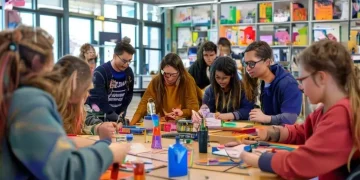
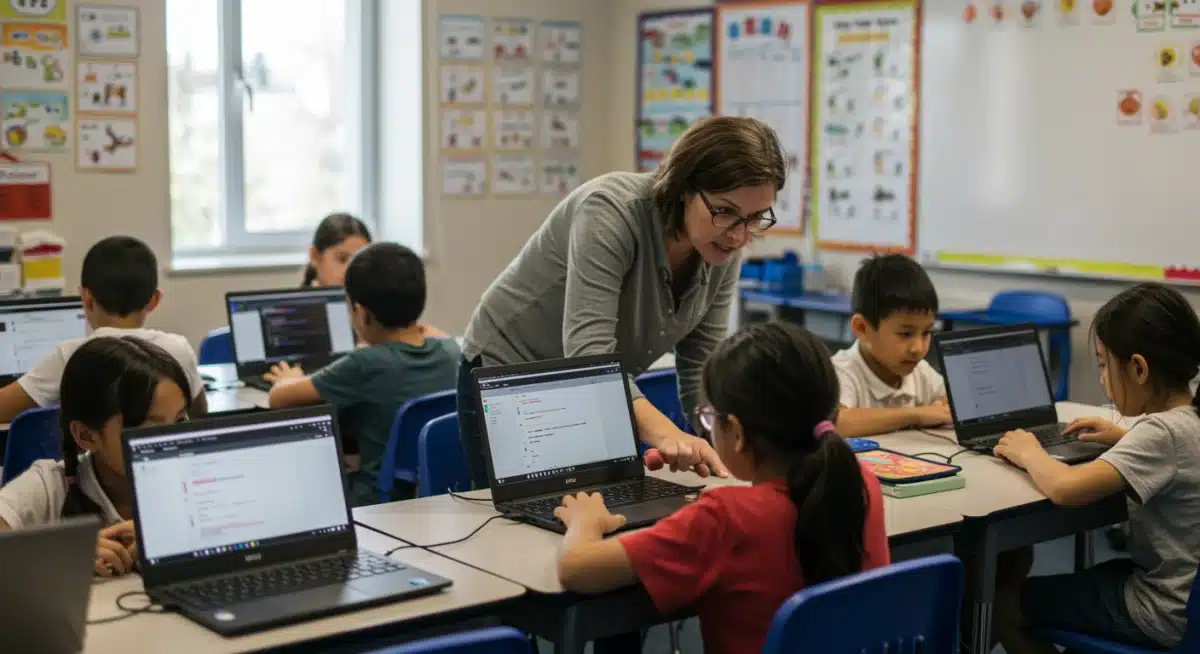
Passive learning is being replaced by active, hands-on, project-based, and experiential learning. By 2026, STEM education will prioritize real-world projects that challenge students to apply their knowledge to solve authentic problems. This approach not only deepens understanding but also develops crucial skills like teamwork, communication, and resilience. Field trips, internships, and collaborations with industry partners will also become more common, bridging the gap between academia and the professional world.
Imagine students designing a water filtration system for a local community, or developing an app to address a specific social issue. These experiences provide context and motivation, making the learning process more meaningful and impactful. This shift towards experiential learning is a cornerstone of the STEM education future.
Comparing Leading STEM Programs for the 2026 Horizon
As the demands on STEM education evolve, so too do the programs designed to deliver it. Here, we compare several prominent approaches and highlight their strengths in preparing students for the 2026 landscape.
1. Project Lead The Way (PLTW)
Overview: Project Lead The Way (PLTW) is a non-profit organization that provides K-12 STEM curricula and teacher professional development. Their programs focus on hands-on, project-based learning in areas like biomedical science, engineering, and computer science. PLTW is known for its structured curriculum that integrates academic rigor with practical application.
Strengths for 2026:
- Integrated Curriculum: PLTW’s curriculum is inherently interdisciplinary, connecting science with engineering design and mathematical analysis. This aligns perfectly with the trend towards breaking down subject silos.
- Hands-on Experience: The strong emphasis on projects, such as designing a sustainable home or analyzing DNA evidence, equips students with practical skills and problem-solving abilities crucial for future STEM careers.
- Teacher Training: PLTW provides extensive professional development for teachers, ensuring they are well-prepared to deliver engaging and effective STEM instruction.
- Scalability: As a widely adopted program, PLTW has a proven track record of implementation across diverse school settings, making it a robust model for widespread STEM integration.
Areas for Growth: While strong, PLTW could further integrate cutting-edge AI and advanced data science modules more explicitly into its core curriculum to stay ahead of the curve in the STEM education future.
2. FIRST Robotics Competition (FOR Inspiration and Recognition of Science and Technology)
Overview: FIRST is a global robotics competition for students from elementary to high school. Teams design, build, and program robots to compete in alliance-based games. Beyond the technical challenge, FIRST emphasizes gracious professionalism and cooperation.
Strengths for 2026:
- Real-world Engineering: Students gain unparalleled experience in mechanical design, electrical engineering, software development, and project management under tight deadlines.
- Teamwork and Collaboration: The competition format necessitates strong teamwork, communication, and problem-solving skills – all vital for future workplaces.
- Mentorship: Teams are often mentored by industry professionals, providing students with invaluable exposure to real-world STEM careers and networking opportunities.
- Inspiration and Engagement: The excitement and challenge of robotics competitions are highly effective in engaging students and fostering a passion for STEM.
Areas for Growth: While excellent for engineering and programming, FIRST’s direct connection to pure scientific research or advanced mathematical theory could be strengthened, though these are often embedded within the engineering tasks.
3. Code.org and Computer Science Education Week
Overview: Code.org is a non-profit dedicated to expanding access to computer science education, particularly for girls and underrepresented minorities. They offer free online coding tutorials, curriculum resources, and advocate for computer science integration in schools. Their Hour of Code initiative has reached millions globally.
Strengths for 2026:
- Universal Access: Code.org’s free resources make computer science accessible to a broad audience, helping to democratize access to critical technological skills.
- Early Introduction to CS: By targeting K-12, Code.org helps introduce computational thinking at an early age, fostering a foundational understanding that can be built upon.
- Teacher Support: They provide professional development and curriculum support for teachers, addressing the shortage of qualified computer science educators.
- Alignment with Digital Economy: With the increasing digitization of all aspects of life, strong computer science skills are paramount for the STEM education future.
Areas for Growth: While strong in computer science, Code.org’s direct integration with the ‘S’, ‘E’, and ‘M’ aspects of STEM could be further developed into more interdisciplinary projects that explicitly link coding to scientific inquiry or engineering design.
4. Inquiry-Based Science Programs (e.g., FOSS, SEPUP)
Overview: Programs like Full Option Science System (FOSS) and Science Education for Public Understanding Program (SEPUP) emphasize inquiry-based learning, where students actively investigate scientific questions, collect data, and draw conclusions. These programs often use kits and modules designed for hands-on exploration.
Strengths for 2026:
- Scientific Literacy: Fosters critical thinking, observation, and data analysis skills essential for scientific literacy and understanding the world.
- Hands-on Exploration: Students learn by doing, which leads to deeper understanding and retention of scientific concepts.
- Problem-Solving: Encourages students to formulate questions, design experiments, and interpret results, mirroring the scientific process.
- Adaptability: Many inquiry-based programs can be adapted to incorporate new scientific discoveries and technologies, keeping the curriculum current.
Areas for Growth: To fully embrace the STEM education future, these programs could more explicitly integrate engineering design challenges and computational thinking into their scientific investigations, moving beyond pure science to a more integrated STEM approach.
Challenges and Opportunities for STEM Education Future
While the outlook for STEM education is promising, several challenges must be addressed to fully realize its potential by 2026.
Addressing Equity and Access
One of the most significant challenges is ensuring equitable access to high-quality STEM education for all students, regardless of socioeconomic background, gender, or geographic location. Disparities in resources, teacher training, and cultural encouragement can create significant gaps. Efforts to promote diversity and inclusion in STEM must be intensified, encouraging more girls and underrepresented minorities to pursue STEM fields.
Teacher Training and Professional Development
The effectiveness of any STEM program hinges on the quality of its teachers. By 2026, there will be an even greater need for STEM educators who are not only subject matter experts but also proficient in interdisciplinary teaching, technology integration, and project-based methodologies. Ongoing professional development, mentorship programs, and competitive salaries will be crucial to attract and retain top talent.
Funding and Resource Allocation
Implementing advanced STEM curricula, acquiring specialized equipment (robotics kits, VR headsets, lab materials), and providing teacher training all require substantial investment. Governments, educational institutions, and private sector partners must collaborate to ensure adequate funding and strategic resource allocation to support the evolving needs of STEM education future.
Curriculum Flexibility and Responsiveness
The pace of technological change means that curricula must be flexible and responsive. Educational systems need mechanisms to quickly integrate new scientific discoveries, emerging technologies, and evolving industry demands into their programs. This requires a shift away from rigid, slow-to-change curricula towards more dynamic and adaptable frameworks.
The Role of Partnerships in Shaping the 2026 STEM Landscape
The future of STEM education cannot be shaped by schools alone. Strong partnerships between educational institutions, industry, government, and non-profit organizations are vital. These collaborations can provide:
- Mentorship and Role Models: Industry professionals can mentor students, provide real-world insights, and serve as inspiring role models.
- Internship and Apprenticeship Opportunities: Companies can offer valuable experiential learning opportunities that bridge the gap between classroom theory and practical application.
- Resource Sharing: Industry can provide financial support, equipment, and expertise, while educational institutions can offer research collaboration and talent pipelines.
- Curriculum Development: Collaboration ensures that academic curricula are relevant to industry needs and prepare students with the skills employers are seeking.
These symbiotic relationships are essential for creating a vibrant and effective STEM education future that benefits all stakeholders.
Conclusion: A Vision for the STEM Education Future in 2026
As we look towards 2026, the trajectory of STEM education is clear: it will be more integrated, personalized, technologically advanced, and deeply rooted in real-world problem-solving. The imperative to equip students with critical STEM skills is not just about producing scientists and engineers; it is about cultivating a citizenry capable of critical thinking, innovation, and adaptability in an ever-changing world.
Programs like Project Lead The Way, FIRST Robotics, and Code.org, alongside inquiry-based science initiatives, are already laying the groundwork for this future. However, sustained effort is required to address challenges related to equity, teacher training, and funding. By embracing interdisciplinary approaches, leveraging emerging technologies, and fostering strong partnerships, we can ensure that the STEM education future is bright, inclusive, and capable of driving progress for generations to come. The journey to 2026 is an opportunity to redefine education, making it more relevant, engaging, and impactful than ever before.
The global competitiveness of nations and the well-being of societies will increasingly depend on the strength of their STEM pipelines. Therefore, continuous innovation and investment in STEM education are not just options but necessities. The vision for 2026 is one where every student has the opportunity to explore, discover, and excel in science, technology, engineering, and mathematics, thereby unlocking their full potential and contributing to a better future for all.