2026 Social Security COLA: Understanding Your Future Benefits

Understanding the 2026 Social Security Benefit Adjustments: A 4.2% COLA Explained
As millions of Americans rely on Social Security for their financial well-being in retirement, disability, or as survivors, understanding the annual Cost-of-Living Adjustment (COLA) is paramount. The COLA is designed to ensure that the purchasing power of Social Security benefits is not eroded by inflation. For those looking ahead, projections suggest a significant 4.2% COLA for 2026 Social Security benefits. This potential increase offers a crucial insight into future financial planning for current and prospective beneficiaries. This comprehensive guide will delve into the intricacies of the 2026 Social Security COLA, how it’s calculated, its potential impact, and what you need to know to navigate these changes effectively.
What is the Cost-of-Living Adjustment (COLA)?
The Cost-of-Living Adjustment, or COLA, is an annual increase in Social Security and Supplemental Security Income (SSI) benefits. Its primary purpose is to counteract the effects of inflation, ensuring that the real value of benefits remains stable over time. Without COLA, the fixed income of beneficiaries would gradually lose its purchasing power as the cost of goods and services rises. The Social Security Act mandates these adjustments, linking them to inflation rates to provide a vital financial cushion for millions.
The History and Purpose of COLA
Before 1975, Social Security benefit increases required specific acts of Congress. However, recognizing the need for a more automatic and predictable mechanism to protect beneficiaries from inflation, Congress amended the Social Security Act to include automatic annual COLAs. This change marked a significant step towards safeguarding the financial security of retirees, disabled workers, and survivors. The COLA mechanism ensures that benefits keep pace with the economy, reflecting the rising costs of daily living, from groceries to healthcare.
How COLA is Calculated: The CPI-W
The calculation of the COLA is not arbitrary; it’s tied directly to specific economic indicators. The Social Security Administration (SSA) uses the Consumer Price Index for Urban Wage Earners and Clerical Workers (CPI-W) as its benchmark. The CPI-W measures the average change over time in the prices paid by urban wage earners and clerical workers for a market basket of consumer goods and services. To determine the COLA, the SSA compares the average CPI-W for the third quarter of the current year (July, August, and September) with the average CPI-W for the third quarter of the most recent year in which a COLA was payable. The percentage increase between these two periods, rounded to the nearest one-tenth of one percent, becomes the COLA for the following year. If there is no increase, or if the CPI-W decreases, there is no COLA for that year, meaning benefits remain the same.
It’s important to note that while the CPI-W is the official measure, some critics argue that it doesn’t fully capture the spending patterns and healthcare costs of seniors, who typically spend more on medical care than the general urban wage earner population. Debates about using alternative indices, such as the CPI-E (Consumer Price Index for the Elderly), have been ongoing, but for now, the CPI-W remains the standard.
Projecting the 2026 Social Security COLA: The 4.2% Forecast
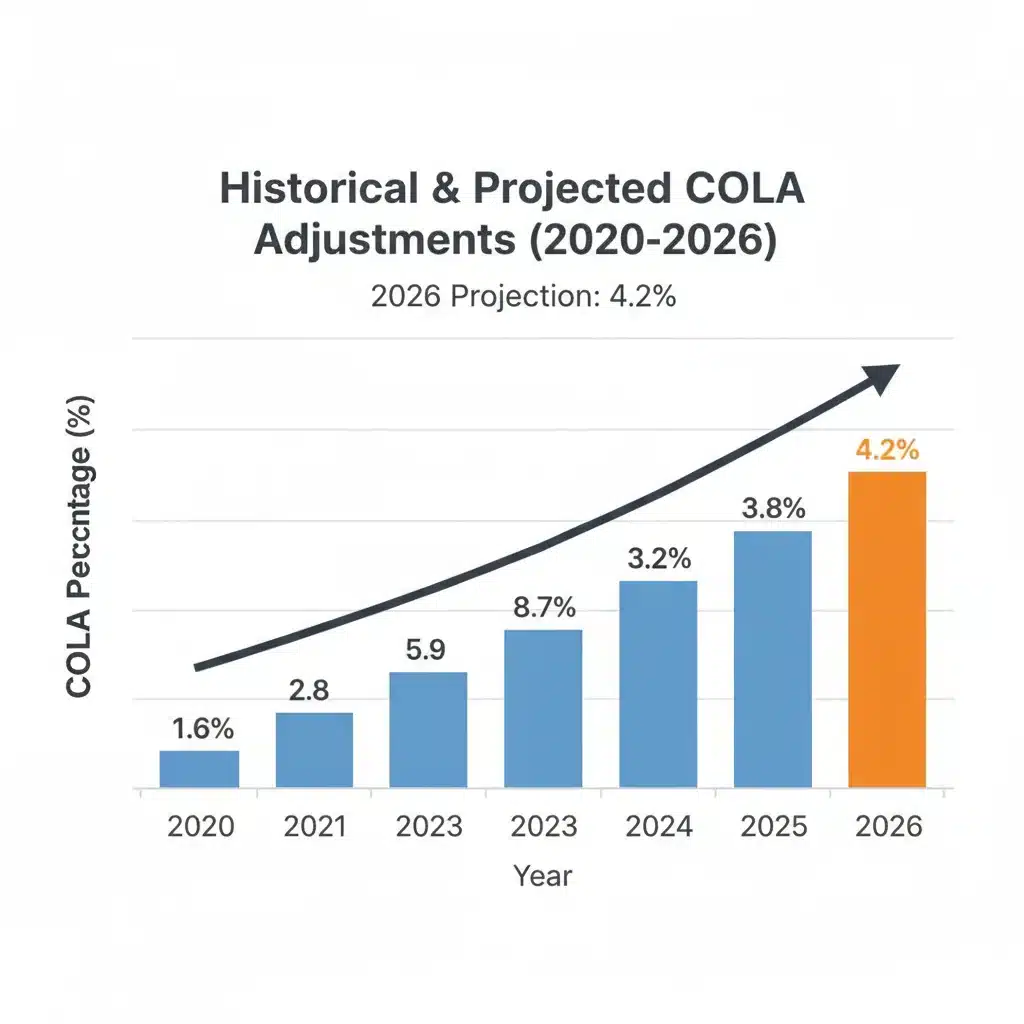
Forecasting the 2026 Social Security COLA involves analyzing current economic trends, particularly inflation rates. While the official COLA is not announced until October of the preceding year (meaning October 2025 for the 2026 COLA), various organizations and economists provide projections based on available data. The current projection of a 4.2% COLA for 2026 is based on a careful analysis of inflation trends observed in recent periods and expected economic conditions.
Factors Influencing the 4.2% Projection
Several key factors contribute to the projected 4.2% COLA for 2026:
- Persistent Inflationary Pressures: While inflation has shown signs of moderation, it remains elevated compared to pre-pandemic levels. Ongoing supply chain issues, geopolitical events, and strong consumer demand can continue to exert upward pressure on prices.
- Wage Growth: Strong wage growth can contribute to inflationary pressures as businesses face higher labor costs, which are often passed on to consumers.
- Energy Prices: Fluctuations in global energy markets, particularly oil and natural gas prices, have a significant impact on the CPI-W. Spikes in energy costs can quickly drive up the overall inflation rate.
- Housing Costs: Rental prices and housing-related expenses are a substantial component of the CPI-W. Continued increases in housing costs can contribute significantly to the COLA calculation.
- Economic Outlook: The overall health and trajectory of the economy play a crucial role. A robust economy with high demand is more likely to experience inflationary pressures, leading to a higher COLA.
It’s crucial to remember that these are projections. The actual COLA can vary depending on how the CPI-W evolves during the third quarter of 2025. Unexpected economic shifts, such as a sudden recession or a rapid decrease in energy prices, could alter the final number. However, a 4.2% projection signals a notable increase that beneficiaries should consider in their financial planning.
Impact of a 4.2% COLA on Your Social Security Benefits
A 4.2% COLA for 2026 Social Security benefits would translate to a tangible increase in monthly payments for all beneficiaries. To illustrate, if your current monthly benefit is $1,500, a 4.2% COLA would add $63 to your payment, bringing it to $1,563. While this might seem modest on a monthly basis, it accumulates over the year and helps maintain purchasing power against rising living costs.
Who Benefits from the 2026 Social Security COLA?
The COLA applies to all Social Security beneficiaries, including:
- Retirees: Individuals receiving retirement benefits.
- Disabled Workers: Those receiving Social Security Disability Insurance (SSDI).
- Survivors: Spouses, children, and parents receiving survivor benefits.
- SSI Recipients: Individuals receiving Supplemental Security Income (SSI) also see an adjustment, though the calculation for SSI can have slightly different implications due to other income and asset rules.
The increase is applied across the board, ensuring that all beneficiaries receive a proportionate boost to their income.
Potential Challenges and Considerations
- Medicare Part B Premiums: One significant factor to watch is how a COLA interacts with Medicare Part B premiums. These premiums are often deducted directly from Social Security benefits. In some years, a large increase in Part B premiums can offset a substantial portion, or even all, of the COLA increase, particularly for those with lower Social Security benefits. This phenomenon is sometimes referred to as the "hold harmless" provision, which prevents most beneficiaries from seeing their net Social Security payment decrease due to Medicare premium hikes, but it can limit the effective benefit of a COLA.
- Taxation of Social Security Benefits: For some beneficiaries, an increased Social Security payment due to COLA could push their total income above thresholds that trigger federal (and some state) taxation of Social Security benefits. This means a portion of their benefits could become taxable, potentially reducing the net impact of the COLA.
- Impact on Other Benefits: For individuals receiving other means-tested benefits, an increase in Social Security income could potentially affect their eligibility or the amount of those other benefits. It’s essential to understand how increased Social Security income might interact with other assistance programs they rely on.
These considerations highlight the importance of holistic financial planning and staying informed about all aspects of your retirement income.
Strategic Financial Planning with the 2026 Social Security COLA in Mind
Knowing about the projected 2026 Social Security COLA can empower you to make more informed financial decisions. It’s not just about receiving more money; it’s about how that increase fits into your broader financial picture.
Reviewing Your Budget
With a projected 4.2% increase, it’s an opportune time to review your budget. Assess your current expenses and anticipate how the additional income might alleviate financial pressures or allow for new spending. Consider:
- Healthcare Costs: As mentioned, Medicare Part B premiums are a critical component. Factor in potential increases in these premiums when calculating your net benefit.
- Inflationary Living Costs: While COLA aims to keep pace with inflation, individual spending patterns can vary. Ensure your budget accounts for rising costs in areas like food, utilities, and transportation.
- Discretionary Spending: If the COLA provides a comfortable buffer, consider allocating a portion to discretionary spending, savings, or investments.
Adjusting Your Savings and Investment Strategy
For those still working or with other sources of income, the COLA projection can influence your savings and investment strategies. If you are close to retirement, understanding the future purchasing power of your Social Security benefits can help you fine-tune your retirement savings goals. For those already retired, consider if the increased benefit allows for greater diversification of investments or a more conservative approach if other income streams are less stable.
Understanding Tax Implications
As noted, an increased Social Security benefit can lead to a portion of your benefits becoming taxable. It’s wise to consult with a tax professional to understand how the 2026 Social Security COLA might affect your overall tax liability. They can help you plan for potential tax payments and explore strategies to minimize your tax burden.
Long-Term Outlook for Social Security
While the annual COLA addresses short-term inflation, the long-term solvency of Social Security is a separate but related concern. The Social Security Trust Funds are projected to be able to pay 100% of scheduled benefits until the mid-2030s, after which they would be able to pay about 80% of scheduled benefits if no legislative action is taken. Discussions about potential reforms, such as adjusting the COLA calculation method, raising the full retirement age, or increasing the Social Security tax cap, are ongoing. Staying informed about these broader discussions is crucial for comprehensive long-term financial planning.

How to Stay Informed About the 2026 Social Security COLA and Your Benefits
Staying updated on Social Security changes is vital. Here are the best ways to ensure you have the most accurate information:
Official Social Security Administration Resources
The most reliable source for information on the 2026 Social Security COLA is the Social Security Administration (SSA) itself. The official announcement of the COLA is typically made in October each year. You can find this information on their official website (SSA.gov), which also provides a wealth of resources, including:
- My Social Security Account: This online portal allows you to check your earnings record, estimate future benefits, and view your benefit statements. Once the COLA is announced, your updated benefit amount will be reflected here.
- Benefit Statements: The SSA mails out annual benefit statements to beneficiaries, detailing their new benefit amount for the upcoming year.
- News Releases: The SSA issues official news releases regarding the COLA announcement and other significant program updates.
Financial Advisors and Planners
A qualified financial advisor can provide personalized guidance on how the 2026 Social Security COLA and other benefit changes fit into your overall retirement plan. They can help you understand the tax implications, assess your budget, and adjust your investment strategies accordingly. Seeking professional advice is particularly important if you have complex financial situations or are nearing retirement.
Reputable Financial News Outlets
Keep an eye on reputable financial news sources and publications that cover Social Security and retirement planning. These outlets often provide expert analysis and commentary on COLA projections and their potential impact, helping you stay ahead of the curve. However, always cross-reference information with official SSA sources to ensure accuracy.
Understanding the Broader Economic Context
The 2026 Social Security COLA doesn’t exist in a vacuum; it’s a direct reflection of broader economic forces. Understanding these forces can provide a more complete picture of why the COLA is what it is and what it means for your financial future.
Inflation and its Impact on Retirees
Inflation, the general increase in prices and fall in the purchasing value of money, disproportionately affects individuals on fixed incomes, such as many retirees. Essential expenses like healthcare, housing, and food often see consistent price increases. The COLA is designed to mitigate this, but it’s important for retirees to recognize that their personal inflation rate might differ from the CPI-W. For example, if a significant portion of a retiree’s budget goes towards healthcare, and healthcare costs rise faster than the overall CPI-W, their personal purchasing power might still decline despite a COLA.
The Role of the Federal Reserve
The Federal Reserve’s monetary policy, particularly interest rate decisions, plays a significant role in influencing inflation. When the Fed raises interest rates, it aims to cool down the economy and curb inflation. Conversely, lower interest rates can stimulate economic activity but may also lead to higher inflation. These policies indirectly affect the CPI-W and, consequently, the COLA. Understanding the Fed’s stance on inflation can offer clues about future COLA projections.
Global Economic Factors
In an increasingly interconnected world, global economic factors can also influence domestic inflation. International supply chain disruptions, geopolitical conflicts affecting energy markets, and global demand shifts can all contribute to price volatility that impacts the CPI-W and the eventual COLA. Keeping an eye on global economic headlines can provide additional context for COLA forecasts.
Preparing for Future COLAs Beyond 2026
While the focus here is on the 2026 Social Security COLA, it’s beneficial to think about COLA adjustments as an ongoing aspect of retirement planning. Future COLAs will continue to be determined by inflation and economic conditions. Therefore, incorporating a flexible approach to your financial planning that accounts for these annual adjustments is wise.
Building an Emergency Fund
An emergency fund is critical for all individuals, but especially for retirees. While COLA helps with regular expenses, unexpected costs can arise. Having a robust emergency fund can provide a buffer against unforeseen medical bills, home repairs, or other significant expenses, regardless of the COLA amount.
Diversifying Income Streams
Relying solely on Social Security, even with COLAs, can be risky. Diversifying your income streams through pensions, retirement accounts (like 401(k)s and IRAs), investments, or even part-time work can provide greater financial security and flexibility, allowing you to better absorb any fluctuations in Social Security benefits or unexpected economic downturns.
Regularly Reviewing Your Financial Plan
Financial planning is not a one-time event; it’s an ongoing process. Schedule regular reviews of your financial plan, ideally annually, or whenever significant life events occur. During these reviews, consider the latest COLA announcements, economic forecasts, and any changes in your personal circumstances. This proactive approach ensures your financial plan remains aligned with your goals and the evolving economic landscape.
Conclusion
The projected 4.2% 2026 Social Security COLA represents a significant adjustment designed to protect the purchasing power of millions of beneficiaries. While it offers a welcome increase in monthly payments, it’s essential to understand the nuances of its calculation, its potential impact on Medicare premiums and taxation, and how it fits into your broader financial strategy. By staying informed, reviewing your budget, and engaging in strategic financial planning, you can navigate these changes effectively and ensure your financial well-being in retirement. Remember to consult official SSA resources and financial professionals for personalized advice, empowering you to make the most of your Social Security benefits now and in the years to come.