Q1 2026 Economic Outlook: Key Financial Indicators and Their Impact on Savings
As we step into the first quarter of 2026, the global economic landscape continues to evolve, presenting both opportunities and challenges for individuals and investors alike. Understanding the Q1 2026 Economic Outlook is paramount for making informed financial decisions, particularly concerning personal savings and investment strategies. This comprehensive analysis will delve into the key financial indicators that are expected to shape the economy, offering insights into their potential impact on your financial well-being.
The beginning of a new year often brings a renewed focus on financial health, and Q1 2026 is no exception. With lingering effects from previous economic cycles and emerging trends, staying updated on the macroeconomic environment is more crucial than ever. Our exploration will cover everything from inflation and interest rates to GDP growth, employment figures, and global trade dynamics, providing a holistic view of what to anticipate.
For many, the primary concern revolves around the preservation and growth of their savings. How will the projected economic conditions affect the value of your money? Are there specific strategies you should adopt to safeguard your wealth against potential headwinds, or to capitalize on favorable conditions? These are the questions we aim to answer, offering practical advice alongside our economic forecasts. The Q1 2026 Economic Outlook is not just about numbers; it’s about translating those numbers into actionable insights for your financial future.
Understanding the Global Economic Context for Q1 2026
Before diving into specific indicators, it’s essential to grasp the broader global economic context that will influence the Q1 2026 Economic Outlook. Geopolitical events, technological advancements, and shifts in consumer behavior are all interconnected, creating a complex web of influences. The post-pandemic recovery has seen various economies progress at different paces, leading to divergent monetary policies and varying levels of economic stability across regions.
Developed economies are likely to continue grappling with the balance between controlling inflation and fostering sustainable growth. Emerging markets, on the other hand, might face unique challenges related to commodity prices, foreign exchange fluctuations, and capital flows. The interconnectedness of global supply chains also means that disruptions in one region can have ripple effects worldwide, impacting everything from manufacturing costs to consumer prices.
The role of central banks will remain pivotal. Their decisions regarding interest rates and quantitative easing/tightening will be closely watched, as these policies directly influence borrowing costs, investment incentives, and overall economic activity. Understanding these global currents provides a foundational perspective for interpreting the more specific financial indicators we will discuss.
Key Financial Indicators to Watch in Q1 2026
Several key financial indicators serve as barometers of economic health. For the Q1 2026 Economic Outlook, a careful examination of these metrics will provide a clearer picture of where the economy is headed and how it might affect your personal finances.
Inflation Rates: The Silent Eroder of Savings
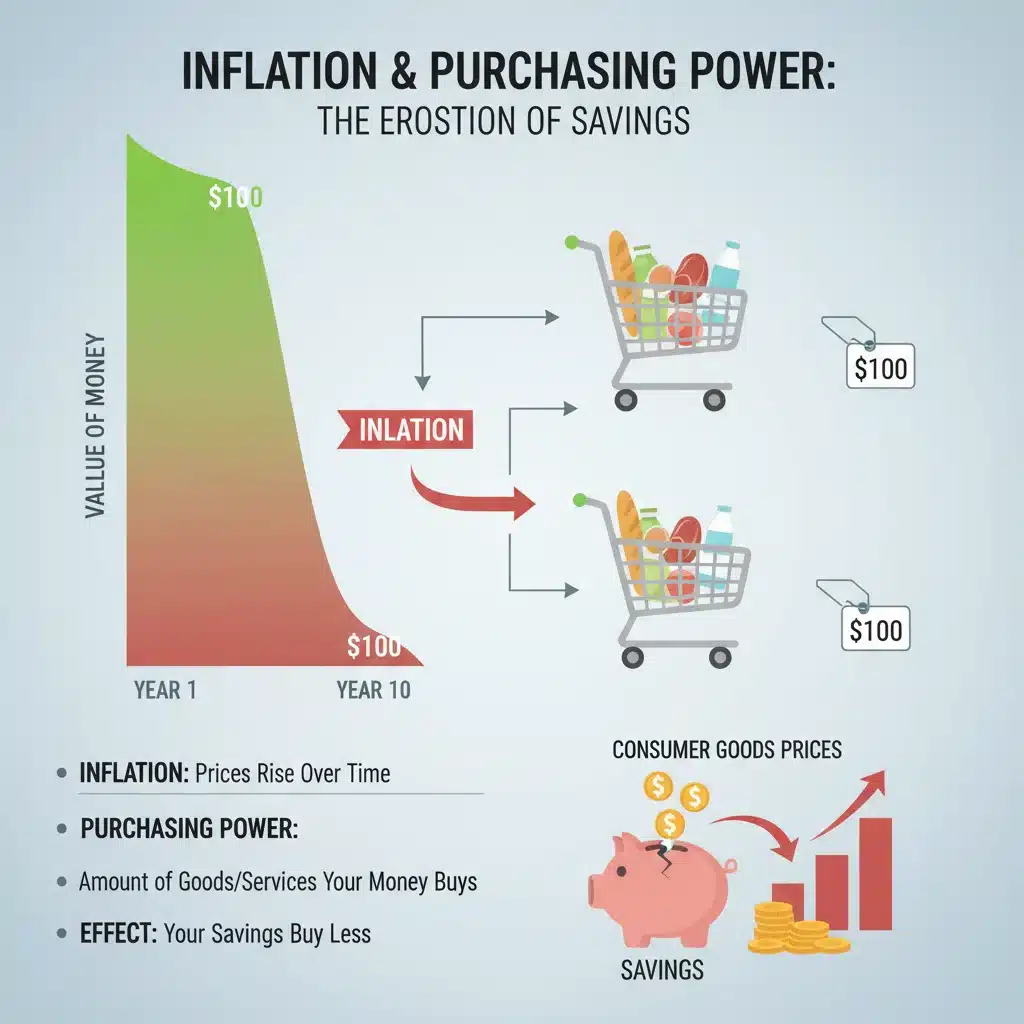
Inflation, the rate at which the general level of prices for goods and services is rising, is perhaps one of the most critical indicators for savers. High inflation erodes the purchasing power of money, meaning your savings buy less tomorrow than they do today. In Q1 2026, central banks will likely continue their efforts to bring inflation down to target levels, typically around 2%.
Factors influencing inflation in Q1 2026 could include:
- Supply Chain Resilience: Continued improvements or new disruptions in global supply chains.
- Energy Prices: Volatility in oil and gas prices due to geopolitical tensions or production cuts.
- Wage Growth: The extent to which labor shortages and strong demand for workers push up wages, which can then feed into higher consumer prices.
- Consumer Demand: The overall strength of consumer spending, which can drive up prices if supply cannot keep pace.
For savers, persistent high inflation necessitates finding investment vehicles that offer returns above the inflation rate to preserve real value. This might involve exploring inflation-protected securities or certain asset classes that historically perform well during inflationary periods.
Interest Rates: A Double-Edged Sword for Savers and Borrowers
Interest rates, particularly those set by central banks, have a profound impact on the cost of borrowing and the returns on savings. In the context of the Q1 2026 Economic Outlook, the trajectory of interest rates will be a significant determinant of financial strategy.
Higher interest rates generally mean:
- Better Returns on Savings: Savings accounts, Certificates of Deposit (CDs), and money market accounts tend to offer higher yields, benefiting those with cash reserves.
- Increased Borrowing Costs: Mortgages, car loans, and credit card interest rates become more expensive, potentially dampening consumer spending and business investment.
- Impact on Bond Markets: Existing bonds with lower interest rates may decrease in value, while new bonds offer more attractive yields.
Central banks will be carefully balancing the need to control inflation with the risk of stifling economic growth. Any shifts in their forward guidance or actual rate changes will significantly influence market sentiment and investment decisions. Savers should look for opportunities to lock in higher rates on their deposits, while borrowers might consider refinancing or consolidating debt if rates are projected to fall.
Gross Domestic Product (GDP) Growth: The Engine of the Economy
GDP growth measures the total economic output of a country and is a primary indicator of economic health. A strong GDP growth rate typically signifies a robust economy with high employment, strong corporate earnings, and increasing consumer confidence. For the Q1 2026 Economic Outlook, a moderate and stable GDP growth rate would be ideal, indicating a healthy, non-inflationary expansion.
Factors influencing GDP growth include:
- Consumer Spending: The largest component of GDP in most developed economies.
- Business Investment: Companies investing in new equipment, technology, and expansion.
- Government Spending: Public sector expenditures on infrastructure, defense, and social programs.
- Net Exports: The difference between a country’s exports and imports.
A sustained period of positive GDP growth can lead to higher wages, increased job security, and a more favorable environment for investment. Conversely, a slowdown could signal potential economic contraction, impacting employment and corporate profitability.
Employment Figures: A Barometer of Economic Health
Unemployment rates, job creation numbers, and wage growth are crucial indicators of the labor market’s health and, by extension, the overall economy. A low unemployment rate and healthy wage growth typically point to a strong economy where businesses are expanding and consumers have disposable income.
In Q1 2026, analysts will be observing:
- Unemployment Rate: Whether it remains low or shows signs of increasing.
- Job Growth: The number of new jobs created each month, indicating economic expansion.
- Wage Inflation: The rate at which wages are increasing, which can influence consumer spending and overall inflation.
- Labor Force Participation: The percentage of the working-age population that is employed or actively seeking employment.
A robust job market supports consumer confidence and spending, which in turn fuels economic growth. However, excessively rapid wage growth without corresponding productivity gains can contribute to inflationary pressures.
Global Trade and Geopolitical Stability
The interconnectedness of the global economy means that international trade dynamics and geopolitical events can significantly impact domestic financial indicators. Trade agreements, tariffs, and political stability in key regions influence supply chains, commodity prices, and investor sentiment.
For the Q1 2026 Economic Outlook, potential factors include:
- Trade Relations: The state of trade agreements between major economic blocs.
- Geopolitical Conflicts: Ongoing or new conflicts that could disrupt energy supplies or trade routes.
- Technological Competition: Rivalry in critical technological sectors (e.g., semiconductors, AI) impacting global supply chains and investment.
These factors introduce an element of uncertainty, and investors should be prepared for potential volatility stemming from international developments.
Impact on Personal Savings and Investment Strategies
Now that we’ve outlined the key financial indicators, let’s explore their direct impact on your personal savings and how you can strategically adjust your investment approach in light of the Q1 2026 Economic Outlook.
Protecting Your Savings from Inflation
If inflation remains elevated, simply holding cash in a standard savings account will lead to a loss of purchasing power. Consider these strategies:
- High-Yield Savings Accounts: Seek out accounts that offer interest rates competitive with or above the inflation rate. Online banks often provide better yields than traditional brick-and-mortar institutions.
- Certificates of Deposit (CDs): Lock in a fixed interest rate for a specific term. If interest rates are expected to rise further, consider a CD laddering strategy where you invest in CDs of varying maturities.
- Inflation-Protected Securities (e.g., TIPS): These government-issued bonds are indexed to inflation, meaning their principal value adjusts with changes in the Consumer Price Index (CPI), offering a hedge against rising prices.
- Real Assets: Tangible assets like real estate, commodities (e.g., gold), and certain natural resource stocks can sometimes act as inflation hedges, though they come with their own risks.
Leveraging Interest Rate Movements
The direction of interest rates in Q1 2026 will dictate different approaches:
- Rising Rates: Favorable for new savings. Look for opportunities to open new savings accounts, money market accounts, or CDs to capitalize on higher yields. Conversely, review any variable-rate debt you hold, such as credit cards or adjustable-rate mortgages, as their costs will increase.
- Falling Rates: While less favorable for new savings, falling rates can be an opportune time to refinance existing debt at lower rates (e.g., mortgages). For bond investors, existing fixed-rate bonds may increase in value.
Staying agile and regularly reviewing your financial products will be key.
Investment Strategies Amidst GDP Fluctuations
A strong GDP growth outlook typically favors equities, as corporate earnings tend to improve. However, if GDP growth is expected to slow, a more cautious approach might be warranted.
- Diversification: Always a cornerstone of sound investing. Diversify across different asset classes (stocks, bonds, real estate, commodities), industries, and geographies to mitigate risks.
- Growth vs. Value Stocks: In periods of strong growth, growth stocks (companies expected to grow earnings faster than the market average) might perform well. In slower growth or uncertain environments, value stocks (companies trading below their intrinsic value) might offer more stability.
- Sector-Specific Opportunities: Certain sectors may be more resilient or benefit from specific economic trends. For instance, in an inflationary environment, consumer staples or energy sectors might show strength.
- Long-Term Perspective: Avoid making impulsive decisions based on short-term economic forecasts. A long-term investment horizon often smooths out market volatility.

Navigating the Job Market and Personal Income
A healthy job market in Q1 2026 can provide a sense of security and opportunities for income growth. If the job market tightens, however, it might be prudent to:
- Build an Emergency Fund: Ensure you have at least 3-6 months’ worth of living expenses saved in an easily accessible, liquid account.
- Upskill and Reskill: Invest in your professional development to remain competitive in the workforce, especially if certain industries are facing headwinds.
- Diversify Income Streams: Explore side hustles or passive income opportunities to reduce reliance on a single source of income.
Potential Risks and Opportunities in Q1 2026
Every economic outlook comes with inherent risks and opportunities. The Q1 2026 Economic Outlook is no different. Understanding these can help you better prepare and position your finances.
Key Risks:
- Persistent Inflation: If inflation remains stubbornly high, it will continue to erode savings and potentially force central banks to maintain higher interest rates for longer, impacting growth.
- Geopolitical Instability: Unforeseen global conflicts or political tensions can disrupt supply chains, increase energy prices, and cause market volatility.
- Recessionary Pressures: Overly aggressive monetary tightening by central banks to combat inflation could inadvertently trigger an economic slowdown or recession.
- Debt Burdens: High levels of public and private debt in many countries could become a vulnerability, especially if interest rates remain high.
- Technological Disruptions: While often positive, rapid technological shifts (e.g., AI integration) can lead to job displacement in some sectors, requiring workforce adaptation.
Key Opportunities:
- Innovation and Technology: Continued advancements in areas like artificial intelligence, renewable energy, and biotechnology could present significant investment opportunities.
- Emerging Markets Growth: Some emerging economies may offer higher growth potential, though often accompanied by higher risk.
- Value Investing: Periods of market uncertainty can uncover undervalued companies that offer long-term growth potential.
- Diversification into Alternatives: Exploring alternative investments like private equity, real estate, or infrastructure can offer diversification benefits and potentially uncorrelated returns.
- Personal Financial Optimization: With potentially higher interest rates on savings, Q1 2026 could be an excellent time to optimize cash holdings and fixed-income portfolios.
Strategic Financial Planning for Q1 2026
Based on the anticipated Q1 2026 Economic Outlook, a proactive and adaptive approach to financial planning is essential. Here’s a framework for your consideration:
- Review Your Budget: Understand your income and expenses. Identify areas where you can save more, especially if inflation is impacting your purchasing power.
- Assess Your Emergency Fund: Ensure it’s adequately funded, typically 3-6 months of essential living expenses, held in a liquid, high-yield account.
- Evaluate Your Debt: Prioritize paying down high-interest debt, especially if interest rates are rising. Consider refinancing options for lower-interest debt if rates are projected to fall.
- Rebalance Your Investment Portfolio: Periodically review your asset allocation to ensure it aligns with your risk tolerance, financial goals, and the current economic environment. This might involve adjusting your exposure to different asset classes or sectors.
- Consider Professional Advice: A qualified financial advisor can provide personalized guidance based on your specific circumstances and help you navigate the complexities of the Q1 2026 Economic Outlook.
- Stay Informed: Continuously monitor economic news and indicators. Economic conditions are dynamic, and staying informed allows you to adapt your strategies as needed.
The Q1 2026 Economic Outlook presents a mosaic of trends and potential shifts. While challenges like persistent inflation and geopolitical uncertainties may loom, opportunities for savvy investors and diligent savers also abound. By understanding the key financial indicators and their implications, you can position yourself to not only safeguard your existing wealth but also to foster its growth in the coming months. Proactive planning, diversification, and a long-term perspective will be your most valuable assets in navigating the economic currents of early 2026.
Remember that economic forecasts are inherently uncertain, and the actual outcome may differ from projections. The information provided here is for general guidance and educational purposes only and does not constitute financial advice. Always consult with a financial professional before making any significant financial decisions.