Gardening for Beginners: Grow 3 Essential Herbs Indoors This Winter
Gardening for Beginners: Grow 3 Essential Herbs Indoors This Winter
As winter’s chill settles in and outdoor gardens become dormant, the thought of fresh, vibrant herbs might seem like a distant summer dream. But what if you could have a flourishing supply of aromatic basil, refreshing mint, and fragrant rosemary right in your own home, regardless of the weather outside? The good news is, you absolutely can! Indoor herb gardening is a rewarding and surprisingly simple endeavor, perfect for beginners looking to add a touch of green and flavor to their winter months. This comprehensive guide will walk you through everything you need to know to establish and maintain a thriving indoor herb garden, focusing on three essential herbs that are both versatile in the kitchen and relatively easy to grow: basil, mint, and rosemary.
Imagine plucking fresh basil for your pasta, adding a sprig of mint to your tea, or garnishing your roasted vegetables with homegrown rosemary, all while snow falls outside. This isn’t just about convenience; it’s about connecting with nature, reducing your grocery bill, and elevating your culinary creations with unparalleled freshness. So, whether you have a sunny windowsill or a small corner in your apartment, get ready to transform your indoor space into a verdant oasis. Let’s dive into the wonderful world of indoor herb gardening!
Why Choose Indoor Herb Gardening for Winter?
The benefits of cultivating an indoor herb garden during the colder months extend far beyond mere aesthetics. For many, winter brings a yearning for the freshness and vitality of spring and summer. Indoor herb gardening offers a tangible connection to nature, providing a daily dose of green that can uplift spirits and brighten any home. Here are some compelling reasons to start your indoor herb garden:
Freshness at Your Fingertips
The most obvious advantage is the immediate access to fresh herbs. Store-bought herbs, while convenient, often lack the vibrant flavor and aroma of freshly picked ones. They also have a limited shelf life. With your own indoor herb garden, you can snip exactly what you need, when you need it, ensuring peak flavor and reducing food waste. This freshness makes a noticeable difference in your cooking, transforming everyday meals into gourmet experiences.
Cost-Effective and Sustainable
Regularly buying fresh herbs from the supermarket can add up. By growing your own, you’ll save money in the long run. Furthermore, indoor herb gardening is a sustainable practice. You reduce your carbon footprint by eliminating the need for transportation and packaging associated with commercial herbs. You’re also in control of what goes into your plants, meaning no pesticides or harmful chemicals if you choose organic growing methods.
A Therapeutic and Rewarding Hobby
Gardening, even on a small scale, has been shown to reduce stress, improve mood, and provide a sense of accomplishment. Tending to your indoor herb garden can be a meditative and calming activity, offering a welcome respite from daily pressures. Watching your plants grow and flourish under your care is incredibly rewarding, fostering a deeper appreciation for the natural world.
Enhanced Home Aesthetics and Air Quality
Beyond their practical uses, herbs are beautiful. A collection of lush green plants can add a touch of natural elegance and warmth to any room. Moreover, plants are known to improve indoor air quality by absorbing carbon dioxide and releasing oxygen, making your home a healthier and more pleasant environment. Some studies even suggest that certain plants can filter out common indoor pollutants.
Year-Round Culinary Exploration
With a continuous supply of fresh basil, mint, and rosemary, your culinary creativity will know no bounds. Experiment with new recipes, infuse oils and vinegars, or simply add a burst of flavor to your favorite dishes. This year-round access encourages healthier eating habits and expands your palate.
Essential Requirements for a Thriving Indoor Herb Garden
Before you even think about planting, it’s crucial to understand the fundamental needs of your indoor herb garden. Providing the right environment from the start will set your plants up for success. While basil, mint, and rosemary have specific preferences, there are general requirements that apply to most indoor herbs.
1. Light: The Most Crucial Factor
Light is arguably the most critical element for indoor herb growth. Most herbs, including our chosen trio, are sun-lovers and require at least 6-8 hours of direct sunlight per day. During winter, natural light can be scarce, making supplemental lighting often necessary.
- South-Facing Window: If you have a south-facing window, this is your best natural light source. East or west-facing windows can also work, but may provide less intense light. North-facing windows are generally insufficient for herbs.
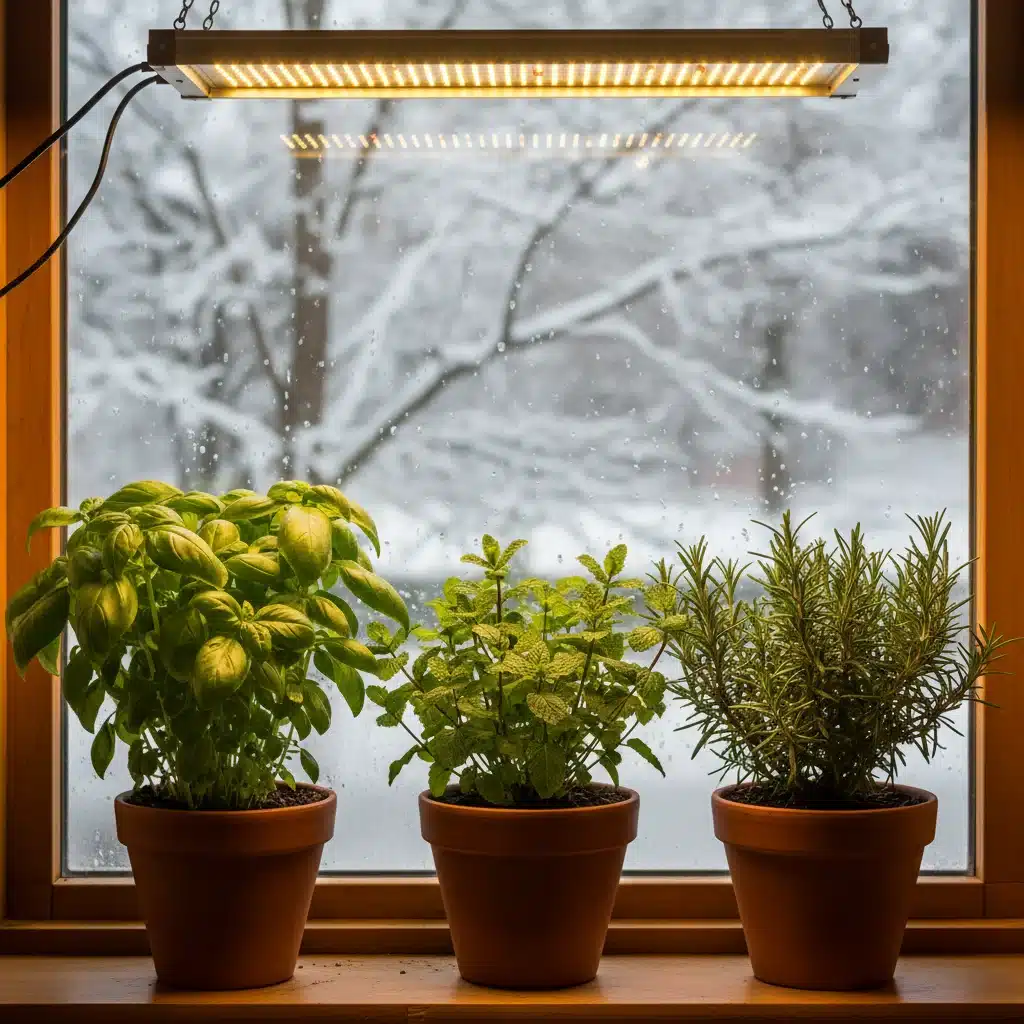
- Grow Lights: For optimal growth, especially in winter or if natural light is limited, invest in a good grow light. LED grow lights are energy-efficient and effective. Position them 6-12 inches above your plants, and use a timer to ensure they receive 12-16 hours of light per day.
2. Temperature and Humidity
Most herbs prefer temperatures between 65-70°F (18-21°C) during the day and slightly cooler at night. Avoid placing plants near drafty windows or heating vents, which can cause temperature fluctuations and dry out the air. While herbs don’t require extremely high humidity, indoor air in winter can be very dry. You can increase humidity by:
- Misting your plants occasionally (though some herbs like rosemary prefer drier conditions).
- Placing pots on a pebble tray filled with water (ensure the pot doesn’t sit directly in the water).
- Using a small room humidifier.
3. Proper Watering Techniques
Overwatering is a common killer of indoor plants. It’s better to slightly underwater than to overwater. The key is consistency and checking the soil moisture regularly.
- Check Before Watering: Stick your finger about an inch or two into the soil. If it feels dry, it’s time to water. If it’s still moist, wait.
- Water Thoroughly: When you do water, do so until water drains out of the bottom of the pot. This ensures the entire root ball is moistened.
- Drainage is Key: Never let your pots sit in standing water. This can lead to root rot. Always use pots with drainage holes and a saucer to catch excess water, which should then be emptied.
4. Well-Draining Potting Mix
The right soil is crucial for healthy root development. Do not use garden soil, which can compact and harbor pests. Opt for a high-quality potting mix specifically designed for containers or herbs. These mixes are typically light, airy, and provide excellent drainage while retaining some moisture and nutrients.
5. Appropriate Containers
Choose pots that are the right size for your herbs. Terra cotta pots are excellent as they are porous and allow for good air circulation, which helps prevent overwatering. Plastic pots also work but require more careful monitoring of moisture levels. Ensure all pots have drainage holes.
Introducing Your Winter Herb Trio: Basil, Mint, and Rosemary
Now that we’ve covered the basics, let’s delve into the specific needs of our chosen herbs. Basil, mint, and rosemary are fantastic choices for beginners because they are relatively forgiving and offer a wide range of culinary uses.
1. Basil: The Aromatic Italian Staple
Basil (Ocimum basilicum) is a warm-weather annual, but it can thrive indoors with the right care. Its sweet, peppery aroma is indispensable in Italian and many other cuisines.
Growing Basil Indoors:
- Starting: You can start basil from seeds or purchase small starter plants. Seeds germinate quickly in warm soil.
- Light: Basil absolutely loves light! It needs at least 6-8 hours of direct sunlight daily. A south-facing window is ideal, or use a grow light for 12-14 hours.
- Temperature: Keep basil warm, ideally above 65°F (18°C). It’s sensitive to cold drafts.
- Watering: Keep the soil consistently moist but not waterlogged. Water when the top inch of soil feels dry.
- Potting: Use a well-draining potting mix. Basil can grow quite large, so start with a 6-8 inch pot for a single plant.
- Pinching and Harvesting: To encourage bushy growth and prevent flowering (which makes leaves bitter), pinch off the top set of leaves when the plant has 3-4 sets. Harvest leaves regularly by pinching off individual leaves or small stems. Never remove more than one-third of the plant at once.
- Pests: Watch out for aphids and spider mites. A gentle insecticidal soap can help.
2. Mint: The Refreshing and Vigorous Grower
Mint (Mentha spp.) is incredibly versatile and comes in many varieties (peppermint, spearmint, chocolate mint, etc.). It’s known for its refreshing flavor and vigorous growth. Be warned: mint can be invasive, so growing it in a dedicated pot is essential, even indoors.
Growing Mint Indoors:
- Starting: Mint is easily grown from cuttings or small starter plants. Seeds can be slow to germinate.
- Light: Mint prefers bright, indirect light, but can tolerate some direct sun. 4-6 hours of light is usually sufficient.
- Temperature: Mint is quite adaptable but thrives in average room temperatures (65-70°F / 18-21°C).
- Watering: Mint likes consistently moist soil. Don’t let it dry out completely. Water when the top inch of soil feels dry.
- Potting: A 6-8 inch pot with good drainage is suitable. Repot annually or when the plant becomes root-bound.
- Pinching and Harvesting: Harvest mint frequently to encourage new growth and prevent it from becoming leggy. Pinch off stems just above a leaf node. You can harvest up to half of the plant at a time.
- Controlling Growth: Mint can grow rapidly. If it starts to look unruly, don’t hesitate to prune it back.
3. Rosemary: The Woody and Fragrant Herb
Rosemary (Salvia rosmarinus, formerly Rosmarinus officinalis) is a woody evergreen perennial known for its piney, pungent aroma and flavor. It’s a bit more challenging than basil or mint but incredibly rewarding.
Growing Rosemary Indoors:
- Starting: Rosemary is best started from cuttings or purchased as a small plant. Seeds have low germination rates.
- Light: Rosemary demands a lot of light – 6-8 hours of direct sunlight daily is essential. A south-facing window is a must, or provide strong grow lights for 12-16 hours.
- Temperature: Rosemary prefers cooler temperatures than basil, ideally between 60-65°F (15-18°C). It can tolerate slightly warmer conditions but dislikes extreme heat.
- Watering: Unlike basil and mint, rosemary prefers its soil to dry out slightly between waterings. Overwatering is the most common cause of death for indoor rosemary. Check the soil moisture carefully.
- Humidity: Rosemary prefers drier air. Avoid misting.
- Potting: A well-draining potting mix is critical. A terra cotta pot is an excellent choice for rosemary due to its breathability. Start with a 6-8 inch pot.
- Pruning and Harvesting: Prune rosemary regularly to maintain its shape and encourage new growth. Harvest sprigs by snipping them off, never taking more than 20% of the plant at once.
- Air Circulation: Good air circulation is important to prevent fungal issues.
Setting Up Your Indoor Herb Garden: Step-by-Step
Now that you know the specific needs of each herb, let’s get down to the practical steps of setting up your indoor herb garden.
Step 1: Gather Your Supplies
- Pots: 6-8 inch pots with drainage holes (terra cotta recommended).
- Potting Mix: High-quality, well-draining potting mix.
- Seeds or Starter Plants: Basil, mint, and rosemary.
- Watering Can: With a fine spout for gentle watering.
- Small Trowel or Spoon: For handling soil.
- Pruning Shears or Scissors: For harvesting.
- Saucers: To catch excess water.
- Optional: Grow light, timer, pebble tray, small fan for air circulation.
Step 2: Planting Your Herbs
Whether starting from seeds or transplanting starter plants, the process is straightforward:
- Prepare Pots: Place a small piece of mesh or a coffee filter over the drainage hole to prevent soil from escaping while allowing water to drain.
- Add Soil: Fill your pots with potting mix, leaving about an inch of space from the rim.
- Planting Seeds: Follow package instructions for depth and spacing. Typically, basil and mint seeds are sown ¼ inch deep. Rosemary is difficult from seed, so consider cuttings or plants.
- Planting Starter Plants: Gently remove the plant from its nursery container, loosen any circling roots, and place it in the new pot. Fill around the root ball with fresh potting mix, gently firming it down.
- Water: Water thoroughly after planting until water drains from the bottom.
Step 3: Positioning and Lighting
Place your newly potted herbs in their designated spots. Remember:
- Basil: Warmest, sunniest spot (south-facing window or under grow light).
- Mint: Bright, indirect light, slightly cooler spot.
- Rosemary: Coolest, sunniest spot with good air circulation (south-facing window with supplemental light if needed).
If using grow lights, set them on a timer for the appropriate duration for each herb.
Ongoing Care and Maintenance for Your Indoor Herbs
Once your herbs are established, consistent care is key to their long-term health and productivity. Think of it as a continuous dialogue with your plants, understanding their needs and responding accordingly.
Watering Wisely
As mentioned, proper watering is crucial. Develop a routine of checking the soil every few days. The frequency of watering will depend on your home’s temperature, humidity, and the size of your pots. Larger pots retain moisture longer, while smaller pots dry out faster. Remember to empty saucers after watering.
Feeding Your Herbs
While potting mix provides initial nutrients, indoor herbs will eventually deplete these. Start feeding your herbs about 4-6 weeks after planting. Use a balanced liquid fertilizer, diluted to half strength, every 2-4 weeks during their active growing season (which is year-round indoors). Reduce feeding in very low light conditions or if plants show signs of stress.
Pruning and Harvesting for Bushy Growth
Regular pruning and harvesting are vital for promoting bushy growth, preventing leggy stems, and encouraging a continuous supply of fresh leaves. Don’t be afraid to snip! The more you harvest, the more your herbs will produce.
- Basil: Pinch off the top two sets of leaves regularly to encourage side branching. Harvest leaves from the top down.
- Mint: Cut stems back by about one-third, just above a leaf node, to encourage new growth. Harvest frequently.
- Rosemary: Snip off sprigs as needed. Prune woody stems to maintain shape and encourage new, softer growth.
Pest and Disease Management
Indoor plants are less prone to pests than outdoor ones, but they can still occur. Common culprits include:
- Aphids: Small, soft-bodied insects often found on new growth.
- Spider Mites: Tiny pests that create fine webs and cause stippling on leaves.
- Fungus Gnats: Small, dark flies that are usually a sign of overwatering.
Inspect your plants regularly. If you spot pests, isolate the affected plant and treat with insecticidal soap or neem oil. For fungus gnats, allow the soil to dry out more between waterings. Good air circulation also helps prevent fungal diseases.
Repotting When Necessary
As your herbs grow, they may outgrow their current pots. Signs of being root-bound include roots growing out of drainage holes, stunted growth, or the plant drying out very quickly. Repot into a container that is only one size larger (e.g., from a 6-inch to an 8-inch pot) using fresh potting mix. This is typically needed every 6-12 months for vigorous growers like mint.
Troubleshooting Common Indoor Herb Problems
Even with the best care, you might encounter some challenges. Here are a few common issues and their solutions:
Yellowing Leaves
- Overwatering: Most common cause. Check soil moisture; let it dry out more between waterings. Ensure good drainage.
- Nutrient Deficiency: If lower leaves yellow and drop, it might be a lack of nitrogen. Fertilize as recommended.
- Insufficient Light: Plants might stretch and lower leaves yellow if they’re not getting enough light.
Leggy or Stretched Growth
- Insufficient Light: The plant is reaching for more light. Move it to a brighter spot or provide supplemental grow lights.
- Lack of Pruning: Regular pinching and harvesting encourage bushier growth.
Wilting Plants
- Underwatering: Soil is bone dry. Water thoroughly.
- Overwatering/Root Rot: If the soil is wet and the plant is wilting, it could be root rot. Check roots for mushiness; repot if necessary after trimming affected roots.
- Pests: Severe pest infestations can cause wilting.
Slow or Stunted Growth
- Lack of Light: Most common reason.
- Nutrient Deficiency: Time to fertilize.
- Root-Bound: Plant needs a larger pot.
- Temperature: Too cold or too hot can stress plants.
Creative Ways to Use Your Freshly Harvested Herbs
Having a constant supply of fresh basil, mint, and rosemary opens up a world of culinary possibilities. Here are just a few ideas to inspire you:
Basil
- Pesto: The classic use! Blend with pine nuts, garlic, Parmesan, and olive oil.
- Caprese Salad: Pair with fresh mozzarella, tomatoes, and a drizzle of balsamic glaze.
- Pizza and Pasta: Add fresh leaves as a garnish after cooking.
- Infused Oil: Steep basil leaves in olive oil for a fragrant culinary oil.
Mint
- Teas and Beverages: Add to hot or iced tea, lemonade, or cocktails (like Mojitos!).
- Salads: A refreshing addition to fruit salads, tabbouleh, or cucumber salads.
- Desserts: Garnish chocolate desserts or fruit tarts.
- Lamb Dishes: Mint sauce is a traditional accompaniment to lamb.
Rosemary
- Roasted Vegetables: Toss with potatoes, carrots, or root vegetables before roasting.
- Meats: Perfect with roasted chicken, lamb, or pork.
- Focaccia Bread: Press fresh sprigs into focaccia dough before baking.
- Infused Olive Oil: Create a fragrant rosemary-infused olive oil for dipping or cooking.
Conclusion: Embrace the Joy of Indoor Herb Gardening
Starting an indoor herb garden, especially during the winter months, is a deeply rewarding experience. It’s an opportunity to bring life, fragrance, and unparalleled freshness into your home, transforming your kitchen into a vibrant hub of culinary creativity. With basil, mint, and rosemary as your starting point, you’ll quickly discover the joy of nurturing plants and enjoying the fruits (or in this case, the leaves) of your labor.
Remember, gardening is a journey of learning and experimentation. Don’t be discouraged by minor setbacks; every yellow leaf or wilting stem is a chance to learn more about your plants’ needs. By providing adequate light, consistent watering, and a little bit of love, you’ll be well on your way to a flourishing indoor herb garden that brings flavor and cheer to your home all winter long. So, grab your pots, soil, and seeds, and embark on this delightful adventure. Happy indoor herb gardening!