LIHEAP 2026: Get Up to $800 for Energy Bills – Your Comprehensive Guide

Understanding the 2026 LIHEAP Program: Get Up to $800 for Energy Bills
As the costs of living continue to fluctuate, managing household expenses can be a significant challenge for many families. Among these, energy bills often represent a substantial portion of monthly expenditures, especially during extreme weather conditions. Fortunately, programs like the Low Income Home Energy Assistance Program (LIHEAP) offer a crucial lifeline. For 2026, the LIHEAP 2026 program is set to provide up to $800 in financial aid to eligible households, helping to alleviate the burden of heating and cooling costs. This comprehensive guide will delve into everything you need to know about the LIHEAP 2026 program, from eligibility requirements to the application process, ensuring you are well-equipped to access these vital benefits.
The LIHEAP initiative is a federally funded program that assists low-income households with their home energy bills. It’s designed to help keep families safe and healthy through initiatives that assist with energy costs. This includes assistance with heating and cooling costs, energy crisis assistance, weatherization and energy-related home repairs. Understanding the intricacies of the LIHEAP 2026 program is paramount for anyone seeking to reduce their energy expenses and maintain a comfortable living environment.
The prospect of receiving up to $800 can make a substantial difference in household budgets, especially for those teetering on the edge of financial instability. This guide aims to demystify the LIHEAP 2026 program, breaking down complex information into easily digestible segments. We will explore who qualifies, what documentation is needed, how to apply, and what to expect after your application is submitted. Our goal is to empower you with the knowledge to successfully navigate the application process and secure the assistance you need.
What is the LIHEAP Program? A Detailed Overview
The Low Income Home Energy Assistance Program (LIHEAP) is a federal block grant program that provides funds to states, territories, and Native American tribes to help low-income households pay for their home energy needs. Established to help reduce the energy burden on vulnerable populations, LIHEAP has been a cornerstone of support for millions of Americans since its inception. The program’s primary objective is to ensure that no household has to choose between paying for essential energy services and other critical necessities like food or medicine.
The LIHEAP 2026 program, like its predecessors, will continue to address various energy-related challenges faced by low-income families. These challenges often include high utility bills, the need for energy-related home repairs, and assistance during energy crises such as a sudden shut-off notice or a broken heating system in winter.
Core Components of LIHEAP
- Heating Assistance: This is perhaps the most widely recognized component, helping households cover the costs of heating their homes during colder months. This can include payments for natural gas, electricity, propane, oil, wood, and other heating fuels.
- Cooling Assistance: In warmer climates or during hot summer months, LIHEAP also provides assistance to help households manage their air conditioning costs, preventing heat-related illnesses.
- Energy Crisis Assistance: This critical aid is available for households facing an immediate energy crisis, such as a utility shut-off or a lack of fuel. It provides quick relief to restore or maintain essential energy services.
- Weatherization and Energy-Related Home Repairs: Some LIHEAP funds are allocated to help make homes more energy-efficient, thereby reducing future energy consumption and costs. This can include insulation, window repairs, and other energy-saving improvements.
Each state and territory administers its own LIHEAP program, meaning that specific eligibility criteria, application periods, and benefit amounts can vary. However, the overarching goal remains consistent: to provide vital energy assistance to those who need it most. The LIHEAP 2026 program will continue this tradition, offering a beacon of hope for many struggling families.
Who is Eligible for the LIHEAP 2026 Program?
Eligibility for the LIHEAP 2026 program is primarily based on income and household size. While specific thresholds can vary by state and even by county, there are general guidelines set at the federal level. Understanding these criteria is the first step toward determining if you qualify for this crucial assistance.
General Eligibility Criteria
- Income Level: Households must have an income at or below 150% of the federal poverty level or 60% of the state median income, whichever is greater. Some states may have slightly different income limits, so it’s essential to check your local program’s specific requirements. For instance, a household of four might have a different income threshold than a single individual.
- Household Size: The number of people living in your household directly impacts the income threshold. Larger households generally have higher income limits to qualify.
- Responsibility for Energy Bills: Applicants must be responsible for paying their home energy bills, either directly or as an un-metered tenant whose rent includes energy costs.
- Residency: You must be a legal resident of the state or territory where you are applying for assistance.
- Citizenship/Legal Residency: Generally, applicants must be U.S. citizens or qualified aliens.
Specific Considerations for LIHEAP 2026
It’s important to note that the federal poverty guidelines are updated annually, typically around January. Therefore, the exact income limits for the LIHEAP 2026 program will be based on the federal poverty guidelines released for the year 2026. Keep an eye on official government websites and your state’s LIHEAP administrator for the most up-to-date figures. Many states also have specific provisions for households with elderly members, individuals with disabilities, or young children, often prioritizing these vulnerable groups for assistance.
For example, a household with an elderly member or a child under six years old might receive priority processing or higher benefit amounts in some states. These provisions reflect the program’s commitment to protecting the most vulnerable segments of the population from energy-related hardships. The LIHEAP 2026 program is designed to be as inclusive as possible while targeting those with the greatest need.

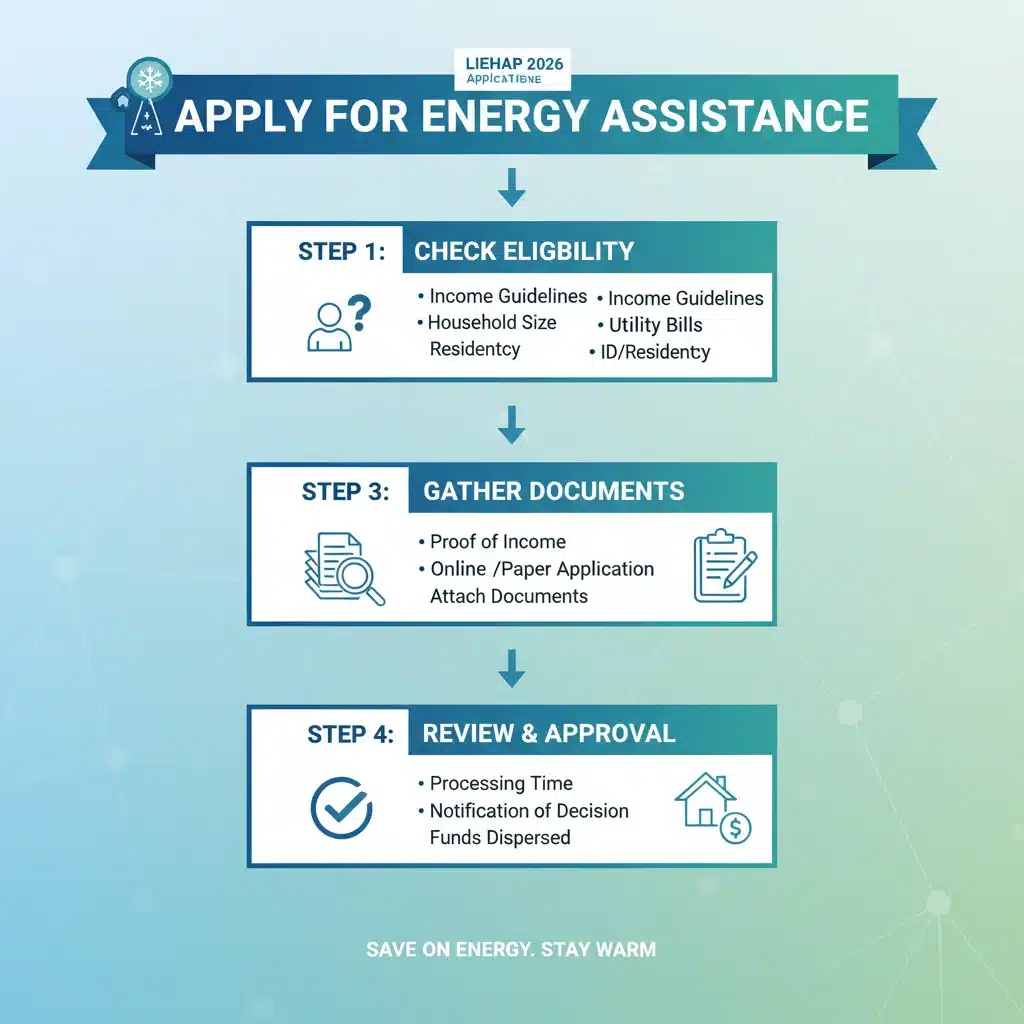
How to Apply for the LIHEAP 2026 Program: A Step-by-Step Guide
Applying for the LIHEAP 2026 program requires careful attention to detail and timely submission of necessary documents. While the exact process may vary slightly by state, the general steps remain consistent. Here’s a detailed guide to help you navigate the application process successfully.
Step 1: Gather Necessary Documentation
Before you even begin the application, it’s crucial to collect all required documents. Having these readily available will streamline the process and prevent delays. Typical documents include:
- Proof of Income: This could be pay stubs, Social Security benefit letters, unemployment compensation statements, disability payments, or other documents verifying your household’s gross income for the past 30 days or the relevant period specified by your state.
- Proof of Residency: A utility bill, lease agreement, or other official mail showing your current address.
- Proof of Identity: A valid photo ID for all adult household members (e.g., driver’s license, state ID card).
- Social Security Numbers: For all household members.
- Utility Bills: Copies of your most recent heating and/or cooling bills. If your utilities are included in your rent, you may need a statement from your landlord.
- Household Members’ Information: Names, birth dates, and relationship to the head of household for everyone living in your home.
Step 2: Locate Your Local LIHEAP Office or Administrator
LIHEAP is administered at the state level, often through local community action agencies, social services departments, or other designated organizations. To find your local LIHEAP office or administrator, you can:
- Visit the official U.S. Department of Health and Human Services (HHS) LIHEAP website.
- Search online for "LIHEAP [Your State] [Your County]".
- Call your state’s social services department.
Step 3: Complete the Application Form
Once you’ve identified your local administrator, obtain the official LIHEAP 2026 program application form. This can usually be downloaded from their website, picked up in person, or mailed to you upon request. Fill out the form completely and accurately. Incomplete applications are a common reason for delays or denials.
Step 4: Submit Your Application
Submit your completed application along with all required documentation. Most agencies offer several submission methods:
- In-person: This allows you to ask questions and ensure all documents are received.
- Mail: Send via certified mail to ensure proof of delivery.
- Online: Many states now offer online application portals, which can be convenient and expedite processing.
- Fax: Some agencies may accept faxed applications, but always confirm receipt.
Be sure to keep copies of everything you submit for your records. The application period for the LIHEAP 2026 program typically opens in the fall or early winter for heating assistance and in the spring or summer for cooling assistance, but these dates are state-dependent. Applying early is always advisable, as funds are limited and distributed on a first-come, first-served basis in many areas.
Maximizing Your LIHEAP 2026 Benefits: Tips and Strategies
Receiving assistance from the LIHEAP 2026 program can significantly ease the financial strain of energy costs. However, there are strategies you can employ to maximize your benefits and ensure you get the most out of the program.
Understand Your State’s Specifics
As mentioned, LIHEAP is administered at the state level, and each state has its own rules and regulations. This means that while federal guidelines provide a framework, the specifics of benefit amounts, eligibility criteria, and application processes can differ. For instance, some states might offer higher maximum benefits, while others might have different income thresholds or priority groups. Regularly checking your state’s official LIHEAP website or contacting your local agency will provide you with the most accurate and up-to-date information for the LIHEAP 2026 program.
Apply Early and Accurately
Funds for the LIHEAP program are limited and often distributed on a first-come, first-served basis. Applying as soon as the application period opens increases your chances of receiving assistance. Furthermore, ensure that all information on your application is accurate and all required documents are submitted. Errors or omissions can lead to delays or even denial of benefits. Double-check everything before submission.
Explore All Available Components
Don’t just think of LIHEAP as heating or cooling assistance. Explore all components of the LIHEAP 2026 program that might be available in your area. This includes:
- Energy Crisis Assistance: If you’re facing a shut-off notice or have run out of heating fuel, immediately inquire about crisis assistance. This usually has a faster processing time.
- Weatherization Services: Some LIHEAP funds are allocated for weatherization, which can make your home more energy-efficient. This reduces your energy consumption long-term, leading to lower bills even after LIHEAP benefits are exhausted. Inquire if your local agency offers or partners with weatherization programs.
- Energy-Related Home Repairs: In certain cases, LIHEAP may offer assistance for minor energy-related home repairs, such as fixing a broken furnace or improving insulation.
Combine with Other Programs
LIHEAP can often be combined with other federal, state, or local assistance programs. For example, if you receive SNAP (food stamps), Temporary Assistance for Needy Families (TANF), or Supplemental Security Income (SSI), you might be automatically eligible for LIHEAP in some states, or at least have an easier time proving income eligibility. Inquire about other utility assistance programs offered by your utility company or local non-profits. Many utility providers have their own low-income assistance programs that can be stacked with LIHEAP benefits.
Monitor Your Energy Usage
Even with assistance, being mindful of your energy consumption is crucial. Simple habits like adjusting your thermostat, sealing drafts, unplugging unused electronics, and using energy-efficient appliances can significantly reduce your overall energy bill. This not only helps you conserve the LIHEAP 2026 program funds but also promotes sustainable living.
Stay Informed About Changes
Government programs can undergo changes from year to year. Stay informed about any updates or modifications to the LIHEAP 2026 program by regularly checking official sources. Subscribing to newsletters from your local LIHEAP agency or community action program can also help you receive timely notifications about application periods, new benefits, or eligibility adjustments.
What to Expect After Applying for LIHEAP 2026
Once you’ve submitted your application for the LIHEAP 2026 program, the waiting period can sometimes be a source of anxiety. Knowing what to expect during this phase can help manage expectations and allow you to plan accordingly.
Application Processing Time
The time it takes to process a LIHEAP application can vary significantly depending on several factors, including the volume of applications, the efficiency of your local agency, and the completeness of your submission. Generally, it can take anywhere from a few weeks to a couple of months. During peak application periods (e.g., the start of winter for heating assistance), processing times might be longer.
- Confirmation of Receipt: Some agencies will send a confirmation that your application has been received. This is a good sign that your submission was successful.
- Review Process: Your application will be reviewed for completeness and accuracy. The agency will verify your income, household size, and other eligibility criteria against your submitted documents.
- Potential for Additional Information Requests: If anything is unclear or if documents are missing, the agency may contact you to request additional information. Responding promptly to these requests is crucial to avoid further delays or denial.
Notification of Decision
Once your application has been processed, you will receive a notification regarding the decision. This notification will typically be sent via mail, though some agencies might use email or phone calls. The notification will state whether your application has been approved or denied.
- If Approved: The notification will include details about the amount of assistance you will receive and how it will be disbursed. Most commonly, the funds are paid directly to your utility company or fuel vendor on your behalf. In some cases, if you use a deliverable fuel (like oil or propane), a check might be issued to the vendor.
- If Denied: The notification will provide a reason for the denial and information on how to appeal the decision. If your application is denied, carefully review the reason provided. Common reasons for denial include exceeding income limits, incomplete applications, or missing documentation.
Appealing a Denial
If your application for the LIHEAP 2026 program is denied and you believe it was an error, you have the right to appeal the decision. The denial letter should outline the appeal process, including deadlines and contact information for the appeals department. Typically, you will need to submit a written appeal explaining why you believe the decision should be overturned and providing any additional supporting documentation. An appeal hearing might be scheduled, where you can present your case.
Benefit Distribution
Once approved, the benefits are usually disbursed directly to your utility provider. This means you won’t typically receive a check directly. Instead, a credit will be applied to your utility account, reducing your bill. It’s a good practice to follow up with your utility company a few weeks after receiving your approval notification to ensure the credit has been applied correctly.
Understanding these steps can help reduce stress and ensure a smoother experience with the LIHEAP 2026 program. Patience and thoroughness are key throughout the post-application phase.
The Broader Impact of the LIHEAP 2026 Program
The LIHEAP 2026 program extends beyond simply providing financial aid for energy bills; it has a profound and multifaceted impact on communities and individual well-being. Its existence helps stabilize households, improve health outcomes, and contribute to economic stability, especially for vulnerable populations.
Preventing Energy Crises and Promoting Health
One of the most critical impacts of LIHEAP is its role in preventing energy crises. Without assistance, many low-income families would face the difficult choice between heating their homes and affording other necessities. This could lead to serious health consequences, such as hypothermia in winter or heatstroke in summer, particularly for the elderly, young children, and individuals with chronic health conditions. By ensuring access to essential heating and cooling, the LIHEAP 2026 program directly contributes to public health and safety, reducing emergency room visits and hospitalizations related to extreme temperatures.
Enhancing Child Development and Educational Outcomes
A stable and comfortable home environment is fundamental for child development and academic success. Children living in homes that are too cold or too hot can experience difficulties concentrating, suffer from increased illness, and have their overall well-being compromised. The LIHEAP 2026 program helps create a conducive learning environment, allowing children to focus on their studies without the added stress of an uncomfortable or unsafe living space. This indirectly supports better educational outcomes and brighter futures for countless young individuals.
Economic Stability and Community Resilience
For many low-income households, energy bills represent a significant portion of their budget. By alleviating this burden, the LIHEAP 2026 program frees up funds that can then be used for other essential expenses, such as food, transportation, healthcare, or even saving for emergencies. This contributes to greater household economic stability, reducing the likelihood of debt and financial hardship. Furthermore, by ensuring that utility companies receive payments, LIHEAP indirectly supports local economies and helps maintain the stability of energy infrastructure. It also reduces the strain on other social services that would otherwise need to step in during energy-related emergencies.
Supporting Energy Efficiency and Conservation
While direct payment assistance is a primary function, LIHEAP also supports weatherization and energy-related home repairs. These investments in energy efficiency not only reduce a household’s long-term energy consumption and costs but also contribute to broader environmental goals. By making homes more efficient, the LIHEAP 2026 program promotes sustainable energy practices and reduces the overall carbon footprint of communities. This aspect of the program is often overlooked but provides lasting benefits beyond immediate financial relief.
A Safety Net for the Most Vulnerable
Ultimately, the LIHEAP 2026 program serves as a vital safety net for millions of Americans who are struggling to make ends meet. It embodies a commitment to ensuring that basic human needs, such as a safe and warm home, are met regardless of economic circumstances. In times of economic uncertainty or fluctuating energy markets, programs like LIHEAP become even more critical, offering peace of mind and tangible support to those who need it most.
Conclusion: Secure Your Energy Future with LIHEAP 2026
The LIHEAP 2026 program stands as a beacon of hope for countless low-income households across the United States, offering much-needed financial relief for energy bills. With the potential to receive up to $800, this program can significantly alleviate the burden of heating and cooling costs, ensuring families can maintain a safe and comfortable living environment.
Understanding the eligibility requirements, meticulously gathering the necessary documentation, and diligently following the application steps are crucial for successfully accessing these benefits. Remember that while federal guidelines provide the framework, specific criteria and application periods can vary by state, making it imperative to consult your local LIHEAP administrator for the most accurate and up-to-date information.
Beyond direct financial assistance, the LIHEAP 2026 program contributes to broader societal well-being by preventing health crises, supporting child development, fostering economic stability, and promoting energy efficiency. It is more than just a payment program; it is an essential component of the social safety net that protects our most vulnerable citizens.
Don’t let the complexities deter you. Take the proactive step to investigate your eligibility and apply for the LIHEAP 2026 program if you believe you qualify. The peace of mind that comes with knowing your energy needs are met is invaluable. By leveraging the resources available through LIHEAP, you can secure your energy future and allocate your hard-earned money to other vital household necessities. Act now, stay informed, and ensure your home remains a sanctuary, regardless of the season.