LIHEAP 2026 Updates: Secure Up to $1,500 for Energy Costs

The 2026 Home Energy Assistance Program (LIHEAP) offers vital financial support, potentially up to $1,500, enabling eligible low-income households nationwide to manage heating and cooling utility costs effectively.
Navigating the complexities of household expenses can be daunting, especially when faced with fluctuating energy costs. This year, the 2026 Home Energy Assistance Program (LIHEAP) Updates: Secure Up to $1,500 in Aid for Heating and Cooling Costs This Year brings crucial financial relief to millions of eligible American households. Understanding these updates is key to accessing the support you may need to keep your home comfortable and your family safe, whether battling winter chills or summer heatwaves.
Understanding the 2026 LIHEAP program landscape
The Low Income Home Energy Assistance Program (LIHEAP) continues to be a cornerstone of federal aid, designed to help low-income households manage their home energy bills. For 2026, the program maintains its core mission but introduces several refinements to enhance accessibility and impact. These updates are crucial for ensuring that the aid reaches those who need it most, adapting to current economic conditions and energy demands across the United States.
LIHEAP operates as a block grant program, meaning funds are allocated to states, territories, and tribal organizations, which then administer the program locally. This decentralized approach allows for flexibility, enabling each jurisdiction to tailor its LIHEAP services to meet the specific energy needs and challenges of its residents. The 2026 framework emphasizes a robust response to the ongoing energy crisis and the persistent challenge of energy poverty.
Key program objectives for 2026
The program’s primary objectives remain focused on preventing energy utility shutoffs, assisting with heating and cooling costs, and addressing energy-related health and safety issues. The 2026 updates underscore these goals with renewed vigor, aiming to provide more substantial and timely assistance. This includes a particular focus on vulnerable populations such as the elderly, disabled, and families with young children.
- Preventing utility shutoffs: A critical objective to maintain essential services.
- Reducing heating and cooling costs: Directly lowering the financial burden on households.
- Addressing energy crises: Providing immediate aid during extreme weather conditions or unexpected financial hardships.
- Promoting energy efficiency: Offering weatherization and energy education services to foster long-term savings.
In essence, the 2026 LIHEAP program is not just about short-term fixes; it’s about fostering long-term energy security and stability for vulnerable populations. The flexibility in state-level implementation ensures that the program can respond effectively to diverse regional energy landscapes and economic pressures.
Eligibility requirements and how to qualify
Determining eligibility for the 2026 LIHEAP program is a multi-faceted process, primarily centered on household income and size. While federal guidelines set the general framework, individual states and tribal organizations may have specific criteria or additional considerations. It is essential for potential applicants to understand these requirements to streamline their application process and increase their chances of receiving aid.
Generally, households must have an income at or below 150% of the federal poverty level or 60% of the state median income, whichever is greater. However, some states may extend eligibility to households receiving certain other federal benefits, such as the Supplemental Nutrition Assistance Program (SNAP) or Temporary Assistance for Needy Families (TANF). This layering of benefits aims to simplify access for those already identified as low-income.
Income thresholds and household size
The exact income thresholds vary by state and are adjusted annually based on federal poverty guidelines. For 2026, these figures will reflect the most recent economic data, ensuring they are relevant to current living costs. Households should consult their state’s LIHEAP office or official website for the precise income limits applicable to their household size.
- Federal poverty guidelines: A primary benchmark for income eligibility.
- State median income: An alternative criterion that might offer broader eligibility in some regions.
- Household size: Income limits are adjusted upwards for larger households to accommodate increased living expenses.
Beyond income, other factors may influence eligibility, such as whether a household includes elderly individuals, persons with disabilities, or young children. These demographic considerations often grant priority status or additional assistance, reflecting the program’s commitment to protecting the most vulnerable members of society. It is always advisable to gather all relevant documentation before applying.
Application process for 2026 LIHEAP aid
Applying for the 2026 LIHEAP program requires careful attention to detail and timely submission of necessary documentation. While the specific application procedures can vary by state or tribal agency, there is a general framework that applicants can expect to follow. Understanding this process can significantly reduce stress and speed up the receipt of assistance.
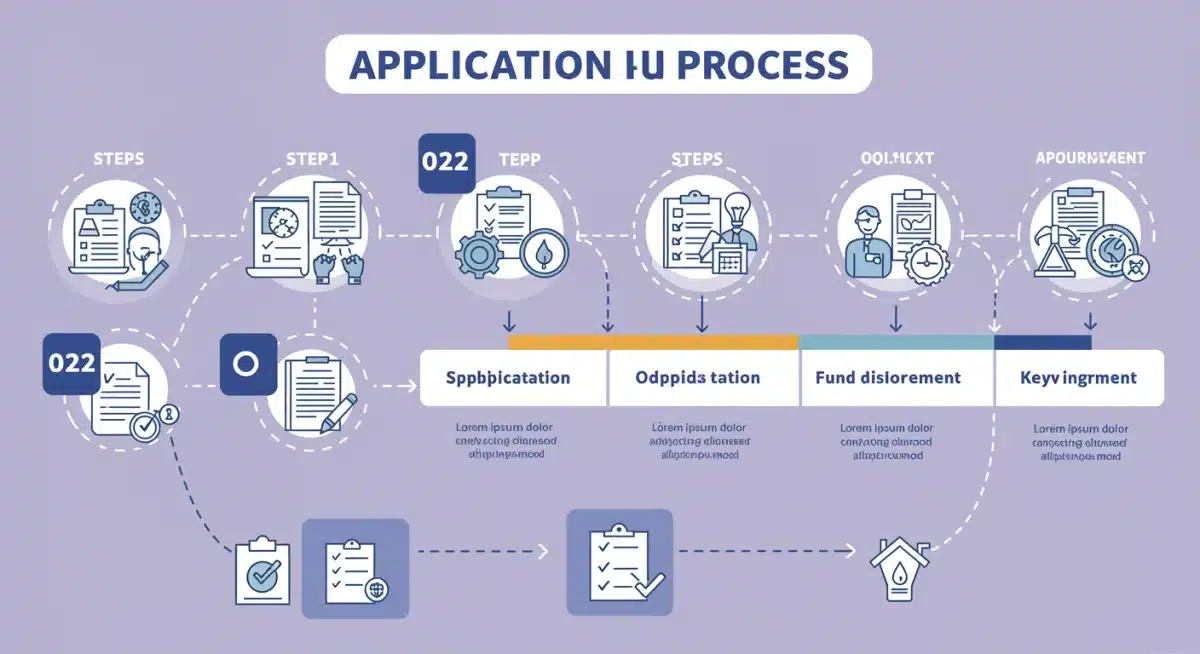

The first step typically involves contacting your local LIHEAP office or visiting your state’s official LIHEAP website. These resources will provide detailed information on local eligibility criteria, required documents, and application deadlines. Many states now offer online application portals, which can be a convenient way to submit your information from home.
Required documentation
Applicants will generally need to provide proof of identity, residency, household income, and utility bills. Gathering these documents beforehand can prevent delays in processing your application. Common documents include:
- Proof of income: Pay stubs, tax returns, Social Security statements, or unemployment benefit letters.
- Proof of residency: A current utility bill or lease agreement.
- Identification for all household members: Birth certificates, driver’s licenses, or state IDs.
- Current utility bills: Recent statements for heating and cooling services.
After submitting your application and all supporting documents, it will be reviewed by the local LIHEAP agency. Processing times can vary depending on the volume of applications and the time of year. It is advisable to apply as soon as possible, especially if you anticipate needing assistance during peak heating or cooling seasons. Follow-up is also encouraged if you have not heard back within a reasonable timeframe.
Maximizing your LIHEAP benefits: Up to $1,500 in aid
The 2026 LIHEAP program is designed to offer substantial assistance, with potential benefits reaching up to $1,500 for eligible households. However, the exact amount of aid received can vary based on several factors, including household income, energy burden, household size, and the specific policies of your state or tribal agency. Understanding these variables can help you better anticipate and potentially maximize your benefits.
States often prioritize households with the greatest energy needs or those facing immediate energy crises. For example, a household with a very low income, high energy costs relative to their income, or a member with a medical condition exacerbated by extreme temperatures might receive higher levels of assistance. This targeted approach ensures that the most vulnerable populations receive adequate support.
Factors influencing benefit amounts
Several key factors are typically considered when determining the amount of LIHEAP aid a household will receive. These include:
- Income level: Lower-income households generally qualify for higher benefits.
- Household size: Larger households often receive more aid to cover increased energy usage.
- Energy burden: The percentage of household income spent on energy costs.
- Fuel type: The cost of heating or cooling fuel in your region can influence aid amounts.
- Special vulnerabilities: Presence of elderly, disabled, or young children in the household.
Some states also offer additional services beyond direct financial assistance, such as energy crisis intervention, weatherization assistance, or energy education. These supplementary programs can further reduce your overall energy expenses and enhance your home’s energy efficiency, effectively extending the value of your LIHEAP benefits. Inquire about all available services when you apply to ensure you are taking full advantage of the program.
Beyond direct aid: Weatherization and energy efficiency
While direct financial assistance for heating and cooling costs is a primary component of LIHEAP, the program’s scope extends to include vital weatherization and energy efficiency services. These services are designed to provide long-term solutions, helping households reduce their energy consumption and, consequently, their utility bills, even after the direct aid has been utilized. For 2026, there’s an increased emphasis on these sustainable solutions.
Weatherization assistance programs (WAP), often coordinated with LIHEAP, aim to improve the energy efficiency of homes occupied by low-income families. This can involve a range of improvements, from sealing air leaks and adding insulation to repairing or replacing inefficient heating and cooling systems. The goal is to make homes more comfortable and affordable to heat and cool year-round.
Long-term savings through efficiency
Investing in weatherization measures can lead to significant and lasting reductions in energy expenses. These improvements not only save money but also contribute to a healthier and safer living environment by addressing issues such as drafts, moisture, and inadequate ventilation. The benefits extend far beyond a single heating or cooling season.
- Reduced energy consumption: Lower utility bills month after month.
- Improved home comfort: More consistent indoor temperatures.
- Enhanced health and safety: Addressing issues like carbon monoxide leaks and poor air quality.
- Environmental benefits: Decreased carbon footprint from lower energy use.
Many LIHEAP agencies can connect eligible households with weatherization services or provide information on how to apply for these separate but complementary programs. Taking advantage of these resources is a smart way to maximize the impact of government assistance and build a more energy-secure future for your household. Inquire about these options during your LIHEAP application process.
Important dates and deadlines for 2026 applications
Staying informed about application periods and deadlines is crucial for anyone seeking to benefit from the 2026 LIHEAP program. While LIHEAP is a year-round program, individual states and tribal organizations often have specific application windows, particularly for heating and cooling assistance components. Missing these deadlines can mean missing out on crucial financial support.
Typically, heating assistance applications open in the fall, coinciding with the onset of colder weather, and cooling assistance applications open in the spring or early summer. However, these dates are not uniform across the nation. It is imperative to check with your local LIHEAP agency for the precise schedule relevant to your area. Some states operate on a first-come, first-served basis, while others have rolling application periods until funds are exhausted.
Key application periods to remember
- Heating assistance: Often opens in October or November, extending through winter.
- Cooling assistance: Typically opens in April or May, continuing through summer.
- Crisis assistance: Available year-round for emergency situations, subject to fund availability.
It is also important to note that funding for LIHEAP is finite. Even if you apply within the designated window, funds may be exhausted before all eligible applications can be processed. Therefore, applying as early as possible once the application period opens is highly recommended. Regularly checking your state’s LIHEAP website or contacting your local office directly will ensure you have the most up-to-date information on deadlines and fund availability for 2026.
Future outlook and advocacy for LIHEAP
The future of the LIHEAP program, while generally stable, is subject to ongoing federal appropriations and evolving energy policies. As we look towards 2026 and beyond, advocacy efforts play a significant role in ensuring that this vital program continues to receive adequate funding and remains responsive to the needs of low-income households. The program’s effectiveness relies heavily on continued governmental and public support.
Energy costs are influenced by global markets, environmental policies, and technological advancements, all of which can impact the demands placed on LIHEAP. Sustained funding levels are essential to address these dynamic challenges and to ensure that the program can continue to offer meaningful assistance, potentially up to the $1,500 mark, to those struggling with energy bills. Advocates work tirelessly to highlight the program’s impact and secure its future.
How to support LIHEAP and energy assistance
Individuals and organizations can contribute to the longevity and strength of LIHEAP through various forms of advocacy. Awareness and engagement are key to ensuring that policymakers understand the critical role LIHEAP plays in communities nationwide.
- Contacting elected officials: Expressing support for robust LIHEAP funding.
- Supporting advocacy groups: Donating to or volunteering with organizations that champion energy assistance.
- Educating others: Spreading awareness about the program and its benefits.
- Participating in community outreach: Helping eligible individuals apply for aid.
The ongoing commitment to LIHEAP ensures that no American family has to choose between heating their home and other basic necessities. By staying informed, advocating for its continued support, and understanding the 2026 updates, we can collectively help secure energy stability for millions of households across the nation.
| Key Point | Brief Description |
|---|---|
| Program Focus | LIHEAP 2026 provides up to $1,500 for heating and cooling costs to low-income households. |
| Eligibility | Based on income (150% FPL or 60% state median) and household size; some federal benefits grant automatic eligibility. |
| Application | Contact local LIHEAP office or state website; submit income, residency, and utility documentation. |
| Additional Benefits | Includes weatherization and energy efficiency services for long-term savings. |
Frequently asked questions about LIHEAP 2026
Eligible households may receive up to $1,500 in aid through the 2026 LIHEAP program. The exact amount depends on your income, household size, energy burden, and specific state policies. It is crucial to check with your local agency for precise figures.
You can apply by contacting your local LIHEAP office, community action agency, or visiting your state’s official LIHEAP website. Be prepared to provide documentation for income, residency, and all household members to complete the application process.
Typical requirements include proof of income (pay stubs, tax returns), proof of residency (utility bill, lease), and identification for all household members. Having these documents ready will expedite your application review.
Yes, LIHEAP is designed to assist with both heating and cooling expenses, depending on the season and your state’s specific program offerings. Many states have distinct application periods for each type of assistance.
Absolutely. Beyond direct payments, LIHEAP often connects eligible households with weatherization assistance programs and energy education services, which can lead to significant long-term savings and improved home energy efficiency.
Conclusion
The 2026 Home Energy Assistance Program (LIHEAP) stands as a vital resource for millions of American households striving to manage their energy bills. With potential aid reaching up to $1,500, along with valuable weatherization and energy efficiency services, the program offers both immediate relief and long-term solutions. Understanding the eligibility criteria, navigating the application process, and staying informed about key deadlines are crucial steps for securing this essential support. As energy costs continue to be a significant household concern, LIHEAP’s adaptive framework and comprehensive approach underscore its importance in fostering energy security and stability for millions of households across the nation.