Social Security COLA 2026: Projecting the 3.2% Increase and Retirement Impact

Understanding the intricacies of Social Security benefits is paramount for millions of Americans, especially those nearing or in retirement. One of the most anticipated announcements each year is the Cost-of-Living Adjustment, or COLA. This adjustment plays a critical role in maintaining the purchasing power of Social Security benefits, ensuring that retirees and other beneficiaries can keep pace with inflation. As we look ahead, projections for the Social Security COLA 2026 are beginning to emerge, with a notable forecast of a 3.2% increase. This potential adjustment, while still a projection, carries significant implications for financial planning, retirement security, and the broader economic landscape.
The Social Security Administration (SSA) typically announces the official COLA in October, based on inflation data from the third quarter of the current year. However, expert analyses and economic models provide early insights, allowing beneficiaries and financial advisors to prepare. A projected 3.2% Social Security COLA 2026 would be a substantial increase, reflecting ongoing inflationary pressures and their impact on the cost of living. For many, this adjustment will mean a tangible boost in their monthly income, helping to offset rising expenses for necessities like food, housing, and healthcare.
This comprehensive guide will delve into the projected 3.2% Social Security COLA 2026, exploring its potential impact on various aspects of your financial life. We will examine the methodology behind COLA calculations, the economic factors driving this projection, and what it could mean for your monthly benefits. Furthermore, we’ll discuss how this adjustment might interact with Medicare premiums, taxation of benefits, and overall retirement planning strategies. Whether you are a current beneficiary, planning for retirement, or simply interested in the future of Social Security, understanding these projections is crucial for informed decision-making.
Understanding the Social Security COLA 2026 Projection
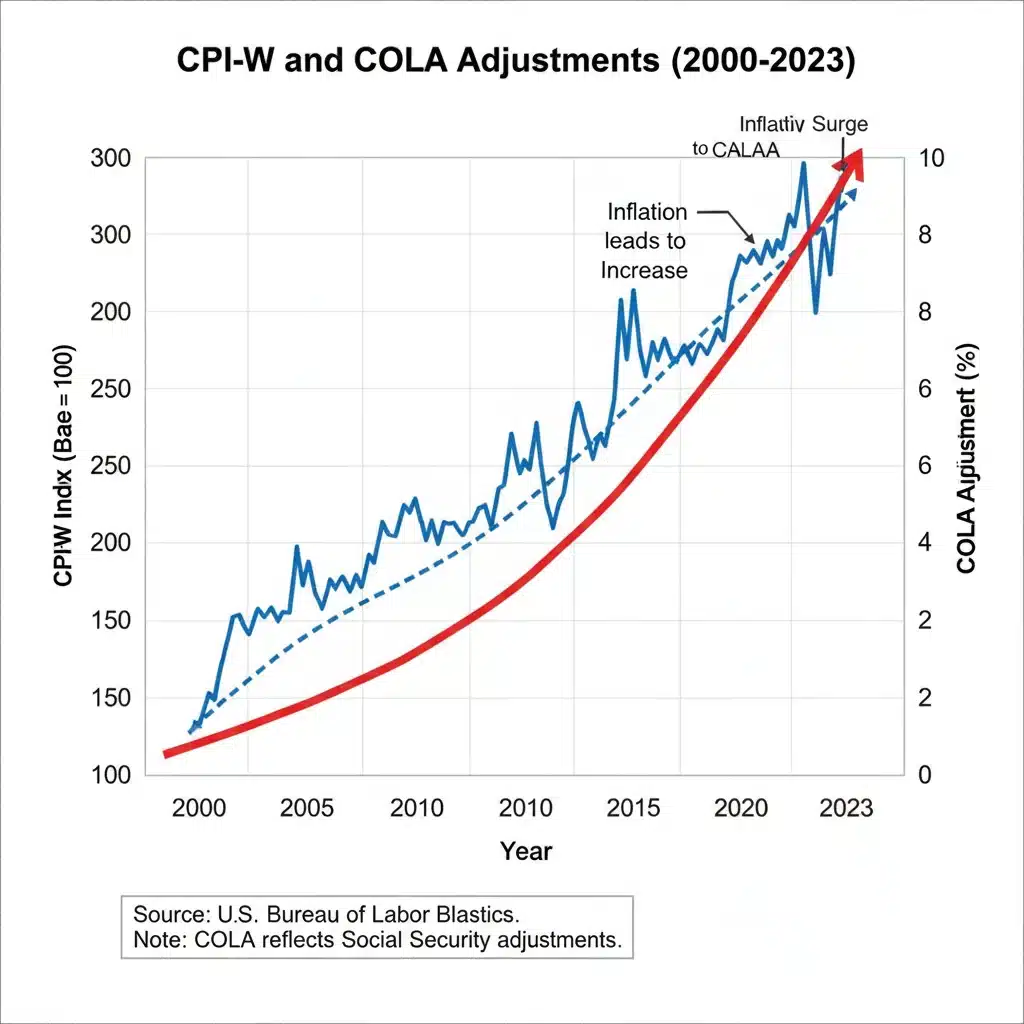
The Social Security COLA 2026 is not just a number; it’s a vital mechanism designed to protect the financial well-being of millions. To truly grasp its significance, it’s essential to understand how it’s calculated and what factors contribute to its projection. The COLA is determined by the increase in the Consumer Price Index for Urban Wage Earners and Clerical Workers (CPI-W) from the third quarter of the previous year to the third quarter of the current year. If there is no increase, there is no COLA.
The CPI-W and Its Role
The CPI-W is a specific measure of inflation that tracks the average change over time in the prices paid by urban wage earners and clerical workers for a market basket of consumer goods and services. This includes everything from food and energy to medical care and transportation. The SSA compares the average CPI-W for the third quarter (July, August, and September) of the current year with the average for the third quarter of the last year in which a COLA was effective. The percentage increase, if any, rounded to the nearest tenth of one percent, becomes the COLA.
Why 3.2% for the Social Security COLA 2026?
The projection of a 3.2% Social Security COLA 2026 is based on current economic trends and forecasts for inflation. While the official numbers won’t be available until later, economists and analysts use various models to predict these adjustments. Factors contributing to this projection typically include:
- Persistent Inflationary Pressures: Although inflation has moderated from its peaks, it remains elevated in certain sectors, particularly for essential goods and services.
- Wage Growth: Strong labor markets and wage growth can also contribute to inflationary pressures, as businesses pass on higher labor costs to consumers.
- Energy Prices: Fluctuations in global energy markets can significantly impact the CPI-W, as energy costs are a major component of household budgets.
- Supply Chain Dynamics: Ongoing global supply chain challenges can lead to higher production costs, which are then reflected in consumer prices.
It’s important to remember that these are projections. The final COLA could be higher or lower depending on how inflation evolves over the coming months. However, a 3.2% increase signals a continued effort to ensure that Social Security benefits maintain their real value.
Impact on Your Monthly Social Security Benefits
A 3.2% Social Security COLA 2026 would translate into a direct increase in the monthly benefits received by retirees, disabled individuals, and survivors. While the percentage might seem small, its cumulative effect over a year can be significant, especially for those who rely heavily on Social Security as their primary source of income.
How to Calculate Your Potential Increase
To estimate your potential increase, simply multiply your current monthly benefit by 3.2%. For example:
- If your current monthly benefit is $1,500, a 3.2% COLA would add $48 to your check, bringing your new benefit to $1,548.
- For a beneficiary receiving $2,000 per month, the increase would be $64, resulting in a new benefit of $2,064.
- Someone receiving the estimated average monthly benefit for retired workers (which was around $1,907 in 2024) would see an increase of approximately $61.02, bringing their benefit to $1,968.02.
These increases, while seemingly modest on a monthly basis, can provide crucial financial relief in an environment of rising costs. They help to ensure that beneficiaries can afford essential goods and services without having to drastically cut back on their spending or dip into their savings.
The Broader Picture for Beneficiaries
Beyond the direct monetary increase, the Social Security COLA 2026 has broader implications:
- Maintaining Purchasing Power: The primary goal of COLA is to prevent inflation from eroding the value of benefits. A 3.2% increase aims to keep beneficiaries’ purchasing power relatively stable, allowing them to afford the same standard of living as before.
- Financial Stability: For many seniors and individuals with disabilities, Social Security is their main source of income. A COLA helps provide a sense of financial stability and predictability in an often unpredictable economic climate.
- Reduced Poverty Risk: By adjusting benefits for inflation, COLA helps to mitigate the risk of poverty among vulnerable populations who rely on Social Security for survival.
It’s important for beneficiaries to monitor the official COLA announcement in October to get the precise figure and plan accordingly for the upcoming year.
Medicare Premiums and the COLA: A Crucial Interplay
One of the most significant considerations when discussing the Social Security COLA 2026 is its interaction with Medicare premiums, particularly Medicare Part B. For many beneficiaries, Medicare Part B premiums are deducted directly from their Social Security checks. This interplay can sometimes reduce the net increase in monthly benefits, especially if Medicare premiums rise significantly.
The ‘Hold Harmless’ Provision
A crucial protection for many Social Security beneficiaries is the ‘hold harmless’ provision. This provision prevents a beneficiary’s net Social Security benefit from decreasing due to an increase in Medicare Part B premiums. If your Part B premium increase would cause your net Social Security payment to be lower than it was the previous year, the ‘hold harmless’ provision limits your premium increase so that your net benefit does not fall.
However, it’s important to note that the ‘hold harmless’ provision does not apply to:
- Beneficiaries who are not receiving Social Security benefits.
- Those who are newly enrolling in Medicare Part B.
- Individuals whose Part B premiums are paid by Medicaid.
- High-income beneficiaries who pay an Income-Related Monthly Adjustment Amount (IRMAA).
For those not protected by ‘hold harmless,’ a significant increase in Medicare Part B premiums could potentially offset a portion, or even all, of the Social Security COLA 2026. Therefore, it’s vital to consider both the COLA and projected Medicare premium changes when planning your retirement budget.
Projected Medicare Part B Premiums
While the official Medicare Part B premiums for 2026 won’t be announced until much later, they are typically influenced by healthcare costs, utilization rates, and legislative changes. Historically, Medicare Part B premiums have tended to rise over time. If healthcare inflation remains high, it’s reasonable to expect an increase in Part B premiums for 2026. This is why the interaction between COLA and Medicare premiums is so critical for beneficiaries.
Taxation of Social Security Benefits and the COLA
Another important aspect to consider with the Social Security COLA 2026 is its potential impact on the taxation of your benefits. Depending on your total income, a portion of your Social Security benefits may be subject to federal income tax.
Provisional Income Thresholds
The amount of Social Security benefits subject to taxation depends on your ‘provisional income,’ which includes your adjusted gross income (AGI), tax-exempt interest, and half of your Social Security benefits. The thresholds for taxation have remained unchanged for many years and are not indexed for inflation:
- Single Filers: If your provisional income is between $25,000 and $34,000, up to 50% of your benefits may be taxable. If it’s above $34,000, up to 85% may be taxable.
- Married Filing Jointly: If your provisional income is between $32,000 and $44,000, up to 50% of your benefits may be taxable. If it’s above $44,000, up to 85% may be taxable.
Because these thresholds are not adjusted for inflation, a COLA increase, such as the projected 3.2% for Social Security COLA 2026, could push some beneficiaries into a higher taxation bracket for their Social Security benefits, or cause a larger portion of their benefits to become taxable. This is often referred to as ‘bracket creep’ and can effectively reduce the net gain from the COLA.
Planning for Tax Implications
It’s crucial for retirees to factor in potential tax implications when planning their finances. A financial advisor can help you understand how a COLA increase might affect your tax liability and explore strategies to minimize your tax burden. This might include adjusting withdrawals from other retirement accounts or considering tax-efficient investment strategies.
The Broader Economic Context of the COLA 2026
The projected 3.2% Social Security COLA 2026 doesn’t occur in a vacuum; it’s a reflection of the broader economic environment. Understanding this context can provide valuable insights into the future of inflation, interest rates, and overall economic stability.
Inflationary Trends
A COLA of 3.2% suggests that while inflation may be cooling from its recent highs, it is still expected to run above the Federal Reserve’s long-term target of 2%. Persistent inflation can have several effects:
- Erosion of Savings: Even with a COLA, if inflation remains high, the purchasing power of personal savings not invested in inflation-protected assets can diminish over time.
- Interest Rate Policy: The Federal Reserve monitors inflation closely when making decisions about interest rates. Sustained inflation could influence future monetary policy, impacting everything from mortgage rates to savings account yields.
- Consumer Spending: Higher prices for goods and services can lead to changes in consumer spending habits, potentially affecting economic growth.
Impact on the Social Security Trust Funds
While COLA increases are essential for beneficiaries, they also place additional demands on the Social Security Trust Funds. The financial health of these funds is a perennial topic of discussion. While a 3.2% COLA is a necessary adjustment, it contributes to the overall outflow of funds. Policymakers continuously debate potential reforms to ensure the long-term solvency of Social Security, and COLA adjustments are an important part of that financial equation.
Strategic Financial Planning for the Social Security COLA 2026
Regardless of the exact percentage, anticipating a COLA adjustment allows beneficiaries and those planning for retirement to refine their financial strategies. Here are some key areas to consider:
Revisiting Your Retirement Budget
With a projected 3.2% Social Security COLA 2026, it’s an opportune time to revisit your retirement budget. Account for the potential increase in your Social Security income, but also consider how rising costs for other expenses might impact your overall spending. Look at categories like:
- Healthcare Costs: As discussed, Medicare premiums can fluctuate. Also factor in potential increases in out-of-pocket medical expenses, prescription drugs, and supplemental insurance.
- Housing: Whether you own or rent, housing costs can continue to rise. Property taxes, insurance, and maintenance for homeowners, or rent increases for renters, should be considered.
- Utilities and Groceries: These essential expenses are often directly impacted by inflation.
Adjusting your budget proactively helps ensure you maintain financial comfort and avoid unexpected shortfalls.
Optimizing Other Income Sources
Social Security is often just one component of a comprehensive retirement income strategy. With the Social Security COLA 2026 in mind, evaluate how other income sources are performing:
- Investment Portfolios: Review your investment strategy. Are your investments generating sufficient income to keep pace with inflation? Consider diversifying your portfolio to include assets that may offer inflation protection.
- Pensions and Annuities: Understand how any pensions or annuities you receive are structured. Do they have their own cost-of-living adjustments?
- Part-time Work: If you engage in part-time work during retirement, consider how your earnings might interact with your Social Security benefits and any potential earnings limits if you are under full retirement age.
Consulting a Financial Advisor
A qualified financial advisor can provide personalized guidance on how the Social Security COLA 2026 might affect your unique financial situation. They can help you:
- Project Future Income: Create a detailed projection of your income sources, including Social Security, investments, and other assets.
- Manage Taxes: Develop strategies to minimize the tax impact of your Social Security benefits and other retirement income.
- Adjust Investment Strategies: Ensure your investment portfolio aligns with your risk tolerance and inflation expectations.
- Plan for Healthcare Costs: Integrate projected healthcare expenses, including Medicare premiums, into your overall financial plan.
Proactive planning is key to maximizing the benefits of any COLA increase and securing your financial future.

The Future of Social Security and COLA Adjustments
While the Social Security COLA 2026 is a near-term projection, it’s also important to consider the long-term outlook for Social Security and how future COLA adjustments might evolve. Debates about the sustainability of the Social Security system are ongoing, with various proposals for reform.
Potential Reforms and Their Impact
Discussions often revolve around:
- Changes to the COLA Formula: Some proposals suggest switching to a different inflation measure, such as the Chained CPI, which tends to show lower inflation rates. This could result in smaller COLA increases in the future.
- Raising the Full Retirement Age: Increasing the age at which individuals can claim full benefits is another frequently discussed option.
- Adjusting Payroll Taxes: Proposals range from raising the Social Security payroll tax rate to increasing the amount of earnings subject to Social Security taxes.
- Means-Testing Benefits: Some suggest reducing benefits for higher-income retirees.
Any of these reforms could significantly alter the landscape of Social Security benefits and future COLA adjustments. While these are long-term considerations, staying informed about these discussions is part of comprehensive retirement planning.
The Importance of Advocacy
For current and future beneficiaries, understanding the implications of these discussions and advocating for policies that support the long-term solvency and adequacy of Social Security benefits is crucial. Organizations representing seniors and retirees often play a significant role in these policy debates.
Conclusion: Navigating Your Retirement with the Social Security COLA 2026
The projected 3.2% Social Security COLA 2026 offers a glimpse into the ongoing efforts to ensure that retirement benefits keep pace with the cost of living. While it provides a welcome boost for many, it also underscores the need for diligent financial planning that accounts for inflation, Medicare premiums, and potential tax implications.
By understanding the mechanics of COLA, its interaction with other financial factors, and the broader economic context, you can make more informed decisions about your retirement strategy. Remember to consult official announcements from the Social Security Administration for the definitive COLA figure and Medicare premium details once they are released. With careful planning and a proactive approach, you can navigate the financial landscape of retirement with greater confidence and security, ensuring that your Social Security benefits continue to support your well-being for years to come.
Stay informed, plan wisely, and empower yourself with the knowledge to make the most of your Social Security benefits. The Social Security COLA 2026 is more than just a number; it’s a key component of your financial future.