US Unemployment Rate Drops to 2.8%: Economic Ripple Effects Explained
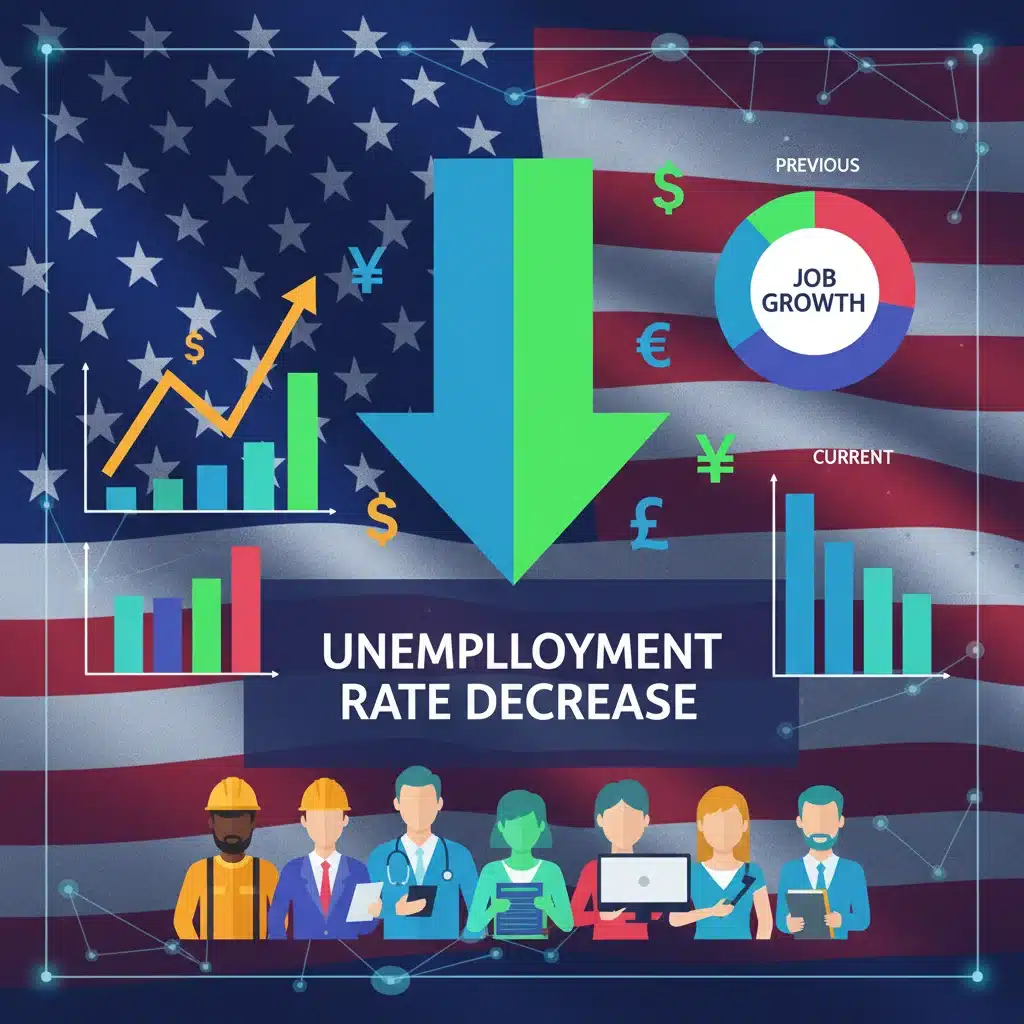
In a significant development for the American economy, the latest figures from the Bureau of Labor Statistics reveal that the US unemployment data has dropped to an impressive 2.8%. This marks a substantial decrease and signals a remarkably tight labor market, a scenario that carries profound implications for workers, businesses, and policymakers alike. Understanding this shift requires a deep dive into the factors driving it, its immediate consequences, and the potential long-term ripple effects across various economic sectors.
The 2.8% unemployment rate is not just a number; it represents millions of Americans finding employment, reduced joblessness, and potentially increased economic stability for countless households. However, such a low rate also brings its own set of challenges, particularly concerning inflation, wage growth, and the future trajectory of monetary policy. This article will thoroughly explore these multifaceted impacts, providing a comprehensive overview of what this new US unemployment data means for the nation’s economic landscape.
Understanding the Drop in US Unemployment Data: What Drove It?
Several converging factors have contributed to the remarkable decline in the US unemployment data. Pinpointing these drivers is crucial for appreciating the current economic climate and anticipating future trends. The primary catalysts include sustained economic growth, robust consumer demand, and a significant rebound in specific sectors post-pandemic.
Strong Economic Growth and Business Expansion
For several quarters, the US economy has demonstrated resilience and consistent growth. This expansion has fueled business confidence, encouraging companies to invest and expand their operations. As businesses grow, their need for labor increases, directly translating into more job openings and a lower unemployment rate. Sectors such as technology, healthcare, manufacturing, and professional services have shown particularly strong hiring trends, absorbing a large portion of the available workforce.
Persistent Consumer Demand
Consumer spending remains a bedrock of the American economy. Despite inflationary pressures, consumers have continued to spend, driven by accumulated savings, increased wages for some, and a desire to return to pre-pandemic consumption patterns. This sustained demand for goods and services necessitates higher production and service delivery, which, in turn, requires more workers. Retail, hospitality, and leisure sectors, which were hit hard during the pandemic, have seen a significant resurgence in employment as people return to travel, dining, and entertainment.
Decline in Labor Force Participation Discrepancies
While the overall labor force participation rate has been a topic of discussion, the narrowing gap between labor demand and supply has played a role. Efforts to bring workers back into the labor force, including increased childcare options, flexible work arrangements, and targeted training programs, have helped to alleviate some of the labor shortages seen in previous periods. Furthermore, a decrease in the number of individuals voluntarily leaving their jobs (the ‘Great Resignation’ trend) suggests that workers are finding stable and satisfactory employment, contributing to the lower US unemployment data.
Government Policies and Fiscal Stimulus
Past government stimulus packages and ongoing infrastructure investments have also provided a tailwind to job creation. These policies injected capital into the economy, supporting businesses and directly funding projects that require substantial labor. While the direct impact of some of these policies has waned, their residual effects continue to support a strong labor market.
The Immediate Economic Ripple Effects of 2.8% Unemployment
A 2.8% unemployment rate is a double-edged sword, bringing both benefits and potential challenges. Its immediate economic ripple effects are felt across various facets of the economy, from wage packets to the cost of living.
Increased Wage Growth and Worker Bargaining Power
One of the most direct consequences of a tight labor market, as indicated by the low US unemployment data, is increased wage growth. With fewer available workers and intense competition for talent, employers are often compelled to offer higher wages, better benefits, and more attractive working conditions to attract and retain employees. This boost in worker bargaining power can lead to a more equitable distribution of economic gains and improved living standards for many households. However, it also raises concerns about a potential wage-price spiral, where rising wages lead to higher production costs, which then get passed on to consumers as higher prices.
Inflationary Pressures
The most pressing concern associated with such low unemployment is its potential to fuel inflation. When the economy operates at or near full employment, demand for goods and services can outstrip supply, leading to price increases. Additionally, higher wages, while beneficial for workers, can increase businesses’ operating costs, which they often recoup by raising prices. This dynamic is closely watched by central banks, as persistent inflation can erode purchasing power and economic stability.
Challenges for Businesses: Labor Shortages and Recruitment
While a strong job market is good for workers, businesses often face significant challenges. Labor shortages can become pervasive, making it difficult for companies to fill open positions, particularly in sectors requiring specialized skills. This can lead to increased recruitment costs, higher turnover rates, and even limits on business expansion. Small and medium-sized enterprises (SMEs) might find it particularly challenging to compete with larger corporations for talent, further exacerbated by the low US unemployment data.

Long-Term Implications and Policy Responses
The sustained low US unemployment data will undoubtedly shape long-term economic trends and necessitate specific policy responses from government and central banks.
Monetary Policy and the Federal Reserve
The Federal Reserve’s dual mandate includes achieving maximum employment and stable prices. With the unemployment rate at 2.8%, the ‘maximum employment’ objective appears to be largely met. This shifts the Fed’s primary focus more squarely onto price stability, meaning they are likely to continue, or even accelerate, their efforts to control inflation through interest rate hikes and quantitative tightening. The challenge for the Fed is to engineer a ‘soft landing’ – cooling inflation without triggering a recession and significantly increasing unemployment.
Impact on Consumer Spending and Savings
While higher wages can boost consumer spending in the short term, persistent inflation can erode real wages, meaning that even with higher pay, purchasing power might not increase significantly. This could lead to a shift in consumer behavior, with households potentially increasing their savings rates to buffer against economic uncertainty or focusing spending on essential goods rather than discretionary items. The long-term impact on consumer confidence and overall economic growth will depend on how effectively inflation is managed.
Government Fiscal Policy and Structural Reforms
In response to the tight labor market and potential inflationary pressures, government fiscal policy might also need to adapt. This could involve re-evaluating spending priorities, focusing on investments that boost productivity and supply rather than just demand, or considering measures to expand the labor supply further. Structural reforms aimed at improving education, vocational training, and childcare infrastructure could help address long-term labor market imbalances and sustain a healthy employment rate without excessive inflationary pressures. Addressing skills gaps through targeted programs can also contribute to a more efficient allocation of labor, even with low US unemployment data.
Sector-Specific Analysis of the 2.8% Unemployment Rate
While the overall US unemployment data is a critical indicator, a closer look at specific sectors reveals varied impacts and challenges.
Technology and Innovation
The technology sector continues to be a major driver of job growth, particularly in areas like artificial intelligence, cybersecurity, and cloud computing. However, even with a low national unemployment rate, this sector faces intense competition for highly skilled workers. Companies are investing heavily in talent acquisition and retention strategies, including remote work options, competitive compensation packages, and professional development opportunities. The demand for tech talent remains exceptionally high, often leading to upward pressure on wages in this specialized field.
Manufacturing and Supply Chains
The manufacturing sector has seen a resurgence, partly due to efforts to reshore production and strengthen domestic supply chains. This has created new jobs, but many manufacturers struggle to find workers with the necessary technical skills. Automation and robotics are increasingly being adopted to address labor shortages and improve efficiency, fundamentally changing the nature of work in this sector. The low US unemployment data means that manufacturers must innovate in both production and workforce development.
Healthcare and Social Assistance
The healthcare sector consistently faces high demand for workers across all roles, from nurses and doctors to support staff and caregivers. An aging population and ongoing public health needs ensure continued job growth. However, this sector is also prone to burnout and staffing shortages, which a low national unemployment rate can exacerbate. Strategies to improve working conditions, provide adequate training, and offer competitive remuneration are crucial for sustaining the healthcare workforce.
Retail and Hospitality
These sectors experienced significant volatility during the pandemic but have since seen a strong recovery in employment. As consumer activity returns to normal, businesses are hiring to meet demand. However, these industries often face challenges with high turnover and lower average wages compared to other sectors. The tight labor market means that employers in retail and hospitality are increasingly pressured to offer better pay and benefits to attract and retain staff, directly influenced by the overall US unemployment data.

The Future Outlook: Navigating a Low Unemployment Environment
Looking ahead, the US economy is poised to navigate a landscape characterized by exceptionally low unemployment. This environment presents both opportunities for continued prosperity and risks that require careful management.
Sustaining Economic Growth Without Overheating
The primary challenge for policymakers will be to sustain economic growth without allowing the economy to overheat and trigger runaway inflation. This delicate balancing act will likely involve a combination of prudent monetary policy from the Federal Reserve and targeted fiscal policies from the government. Investments in productivity-enhancing technologies and infrastructure could help expand the economy’s capacity without solely relying on increased labor supply, thus managing inflationary pressures despite the low US unemployment data.
Addressing Labor Market Inefficiencies
Even with low unemployment, inefficiencies in the labor market can persist. These include skills mismatches, where available jobs don’t align with the skills of the unemployed, or geographical mismatches, where jobs are plentiful in one region but scarce in another. Policies focused on education, retraining, and facilitating labor mobility can help address these issues, ensuring that the low unemployment rate reflects a truly efficient and inclusive labor market.
The Role of Automation and AI
The increasing adoption of automation and artificial intelligence will continue to reshape the labor market. While some fear job displacement, these technologies can also create new jobs and enhance productivity. The challenge will be to manage this transition effectively, ensuring that workers are equipped with the skills needed for future jobs and that the benefits of technological advancement are broadly shared across society. This will be an ongoing consideration even with consistently low US unemployment data.
Global Economic Factors
The US economy does not exist in a vacuum. Global economic conditions, including geopolitical events, international trade dynamics, and the economic health of other major nations, will continue to influence the domestic labor market. Supply chain disruptions, energy price fluctuations, and global demand shifts can all have ripple effects on US employment and inflation, requiring agile and responsive policy adjustments.
Conclusion: A New Chapter for the US Labor Market
The drop in the US unemployment data to 2.8% marks a significant milestone, reflecting a resilient and dynamic labor market. While this low rate is a testament to the strength of the American economy and offers substantial benefits to workers, it also brings complex challenges, particularly regarding inflation and the need for careful monetary and fiscal management. The path forward requires a nuanced approach, balancing the goals of full employment with price stability and long-term sustainable growth.
As the economy continues to evolve, understanding these intricate connections between employment, wages, and prices will be paramount for businesses, individuals, and policymakers. The current low unemployment rate is not merely a statistical achievement; it is a powerful indicator of a changing economic landscape that demands thoughtful consideration and strategic planning to harness its benefits and mitigate its risks. The future of the American job market, shaped by this impressive US unemployment data, promises to be both prosperous and challenging, requiring continuous adaptation and innovation.