
Navigating 2026 Unemployment Benefits: A Step-by-Step Guide to Filing and Receiving Aid Within 3 Weeks
Losing a job can be an incredibly stressful experience, filled with uncertainty and financial worry. In such challenging times, unemployment benefits serve as a crucial safety net, offering temporary financial relief while you search for new employment. As we move into 2026, understanding the updated processes, eligibility requirements, and strategies for a swift application is more important than ever. This comprehensive guide will walk you through everything you need to know about unemployment benefits 2026, focusing on how to file your claim effectively and aim to receive your aid within three weeks. We’ll cover the essentials, from understanding who qualifies to mastering the application process and knowing what to do after you’ve filed.
The landscape of unemployment assistance can shift with economic changes and legislative updates. Therefore, being prepared with accurate, up-to-date information is your best defense against delays and complications. Our goal is to empower you with the knowledge to navigate the system confidently, ensuring you access the support you need when you need it most. Let’s dive into the specifics of securing your unemployment benefits 2026.
Understanding 2026 Unemployment Benefits: Eligibility and Key Changes
Before you even begin the application process, it’s vital to understand the fundamental eligibility criteria for unemployment benefits 2026. While federal guidelines provide a framework, each state administers its own unemployment insurance program, meaning specific rules can vary significantly. However, some core requirements remain consistent across the board. Typically, you must meet the following conditions:
- Loss of Employment Through No Fault of Your Own: This is the cornerstone of unemployment eligibility. If you were laid off, your position was eliminated, or your employer went out of business, you generally qualify. If you quit voluntarily without good cause, or were fired for misconduct, you might be ineligible. ‘Good cause’ for quitting can include unsafe working conditions, harassment, or a significant change in job duties or pay.
- Sufficient Past Earnings: States require you to have earned a certain amount of wages during a ‘base period’ (usually the first four of the last five completed calendar quarters before you filed your claim). This ensures that benefits are paid to individuals with a recent work history. The exact amount varies by state, but it’s designed to show you were a consistent part of the workforce.
- Able and Available for Work: To receive benefits, you must be physically and mentally able to work and actively seeking new employment. This often involves registering with state employment services and documenting your job search efforts. You cannot refuse suitable work without a valid reason.
- Residency and Legal Status: You must be a legal resident of the state in which you are filing and authorized to work in the U.S.
Potential Changes for 2026
While it’s difficult to predict every legislative nuance for 2026, it’s wise to be aware of potential trends and areas where changes commonly occur:
- Benefit Amounts and Duration: States periodically review and adjust the maximum weekly benefit amounts and the total number of weeks benefits can be received. These changes are often tied to economic conditions and state unemployment fund solvency.
- Work Search Requirements: In response to evolving job markets, states might modify the frequency or type of job search activities required. For example, there might be an increased emphasis on online job applications, networking, or participation in re-employment services.
- Waiting Periods: Some states have a one-week waiting period before benefits begin. While many states waived this during the pandemic, it’s a policy that could be reinstated or altered.
- Technological Updates: Expect continued improvements in online filing systems, making the application process for unemployment benefits 2026 more streamlined and user-friendly. However, this also means staying updated on new portal features or requirements.
Staying informed about your state’s specific Department of Labor or Employment Security agency website is crucial for the most accurate and up-to-date information regarding unemployment benefits 2026.
Preparing for Your Claim: Essential Documents and Information
The key to a fast and efficient application for unemployment benefits 2026 is thorough preparation. Gathering all necessary documents and information before you start will minimize delays and reduce the chances of errors. Think of this as your pre-flight checklist for securing your financial aid.
Personal Information You’ll Need:
- Social Security Number (SSN): Your SSN is fundamental for identification and verifying your work history.
- Driver’s License or State ID Number: For identity verification purposes.
- Mailing Address and Phone Number: Ensure these are current and accurate for all correspondence.
- Email Address: Many states communicate updates and requests via email.
- Bank Account Information: For direct deposit of benefits. This usually includes your bank’s routing number and your account number.
Employment History Details (for the last 18-24 months, depending on your state):
- Names and Addresses of All Employers: Even if you worked for them briefly.
- Dates of Employment: Start and end dates for each employer.
- Reasons for Separation: Why you left each job. Be honest and clear, especially regarding your most recent employer.
- Gross Wages Earned: For each employer during the base period. Pay stubs, W-2 forms, and tax returns can help here.
- Employer’s Federal Employer Identification Number (FEIN): This is crucial for verifying your employment and wages. You can usually find this on your W-2 or pay stubs.
- Union Membership Information: If applicable, including your union local number and name.
- Form SF-8 or SF-50 (Federal Employees): If you were a federal employee.
- DD-214 (Military Personnel): If you were in the military.
Additional Information That May Be Required:
- Alien Registration Number (if not a U.S. citizen): For non-citizens authorized to work.
- Child Support Obligations: If you have child support payments, a portion of your benefits may be garnished.
- Pension or Retirement Income: Details of any pension or retirement payments you are receiving or will receive.
- Severance Pay Information: Any severance pay you received or will receive from your last employer. This can impact when your benefits start.
Pro-Tip: Organize these documents in a dedicated folder, either physical or digital, so they are readily accessible. Having everything at your fingertips will significantly speed up the online application process for your unemployment benefits 2026.
The Application Process: Step-by-Step for 2026 Unemployment Benefits
Once you have all your documents in order, you’re ready to tackle the application itself. The vast majority of states now encourage or require online filing, which is usually the fastest and most efficient method. Here’s a general step-by-step guide to filing your claim for unemployment benefits 2026:
Step 1: Locate Your State’s Unemployment Website
The first and most critical step is to find the official website for your state’s unemployment agency (e.g., Department of Labor, Employment Security Commission). Be wary of third-party sites that may charge fees or provide incorrect information. A quick search for “[Your State] unemployment benefits” should lead you to the correct government portal.
Step 2: Create an Account (If Required)
Most online systems will require you to create a secure account. This typically involves providing an email address, setting a password, and sometimes answering security questions. Keep your login credentials safe and accessible.
Step 3: Start Your Initial Claim
Look for a link or button that says “File a New Claim,” “Apply for Benefits,” or similar. You will then be guided through a series of questions about your personal information, employment history, and reason for separation from your last job. Be prepared to enter all the details you gathered in the preparation phase.
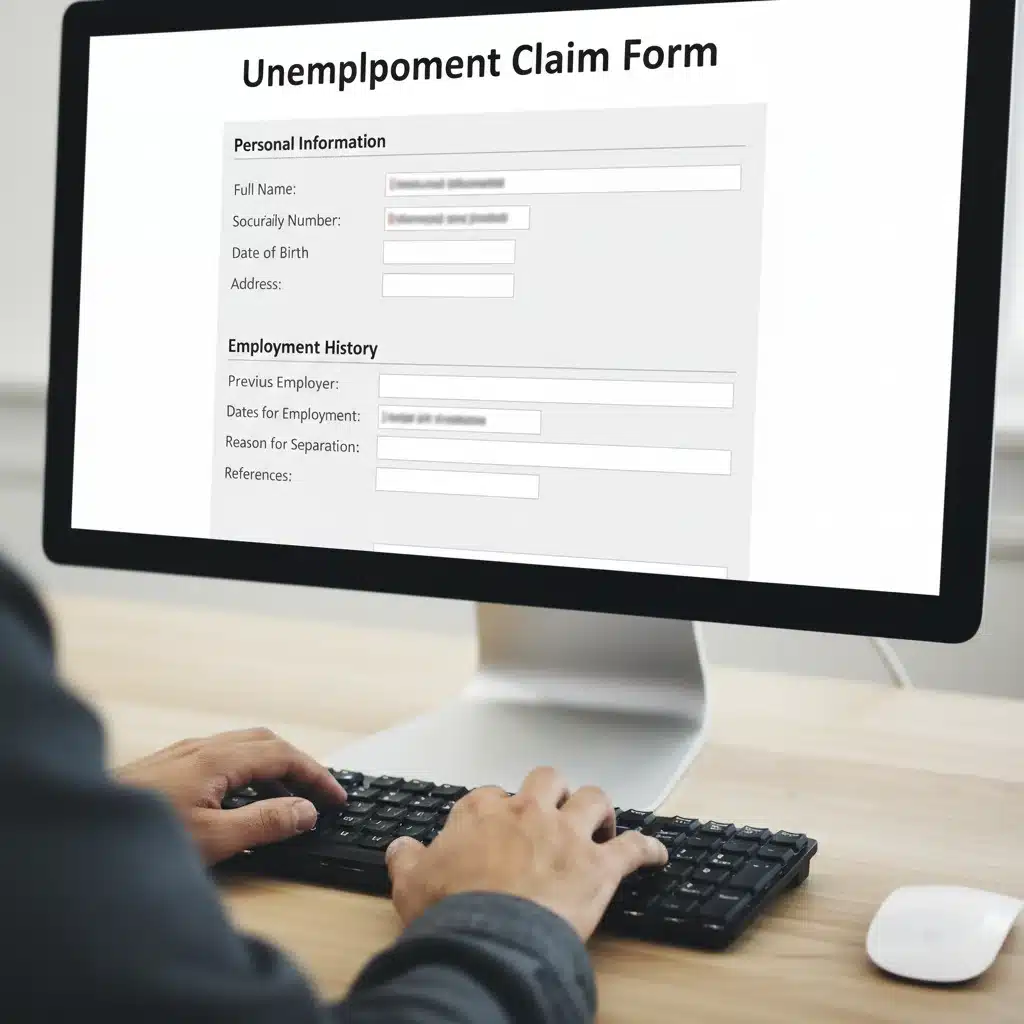
Step 4: Be Precise and Honest
Accuracy is paramount. Any discrepancies or false information can lead to delays, denial of benefits, or even legal repercussions. Double-check all dates, wage amounts, and employer details. When describing your reason for separation, be concise and factual. If you were laid off, simply state ‘Lack of work’ or ‘Position eliminated.’ If there were specific circumstances, describe them objectively.
Step 5: Provide Direct Deposit Information
To receive your benefits as quickly as possible, opt for direct deposit. This is generally much faster than receiving a debit card or paper checks. Ensure your bank routing and account numbers are entered correctly.
Step 6: Review and Submit
Before hitting the ‘submit’ button, carefully review your entire application. Check for any typos, missing information, or incorrect dates. Once submitted, you will usually receive a confirmation number. Save this number! It’s your proof of filing and will be essential for tracking your claim.
Step 7: What Happens Next?
After submission, your state agency will review your application. They may contact your former employer to verify the information you provided. You might also receive a monetary determination letter, which outlines your potential weekly benefit amount and the total amount you could receive. This letter is not a guarantee of payment but an estimate based on your reported wages.
Expediting Your Claim: Tips for Receiving Aid Within 3 Weeks
While no process is guaranteed to be instantaneous, several strategies can significantly expedite your receipt of unemployment benefits 2026. The goal is to minimize any potential roadblocks or requests for additional information that could delay your payments.
1. File Immediately After Job Loss
Do not delay! The sooner you file, the sooner your claim can be processed. Benefits are often calculated from the week you file, not from your last day of work. Waiting even a few days can mean losing out on a week’s worth of benefits.
2. Ensure All Information is Accurate and Complete
As emphasized earlier, this is perhaps the single most critical factor. Incomplete applications are the primary cause of delays. Take your time during the preparation phase and double-check everything before submission. If the agency needs to contact you for missing details, it adds days, if not weeks, to the process.
3. Respond Promptly to All Communications
Keep a close eye on your email, physical mail, and even your phone. The unemployment agency may send requests for additional documentation, schedule phone interviews, or ask for clarification on your application. Responding quickly to these inquiries is crucial. Set up email notifications if your state portal offers them.
4. Understand Your State’s Specific Requirements
Each state has its unique nuances. Some states might require you to register with a specific job search portal immediately, while others might have a mandatory waiting period. Familiarize yourself with your state’s specific rules to avoid accidental non-compliance.
5. Opt for Direct Deposit
This is the fastest way to receive funds. Paper checks can take days longer to arrive and clear. Ensure your bank information is correct to prevent bounced payments.
6. Actively Monitor Your Claim Status
Most state unemployment websites allow you to log in and check the status of your claim. Regularly monitoring this can help you identify if your claim is stuck, awaiting action, or if there are any issues you need to address. If your claim status isn’t updating or seems stalled, don’t hesitate to contact the agency.
7. Be Prepared for an Interview (If Necessary)
Sometimes, especially if the reason for separation is complex (e.g., a dispute with your employer, a voluntary quit for good cause), an adjudicator may need to conduct a phone interview. Be prepared to clearly and concisely explain your situation, providing any supporting documentation if requested.
8. Begin Your Job Search Immediately
Remember, to remain eligible for unemployment benefits 2026, you must be actively seeking work. Starting your job search early not only fulfills this requirement but also increases your chances of re-employment, potentially shortening the period you need benefits.

After You File: Maintaining Eligibility and Receiving Payments
Filing your initial claim is just the first step. To continue receiving your unemployment benefits 2026, you must adhere to ongoing requirements. Failing to do so can result in delayed payments, suspension of benefits, or even a requirement to repay benefits received.
Weekly or Bi-Weekly Certifications:
This is arguably the most crucial ongoing requirement. You will need to certify, usually weekly or bi-weekly, that you are still unemployed, able and available for work, and actively seeking employment. During this certification, you will typically report:
- Any wages earned during the certification period (even if you haven’t been paid yet).
- Any job offers you received or refused.
- Details of your job search activities (e.g., names of companies applied to, dates of applications, types of jobs sought).
- Whether you were able and available for work for the entire period.
Warning: Be truthful in your certifications. Misrepresenting information can lead to severe penalties, including benefit disqualification and prosecution for fraud.
Active Job Search:
You are generally required to conduct a certain number of job search activities each week. This could include applying for jobs, attending job fairs, networking, or participating in approved training programs. Keep meticulous records of your job search efforts, including:
- Date of contact.
- Name of employer/company.
- Method of contact (online application, in-person, email).
- Type of work sought.
- Results of contact.
These records are vital if your state agency requests proof of your job search.
Reporting Earnings:
If you start a part-time job or freelance work while receiving benefits, you must report these earnings during your weekly certifications. Your weekly benefit amount may be reduced based on your earnings, but it’s important to report them accurately to avoid overpayment issues.
Attending Reemployment Services:
Some states may require you to participate in reemployment services, workshops, or training programs. These are designed to help you find a new job faster. Failure to attend mandatory sessions can result in a loss of benefits.
Understanding Your Rights and Responsibilities:
Upon filing, you should receive information outlining your rights and responsibilities. Read this carefully. It contains important details specific to your state’s program for unemployment benefits 2026.
Appealing a Denial:
If your claim for unemployment benefits 2026 is denied, don’t despair. You have the right to appeal the decision. The denial letter will provide instructions on how to file an appeal and the deadline for doing so. Gather any additional documentation or evidence that supports your case, and be prepared to present it during an appeal hearing.
Common Pitfalls and How to Avoid Them
Even with the best intentions, applicants can encounter issues that delay or jeopardize their unemployment benefits 2026. Being aware of these common pitfalls can help you steer clear of them.
1. Incorrect or Incomplete Information:
This is the number one reason for delays. Always double-check names, dates, addresses, and especially Social Security and employer identification numbers. A single digit error can cause significant processing headaches.
2. Misunderstanding ‘Reason for Separation’:
The way you describe why you left your last job is critical. If you state you quit without providing a ‘good cause’ (as defined by your state), your claim will likely be denied. If you were fired, the reason for termination (e.g., misconduct vs. lack of skills) will be heavily scrutinized. Be factual and avoid emotional language.
3. Failure to Meet Work Search Requirements:
Not actively looking for work, or failing to document your search efforts, is a direct path to losing your benefits. Take the work search requirement seriously and keep detailed records.
4. Not Responding to Agency Inquiries:
Ignoring calls, emails, or letters from the unemployment agency is a sure fire way to have your benefits delayed or stopped. Check your spam folder regularly and ensure your contact information is always up-to-date.
5. Failing to Certify on Time:
Missing your weekly or bi-weekly certification deadline will result in missed payments for that period. Set reminders for yourself to complete these certifications promptly.
6. Not Reporting All Earnings:
Any income earned, even from odd jobs or freelance work, must be reported. Failure to do so is considered fraud and can have severe consequences, including fines and criminal charges.
7. Assuming Previous Eligibility Applies:
Rules and regulations can change. Don’t assume that because you qualified for benefits years ago, the same criteria apply to unemployment benefits 2026. Always review the current guidelines.
Conclusion: Securing Your 2026 Unemployment Benefits
Navigating the unemployment benefits system can seem daunting, especially during an already stressful time. However, by understanding the eligibility criteria, meticulously preparing your documentation, filing your claim promptly and accurately, and diligently fulfilling your ongoing responsibilities, you can significantly streamline the process. The goal of receiving your unemployment benefits 2026 within three weeks is ambitious but achievable with careful planning and proactive engagement with your state’s unemployment agency.
Remember, these benefits are a temporary bridge, designed to provide financial stability while you transition to new employment. Use this time wisely to refine your resume, enhance your skills, and actively pursue new job opportunities. Stay informed, stay organized, and don’t hesitate to reach out to your state’s unemployment office if you have questions or encounter issues. Your diligence in this process will be key to securing the financial support you need to weather this period and move forward successfully.