Mastering Advanced Placement: Strategies for Higher AP Scores

Mastering Advanced Placement: Strategies for Higher AP Scores
Advanced Placement (AP) exams represent a pivotal moment in many high school students’ academic journeys. These rigorous tests offer the unique opportunity to earn college credit, stand out in college applications, and gain a deeper understanding of challenging subjects. However, achieving high scores on these exams requires more than just intelligence; it demands strategic preparation, consistent effort, and a deep understanding of the test format and content. This comprehensive guide will delve into proven strategies for AP score improvement, providing actionable insights to help you maximize your potential and achieve academic success.
The landscape of college admissions is increasingly competitive, and strong AP scores can significantly bolster an applicant’s profile. Beyond the immediate benefit of college credit, excelling in AP courses demonstrates a commitment to academic rigor and an ability to handle college-level coursework. This article is designed to be your ultimate resource, breaking down the complex process of AP preparation into manageable, effective steps. Whether you’re just starting your AP journey or looking to refine your existing study habits, the techniques outlined here will equip you with the tools needed for substantial AP score improvement.
Our goal is to provide a holistic approach to AP preparation, covering everything from understanding the exam structure to mastering specific content areas and developing effective test-taking strategies. We’ll explore how to leverage resources, manage your time efficiently, and maintain a healthy mindset throughout the challenging yet rewarding process of preparing for AP exams. By implementing these strategies, you’ll be well on your way to achieving the high scores that can open doors to exciting academic opportunities.
Understanding the Advanced Placement Program
Before diving into specific strategies, it’s crucial to have a foundational understanding of what the AP program entails. The College Board, the organization behind the SAT and AP exams, designs AP courses to be equivalent to introductory college-level courses. These courses are offered in a wide array of subjects, from Calculus and Biology to English Literature and World History. Each AP course culminates in a standardized exam, typically administered in May, which is scored on a scale of 1 to 5.
The AP Scoring System: What Do the Numbers Mean?
- 5: Extremely well qualified – This score is generally accepted for college credit and signifies exceptional mastery of the subject matter.
- 4: Well qualified – Often accepted for college credit, indicating strong performance.
- 3: Qualified – Many colleges grant credit for a 3, demonstrating satisfactory understanding.
- 2: Possibly qualified – Rarely accepted for credit, suggesting some familiarity but not mastery.
- 1: No recommendation – No college credit, indicating minimal understanding.
The ultimate aim for most students is to achieve a 3, 4, or 5, as these scores are most likely to yield college credit and demonstrate readiness for higher education. Our strategies for AP score improvement will focus on helping you consistently hit these higher tiers.
Benefits of High AP Scores
The advantages of achieving high AP scores are multifaceted:
- College Credit: Perhaps the most significant benefit, high scores can translate directly into college credits, allowing students to skip introductory courses, graduate early, or pursue more advanced electives.
- Enhanced College Applications: Admissions committees view strong AP performance favorably, as it signals academic ambition, intellectual curiosity, and preparedness for the rigors of college-level work.
- Cost Savings: Earning college credit in high school can reduce the overall cost of a college education by potentially shortening the time spent in university.
- Skill Development: AP courses foster critical thinking, analytical skills, and effective study habits that are invaluable for future academic and professional success.
- Confidence Boost: Successfully tackling challenging AP material and performing well on the exams builds self-confidence and a sense of accomplishment.
Phase 1: Early Preparation and Foundational Strategies
Effective AP score improvement begins long before exam season. The initial phase involves laying a strong foundation through strategic course selection, understanding content, and establishing disciplined study habits.
1. Strategic Course Selection and Planning
Choosing the right AP courses is the first critical step. Consider your strengths, interests, and future academic goals. Don’t overload your schedule with too many AP classes if it means sacrificing depth of understanding or overall well-being. A balanced approach is key.
- Assess Your Strengths: Which subjects do you naturally excel in or find most engaging?
- Consider Your College Major: If you have a potential major in mind, prioritize AP courses that align with that field.
- Talk to Counselors and Teachers: Seek advice from those familiar with your academic profile and the demands of specific AP courses.
- Review College Policies: Research the AP credit policies of colleges you’re interested in. Some colleges are more generous with credit than others.
2. Master the Course Content Throughout the Year
AP exams test a full year’s worth of material. Procrastination is the enemy of AP score improvement. Consistent engagement with the course material is paramount.
- Active Learning: Don’t just passively read. Engage with the material by taking detailed notes, asking questions, participating in discussions, and creating concept maps or outlines.
- Regular Review: Schedule short, frequent review sessions. This spaced repetition helps solidify information in long-term memory.
- Understand, Don’t Just Memorize: AP exams emphasize conceptual understanding and application rather than rote memorization. Focus on why things work the way they do.
- Utilize All Resources: Textbooks, class lectures, online tutorials, and study groups are all valuable tools.
3. Get Familiar with the Exam Format
Each AP exam has a unique structure, including multiple-choice questions (MCQs), free-response questions (FRQs), and sometimes essays or performance tasks. Understanding this format early on is vital for effective AP score improvement.
- Review the Course & Exam Description (CED): The College Board publishes a CED for each AP subject. This document outlines the topics covered, the skills assessed, and the format of the exam. It’s an indispensable resource.
- Practice with Official Materials: Use past AP exam questions, available on the College Board website, to familiarize yourself with the question types, difficulty level, and scoring guidelines.
- Understand Scoring: For FRQs, pay close attention to the rubrics. Knowing what graders are looking for can guide your answers.
Phase 2: Targeted Study and Practice for Maximum Impact
As the exam date draws closer, your preparation should shift towards more targeted study and intensive practice. This phase is where many students see significant AP score improvement.
4. Develop a Structured Study Schedule
A well-organized study plan is the backbone of successful AP preparation. It ensures all topics are covered and allocates sufficient time for practice.
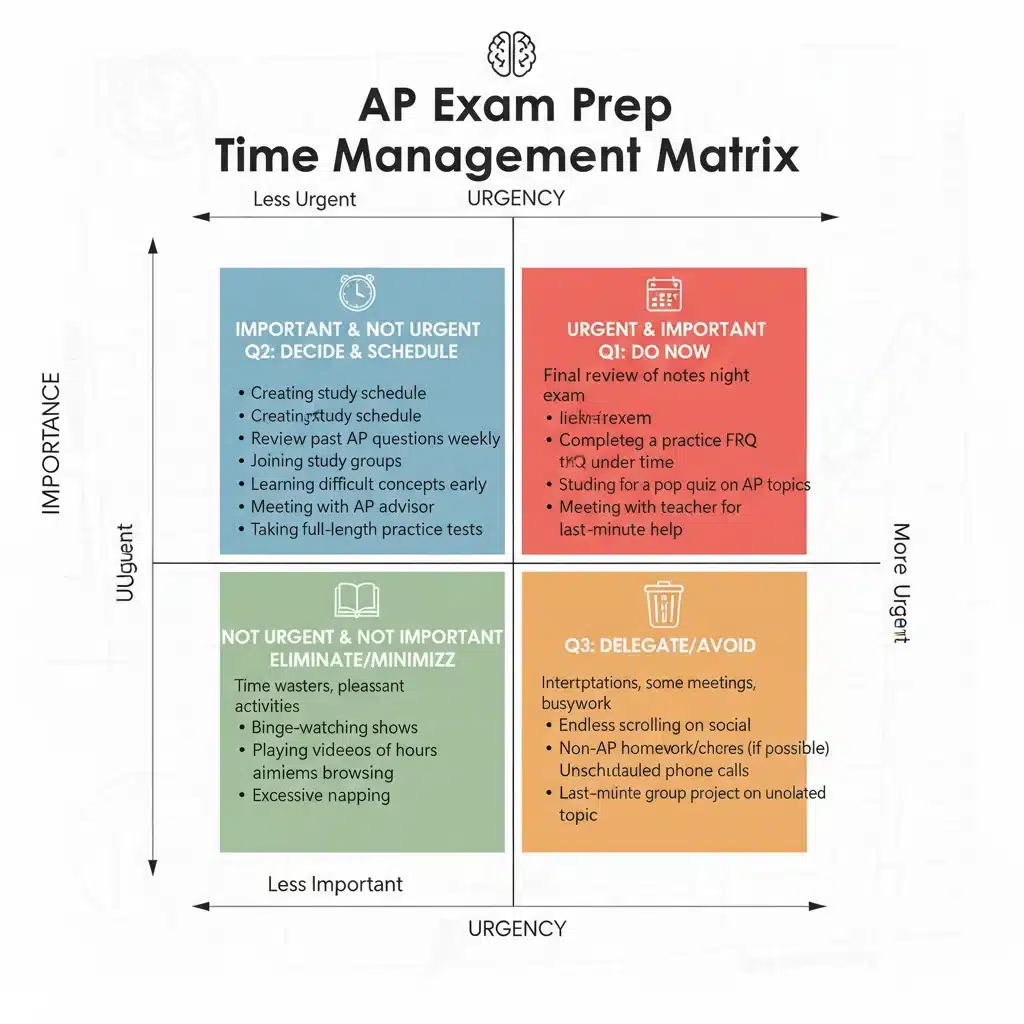
- Create a Calendar: Map out your study sessions leading up to the exam. Be realistic about how much time you can commit.
- Prioritize Weak Areas: Identify topics or question types where you struggle and dedicate more time to them.
- Break Down Material: Don’t try to cram everything at once. Break down large topics into smaller, manageable chunks.
- Incorporate Breaks: Regular breaks are essential for maintaining focus and preventing burnout.
- Flexibility: Be prepared to adjust your schedule as needed based on your progress and other commitments.
5. Master Multiple-Choice Strategies
Multiple-choice sections often account for a significant portion of your overall AP score. Improving your performance here can dramatically impact your final grade.
- Read Questions Carefully: Pay attention to keywords, negative phrasing (e.g., “NOT,” “EXCEPT”), and specific instructions.
- Eliminate Incorrect Answers: Even if you don’t immediately know the correct answer, you can often eliminate one or two obviously wrong choices, increasing your odds.
- Don’t Dwell Too Long: If you’re stuck on a question, make an educated guess, mark it, and move on. You can return to it if time permits.
- Pace Yourself: Be mindful of the time limit. Practice answering MCQs under timed conditions to improve your speed.
- Review Answer Explanations: After practice tests, don’t just look at the correct answer. Understand why the correct answer is right and why the incorrect ones are wrong.
6. Conquer Free-Response Questions (FRQs)
FRQs require a different set of skills: critical thinking, analytical writing, and the ability to synthesize information. They are crucial for AP score improvement.
- Understand the Prompt: Break down the prompt into its core components. Identify the task verbs (e.g., “analyze,” “compare,” “explain,” “evaluate”).
- Outline Your Answer: Before writing, quickly jot down key points, evidence, and your thesis (if applicable). This ensures a structured and coherent response.
- Use Specific Evidence: Support your claims with concrete examples, data, historical events, literary passages, or scientific principles relevant to the question.
- Address All Parts of the Question: Ensure you answer every component of the prompt to earn full credit.
- Practice Timed Writing: The biggest challenge for many students is writing comprehensive FRQs under strict time constraints. Practice regularly.
- Review Rubrics: Understand how FRQs are scored by studying the official rubrics available from the College Board. This will guide your writing.
7. Utilize Full-Length Practice Exams
Taking full-length practice exams is perhaps the single most effective strategy for AP score improvement. It simulates the actual test experience and provides invaluable insights.
- Mimic Test Conditions: Take practice tests in a quiet environment, without distractions, and adhere strictly to time limits.
- Analyze Your Performance: Don’t just look at your score. Go back through every question, both correct and incorrect. Understand your mistakes.
- Identify Knowledge Gaps: Pinpoint specific content areas where you consistently struggle. These are your priority for further study.
- Refine Pacing: Practice helps you develop a sense of how much time to allocate to each section and question.
- Build Stamina: AP exams are long. Full-length practice builds the mental stamina needed to stay focused for several hours.
Phase 3: The Final Stretch and Exam Day Excellence
The last few weeks leading up to the exam, and the exam day itself, require specific strategies to ensure all your hard work translates into top scores.
8. Targeted Review and Remediation
In the weeks before the exam, focus on reinforcing weak areas identified through practice tests and quick reviews of all major topics.
- Flashcards: Excellent for memorizing key terms, dates, formulas, and concepts.
- Review Guides: Use reputable AP review books (e.g., Princeton Review, Barron’s, Kaplan) for concise summaries and additional practice questions.
- Peer Teaching: Explain difficult concepts to a study partner. Teaching others is a powerful way to solidify your own understanding.
- Video Resources: Utilize platforms like Khan Academy, Crash Course, or specific AP review channels on YouTube for visual explanations.
- AP Classroom: The College Board’s AP Classroom platform offers daily videos, topic questions, and progress checks that are invaluable.
9. Prioritize Well-being and Mental Preparation
Stress and anxiety can hinder performance. Maintaining a healthy mind and body is just as important as academic preparation for AP score improvement.
- Adequate Sleep: Especially in the days leading up to the exam, prioritize 7-9 hours of sleep. A well-rested brain performs better.
- Healthy Diet: Eat nutritious meals. Avoid excessive caffeine or sugary snacks that can lead to crashes.
- Exercise: Physical activity helps reduce stress and improves cognitive function.
- Mindfulness/Relaxation: Practice deep breathing exercises or short meditation sessions to manage anxiety.
- Positive Self-Talk: Believe in your preparation and your abilities. Avoid negative self-talk.
10. Exam Day Strategies for Peak Performance
On exam day, small details can make a big difference.

- Get There Early: Arrive at the test center with plenty of time to spare to avoid last-minute stress.
- Bring Essentials: Pencils, pens (blue or black ink), an approved calculator (if applicable), your admission ticket, and a valid photo ID. Don’t forget a water bottle and a small snack for breaks.
- Read Instructions Carefully: Before you begin, take a moment to read all instructions on the exam booklet.
- Manage Your Time Wisely: Stick to your pacing strategies. Don’t spend too much time on any single question.
- Stay Calm: If you encounter a difficult question, take a deep breath, and move on. You can always come back to it.
- Review Your Work (if time allows): If you finish early, go back and check your answers, especially for multiple-choice questions. For FRQs, ensure clarity and completeness.
Advanced Techniques for Elite AP Score Improvement
For those aiming for the coveted 4s and 5s, incorporating advanced techniques can provide that extra edge. These strategies go beyond basic preparation and focus on deeper engagement and critical analysis.
11. Deconstruct and Reconstruct
Instead of just answering questions, try to understand how questions are constructed. This is particularly useful for multiple-choice questions.
- Why is this the best answer? Analyze why the correct option is superior to the others.
- What makes the other options incorrect? Identify the flaws, distractors, or partial truths in the wrong answers.
- If I were writing this question, what concept would I be testing? This helps you think like the test makers and anticipate common pitfalls.
12. The Power of Active Recall and Spaced Repetition
These are scientifically proven methods for long-term memory retention, crucial for mastering the vast amount of content in AP courses.
- Active Recall: Instead of re-reading notes, actively test yourself. Close your book and try to explain a concept in your own words, or answer practice questions from memory. This strengthens neural pathways.
- Spaced Repetition: Review material at increasing intervals over time. Tools like Anki or Quizlet can automate this process, showing you difficult concepts more frequently.
13. Seek and Utilize Feedback Effectively
Don’t just take practice tests; get feedback on your free-response answers.
- Ask Your Teacher: Your AP teacher is an invaluable resource. Ask them to review your practice FRQs and provide specific feedback based on the scoring rubrics.
- Study Groups: Exchange essays with peers and provide constructive criticism. Sometimes a fresh perspective can highlight areas for improvement.
- Self-Correction: After reviewing the rubric, score your own FRQs. This process helps you internalize what constitutes a strong answer.
14. Connect Concepts Across Units and Disciplines
High-level AP questions often require students to draw connections between different topics or even across different AP subjects. This demonstrates a deeper, more holistic understanding.
- Create a “Big Picture” Map: As you study each unit, consider how it relates to previous units and overarching themes of the course.
- Interdisciplinary Thinking: For example, in AP US History, how did economic factors (from AP Economics) influence political decisions? How does a scientific principle (from AP Physics) apply to a biological process (from AP Biology)?
15. Simulate Real-World Scenarios (Where Applicable)
For AP sciences or computer science, try to apply concepts in practical ways.
- Lab Work: Pay close attention in labs and understand the underlying principles.
- Coding Practice: For AP Computer Science, write and debug code regularly.
- Case Studies: For subjects like AP Psychology or Government, analyze real-world case studies using the theories and concepts learned.
Common Pitfalls to Avoid in AP Preparation
While focusing on effective strategies, it’s equally important to be aware of common mistakes that can hinder AP score improvement.
- Cramming: Trying to absorb a year’s worth of material in a few days or weeks is highly ineffective for long-term retention and deep understanding.
- Ignoring Weaknesses: It’s tempting to only study what you’re good at. However, addressing your weakest areas offers the greatest potential for score gains.
- Over-reliance on Memorization: AP exams test application and analysis. Simply memorizing facts without understanding their context will not lead to high scores.
- Not Practicing Under Timed Conditions: Pacing is critical. Without timed practice, students often run out of time on the actual exam.
- Neglecting Mental and Physical Health: Burnout, stress, and lack of sleep can severely impair cognitive function and exam performance.
- Using Unofficial Study Materials: While supplementary materials can be helpful, always prioritize official College Board resources for accuracy and alignment with the exam’s expectations.
- Failing to Understand Rubrics: For FRQs, not knowing how your answers will be graded means you’re flying blind.
Conclusion: Your Path to AP Success
Achieving significant AP score improvement is an attainable goal for any dedicated student. It’s a journey that requires commitment, strategic planning, and consistent effort. By understanding the AP program, mastering course content, practicing effectively, and taking care of your well-being, you can unlock your full potential and excel on these important exams.
Remember, AP success isn’t just about the final score; it’s about the valuable skills you acquire along the way – critical thinking, problem-solving, time management, and resilience. These are competencies that will serve you well not only in college but throughout your entire life. Embrace the challenge, utilize the strategies outlined in this guide, and approach your AP exams with confidence. Your hard work will undoubtedly pave the way for a brighter academic future.
Start early, stay consistent, and believe in your ability to succeed. With these insider strategies, you are well-equipped to achieve the AP scores you desire and take a significant step towards your college and career aspirations.