Emergency Fund Planning 2026: Your Essential Guide to Securing Financial Peace
In an ever-changing world, financial stability isn’t just a luxury; it’s a necessity. As we look towards 2026, the importance of robust emergency fund planning becomes even clearer. Unexpected events—job loss, medical emergencies, car repairs, or home maintenance—can strike at any time, often when least expected. Without a safety net, these situations can quickly escalate from minor inconveniences to major financial crises. This comprehensive guide is designed to help you understand, build, and maintain an emergency fund, specifically targeting the crucial goal of securing 3-6 months of living expenses by 2026.
The concept of an emergency fund is simple yet profoundly impactful: it’s a dedicated savings account specifically for unforeseen circumstances. It acts as a buffer, preventing you from going into debt, selling investments at a loss, or compromising your long-term financial goals when life throws a curveball. By focusing on emergency fund planning now, you’re not just saving money; you’re investing in your future peace of mind and resilience.
This article will walk you through every step, from defining your target amount to practical strategies for saving and managing your fund. We’ll explore common challenges and provide actionable solutions, ensuring you’re well-equipped to achieve your financial security goals for 2026 and beyond. Let’s dive into the world of strategic emergency fund planning.
Why Emergency Fund Planning is Non-Negotiable for 2026
The financial landscape is constantly evolving. Economic shifts, technological advancements, and global events can all impact personal finances. For 2026, proactive emergency fund planning is more critical than ever. Here’s why:
- Unpredictable Job Market: While the economy may seem stable, job security is never guaranteed. Industries can change rapidly, leading to layoffs or needing to pivot careers. An emergency fund provides the breathing room to search for a new job without immediate financial pressure.
- Rising Cost of Living: Inflation can erode purchasing power, making everyday expenses more costly. A solid emergency fund helps absorb these increased costs without disrupting your budget.
- Health-Related Surprises: Medical emergencies are often the most significant unplanned expenses. Even with good insurance, deductibles, co-pays, and out-of-network costs can quickly deplete savings.
- Home and Vehicle Upkeep: Major home repairs (roof leaks, appliance breakdowns) or car issues (engine problems, accidents) are inevitable. These can be costly and require immediate attention.
- Global and Local Events: Pandemics, natural disasters, or local crises can have widespread financial implications, from business closures to supply chain disruptions.
Thinking about these potential scenarios isn’t about dwelling on negativity; it’s about being prepared. Effective emergency fund planning transforms potential catastrophes into manageable challenges, allowing you to navigate life’s uncertainties with confidence.
Step 1: Defining Your Emergency Fund Goal (3-6 Months of Living Expenses)
The golden rule for an emergency fund is to save 3 to 6 months’ worth of essential living expenses. For some, especially those with less stable income or dependents, aiming for 6-12 months might be more appropriate. But how do you calculate this?
A. Calculate Your Monthly Essential Expenses
This is the cornerstone of your emergency fund planning. Go through your past 3-6 months of spending and identify your absolute essential expenses. These are the costs you cannot avoid:
- Housing: Rent or mortgage payments, property taxes, home insurance.
- Utilities: Electricity, gas, water, internet (consider reducing non-essential services if needed).
- Food: Groceries (not dining out).
- Transportation: Car payments, fuel, public transport, car insurance.
- Healthcare: Insurance premiums, essential medications.
- Minimum Debt Payments: Student loan minimums, credit card minimums (though ideally, you wouldn’t be accruing new debt during an emergency).
- Childcare/Dependent Care: Essential costs.
What NOT to include: Discretionary spending like entertainment, dining out, subscriptions you can cancel, vacations, new clothes, or luxury items. The goal is to cover survival, not lifestyle. Be brutally honest with yourself about what is truly essential.
Example: If your essential monthly expenses total $2,500, then your emergency fund goal would be:
- 3 months: $2,500 x 3 = $7,500
- 6 months: $2,500 x 6 = $15,000
This figure will be your target for your emergency fund planning by 2026. Write it down and keep it visible.
Step 2: Practical Strategies for Building Your Emergency Fund
Once you have your target, the next step in emergency fund planning is to create a realistic savings plan. This isn’t about deprivation, but smart allocation.
A. Automate Your Savings
The easiest way to save is to make it automatic. Set up a recurring transfer from your checking account to a dedicated savings account each payday. Treat this transfer like any other bill you have to pay. Even small, consistent contributions add up significantly over time. For example, if your goal is $15,000 and you have 24 months until 2026, saving $625 a month will get you there.
B. Cut Unnecessary Expenses
Review your budget (or create one if you don’t have one). Identify areas where you can trim spending and redirect those funds to your emergency account. Common areas include:
- Subscriptions: Do you use all your streaming services or gym memberships?
- Dining Out/Takeaway: Cooking at home is almost always cheaper.
- Impulse Purchases: Implement a ’24-hour rule’ before buying non-essential items.
- Expensive Habits: Coffee shop runs, frequent happy hours.
Even small cuts can free up significant amounts for your emergency fund planning.
C. Boost Your Income
If cutting expenses isn’t enough, consider increasing your income. This could involve:
- Side Hustle: Freelancing, ride-sharing, dog walking, tutoring, selling crafts online.
- Selling Unused Items: Declutter your home and sell items you no longer need on platforms like eBay, Facebook Marketplace, or local consignment shops.
- Overtime at Work: If available and feasible.
- Negotiating a Raise: If you’ve been excelling at work, it might be time to ask for a raise.
D. Windfalls and Bonuses
Whenever you receive unexpected money—a tax refund, work bonus, inheritance, or gift—resist the urge to spend it. Instead, direct a significant portion, if not all, of it straight into your emergency fund. This can provide a substantial boost to your emergency fund planning progress.
E. Debt Reduction (Strategically)
While building an emergency fund, it’s also wise to tackle high-interest debt. Some financial experts recommend a ‘starter emergency fund’ (e.g., $1,000-$2,000) first, then focusing aggressively on high-interest debt, and then fully funding the emergency fund. The reasoning is that the interest saved on credit card debt can often outweigh the interest earned on savings. Find a balance that works for your personal situation.
Step 3: Where to Keep Your Emergency Fund
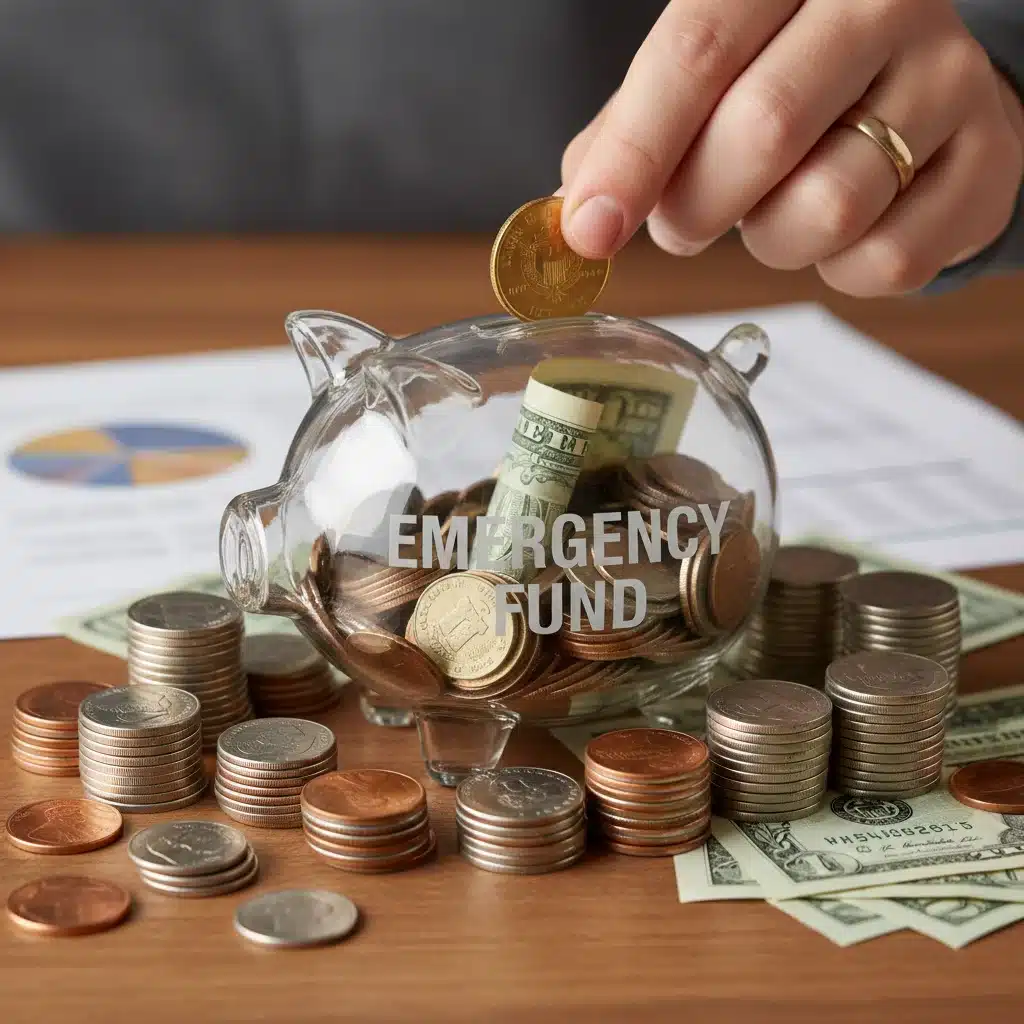
The location of your emergency fund is almost as important as its existence. The key criteria are safety, accessibility, and liquidity. You want your money to be safe from market fluctuations and easily accessible when you need it.
A. High-Yield Savings Account (HYSA)
This is the gold standard for emergency funds. HYSAs offer:
- Higher Interest Rates: While not a get-rich-quick scheme, HYSAs offer significantly better interest rates than traditional savings accounts, helping your money grow slightly.
- Liquidity: You can access your money quickly, usually within a day or two, through online transfers.
- Safety: HYSAs are FDIC-insured (up to $250,000 per depositor per institution), meaning your money is safe even if the bank fails.
- Separation: Keeping your emergency fund in a separate account, preferably at a different bank, reduces the temptation to dip into it for non-emergencies.
B. Money Market Accounts (MMAs)
Similar to HYSAs, MMAs offer competitive interest rates and FDIC insurance. They might also come with check-writing privileges or a debit card, offering slightly more access, but often have higher minimum balance requirements.
C. Avoid Investments for Your Emergency Fund
While investing is crucial for long-term wealth building, your emergency fund should not be in stocks, bonds, mutual funds, or other volatile assets. The value of these investments can fluctuate, and you might need to sell them at a loss during a downturn, precisely when you need the money most. The primary goal of your emergency fund is capital preservation, not growth.
Step 4: Maintaining and Replenishing Your Emergency Fund
Building an emergency fund is a significant achievement, but emergency fund planning doesn’t stop there. Maintaining and, if necessary, replenishing it are crucial for long-term financial security.
A. Hands Off! (Unless it’s a True Emergency)
The biggest challenge for many is resisting the urge to use the emergency fund for non-emergencies. Define what constitutes a true emergency for you (e.g., job loss, medical crisis, essential home/car repair) and stick to it. That new gadget or vacation is not an emergency.
B. Replenish Immediately
If you do have to use your emergency fund, make it an absolute priority to replenish it as quickly as possible. Treat it like a debt you owe yourself. Redirect any extra income, cut back on discretionary spending, and focus intensely on building it back up to its target level. This ensures you’re prepared for the next unexpected event.
C. Review Annually (or When Life Changes)
Your essential living expenses can change over time. Review your emergency fund target at least once a year, or whenever significant life events occur (e.g., marriage, having children, buying a home, a major pay raise or cut). Adjust your target amount as needed to ensure it still covers 3-6 months of your current essential expenses.
Common Challenges in Emergency Fund Planning and How to Overcome Them
Building an emergency fund isn’t always easy. Many people face hurdles. Here’s how to navigate them:
A. “I Don’t Have Enough Money to Save”
This is a common sentiment. Start small. Even $10 or $20 a week adds up. Focus on the ‘why’—your financial peace of mind. Review your budget meticulously; often, there are small leaks in spending that can be plugged. Consider a temporary side hustle to kickstart your savings. The key is to start somewhere, build momentum, and gradually increase your contributions.
B. “I Keep Dipping Into My Savings”
This usually indicates a lack of discipline or unclear boundaries. Re-evaluate your definition of an emergency. Consider moving your emergency fund to a separate bank (especially an online-only bank) that isn’t linked to your primary checking account. This adds a layer of friction, making it harder to access impulsively. Remind yourself of the long-term goal of emergency fund planning.
C. “It Feels Overwhelming”
Breaking down your large goal into smaller, manageable chunks can help. Instead of focusing on $15,000, aim for $1,000 first, then $2,000, and so on. Celebrate each mini-milestone. Focus on consistency over speed. Remember, every dollar saved is a step towards greater security.
D. “What About Investing While Saving?”
Ideally, you should have both an emergency fund and investments. The general recommendation is to fully fund your emergency savings before aggressively investing for long-term goals like retirement. However, if your employer offers a 401(k) match, contribute enough to get the full match while building your emergency fund, as that’s essentially free money. Once your emergency fund is solid, you can then increase your investment contributions.

Advanced Tips for Emergency Fund Planning in 2026
Once you’ve mastered the basics, consider these advanced strategies to optimize your emergency fund planning:
A. Tiered Emergency Fund
For those with very large emergency fund goals (e.g., 12+ months), you might consider a tiered approach:
- Tier 1 (3-6 months): In a highly liquid HYSA.
- Tier 2 (Additional months): In a slightly less liquid but still safe option, like a Certificate of Deposit (CD) that matures at staggered intervals, or even I-Bonds (inflation-protected savings bonds). These offer slightly better returns but with some access restrictions.
This strategy allows you to earn a little more interest on the portion of your fund you’re less likely to need immediately, without sacrificing safety for the core amount.
B. Review Your Insurance Policies
Your insurance policies (health, auto, home, disability, life) are your first line of defense against many emergencies. Ensure your coverage is adequate and your deductibles are manageable. A robust insurance portfolio can prevent you from needing to tap into your emergency fund for certain events, or at least minimize the amount you need to withdraw.
C. Create a Financial Emergency Plan
Beyond just having the money, consider what you would do in various emergency scenarios. This could include:
- A list of essential contacts (doctor, insurance agent, financial advisor).
- Location of important documents (passports, birth certificates, insurance policies).
- A brief outline of your budget reduction plan if income is lost.
This proactive thinking, part of comprehensive emergency fund planning, can reduce stress during an actual crisis.
D. Stay Informed About Economic Trends
While you shouldn’t react to every news headline, being generally aware of economic trends can help you adjust your emergency fund planning. For instance, if economic forecasts suggest a recession, you might consider increasing your emergency fund from 3 to 6 months, or even more. Flexibility and adaptability are key.
The Psychological Benefits of a Fully Funded Emergency Fund
Beyond the tangible financial benefits, having a robust emergency fund offers significant psychological advantages:
- Reduced Stress and Anxiety: Knowing you have a safety net provides immense peace of mind. You’re less likely to lose sleep over potential financial setbacks.
- Increased Freedom: An emergency fund gives you more options. You can leave a toxic job, pursue a new career path, or take time off for family without immediate financial ruin.
- Better Decision-Making: When faced with an emergency, you can make clear-headed decisions rather than being forced into desperate choices due to financial pressure.
- Improved Relationships: Financial stress is a leading cause of relationship strain. A healthy emergency fund can alleviate this pressure.
- Foundation for Wealth Building: By protecting your assets and preventing debt, an emergency fund allows you to focus on growing your wealth through investing, rather than constantly bailing yourself out of trouble.
These intangible benefits are often just as valuable as the money itself, reinforcing the importance of diligent emergency fund planning.
Conclusion: Your Path to Financial Security by 2026
Emergency fund planning isn’t a one-time task; it’s an ongoing commitment to your financial well-being. By setting a clear goal of 3-6 months of living expenses, implementing smart saving strategies, choosing the right place for your funds, and committing to its maintenance, you are building a powerful shield against life’s uncertainties.
As we approach 2026, take control of your financial future. Start today, even if it’s with a small amount. The journey to financial security is a marathon, not a sprint, but every step you take in your emergency fund planning brings you closer to a future where you are prepared, resilient, and at peace. Don’t wait for a crisis to realize the importance of an emergency fund; build it now and secure your financial peace of mind for years to come.