
Teaching Kids About Money in 2026: Practical Financial Literacy Strategies for Ages 10 and Under
In an increasingly complex financial world, equipping our children with robust kids financial literacy skills is no longer a luxury but a necessity. The landscape of money, from digital transactions to global economies, is evolving rapidly. As we look towards 2026 and beyond, the methods we use to teach the younger generation about finances must adapt. This comprehensive guide will delve into practical, age-appropriate strategies to instill sound financial habits in children aged 10 and under, ensuring they are well-prepared for their financial futures.
The goal isn’t just to teach them how to count money, but to foster an understanding of its value, how to earn it, save it, spend it wisely, and even give back. By starting early, we can lay a strong foundation that will serve them throughout their lives. Let’s explore how to make financial education engaging, effective, and relevant for today’s children.
Why Financial Literacy for Kids is More Critical Than Ever
The digital age has transformed how we interact with money. Cash is becoming less common, replaced by cards, apps, and contactless payments. For young children, this can make money feel abstract and less tangible. They don’t see physical bills being exchanged as often, which can obscure the concept of earning and spending. Therefore, teaching kids financial literacy needs to address these modern realities.
Furthermore, the rise of online shopping, subscription services, and in-app purchases means children are exposed to spending opportunities earlier and more frequently. Without a solid understanding of financial principles, they can easily fall prey to impulsive decisions or develop unhealthy spending habits. Early financial education helps them navigate these challenges with confidence and responsibility.
Beyond personal finances, understanding concepts like debt, investment, and economic cycles, even at a basic level, prepares them for future societal roles. A financially literate generation is better equipped to make informed decisions that benefit not only themselves but also their communities and the broader economy. It fosters critical thinking, delayed gratification, and problem-solving skills that extend far beyond money matters.
Age-Appropriate Strategies for Different Stages
Teaching kids financial literacy isn’t a one-size-fits-all approach. What works for a 3-year-old will be very different from what resonates with a 9-year-old. Tailoring your strategies to their developmental stage is key to effective learning.
Ages 3-5: Introducing Basic Concepts
At this stage, the focus should be on the most fundamental ideas. Children are learning to count and understand simple cause and effect. Keep it concrete and hands-on.
- Recognizing Money: Teach them to identify different coins and bills. Play games where they sort money by size, color, or denomination. Explain that different pieces have different values.
- The Concept of Earning: Introduce simple chores with small rewards. For example, ‘If you help put away your toys, you earn a coin.’ This links effort to reward.
- Saving for Something Specific: Use a clear jar or piggy bank. Talk about saving for a small, desired item, like a toy car or a sticker book. When they reach their goal, let them experience the joy of purchasing it with their saved money.
- Wants vs. Needs (Simple): Begin to differentiate. ‘Do we need this new toy, or do we want it?’ Focus on basic needs like food, shelter, and clothing.
Ages 6-7: Expanding Understanding
Children in this age group are developing stronger math skills and a greater capacity for abstract thought. You can introduce slightly more complex ideas.
- Allowance and Chores: Formalize an allowance system linked to responsibilities. This teaches consistent earning and accountability. Decide together if the allowance is tied to chores or if chores are expected as part of being a family member, with allowance as a separate learning tool.
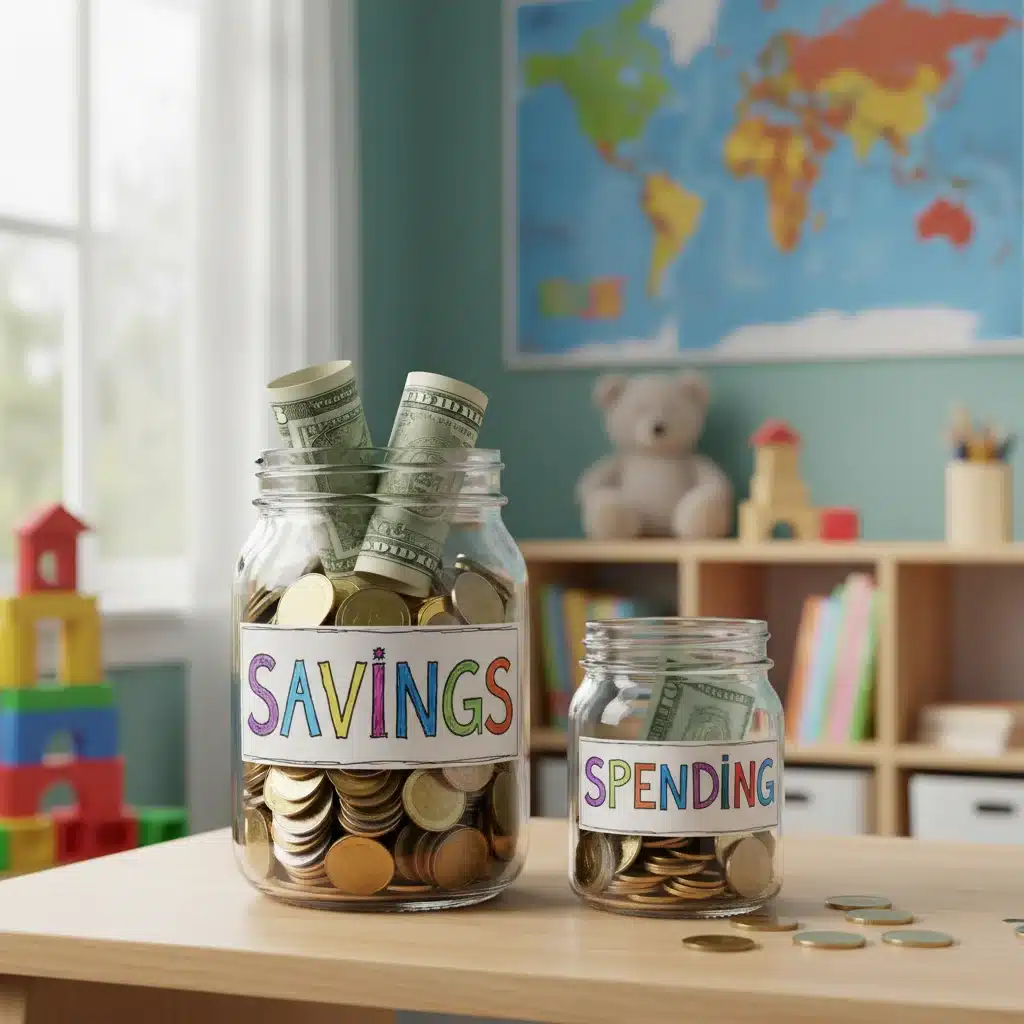
- Three-Jar System: Introduce the classic ‘Spend, Save, Give’ jar system. This is an excellent way to teach budgeting and philanthropy early on. Allocate a percentage of their allowance to each jar. For example, 50% spend, 40% save, 10% give.
- Making Choices: When shopping, give them a small budget for a specific item (e.g., ‘You have $5 for a treat’). Let them choose, compare prices, and experience the consequence of their choice.
- The Cost of Things: Point out the prices of everyday items. ‘This loaf of bread costs $3, and we need it for sandwiches.’ This helps them understand that everything has a value.
Ages 8-10: Developing Deeper Insights
This is a crucial age for building more sophisticated kids financial literacy. They can grasp more abstract concepts and understand future implications.
- Budgeting Basics: Help them create a simple budget for their allowance. This can be done on paper or using a child-friendly app. Track their spending and saving together.
- Goal-Oriented Saving: Encourage saving for bigger, longer-term goals, like a new video game, a bicycle, or a special outing. Break the goal down into smaller, achievable steps. ‘If you save $5 a week, you’ll have enough for that game in 10 weeks!’
- Delayed Gratification: Discuss the benefits of waiting to buy something versus immediate gratification. Use real-life examples where waiting for a sale or saving for a better quality item pays off.
- Basic Investing (Conceptual): While not actual investing, you can introduce the idea of money growing. For example, if they save a certain amount, you might offer a ‘parental interest’ bonus, explaining that money can make more money over time.
- Understanding Advertising: Discuss how advertising works and its goal to make people want to buy things. Help them critically evaluate commercials and product placements.
- Digital Money: Explain how debit cards and online payments work. ‘When we use this card, the money comes out of our bank account, just like taking it from a piggy bank.’
Practical Tools and Resources for 2026
The future of kids financial literacy will undoubtedly leverage technology and innovative educational approaches. Here are some tools and resources to consider for 2026:
- Financial Apps for Kids: Many apps are designed to help children manage allowances, track savings goals, and understand budgeting in a fun, interactive way. Look for apps with parental controls and clear, engaging interfaces. Examples might include ‘Greenlight,’ ‘GoHenry,’ or ‘BusyKid.’
- Educational Games: Board games like Monopoly (simplified versions), ‘The Game of Life,’ or even custom-made games can teach valuable money lessons. Digital games that simulate earning, spending, and saving are also becoming more prevalent.
- Books and Storybooks: Numerous children’s books explain financial concepts through engaging narratives. Reading these together can spark conversations and make learning enjoyable.
- Online Resources: Websites from financial institutions, educational organizations, and government bodies often provide free resources, lesson plans, and interactive tools for teaching children about money.
- Family Banking Systems: Set up a ‘family bank’ where children can deposit their allowance, track their balance, and even ‘borrow’ small amounts (with clear repayment terms and interest, if appropriate for older kids).
Making Financial Education a Part of Everyday Life
The most effective way to teach kids financial literacy is to integrate it into daily routines and conversations. It shouldn’t feel like a separate, formal lesson, but rather a natural part of growing up.
Involve Them in Family Finances (Appropriately)
While you don’t need to share all the details of your household budget, involve them in age-appropriate financial discussions. For example:
- Grocery Shopping: Let them help compare prices, look for sales, or choose between store brands and name brands. ‘We have $50 for groceries today. What should we buy?’
- Utilities: Explain that turning off lights saves electricity, which saves money. Show them a utility bill (without revealing sensitive information) and explain that the family pays for these services.
- Vacation Planning: If planning a family trip, involve them in budgeting for souvenirs or activities. ‘We have X amount for fun activities; what do you think we should spend it on?’
Be a Role Model
Children learn by observing. Your own financial habits, both good and bad, will significantly influence their understanding and behavior. Be mindful of how you talk about money, spend, save, and handle financial decisions. If you’re struggling, be honest in an age-appropriate way, emphasizing problem-solving and resilience.
- Talk openly about money: Avoid making money a taboo subject. Discuss financial decisions, big or small, in front of them.
- Show them your budgeting: Let them see you creating a shopping list, checking your bank balance, or paying bills online.
- Demonstrate saving: Talk about your own savings goals, whether it’s for a new car, a home repair, or retirement.
Embrace Mistakes as Learning Opportunities
Children will make financial mistakes – they’ll spend all their allowance on one toy and regret it later, or they’ll forget to save for something important. These are invaluable learning moments. Instead of reprimanding, guide them through the consequences and help them strategize for next time. ‘What did you learn from that purchase? How can we plan better next week?’

Advanced Concepts for the Future (Ages 8-10)
As children approach the upper end of the 10-and-under age bracket, you can gently introduce more nuanced financial ideas that will serve as building blocks for later learning.
Understanding Value and Scarcity
Discuss why some things cost more than others. Is it because they are rare, high-quality, or in high demand? This helps them understand the economic principles of supply and demand in a simplified way. For example, why does a handmade toy cost more than a mass-produced one? Or why does a ticket to a popular concert cost more than a lesser-known event?
The Concept of Work and Income Diversification
Beyond chores, talk about different types of jobs and how people earn money. Explain that some people have multiple ways of earning income. While too complex for young children to implement, introducing the idea that money can come from various sources (e.g., a job, a small business, or even investments in the future) can broaden their perspective.
Philanthropy and Giving Back
The ‘Give’ jar is a great start. Expand on this by discussing charities, community service, and the impact of giving. Let them choose a cause they care about and donate their ‘give’ money. This teaches empathy, social responsibility, and the power of collective action.
The Basics of Entrepreneurship
Encourage small, age-appropriate entrepreneurial ventures. This could be a lemonade stand, selling handmade crafts, or offering to help neighbors with simple tasks for a small fee. This teaches them about creating value, marketing, pricing, and managing earnings. It’s a fantastic way to develop an entrepreneurial mindset and understand the effort involved in generating income.
The Power of Compounding (Simplified)
While the mathematical intricacies of compound interest are beyond this age group, the concept of ‘money making money’ can be introduced. For instance, if they save $10 this month, and you add an extra $1 as a ‘thank you’ for saving, and then they save another $10 next month, and you add $1.50, you can explain that the bonus grows because their savings grew. This lays the groundwork for understanding investments and long-term financial growth.
Addressing Common Parental Concerns
Many parents have questions and concerns when it comes to teaching kids financial literacy. Let’s address a few common ones:
“Won’t talking about money make my child materialistic?”
The opposite is often true. Openly discussing money, its value, and the effort required to earn it can reduce materialism. When children understand the finite nature of resources and the trade-offs involved in spending, they tend to appreciate things more and make more thoughtful purchases. The goal is not to make them obsessed with money, but to empower them with the skills to manage it responsibly.
“How much allowance should I give?”
There’s no universal answer, as it depends on your family’s budget and what you expect the allowance to cover. A common guideline is $1 per year of age per week (e.g., an 8-year-old gets $8/week). However, it’s more important to be consistent and to use the allowance as a teaching tool. Discuss what expenses they are responsible for (toys, candy, movie tickets) versus what you will cover (clothes, school supplies).
“What if I’m not good with money myself?”
This is a perfect opportunity to learn alongside your child! You don’t have to be a financial expert to teach basic principles. Be honest about your own learning journey, discuss financial challenges in a constructive way, and model a willingness to learn and improve. There are many resources available for parents to boost their own financial literacy while teaching their kids.
“Should allowance be tied to chores?”
This is a debated topic. Some argue that chores are part of being a family member and shouldn’t be compensated, while allowance is a separate tool for financial education. Others believe linking chores to allowance teaches the value of work. A balanced approach might be to have some expected ‘family contribution’ chores, and then offer additional paid chores for extra income opportunities. The most important thing is consistency and clear expectations.
Looking Ahead to 2026 and Beyond
The world of finance will continue to evolve. By 2026, we can expect even more digital currencies, sophisticated online payment systems, and perhaps new forms of value exchange. The core principles of kids financial literacy – earning, saving, spending wisely, and giving – will remain timeless. However, the tools and contexts will change.
Therefore, our approach to financial education must be adaptable. Emphasize critical thinking, problem-solving, and a growth mindset. Teach children to ask questions, research options, and understand the implications of their financial choices. Encourage them to be curious about how money works in the world around them.
The goal is not just to teach them about money, but to empower them to be financially resilient, responsible, and confident individuals who can navigate the complexities of future economies. By investing in their financial education today, we are investing in a brighter, more secure future for them and for society as a whole.
Conclusion
Teaching kids financial literacy is an ongoing journey, not a destination. It requires patience, consistency, and a willingness to adapt your methods as your child grows and the financial world changes. By starting early, using age-appropriate strategies, leveraging modern tools, and modeling responsible financial behavior, we can equip children aged 10 and under with the essential skills they need to become financially intelligent adults.
Remember, every conversation about money, every decision made at the grocery store, and every penny saved in a piggy bank is an opportunity for learning. Embrace these moments, make them fun, and watch as your children develop a strong foundation for a lifetime of financial well-being. The investment you make in their financial education today will yield invaluable returns in their future.