Cybersecurity Education in Schools: A 4-Step Plan for Robust Programs by 2026

In an increasingly digital world, the need for robust school cybersecurity education has never been more critical. Educational institutions are prime targets for cyberattacks, holding sensitive student data, financial records, and intellectual property. Beyond protecting institutional assets, equipping students with essential cybersecurity knowledge is paramount for their personal safety and future career readiness. This article outlines a comprehensive 4-step plan to implement robust school cybersecurity education programs by 2026, ensuring that both the infrastructure and the students are well-prepared for the digital landscape.
The digital transformation of education has brought immense opportunities but also significant vulnerabilities. From remote learning platforms to administrative networks, schools are constantly exposed to threats ranging from ransomware and phishing to data breaches and cyberbullying. The consequences of these incidents can be devastating, leading to financial losses, reputational damage, and, most importantly, the compromise of student and staff privacy. Therefore, integrating dedicated school cybersecurity education is not just an IT concern but a fundamental educational imperative. By 2026, every school should have a foundational program in place.
This ambitious goal requires a structured approach, involving strategic planning, resource allocation, and continuous evaluation. Our 4-step plan provides a roadmap for school districts and individual institutions to build resilient cybersecurity programs. This includes assessing current vulnerabilities, developing a comprehensive curriculum, training educators, and fostering a culture of digital responsibility among students and staff. Let’s delve into each step to understand how to achieve this vital objective.
Step 1: Comprehensive Needs Assessment and Policy Development
The first critical step in building a robust school cybersecurity education program is to conduct a thorough needs assessment. This involves understanding the current cybersecurity posture of the school or district, identifying existing gaps, and evaluating the level of digital literacy among students and staff. This assessment should cover technical infrastructure, human factors, and current educational offerings.
1.1. Technical Infrastructure Audit
Begin by auditing all existing IT infrastructure. This includes network security, device management, data storage practices, and incident response protocols. Identify weaknesses such as outdated software, unpatched systems, weak access controls, and inadequate backup solutions. Engage cybersecurity professionals or third-party auditors to perform penetration testing and vulnerability assessments. Understanding where the school’s digital assets are most vulnerable is crucial for developing targeted protection strategies.
1.2. Digital Literacy and Awareness Survey
Assess the current level of cybersecurity awareness among students, teachers, and administrative staff. This can be done through surveys, questionnaires, and informal interviews. Key questions should focus on understanding common threats (e.g., phishing, malware), best practices (e.g., strong passwords, secure browsing), and reporting mechanisms for suspicious activities. The results of this survey will highlight areas where educational interventions are most needed and help tailor the school cybersecurity education curriculum effectively.
1.3. Review and Develop Cybersecurity Policies
Based on the audit and survey results, review and update existing cybersecurity policies, or develop new ones if they are absent. These policies should cover acceptable use of technology, data privacy (e.g., FERPA, COPPA compliance), incident response plans, password policies, and guidelines for remote learning and device usage. Clear, concise, and enforceable policies are the bedrock of any effective cybersecurity program. Ensure that these policies are communicated clearly to all stakeholders and regularly updated to reflect evolving threats and technologies. This foundational work is essential for any meaningful school cybersecurity education initiative.
Step 2: Curriculum Development and Integration
Once the needs are assessed and policies are in place, the next step is to develop and integrate a comprehensive school cybersecurity education curriculum. This curriculum should be age-appropriate, engaging, and designed to instill practical skills and a strong understanding of digital citizenship.
2.1. Age-Appropriate Curriculum Design
Cybersecurity education should not be a one-size-fits-all approach. Content must be tailored to different age groups:
- Elementary School (K-5): Focus on basic digital citizenship, online etiquette, recognizing safe websites, not sharing personal information, and understanding the concept of a strong password through simple analogies. Interactive games and stories can be highly effective.
- Middle School (6-8): Introduce more complex concepts like phishing, cyberbullying prevention, privacy settings on social media, understanding malware, and the importance of data backup. Practical exercises and case studies can engage students.
- High School (9-12): Delve into advanced topics such as network security basics, encryption, ethical hacking concepts, career paths in cybersecurity, and the societal impact of cyberattacks. Project-based learning and guest speakers from the cybersecurity industry can provide valuable insights.
2.2. Integration Across Subjects
Rather than treating cybersecurity as an isolated subject, integrate it across various disciplines. For instance:
- Computer Science/Technology Classes: Naturally, these classes are ideal for in-depth technical aspects of cybersecurity.
- Social Studies/Civics: Discuss the legal and ethical implications of cybercrime, digital rights, and the role of government in cybersecurity.
- English/Language Arts: Analyze articles on data breaches, write persuasive essays on digital privacy, or create public service announcements about online safety.
- Mathematics: Explore cryptography principles and data analysis related to cyber threats.
This interdisciplinary approach reinforces the importance of school cybersecurity education and demonstrates its relevance in various contexts.
2.3. Resource Development
Create or curate educational resources, including lesson plans, interactive modules, videos, and hands-on activities. Partner with cybersecurity organizations, universities, and industry experts who often provide free educational materials and programs. Consider developing a dedicated online portal or learning management system (LMS) section for cybersecurity resources that can be easily accessed by students and teachers. These resources are vital for consistent and high-quality school cybersecurity education.
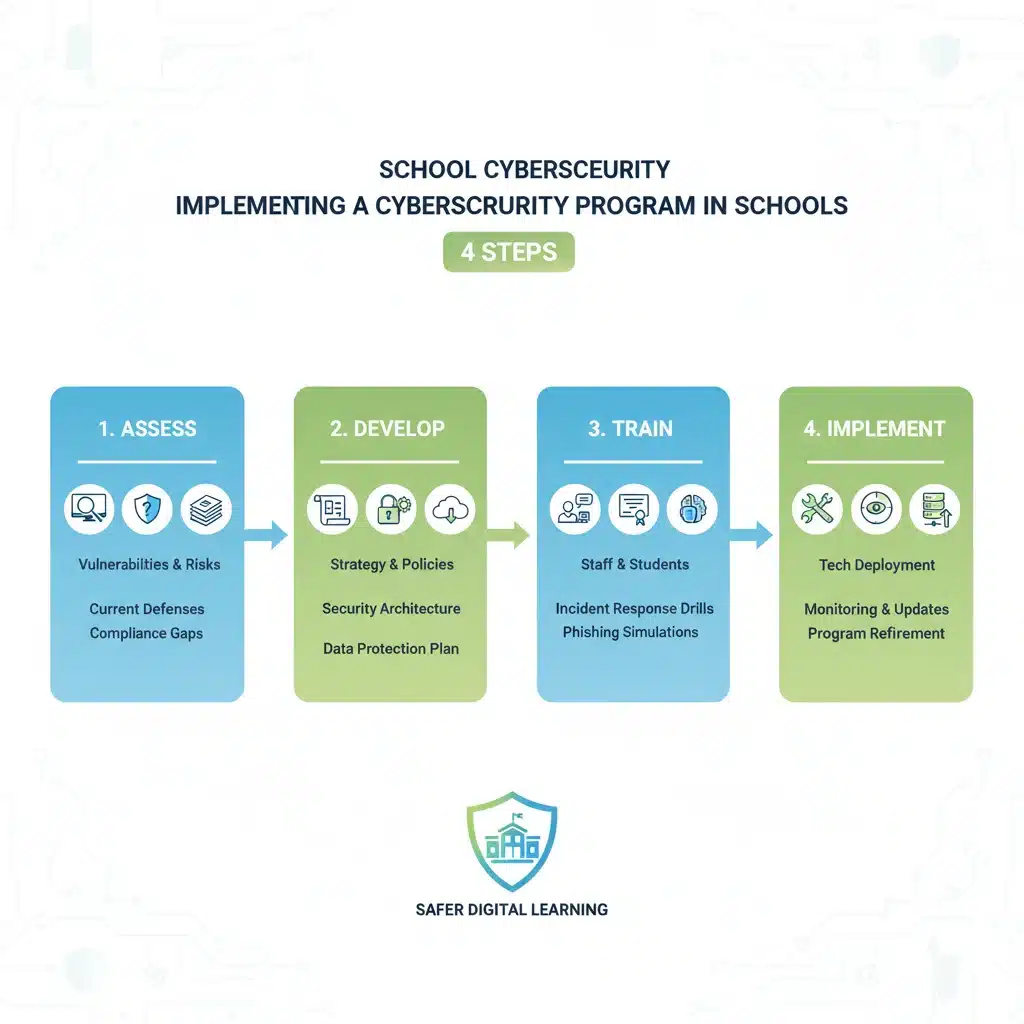
Step 3: Teacher Training and Professional Development
The success of any educational initiative hinges on the capabilities of its educators. Teachers must be adequately trained not only to understand cybersecurity concepts themselves but also to effectively convey this knowledge to students. This step is crucial for the effective implementation of school cybersecurity education.
3.1. Mandatory Basic Cybersecurity Training for All Staff
Every staff member, from teachers and administrators to support staff, should undergo mandatory basic cybersecurity training. This training should cover the school’s cybersecurity policies, how to identify and report phishing attempts, safe browsing habits, data handling protocols, and the importance of strong, unique passwords. Regular refreshers and updates are essential as threats evolve. This baseline knowledge is fundamental to creating a secure digital environment within the school system.
3.2. Specialized Training for Key Educators
Identify and provide specialized training for teachers who will be directly responsible for delivering cybersecurity curriculum. This could include technology teachers, computer science instructors, and potentially social studies or English teachers integrating cybersecurity topics. This specialized training should delve deeper into technical concepts, pedagogical approaches for teaching cybersecurity, and access to advanced resources. Consider certifications or micro-credentials in cybersecurity education to enhance their expertise.
3.3. Continuous Professional Development (CPD)
Cybersecurity is a rapidly evolving field. Therefore, professional development cannot be a one-time event. Establish a system for ongoing CPD, including workshops, webinars, conferences, and access to online learning platforms. Encourage teachers to join professional networks and communities focused on cybersecurity education. Providing dedicated time and resources for CPD ensures that educators remain current with the latest threats, technologies, and teaching methodologies, thereby strengthening school cybersecurity education efforts.

Step 4: Implementation, Monitoring, and Community Engagement
The final step involves rolling out the program, continuously monitoring its effectiveness, and actively engaging the entire school community, including parents and local experts. This ensures the sustainability and relevance of school cybersecurity education.
4.1. Phased Rollout and Pilot Programs
Instead of a district-wide immediate launch, consider a phased rollout. Begin with pilot programs in a few schools or grade levels to test the curriculum, gather feedback, and identify any unforeseen challenges. This allows for adjustments and refinements before a broader implementation. Document lessons learned from the pilot to optimize the full-scale deployment of school cybersecurity education.
4.2. Incident Response and Reporting Mechanisms
Establish clear and easily accessible channels for reporting cybersecurity incidents. Students and staff should know whom to contact and how to report suspicious activities, cyberbullying, or data breaches without fear of reprisal. Regularly test the incident response plan through drills and simulations to ensure its effectiveness. A well-practiced response plan can significantly mitigate the damage from a cyberattack.
4.3. Community and Parental Engagement
Cybersecurity extends beyond the school gates. Involve parents and the wider community in the school cybersecurity education initiative. Host workshops for parents on topics like parental controls, safe internet usage at home, and recognizing online dangers. Share resources and tips through newsletters, school websites, and social media. Collaborate with local law enforcement, cybersecurity firms, and community organizations to leverage their expertise and resources. A united front between school and home is vital for creating a truly secure digital environment for children.
4.4. Continuous Evaluation and Adaptation
Cybersecurity threats are constantly evolving, so the education program must also adapt. Regularly evaluate the effectiveness of the curriculum, teacher training, and policy implementation. Gather feedback from students, teachers, and parents. Monitor cybersecurity incident trends within the school and district to identify emerging threats. Use this data to make necessary adjustments to the curriculum, update policies, and refine training programs. This continuous improvement cycle is essential for maintaining a cutting-edge school cybersecurity education program.
Challenges and Solutions in Implementing School Cybersecurity Education
Implementing a comprehensive school cybersecurity education program by 2026 presents several challenges, but with strategic planning, these can be overcome.
Budgetary Constraints
Many schools operate with limited budgets, making it difficult to allocate funds for new programs, technologies, and professional development. Solutions include seeking grants from government agencies and private foundations, partnering with cybersecurity companies for pro bono services or discounted resources, and leveraging existing technology infrastructure where possible. Prioritizing the most critical aspects of the program can also help manage costs.
Lack of Qualified Educators
Finding teachers with sufficient cybersecurity expertise can be a significant hurdle. Addressing this requires investing in comprehensive professional development programs, as outlined in Step 3. Additionally, schools can explore recruiting cybersecurity professionals as adjunct instructors or guest lecturers, and developing mentorship programs where experienced tech teachers can guide their peers. Online certifications and partnerships with universities can also help upskill existing staff.
Keeping Up with Evolving Threats
The cybersecurity landscape changes daily. Ensuring that curriculum and training remain current is an ongoing challenge. Establishing a dedicated committee or task force responsible for monitoring threat intelligence, reviewing educational materials, and recommending updates is crucial. Subscribing to cybersecurity news feeds, participating in industry forums, and maintaining strong ties with cybersecurity experts can help schools stay informed and proactive in their school cybersecurity education.
Student Engagement
Making cybersecurity education engaging for students, especially younger ones, can be difficult. Solutions involve incorporating gamification, interactive simulations, real-world case studies, and project-based learning. Connecting cybersecurity concepts to students’ daily digital lives (e.g., social media, online gaming) can make the content more relevant and interesting. Encouraging student-led initiatives, such as cybersecurity clubs or awareness campaigns, can also boost engagement.
The Future of School Cybersecurity Education
By 2026, the goal is not just to have basic cybersecurity awareness but to foster a generation of digitally literate and responsible citizens. This involves moving beyond reactive measures to proactive education and prevention. The integration of artificial intelligence (AI) and machine learning (ML) into educational tools will offer new avenues for personalized learning experiences in cybersecurity, adapting to individual student needs and learning styles. Furthermore, as the world becomes more interconnected, understanding global cybersecurity challenges and ethical considerations will become an integral part of the curriculum.
Moreover, the emphasis will shift towards developing critical thinking skills that enable students to evaluate online information, identify deceptive content, and make informed decisions about their digital footprint. This holistic approach to school cybersecurity education will prepare students not only for potential careers in cybersecurity but also for navigating the complexities of modern life safely and effectively. Collaboration between educational institutions, industry, and government will be key to developing standardized curricula and certifications that ensure a consistent and high-quality learning experience across all schools.
Conclusion
Implementing robust school cybersecurity education programs by 2026 is an ambitious yet achievable goal. By following this 4-step plan—comprehensive needs assessment, curriculum development, teacher training, and continuous implementation with community engagement—schools can significantly enhance their digital defenses and empower students with critical skills for the future. The investment in cybersecurity education today will yield immense dividends, protecting sensitive data, fostering responsible digital citizenship, and preparing the next generation to thrive in an increasingly complex digital world. It’s an investment in safety, privacy, and future prosperity for all.