Personalized Learning Pathways: 4 States Revolutionizing Education by 2026
Personalized Learning Pathways: 4 States Revolutionizing Education by 2026
The landscape of education is undergoing a profound transformation, moving away from the traditional one-size-fits-all model towards an approach that recognizes and celebrates the unique needs, strengths, and aspirations of each student. This paradigm shift is encapsulated by the concept of personalized learning pathways, a revolutionary educational framework designed to tailor the learning experience to individual students. As we approach 2026, several pioneering states are at the forefront of this movement, implementing innovative strategies that promise to reshape educational outcomes for generations to come. This article delves into the intricacies of personalized learning, explores why it’s gaining such traction, and highlights how four specific states are leading the charge in revolutionizing education through these bespoke pathways.
The Imperative for Personalized Learning Pathways
For decades, education systems have largely operated on a standardized model, assuming that all students learn at the same pace and in the same way. However, this approach often leaves many students disengaged, underserved, or unchallenged. The modern world demands a different kind of education – one that fosters critical thinking, creativity, adaptability, and a lifelong love of learning. This is precisely where personalized learning pathways come into play. They are not merely about customizing content; they represent a fundamental rethinking of how students interact with their education, how progress is measured, and how educators facilitate learning.
What Exactly Are Personalized Learning Pathways?
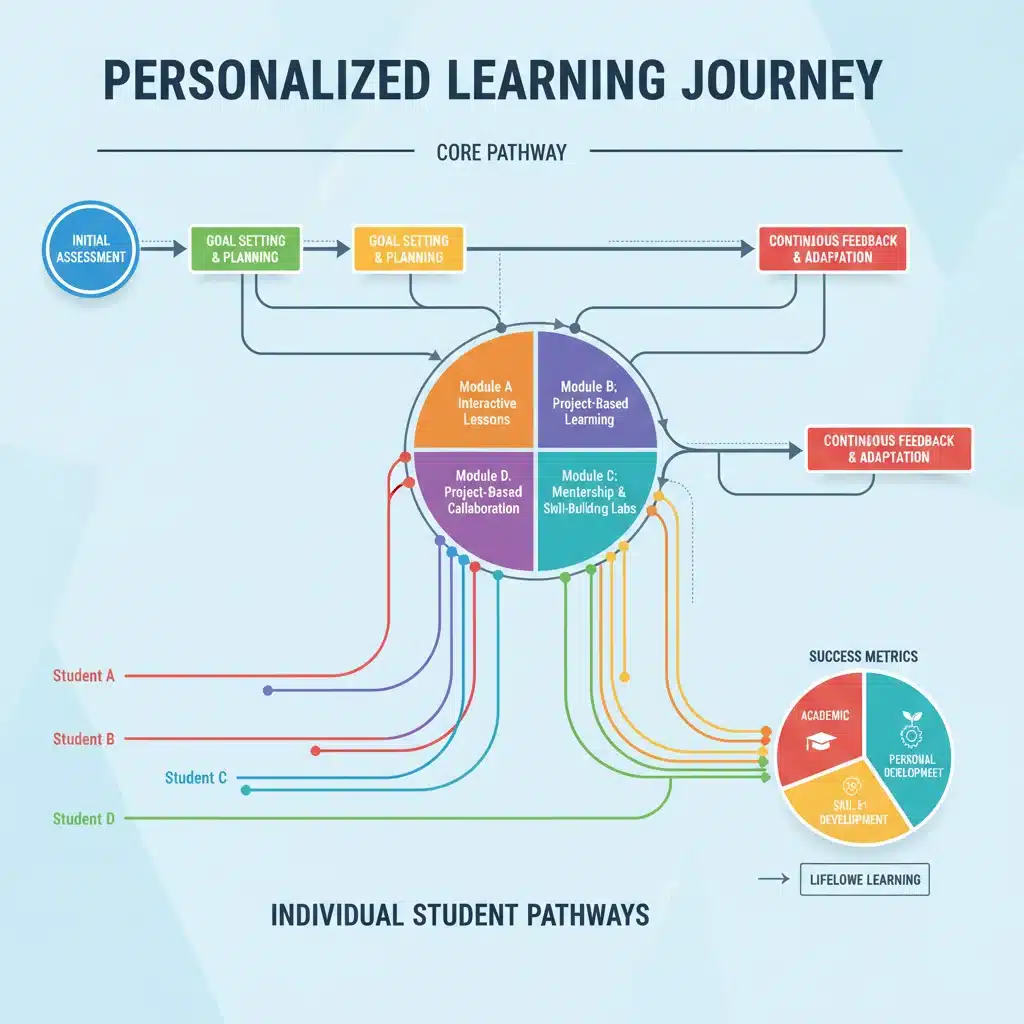
At its core, personalized learning involves tailoring instruction to meet the individual needs of each learner. This includes adjusting the pace, content, and method of delivery based on a student’s readiness, interests, and learning style. Personalized learning pathways take this concept a step further by creating a dynamic, adaptable educational journey for every student. This pathway is continuously adjusted based on ongoing assessments, student feedback, and evolving goals. Key characteristics often include:
- Student Agency: Empowering students to take ownership of their learning, setting goals, and making choices about how and what they learn.
- Competency-Based Progression: Students advance based on demonstrated mastery of skills and knowledge, rather than seat time or age.
- Flexible Learning Environments: Learning can occur in various settings, both inside and outside the traditional classroom, utilizing diverse resources.
- Individualized Support: Educators act as facilitators and mentors, providing targeted support and interventions as needed.
- Data-Driven Decisions: Utilizing data from assessments and student performance to inform instructional strategies and pathway adjustments.
Why Now? The Driving Forces Behind the Shift
Several factors are converging to accelerate the adoption of personalized learning pathways:
- Technological Advancements: Digital tools, adaptive software, and artificial intelligence are making it easier than ever to deliver customized content and track individual progress.
- Changing Workforce Demands: The 21st-century economy requires individuals who are adaptable, problem-solvers, and critical thinkers – skills that are best cultivated through personalized approaches.
- Equity Concerns: Standardized models often exacerbate achievement gaps. Personalized learning aims to provide equitable opportunities for all students to succeed, regardless of their background or starting point.
- Research on Learning Sciences: Growing understanding of cognitive science underscores the effectiveness of differentiated instruction and student-centered approaches.
- Post-Pandemic Realities: The COVID-19 pandemic highlighted the need for flexible, resilient, and individualized educational models that can adapt to unforeseen circumstances.
The move towards personalized learning pathways is not just an educational trend; it’s a strategic necessity to prepare students for a rapidly changing world. It’s about ensuring every student has the opportunity to reach their full potential, fostering a generation of engaged, capable, and lifelong learners.
State Spotlights: Four Leaders in Personalized Learning by 2026
While many states are exploring personalized learning, a few have made significant strides, demonstrating a strong commitment to integrating these pathways into their educational ecosystems. These states are not just tinkering around the edges; they are enacting comprehensive policies, investing in infrastructure, and empowering educators to embrace this transformative approach.
State A: Pioneering Competency-Based Education
This state has emerged as a national leader in competency-based education, which forms the bedrock of effective personalized learning pathways. Their approach focuses on ensuring students master specific skills and knowledge before moving on, rather than simply progressing based on age or time spent in a classroom. By 2026, their goal is to have a majority of districts operating under a fully competency-based model, supported by robust digital platforms that track student progress and recommend tailored learning resources.
- Key Initiatives: Extensive professional development for teachers on competency-based assessment and instruction, development of open educational resources aligned with competencies, and pilot programs in diverse school districts.
- Impact: Early data suggests increased student engagement, particularly among traditionally underserved populations, and a deeper understanding of subject matter. Students are more aware of their own learning goals and progress.
- Challenges & Solutions: Initial resistance from educators accustomed to traditional grading, addressed through intensive training and peer-to-peer mentorship. Ensuring equitable access to technology across all districts remains an ongoing focus.
State B: Leveraging Technology for Individualized Instruction
This state has made significant investments in educational technology to enable truly individualized personalized learning pathways. They have implemented statewide learning management systems (LMS) that integrate adaptive learning software, AI-powered tutoring, and comprehensive data analytics dashboards for educators. Their vision for 2026 includes a seamless digital learning ecosystem where every student has access to a personalized learning plan generated and refined by intelligent systems, with human educators providing crucial guidance and mentorship.
- Key Initiatives: 1:1 device programs in all K-12 schools, development of AI-driven adaptive learning platforms, and training for educators on leveraging data to inform instruction.
- Impact: Students are able to learn at their own pace, revisit challenging concepts, and explore areas of interest in depth. Educators report more time for targeted interventions and small-group instruction.
- Challenges & Solutions: Addressing the digital divide in rural areas through subsidized internet access and mobile hotspots. Ensuring responsible and ethical use of student data is paramount, with strict privacy protocols in place.
State C: Fostering Student Agency and Choice
Recognizing that student motivation is key to effective learning, this state has prioritized fostering student agency within their personalized learning pathways. Their model emphasizes student voice and choice, allowing learners to co-create their educational goals, select learning activities, and demonstrate their understanding in diverse ways. By 2026, they aim for every student to have a personalized learning plan that is actively developed and owned by the student, with guidance from educators and families.
- Key Initiatives: Project-based learning initiatives, opportunities for students to pursue passion projects, and flexible scheduling that allows for varied learning experiences. Emphasis on student-led conferences and portfolios for demonstrating mastery.
- Impact: Increased student engagement, improved critical thinking skills, and a stronger sense of ownership over their academic journey. Students are developing valuable self-direction and problem-solving abilities.
- Challenges & Solutions: Shifting mindsets of educators and parents accustomed to more structured environments, addressed through extensive community engagement and showcasing student success stories. Developing clear rubrics for assessing diverse project outcomes.
State D: Holistic Development Through Integrated Pathways
This state takes a holistic view of education, integrating academic, social-emotional, and career readiness components into their personalized learning pathways. Their model recognizes that student success is not solely dependent on academic achievement but also on well-being, interpersonal skills, and preparedness for future careers. By 2026, their goal is to provide every student with a comprehensive personalized plan that addresses all these dimensions, ensuring they are well-rounded and ready for life beyond school.
- Key Initiatives: Implementation of social-emotional learning (SEL) curricula, career exploration programs starting in middle school, partnerships with local businesses for internships and apprenticeships, and robust counseling services.
- Impact: Students exhibit improved emotional regulation, better communication skills, and a clearer understanding of their post-secondary options. Reduced dropout rates and increased college/career readiness are observed.
- Challenges & Solutions: Coordinating efforts across multiple agencies and stakeholders, addressed through cross-sector partnerships and dedicated leadership teams. Providing adequate resources for mental health support in schools.
The Broader Impact of Personalized Learning Pathways on Education Outcomes
The collective efforts of these pioneering states underscore a broader trend: personalized learning pathways are not just improving individual student experiences; they are systematically elevating overall education outcomes. The benefits extend far beyond test scores, touching upon critical aspects of student development and future societal contributions.
Enhanced Academic Achievement
One of the most immediate and measurable impacts of personalized learning is on academic achievement. When instruction is tailored to a student’s specific needs, they are more likely to grasp complex concepts, retain information, and apply their knowledge effectively. For students who struggle in traditional settings, personalized pathways can provide the necessary scaffolding and differentiated instruction to close learning gaps. Conversely, high-achieving students are challenged to delve deeper, explore advanced topics, and accelerate their learning without being held back by a one-size-fits-all curriculum. This targeted approach ensures that every student is learning at their optimal level, leading to demonstrably better academic results across the spectrum.
Increased Student Engagement and Motivation
Perhaps even more crucial than academic gains is the profound impact on student engagement and motivation. When students have a voice in their learning, when the content is relevant to their interests, and when they can progress at their own pace, they become active participants rather than passive recipients of information. This increased agency fosters a sense of ownership and purpose. Students are more likely to be intrinsically motivated, to ask questions, to seek out knowledge, and to persevere through challenges. This shift from compliance to engagement is a cornerstone of preparing students for lifelong learning, equipping them with the drive and curiosity needed to navigate a constantly evolving world.
Development of 21st-Century Skills
The modern workforce demands more than just rote memorization. Employers are increasingly seeking individuals with critical 21st-century skills such as critical thinking, problem-solving, creativity, collaboration, and communication. Personalized learning pathways are uniquely positioned to cultivate these skills. Project-based learning, inquiry-based approaches, and opportunities for student choice inherently require students to think critically, work collaboratively, and communicate their ideas effectively. By moving beyond standardized tests to assessments that measure competency and application, these pathways ensure that students are not just learning facts, but developing the essential capabilities for success in higher education and the professional landscape.
Improved Equity and Access
Traditional education systems, despite their best intentions, often perpetuate inequities. Students from disadvantaged backgrounds, those with learning differences, or English language learners frequently face systemic barriers. Personalized learning offers a powerful antidote to these challenges. By providing individualized support, differentiated instruction, and flexible learning modalities, these pathways can address the specific needs of diverse learners. Technology, when thoughtfully integrated, can bridge gaps in resources and provide access to high-quality learning experiences that might otherwise be unavailable. This commitment to equity ensures that every student, regardless of their starting point, has the opportunity to thrive and reach their full potential.
Greater Educator Effectiveness and Professional Growth
The shift to personalized learning also transforms the role of the educator. Teachers move from being sole dispensers of knowledge to facilitators, mentors, and instructional designers. This new role requires a different set of skills, but it also offers immense opportunities for professional growth and greater job satisfaction. With personalized learning, educators gain deeper insights into individual student needs, allowing them to provide more targeted and effective support. They collaborate more closely with colleagues, share best practices, and continuously refine their pedagogical approaches. This leads to a more dynamic and rewarding teaching experience, ultimately benefiting students.
The Future is Personalized: Challenges and Opportunities Ahead
While the promise of personalized learning pathways is immense, their widespread implementation is not without challenges. These include the need for significant investment in technology and infrastructure, ongoing professional development for educators, and a cultural shift in how we perceive and measure educational success. However, the opportunities far outweigh these hurdles.
Overcoming Implementation Hurdles
The journey to fully personalized learning environments requires strategic planning and sustained effort. Key challenges often include:
- Funding: Implementing new technologies, developing customized curricula, and providing extensive teacher training all require substantial financial investment. States are exploring various funding models, including public-private partnerships and grants.
- Teacher Training: Shifting from traditional instruction to a personalized, facilitative role demands new skills and mindsets. Ongoing, high-quality professional development is crucial, focusing on data analysis, adaptive teaching strategies, and fostering student agency.
- Assessment Redesign: Traditional standardized tests are often ill-suited for measuring progress in personalized, competency-based systems. States are developing innovative assessment methods that truly reflect student mastery and growth.
- Parent and Community Engagement: Explaining the benefits and methodologies of personalized learning to parents and the wider community is vital to build support and ensure successful implementation.
The Long-Term Vision for 2026 and Beyond
By 2026, the states leading this charge envision education systems where:
- Every student has an individualized learning plan that adapts dynamically to their needs and interests.
- Technology seamlessly supports learning, providing access to diverse resources and adaptive feedback.
- Educators are empowered to act as coaches and mentors, guiding students through their unique pathways.
- Learning is not confined to the classroom but extends into communities, workplaces, and digital spaces.
- Graduates are not just prepared for college or career, but are lifelong learners, critical thinkers, and engaged citizens.
The revolution in education driven by personalized learning pathways is well underway. The dedication and foresight of these four states, among others, are setting a powerful precedent for what is possible when we truly put the student at the center of the learning experience. As we move towards 2026, the impact of these transformative approaches will undoubtedly resonate throughout the educational landscape, creating a brighter, more equitable, and more effective future for all learners.