Extended School Year Programs: Unpacking Academic Gains in 2026 Pilots
The traditional school calendar, largely a relic of an agrarian society, has been a cornerstone of education for centuries. However, in an increasingly competitive global landscape and with growing concerns about learning loss, particularly exacerbated by recent global events, the concept of an extended school year has gained significant traction. As we look towards 2026, several pilot programs across various regions are meticulously evaluating the impact of lengthening the academic calendar. This comprehensive analysis delves into the academic gains observed in these 2026 pilot programs, exploring the nuanced effects on student performance, teacher dynamics, and the broader educational ecosystem.
The debate surrounding an extended school year is not new. Proponents argue that more instructional time directly correlates with improved academic outcomes, especially for students from disadvantaged backgrounds who may lack access to enriching summer activities. Conversely, critics raise concerns about potential student burnout, reduced opportunities for extracurricular development, and increased financial burdens on school districts. This article aims to provide an evidence-based perspective, drawing upon preliminary data and qualitative insights from the 2026 pilot initiatives.
The Rationale Behind Extending the School Year
The primary motivation for implementing an extended school year is to enhance academic achievement. The underlying theory is straightforward: more time in the classroom equates to more opportunities for learning, review, and mastery of subject matter. This is particularly relevant in subjects like mathematics and reading, where foundational skills are crucial for subsequent learning. Research consistently suggests that summer breaks, often referred to as ‘summer slide’ or ‘summer learning loss,’ disproportionately affect students from lower socioeconomic backgrounds. An extended calendar seeks to mitigate this by providing continuous instruction and reducing the duration of time away from structured learning environments.
Beyond academic remediation, an extended school year can also offer opportunities for curriculum enrichment. With additional days, schools can integrate more project-based learning, arts education, and hands-on scientific exploration without sacrificing core subject instruction. This holistic approach can foster a more engaging and well-rounded educational experience, potentially boosting student motivation and intrinsic love for learning. Furthermore, an extended calendar could allow for more flexible scheduling, enabling schools to incorporate professional development days for teachers without disrupting student learning, or to offer more targeted interventions for students requiring additional support.
Methodology of the 2026 Pilot Programs
The 2026 pilot programs for an extended school year are diverse in their implementation, reflecting various educational philosophies and local contexts. These programs typically involve adding a significant number of instructional days, ranging from an additional two weeks to a full month, or even restructuring the calendar to a year-round model with shorter, more frequent breaks. Key aspects of the pilot methodologies include:
- Targeted Demographics: Many pilots are focused on schools serving high-need populations, where the potential for academic gains is considered greatest due to existing achievement gaps.
- Curriculum Adaptation: Schools in these pilots are often encouraged to adapt their curricula to leverage the additional time, moving beyond simply extending existing lessons. This includes incorporating more experiential learning and interdisciplinary projects.
- Teacher Professional Development: Recognizing the increased demands on educators, a significant component of these pilots involves enhanced professional development, focusing on strategies for sustained student engagement and effective use of extended instructional time.
- Student and Teacher Well-being: Comprehensive surveys and qualitative data collection are being used to monitor student and teacher morale, stress levels, and overall well-being throughout the extended academic year.
- Rigorous Data Collection: Academic performance is being tracked through standardized tests, classroom assessments, attendance rates, and graduation rates. Comparative analyses are being conducted against control groups operating under traditional calendars.
These pilot programs are designed to provide robust data that can inform future policy decisions regarding the optimal length and structure of the school year. The findings are expected to offer valuable insights into the practicalities and effectiveness of an extended school year on a larger scale.
Academic Gains: Initial Findings from 2026 Pilots
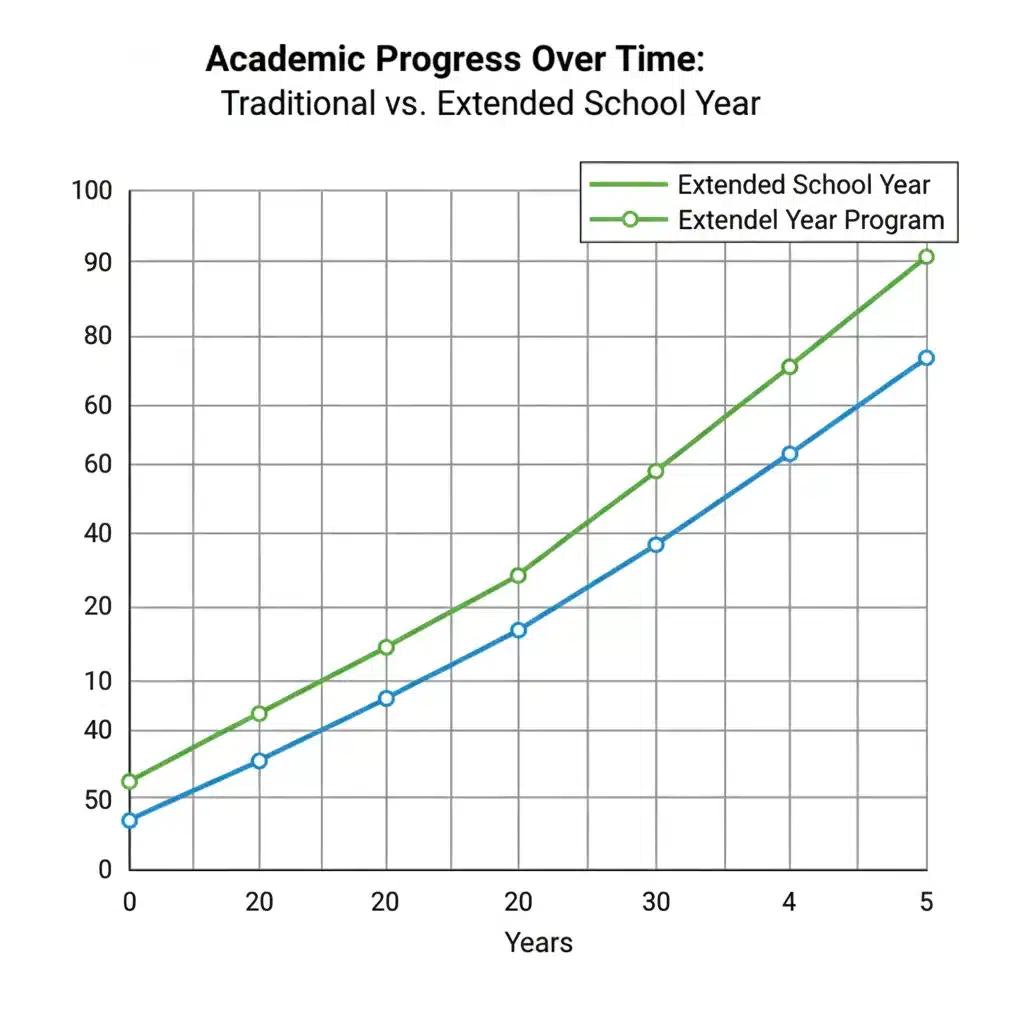
Preliminary data from the 2026 pilot programs strongly suggests a positive correlation between an extended school year and academic gains, particularly in core subjects. While it’s still early to draw definitive long-term conclusions, the initial trends are encouraging. Many participating schools are reporting:
- Improved Test Scores: Students in extended school year programs are showing measurable improvements in standardized test scores for reading, writing, and mathematics. These gains are often more pronounced among students who previously struggled academically.
- Reduced Learning Loss: The ‘summer slide’ effect appears to be significantly mitigated, with students retaining more knowledge and skills over shorter breaks compared to their counterparts on traditional calendars. This reduces the need for extensive review at the beginning of each academic term.
- Enhanced Mastery of Concepts: Teachers report having more time to delve deeper into complex topics, allowing for greater conceptual understanding rather than rote memorization. This leads to a more robust and lasting comprehension of the subject matter.
- Higher Attendance Rates: Some pilot programs have observed slightly higher attendance rates, potentially due to the perception of a more consistent and engaging learning environment.
- Narrowing Achievement Gaps: A particularly promising finding is the potential for an extended school year to help narrow achievement gaps between students from different socioeconomic backgrounds. The additional instructional time provides crucial support for students who may not have access to supplementary educational resources outside of school.
These early indicators suggest that the investment in an extended school year could yield substantial dividends in terms of academic performance and equity. The detailed analysis of these gains will be critical in shaping future educational policies.
Beyond Academics: Holistic Impact of an Extended School Year
While academic gains are a primary focus, the impact of an extended school year extends far beyond test scores. The pilot programs are also examining the broader effects on student well-being, social-emotional development, and teacher morale.
Student Well-being and Engagement
Concerns about student burnout are often raised in discussions about an extended school year. However, initial qualitative data from the 2026 pilots suggests that with thoughtful implementation, negative effects can be minimized. Schools that have successfully integrated varied instructional methods, incorporated more breaks within the day, and prioritized physical activity and creative outlets are reporting positive student engagement. The extended time can allow for a less rushed curriculum, reducing pressure and fostering a more relaxed learning environment. Furthermore, for some students, the school provides a safe and stable environment, and an extended school year can offer continuous access to meals, social services, and positive adult role models, which is particularly beneficial for vulnerable populations.
Teacher Perspectives and Professional Development
Teachers are at the forefront of any educational reform, and their experiences with an extended school year are paramount. While the increased workload is a legitimate concern, many educators in the pilot programs are also highlighting the benefits. The additional time allows for deeper dives into subject matter, more individualized attention for students, and greater flexibility for collaborative planning and professional development. Schools are investing in robust support systems, including additional planning days, enhanced compensation, and access to wellness resources, to ensure that teachers can thrive in an extended calendar model. The opportunity to experiment with new pedagogical approaches and see the direct impact on student learning has been a motivating factor for many.
Operational and Financial Considerations
Implementing an extended school year is not without its operational and financial challenges. Increased costs for staffing, utilities, transportation, and summer programming are significant considerations. The 2026 pilot programs are carefully tracking these expenditures and exploring various funding models, including state and federal grants, community partnerships, and innovative resource allocation strategies. The long-term economic benefits, such as a more educated workforce and reduced societal costs associated with academic failure, are also being factored into the cost-benefit analysis. The pilots are providing crucial data on the most cost-effective ways to implement and sustain an extended school year.
Challenges and Considerations for Future Implementation
Despite the promising initial findings, scaling an extended school year nationally or regionally presents several challenges that need careful consideration:
- Logistical Complexities: Coordinating schedules for families with children in different schools, summer job opportunities for older students, and community-based summer programs requires extensive planning and communication.
- Funding Sustainability: Ensuring long-term financial viability for an extended calendar beyond initial pilot grants is a major hurdle. Creative funding solutions and strong political will are essential.
- Teacher Recruitment and Retention: Attracting and retaining high-quality teachers in an extended school year model will depend on competitive compensation, supportive working conditions, and opportunities for professional growth.
- Curriculum Design: Simply adding more days without thoughtful curriculum redesign may not yield optimal results. The additional time must be used effectively for deeper learning, enrichment, and remediation.
- Public Buy-in: Gaining widespread support from parents, students, and the community is crucial for successful implementation. Clear communication about the benefits and addressing concerns proactively will be vital.
The 2026 pilots are providing invaluable lessons on navigating these challenges, highlighting best practices and areas requiring further refinement. The success of an extended school year hinges not just on adding days, but on strategically optimizing every moment of instructional time.
Case Studies from the 2026 Pilot Programs
To illustrate the practical application and diverse outcomes of the extended school year, let’s examine a few hypothetical case studies from the 2026 pilot programs:
Case Study 1: Urban Elementary School – ‘Project Ascent’
Located in a high-poverty urban district, ‘Project Ascent’ implemented a 30-day extended school year, focusing on intensive literacy and numeracy intervention for grades K-5. The additional month was structured with a blend of academic instruction in the mornings and enrichment activities (arts, sports, coding) in the afternoons. Initial results show a 15% increase in reading proficiency and a 12% increase in math scores among participating students compared to a control group. Teachers reported feeling better equipped to address individual learning gaps due to the extended time, and parents expressed appreciation for the continuous learning opportunities and safe environment for their children during the summer months.
Case Study 2: Rural Middle School – ‘Year-Round Learning Initiative’
A rural middle school adopted a year-round calendar with shorter, more frequent breaks (e.g., three-week breaks after each nine-week instructional period). This model aimed to combat the significant ‘summer slide’ often seen in rural areas with limited summer enrichment options. Data from the first year indicates a reduction in the need for remedial instruction at the start of new terms and an improvement in student engagement throughout the year. Teachers appreciated the more frequent breaks for rejuvenation, although initial adjustments to the new schedule were a challenge for some families. The school leveraged the shorter breaks for targeted student support and teacher professional development.
Case Study 3: Suburban High School – ‘Innovation Academy’
This pilot added an extra two weeks to the traditional school year, primarily focusing on project-based learning and career exploration for high school students. The additional time allowed for extended internships, community service projects, and interdisciplinary units that integrated STEM with humanities. While standardized test scores showed modest gains, the most significant impact was observed in student engagement, critical thinking skills, and readiness for post-secondary education or careers. Students reported feeling more prepared for the future, and counselors noted an increase in applications for challenging college programs and vocational training.
These case studies, while hypothetical, reflect the types of outcomes and insights being gathered from the real-world 2026 pilot programs. They underscore the importance of tailoring the extended school year model to the specific needs and contexts of different communities.

The Future of the School Calendar: Policy Implications
The findings from the 2026 pilot programs on the extended school year are poised to have significant policy implications. If the positive academic gains and broader benefits continue to hold, there could be a strong push for widespread adoption of extended calendars. Policymakers will need to consider:
- Funding Models: Developing sustainable and equitable funding mechanisms will be paramount. This might involve reallocating existing educational budgets, securing new state or federal grants, or exploring public-private partnerships.
- Teacher Compensation and Support: Any shift to an extended calendar must be accompanied by competitive compensation and robust support systems for educators to prevent burnout and ensure quality instruction.
- Curriculum Development: State and local education agencies will need to provide guidance and resources for schools to effectively redesign curricula to maximize the benefits of additional instructional time.
- Community Engagement: Successful implementation will require extensive community engagement to address concerns, build consensus, and ensure that the new calendar meets the needs of students, families, and local businesses.
- Flexibility and Customization: A one-size-fits-all approach is unlikely to be effective. Policies should allow for flexibility, enabling districts to adapt extended school year models to their unique circumstances and student populations.
The data from the 2026 pilots will serve as a critical foundation for these policy discussions, providing evidence-based insights into the efficacy and feasibility of an extended school year.
Conclusion: A New Era for Educational Timelines?
The ongoing 2026 pilot programs exploring an extended school year are providing compelling evidence that more instructional time, when implemented thoughtfully, can lead to significant academic gains and a more holistic educational experience for students. While challenges related to funding, logistics, and teacher well-being remain, the initial successes suggest that the traditional school calendar may be ripe for re-evaluation.
As educators, policymakers, and communities continue to seek innovative solutions to improve educational outcomes and address learning disparities, the extended school year stands out as a promising reform. The comprehensive data emerging from these pilots will be instrumental in guiding future decisions, potentially ushering in a new era for educational timelines that better serve the needs of 21st-century learners. The ultimate goal is not just to add more days to the school year, but to create more effective and equitable learning opportunities that empower every student to reach their full potential.