Boosting STEM Learning: 7 Innovative Programs for US Schools 2026-2027
The landscape of education is constantly evolving, and at its forefront is the critical need to bolster Science, Technology, Engineering, and Mathematics (STEM) learning. As we look towards the 2026-2027 academic year, US schools are presented with an exciting array of innovative STEM programs designed to captivate students, foster critical thinking, and prepare them for the challenges of a rapidly advancing world. These initiatives go beyond traditional textbooks, embracing hands-on experiences, interdisciplinary approaches, and cutting-edge technologies to make STEM accessible and engaging for all learners.
The importance of STEM education cannot be overstated. It is the bedrock upon which future innovation, economic prosperity, and global competitiveness are built. By investing in these innovative STEM programs, schools are not just teaching subjects; they are cultivating a generation of problem-solvers, creators, and leaders. This article will delve into seven groundbreaking programs that are set to transform STEM education in US schools, offering a glimpse into the future of learning.
The Imperative for Innovative STEM Programs
Before diving into specific programs, it’s crucial to understand why innovation in STEM education is more vital now than ever. The global economy demands a workforce proficient in STEM skills. From artificial intelligence and biotechnology to renewable energy and cybersecurity, the industries of tomorrow are rooted in these disciplines. Yet, many students, particularly from underrepresented groups, still lack adequate exposure and access to quality STEM education. Traditional teaching methods, while foundational, often fall short in sparking genuine curiosity and demonstrating the real-world relevance of STEM concepts.
This is where innovative STEM programs step in. They are designed to bridge this gap by offering experiential learning, project-based curricula, and mentorship opportunities that go beyond the classroom walls. They aim to dismantle the perception of STEM as dry or overly challenging, revealing its inherent excitement and potential for creative expression. By focusing on practical application and interdisciplinary connections, these programs empower students to see themselves as scientists, engineers, technologists, and mathematicians, regardless of their background.
Furthermore, these initiatives often integrate 21st-century skills such as collaboration, communication, critical thinking, and creativity – often referred to as the ‘4 Cs.’ These skills are indispensable for success in any career path and are naturally fostered within dynamic STEM environments. As schools prepare for the 2026-2027 academic year, adopting such programs will not only enrich their curriculum but also equip their students with the tools necessary to thrive in an increasingly complex world.
1. Project-Based Learning in Robotics & AI Foundations
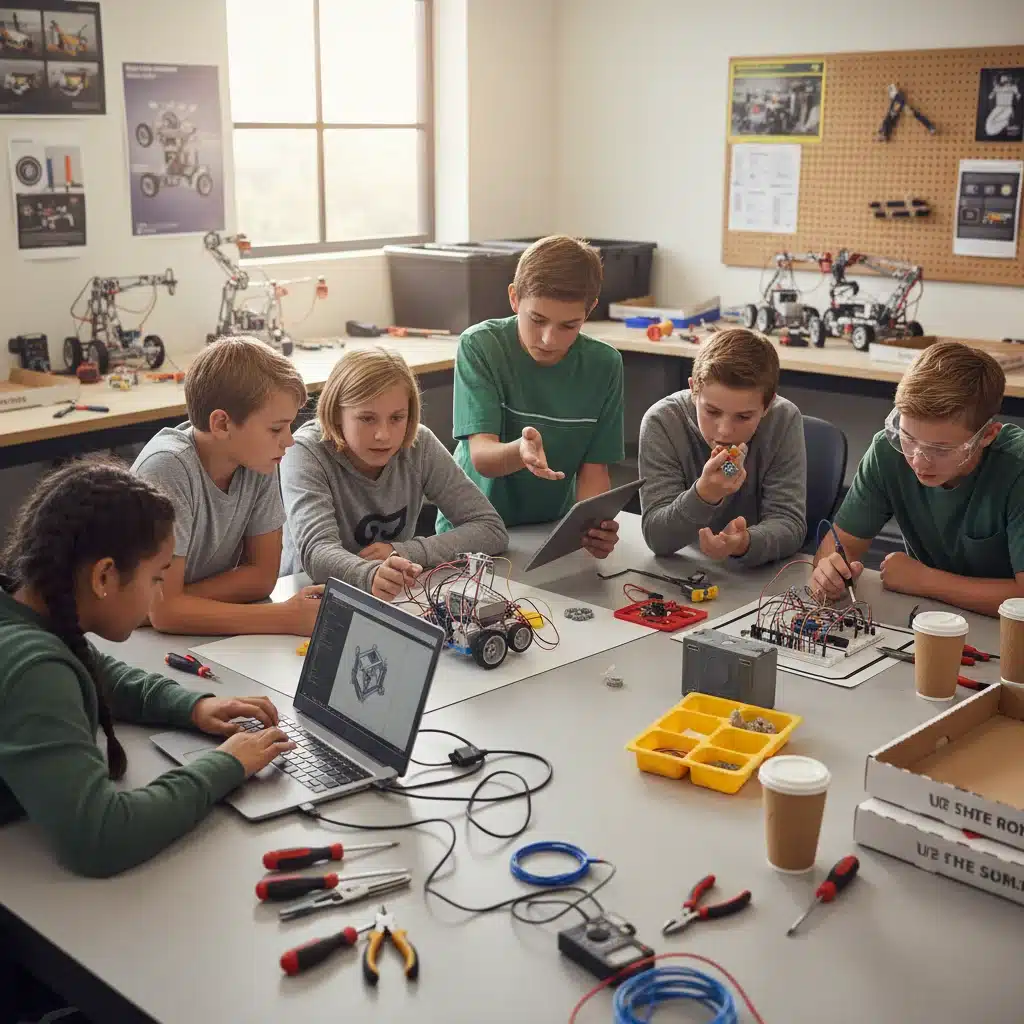
One of the most impactful innovative STEM programs gaining traction is a comprehensive Project-Based Learning (PBL) curriculum focused on Robotics and Artificial Intelligence (AI) Foundations. This program moves away from rote memorization, instead challenging students to design, build, and program robots to solve real-world problems. Students learn about mechanical engineering, electrical circuits, coding (often using visual programming languages for younger students and Python for older ones), and ethical considerations in AI development.
For the 2026-2027 school year, this program emphasizes a modular approach, allowing schools to tailor the curriculum to different age groups and resource levels. For instance, elementary students might build simple line-following robots, while high schoolers could engage in more complex challenges like developing AI algorithms for autonomous drones or smart home systems. The beauty of PBL is that it inherently teaches problem-solving, teamwork, and resilience. Students encounter setbacks, troubleshoot issues, and iterate on their designs, mirroring the engineering design process used by professionals.
Moreover, the integration of AI foundations introduces students to concepts like machine learning, data analysis, and ethical AI development from an early age. This prepares them for a future where AI will be ubiquitous, encouraging responsible innovation. Schools adopting this program often report significant increases in student engagement, improved critical thinking skills, and a greater interest in pursuing STEM careers.
2. Immersive Virtual and Augmented Reality (VR/AR) for Scientific Exploration
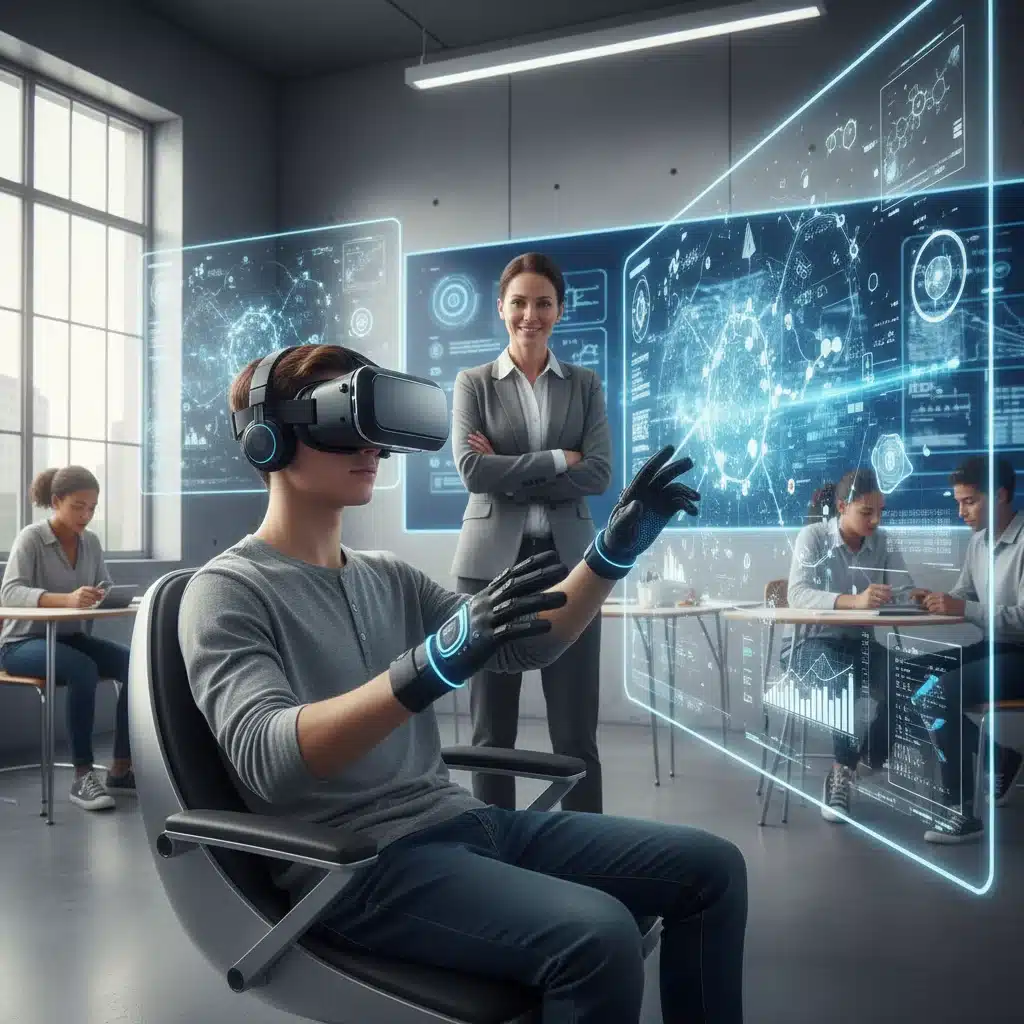
Imagine dissecting a virtual frog without harming an animal, exploring the human circulatory system from the inside, or walking on Mars to study its geology – all from the classroom. Immersive VR and AR platforms are among the most exciting innovative STEM programs poised for widespread adoption in 2026-2027. These technologies offer unparalleled opportunities for scientific exploration and visualization, making abstract concepts tangible and engaging.
Programs leveraging VR/AR can transport students to environments otherwise inaccessible, providing rich, interactive learning experiences. For biology, students can conduct virtual lab experiments, observe molecular structures in 3D, or simulate ecological systems. In physics, they can manipulate forces in a virtual gravity-free environment or visualize complex quantum phenomena. Mathematics can be brought to life through interactive geometry or data visualization in 3D space.
The benefits extend beyond mere novelty. Research suggests that VR/AR can improve retention rates, enhance spatial reasoning, and cater to diverse learning styles. These platforms often come with built-in assessment tools, allowing educators to track student progress and identify areas where additional support might be needed. As the cost of VR/AR hardware decreases and educational content expands, these immersive experiences are becoming a viable and powerful tool for enhancing STEM learning across all grade levels.
3. Environmental STEM (E-STEM) for Sustainable Futures
Addressing global challenges like climate change and resource depletion requires a new generation of environmentally conscious STEM professionals. E-STEM programs are an essential component of innovative STEM programs for the coming academic year, integrating environmental science with technology, engineering, and mathematics to tackle sustainability issues. These programs often involve hands-on fieldwork, data collection, and community-based projects.
Students might design and build miniature wind turbines, analyze local water quality, develop sustainable gardening systems, or use remote sensing data to monitor deforestation. The curriculum typically includes topics such as renewable energy, biodiversity conservation, waste management, and climate modeling. By connecting STEM concepts directly to environmental stewardship, E-STEM programs instill a sense of responsibility and empower students to become agents of positive change.
These programs frequently partner with local environmental organizations, universities, and government agencies, providing students with real-world exposure and mentorship opportunities. The interdisciplinary nature of E-STEM helps students see the interconnectedness of various scientific fields and understand how STEM skills can be applied to solve pressing societal problems. For the 2026-2027 academic year, expect to see an increased focus on data science applications within E-STEM, allowing students to analyze large environmental datasets and make data-driven decisions.
4. Cybersecurity & Digital Literacy Curriculum
In an increasingly digital world, cybersecurity and digital literacy are no longer niche topics but fundamental skills. The introduction of comprehensive Cybersecurity & Digital Literacy curricula as innovative STEM programs is paramount for the 2026-2027 academic year. These programs aim to educate students not only on how to use technology but also how to use it safely, ethically, and effectively.
Key components include understanding online privacy, identifying phishing scams, basic cryptography, network security fundamentals, and ethical hacking principles (in controlled educational environments). Students learn about the importance of strong passwords, secure online behavior, and the societal impact of cyber threats. For older students, the curriculum can delve into programming secure applications, incident response, and digital forensics.
These programs are often designed with a strong practical component, including simulated cyberattack scenarios and hands-on exercises in secure coding. The goal is to cultivate a generation of digitally responsible citizens and to inspire future cybersecurity professionals, a field with immense demand. Integrating this into the curriculum from an early age ensures that students develop a strong foundational understanding of digital safety and the critical role of cybersecurity in modern society.
5. Integrated Arts & STEM (STEAM) Initiatives
While STEM focuses on science, technology, engineering, and mathematics, many innovative STEM programs are now embracing the ‘A’ for Arts, transforming into STEAM initiatives. This integration recognizes that creativity, design thinking, and aesthetic appreciation are not separate from scientific inquiry but are integral to innovation. STEAM programs foster a more holistic approach to learning, encouraging students to think both analytically and creatively.
In a STEAM classroom, students might design and 3D print artistic sculptures using mathematical algorithms, create interactive digital art installations that respond to scientific data, or engineer musical instruments using principles of acoustics and materials science. The arts provide a powerful medium for expressing scientific concepts and for engaging students who might not initially see themselves as ‘STEM people.’
For the 2026-2027 academic year, expect to see more collaboration between art and science departments, with projects that blend coding with creative expression, robotics with performance art, or data visualization with graphic design. This interdisciplinary approach not only makes learning more engaging but also prepares students for careers that increasingly demand both technical proficiency and creative problem-solving skills.
6. Data Science & Analytics for K-12
In an age dominated by data, understanding how to collect, analyze, and interpret information is a crucial skill. Data Science & Analytics for K-12 is emerging as one of the most vital innovative STEM programs. This initiative introduces students to fundamental data science concepts, statistical reasoning, and computational thinking using age-appropriate tools and real-world datasets.
For younger students, this might involve collecting classroom data (e.g., favorite colors, pet types) and representing it with simple graphs. For middle schoolers, it could mean analyzing public datasets related to weather patterns or sports statistics using spreadsheets. High school students can delve into more complex topics like predictive modeling, machine learning algorithms, and data visualization using programming languages like Python or R.
The program emphasizes not just the technical aspects but also the ethical considerations of data, such as privacy, bias, and responsible data use. By fostering data literacy from an early age, schools can empower students to make informed decisions, critically evaluate information, and prepare for a future where data analysis skills are highly valued across all sectors.
7. Community-Based STEM Mentorship & Internship Pathways
Beyond classroom instruction, real-world exposure and mentorship are critical for inspiring and sustaining interest in STEM. Community-Based STEM Mentorship & Internship Pathways are among the most impactful innovative STEM programs for the 2026-2027 academic year. These programs connect students with STEM professionals, local businesses, universities, and research institutions, providing invaluable insights into potential career paths.
Mentorship programs pair students with STEM professionals who can offer guidance, share their experiences, and help students navigate their academic and career choices. Internships, even short-term ones, provide hands-on experience in real-world settings, allowing students to apply their classroom knowledge to practical problems. This could involve working in a lab, assisting engineers on a project, shadowing a software developer, or contributing to a local conservation effort.
These pathways are particularly effective in reaching students from underrepresented communities, offering them access to networks and opportunities they might not otherwise encounter. The programs often include workshops on resume building, interview skills, and professional networking, equipping students with essential soft skills alongside their technical knowledge. By fostering these connections, schools are not just teaching STEM; they are building bridges to future careers and empowering students to envision themselves as part of the STEM workforce.
Implementing Innovative STEM Programs in Your School
Adopting innovative STEM programs requires careful planning and commitment. School administrators, educators, and community stakeholders must collaborate to ensure successful integration. Here are some key considerations for implementing these programs effectively:
- Professional Development: Teachers need adequate training to effectively deliver new STEM curricula and utilize advanced technologies. Investing in ongoing professional development is crucial.
- Resource Allocation: Implementing programs involving robotics, VR/AR, or specialized software requires appropriate funding for equipment, software licenses, and maintenance.
- Curriculum Integration: Look for opportunities to integrate STEM concepts across different subjects, fostering an interdisciplinary approach to learning.
- Community Partnerships: Forge strong relationships with local industries, universities, and non-profits to create mentorship, internship, and project-based learning opportunities.
- Equity and Access: Ensure that these innovative programs are accessible to all students, regardless of their socioeconomic background, gender, or ethnicity. Address potential barriers to participation.
- Assessment and Evaluation: Regularly assess the effectiveness of the programs in terms of student engagement, learning outcomes, and skill development. Use data to make informed adjustments.
- Flexibility and Adaptability: The field of STEM is constantly changing. Programs should be designed with enough flexibility to incorporate new technologies and research findings as they emerge.
By focusing on these aspects, schools can create a robust and dynamic STEM learning environment that truly prepares students for the future. The goal is not just to teach facts but to instill a lifelong passion for inquiry, innovation, and problem-solving.
The Future of STEM Education: A Collaborative Effort
The seven innovative STEM programs outlined above represent a significant step forward in preparing US students for the challenges and opportunities of the 21st century. From hands-on robotics and immersive virtual realities to crucial digital literacy and real-world mentorship, these initiatives are designed to make STEM learning more relevant, engaging, and accessible than ever before. For the 2026-2027 academic year, the emphasis will be on creating learning environments that foster creativity, critical thinking, collaboration, and communication – the essential skills for future success.
However, the success of these programs hinges on a collaborative effort. It requires dedication from educators, visionary leadership from school administrators, sustained investment from policymakers, and active engagement from parents and the wider community. By working together, we can ensure that every student has the opportunity to explore the wonders of science, technology, engineering, and mathematics, unlocking their full potential and contributing to a brighter, more innovative future for all.
Embracing these innovative STEM programs is not merely an educational upgrade; it is an investment in the intellectual capital and economic future of the nation. As these programs take root and flourish, we can anticipate a significant shift in how students perceive and engage with STEM fields, leading to a more skilled, innovative, and resilient workforce.