US Energy Policy Shifts: How New Regulations Will Affect Household Utility Costs by 2027
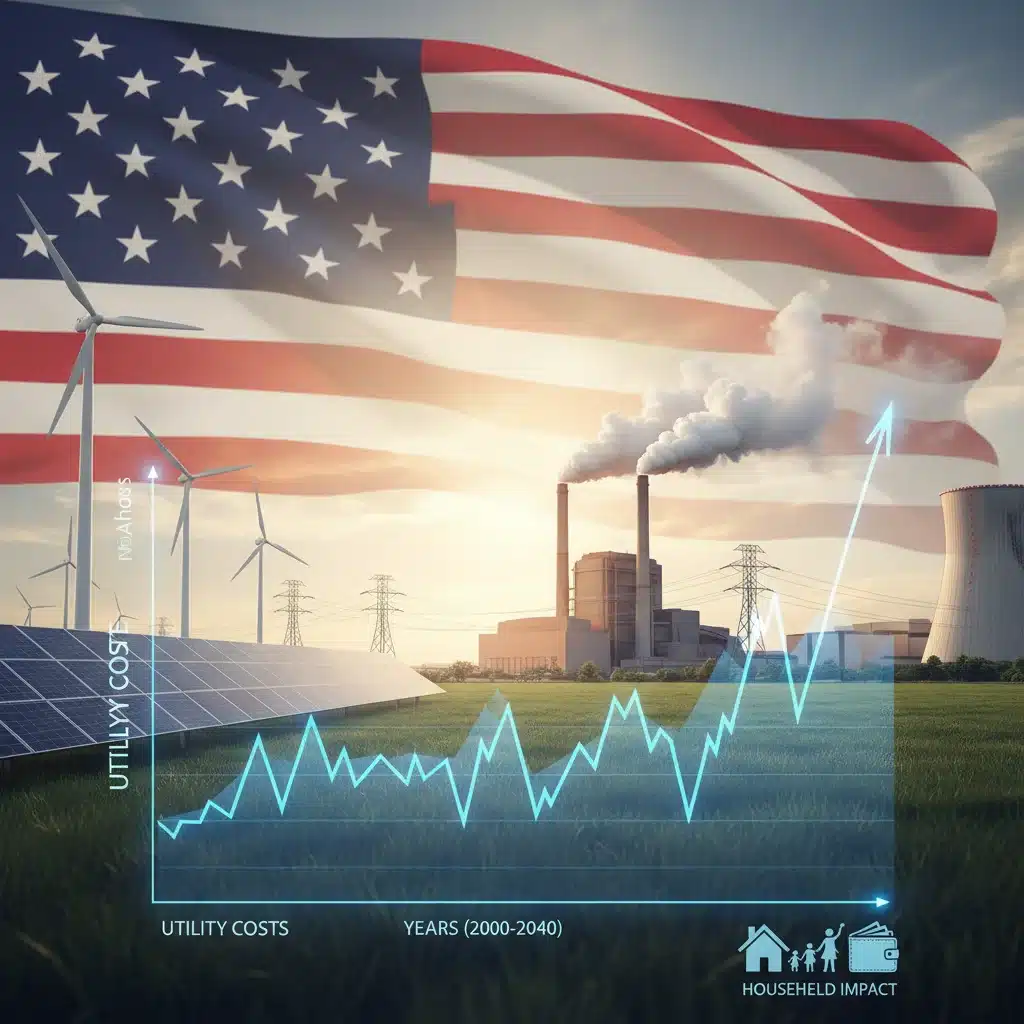
US Energy Policy Shifts: How New Regulations Will Affect Household Utility Costs by 2027
The landscape of energy production and consumption in the United States is in a constant state of flux, driven by technological advancements, environmental concerns, and geopolitical factors. For the average American household, these changes often translate directly into the monthly utility bill. As we look towards 2027, significant US energy policy shifts and new regulations are poised to reshape how we power our homes and, crucially, what we pay for that power. Understanding these impending changes is not just an academic exercise; it’s a vital step in preparing for the financial realities of the near future.
The federal government, alongside state and local authorities, is increasingly focused on transitioning towards a cleaner energy economy, enhancing grid resilience, and promoting energy efficiency. While the long-term benefits of these initiatives—such as reduced carbon emissions and greater energy independence—are widely acknowledged, the short-to-medium term impacts on household utility costs can be complex and varied. This comprehensive guide will delve into the specific regulatory shifts, analyze their potential ripple effects on electricity, natural gas, and other utility expenses, and offer strategies for consumers to navigate this evolving energy environment.
From carbon pricing mechanisms to incentives for renewable energy adoption and stricter efficiency standards for appliances, the regulatory framework is undergoing a profound transformation. These policies, while aiming for a more sustainable future, often come with upfront costs that can be passed on to consumers. However, they also present opportunities for savings through increased efficiency and participation in new energy programs. By 2027, the cumulative effect of these US energy policy decisions will be tangible in every household budget.
Understanding the Current US Energy Policy Landscape
Before we project forward, it’s essential to grasp the foundational elements of current US energy policy. The United States operates under a complex web of federal, state, and local regulations that govern everything from power generation and transmission to energy consumption and environmental standards. Key federal agencies such as the Department of Energy (DOE), the Environmental Protection Agency (EPA), and the Federal Energy Regulatory Commission (FERC) play crucial roles in shaping this landscape.
Historically, US energy policy has balanced economic growth, national security, and environmental protection. The emphasis, however, has shifted significantly over the past two decades. There’s been a growing bipartisan (though sometimes contentious) recognition of climate change and the need to reduce greenhouse gas emissions. This has led to policies promoting renewable energy, energy efficiency, and, in some cases, a gradual phasing out of fossil fuels.
State-level policies often complement or even lead federal initiatives. Many states have Renewable Portfolio Standards (RPS) mandating a certain percentage of electricity come from renewable sources, while others have implemented carbon cap-and-trade programs or aggressive energy efficiency targets. These diverse approaches create a patchwork of regulations that can result in varying utility costs across different regions of the country.
The existing infrastructure, largely built around fossil fuels, also plays a significant role. The transition to a greener grid requires substantial investment in new generation capacity, transmission lines, and energy storage solutions. These investments, often borne by utility companies, are eventually recovered through customer rates. Therefore, understanding the current policy framework and infrastructure is the bedrock upon which we can analyze future impacts.
Key Regulatory Shifts Expected by 2027
Several significant US energy policy shifts and regulatory changes are either already underway or are anticipated to take full effect by 2027. These changes will be the primary drivers of alterations in household utility costs.
1. Increased Emphasis on Renewable Energy Mandates and Incentives
The push for renewable energy sources like solar, wind, and hydropower is accelerating. Many states are strengthening their RPS targets, and federal incentives, such as tax credits for renewable energy projects, are likely to continue or even expand. While the long-term cost of generating electricity from renewables is often lower than fossil fuels, the initial investment in infrastructure and grid modernization can be substantial. These costs may be passed on to consumers in the form of higher rates or surcharges to fund the transition.
2. Carbon Pricing Mechanisms and Emissions Regulations
While a nationwide carbon tax remains politically challenging, various forms of carbon pricing or stricter emissions regulations are likely to gain traction. This could include expansion of cap-and-trade programs in more states, or federal regulations limiting emissions from power plants. When the cost of emitting carbon increases, power generators using fossil fuels will either invest in carbon capture technologies (which are expensive) or pass on the increased operational costs to consumers. This will likely make electricity generated from fossil fuels more expensive, thereby making renewables more competitive.
3. Enhanced Energy Efficiency Standards
The Department of Energy regularly updates energy efficiency standards for appliances, buildings, and industrial equipment. By 2027, we can expect stricter standards for everything from refrigerators and washing machines to heating and cooling systems. While these standards lead to more energy-efficient products that save consumers money over their lifespan, they can also increase the upfront purchase price of these items. However, the long-term savings on utility bills typically outweigh the initial cost.
4. Grid Modernization and Resilience Investments
Extreme weather events and cyber threats have highlighted the vulnerability of the nation’s aging energy grid. Significant federal funding and utility investments are being directed towards modernizing the grid, incorporating smart technologies, and enhancing its resilience. This includes upgrades to transmission lines, deployment of smart meters, and integration of distributed energy resources. These investments are crucial for a reliable energy supply but will inevitably contribute to higher utility rates as costs are amortized over the customer base.
5. Electrification Initiatives
There’s a growing movement towards electrifying sectors traditionally reliant on fossil fuels, such as transportation and building heating. Federal and state incentives for electric vehicles (EVs) and heat pumps are becoming more common. As more households adopt these technologies, overall electricity demand will increase. While this can lead to economies of scale in electricity generation, it also requires significant upgrades to local distribution grids, which could impact rates. Consumers adopting these technologies will see changes in their overall energy spending, shifting from gasoline or natural gas to electricity.
Impact on Household Utility Costs by 2027
The confluence of these regulatory shifts will manifest in various ways on household utility bills. It’s not a simple case of ‘up’ or ‘down’; rather, it’s a dynamic interplay of factors.
Electricity Costs: The Most Affected
Electricity bills are likely to see the most direct impact. The transition to renewables and grid modernization efforts involve significant capital expenditures. While renewable energy sources have lower operating costs once built, the initial build-out and integration into the grid are expensive. These costs will likely be recovered through higher electricity rates, at least in the short to medium term. Additionally, carbon pricing mechanisms will directly increase the cost of electricity generated from fossil fuels, which still make up a substantial portion of the US energy mix.
However, increased energy efficiency standards for appliances and homes will partially offset these increases for proactive consumers. Homes with newer, more efficient appliances and better insulation will consume less electricity, thereby mitigating the impact of higher per-unit costs. The rise of time-of-use (TOU) rates, where electricity is more expensive during peak demand hours, will also become more prevalent, encouraging consumers to shift their energy use to off-peak times to save money.
Natural Gas Costs: Volatility and Transition
Natural gas has been a relatively inexpensive and abundant energy source in the US, used for heating, cooking, and electricity generation. However, future US energy policy aims to reduce reliance on fossil fuels. Stricter regulations on methane emissions from natural gas production and transport could increase the cost of natural gas. Furthermore, electrification initiatives that encourage the switch from natural gas furnaces to electric heat pumps will reduce demand for natural gas in some areas, potentially leading to higher per-unit costs for remaining customers as fixed infrastructure costs are spread over a smaller base.
That being said, natural gas markets are also heavily influenced by global supply and demand dynamics, which can introduce significant volatility independent of domestic policy. Consumers primarily using natural gas for heating might see more stable costs than electricity, but the long-term trend points towards gradual decarbonization and potential cost increases related to environmental compliance.
Other Utility Costs: Water and Waste
While direct US energy policy primarily targets electricity and natural gas, there can be indirect effects on other utilities. For instance, the energy required to treat and pump water can be substantial. If electricity costs rise, so too might the operational costs for water utilities, which could be passed on to consumers. Similarly, waste management facilities often consume significant energy, and higher energy prices could lead to increased waste collection and processing fees.
However, these indirect impacts are generally less pronounced than the direct effects on electricity and natural gas. The primary focus of energy policy remains on the generation and consumption of energy itself.

Regional Variations and Disparities
It’s crucial to recognize that the impact of US energy policy shifts will not be uniform across the country. Different states and regions have varying energy mixes, regulatory frameworks, and economic conditions, leading to significant disparities in how these changes affect household utility costs.
- States with High Renewable Penetration: Regions that have already heavily invested in renewable energy (e.g., California, Texas, Iowa for wind, Northeast for hydro) might see a more stable transition, as much of the initial investment is already absorbed. However, continued grid upgrades to handle higher renewable integration could still lead to rate increases.
- States Heavily Reliant on Fossil Fuels: States with a high reliance on coal and natural gas for electricity generation may experience more significant rate increases as they face greater pressure to comply with emissions regulations and transition to cleaner sources. The cost of retiring old power plants and building new infrastructure will be substantial.
- Regulated vs. Deregulated Markets: In regulated markets, utility companies are monopolies, and rate changes are approved by state public utility commissions. In deregulated markets, consumers can often choose their electricity supplier, which can offer more competitive pricing but also expose them to market volatility. Policy changes will affect both, but the mechanisms of cost pass-through will differ.
- Weather Patterns and Climate Zones: Regions with extreme weather (very hot summers or cold winters) have higher energy demands for heating and cooling. Policy-driven price increases will have a magnified effect on these households, making energy efficiency upgrades even more critical.
Understanding your local energy market and the specific policies in your state is paramount to accurately predicting and preparing for changes in your utility costs.
Strategies for Households to Mitigate Rising Utility Costs
While some increases in utility costs may be unavoidable due to broader US energy policy objectives, households are not powerless. Several strategies can help mitigate these impacts and even lead to long-term savings.
1. Embrace Energy Efficiency
This is arguably the most impactful strategy. Investing in energy-efficient upgrades can significantly reduce consumption, thereby lowering your bill even if per-unit energy costs rise. This includes:
- Home Insulation and Air Sealing: Proper insulation in attics, walls, and floors, along with sealing air leaks around windows and doors, can drastically reduce heating and cooling loads.
- HVAC System Upgrades: Replacing old furnaces and air conditioners with high-efficiency models or heat pumps can lead to substantial savings. Regular maintenance of existing systems also improves efficiency.
- Energy-Efficient Appliances: When purchasing new appliances, look for ENERGY STAR® certified products. While they may have a higher upfront cost, their lower operating expenses can save money over their lifespan.
- LED Lighting: Switching from incandescent or CFL bulbs to LEDs can reduce lighting energy consumption by 75-90%.
- Smart Thermostats: These devices learn your preferences and can be programmed to optimize heating and cooling schedules, often controlled remotely.
2. Explore Renewable Energy Options
For some households, investing in on-site renewable energy can be a game-changer:
- Rooftop Solar: Installing solar panels can significantly reduce or even eliminate your electricity bill. Federal tax credits (like the Investment Tax Credit) and state incentives can make solar more affordable. Net metering policies, where you get credit for excess electricity fed back to the grid, are also crucial.
- Community Solar: If rooftop solar isn’t feasible, community solar programs allow you to subscribe to a share of a local solar farm and receive credits on your electricity bill.
3. Understand and Adapt to Time-of-Use Rates
As TOU rates become more common, understanding when electricity is most expensive (peak hours) and adjusting your consumption habits accordingly can lead to savings. This might involve running dishwashers and laundry machines during off-peak hours or pre-cooling your home before peak times.
4. Monitor Energy Consumption
Many utility providers offer tools and smart meters that allow you to track your energy consumption in real-time. Regularly monitoring your usage can help identify energy vampires (appliance that draw power even when off) and inefficient habits.
5. Advocate and Engage
Stay informed about proposed US energy policy changes and utility rate cases in your area. Participate in public hearings, contact your elected officials, or join local advocacy groups to voice your concerns and support for policies that benefit consumers and promote sustainable, affordable energy.
The Role of Technology and Innovation
Technology will play a pivotal role in shaping both the challenges and solutions related to future utility costs. Innovations in grid management, energy storage, and smart home devices will influence how households interact with the energy system and manage their consumption.
Smart Grids and Distributed Energy Resources
The modernization of the grid into a ‘smart grid’ will enable two-way communication between utilities and consumers, facilitating more efficient energy distribution and management. This will support the integration of distributed energy resources (DERs) such as rooftop solar, battery storage, and electric vehicles. Households with DERs could become active participants in the energy market, potentially selling excess power back to the grid or using stored energy during peak times, thereby reducing their reliance on grid power and lowering bills.
Advanced Energy Storage Solutions
Battery storage technology, particularly for homes, is becoming more affordable and efficient. Pairing solar panels with battery storage allows households to store excess solar energy generated during the day and use it at night or during power outages, further enhancing energy independence and resilience. As storage costs continue to decline, this option will become more viable for a wider range of consumers.
Artificial Intelligence and Machine Learning in Energy Management
AI and machine learning are being deployed to optimize energy consumption in homes and buildings. Smart thermostats powered by AI can learn occupant preferences and predict energy needs, automatically adjusting settings for maximum efficiency. AI can also help utilities forecast demand more accurately, leading to more efficient power generation and potentially lower costs for consumers.
Potential Challenges and Considerations
While the long-term vision of a cleaner, more resilient energy system is positive, the transition phase will not be without its challenges. These include:
- Equity and Affordability: A key concern is ensuring that the costs of the energy transition do not disproportionately burden low-income households. Policy makers must design programs that provide assistance and equitable access to energy efficiency and renewable energy technologies for all segments of the population.
- Pace of Infrastructure Development: The scale of infrastructure upgrades required for grid modernization and renewable energy integration is immense. Delays in permitting, construction, and technological deployment could lead to bottlenecks and higher costs.
- Technological Learning Curves: While renewable energy costs have fallen dramatically, new technologies still have learning curves. The initial deployment of cutting-edge solutions might be more expensive before economies of scale are achieved.
- Political Will and Consistency: Energy policy can be subject to significant shifts with changes in political leadership. Inconsistent policies can create uncertainty for investors and utilities, potentially slowing the transition and increasing costs.
Addressing these challenges requires careful planning, robust investment, and a commitment to equitable outcomes from policymakers, utilities, and consumers alike.
Conclusion: Navigating the Energy Future
The period leading up to 2027 will be a transformative one for US energy policy and, by extension, for household utility costs. The shift towards cleaner energy, enhanced grid resilience, and greater energy efficiency is inevitable and necessary. While these changes promise a more sustainable and secure energy future, they will also introduce new cost structures for consumers.
Households that proactively embrace energy efficiency, explore renewable energy options, and adapt to evolving rate structures will be best positioned to mitigate potential increases in their utility bills. Staying informed about local and federal energy policies, understanding your consumption patterns, and leveraging available technologies will be key to navigating this evolving landscape successfully.
Ultimately, the goal of these US energy policy shifts is to create an energy system that is not only clean and reliable but also affordable in the long run. The journey to 2027 will be a critical phase in this transition, and by understanding the forces at play, consumers can empower themselves to make informed decisions that benefit both their wallets and the planet.