US Healthcare Policy: Access, Costs & Future Debates

The landscape of US healthcare policy is a complex, ever-evolving tapestry woven with threads of economic, social, and ethical considerations. It is a system constantly under scrutiny, debated fiercely by politicians, policymakers, healthcare professionals, and citizens alike. At its core, the discussions invariably revolve around three pivotal pillars: access, cost, and quality. Understanding the current state of US healthcare policy requires a deep dive into these intertwined elements and the ongoing debates that shape their future.
For decades, the United States has grappled with the challenge of providing universal, affordable, and high-quality healthcare to its populace. Unlike many other developed nations that have adopted single-payer or universal healthcare systems, the US operates a hybrid model, heavily reliant on private insurance, employer-sponsored plans, and a patchwork of government programs like Medicare and Medicaid. This unique structure, while offering innovation and choice to some, simultaneously creates significant disparities and challenges for others. The intricacies of US healthcare policy are not merely academic; they profoundly impact the daily lives, financial stability, and well-being of millions of Americans.
The Patient Protection and Affordable Care Act (ACA), enacted in 2010, stands as the most significant reform to US healthcare policy in recent history. While it aimed to expand coverage and improve affordability, its implementation has been met with both praise and fierce opposition, leading to a decade of legal challenges, legislative attempts at repeal, and ongoing adjustments. The ACA’s impact on insurance markets, individual mandates, and state-level Medicaid expansion continues to be a central theme in discussions about the future direction of healthcare in the nation. Its legacy and future are inextricably linked to the broader trajectory of US healthcare policy.
The Perennial Challenge of Healthcare Access
Access to healthcare is arguably the most fundamental aspect of US healthcare policy and a persistent point of contention. Despite significant gains in insurance coverage under the ACA, millions of Americans remain uninsured or underinsured. This lack of adequate coverage often translates to delayed or foregone medical care, leading to worse health outcomes and increased financial strain when care is eventually sought. The reasons for limited access are multifaceted, ranging from high premiums and deductibles to geographical barriers, particularly in rural areas where healthcare facilities and specialists are scarce.
The debate around access often pits advocates for universal healthcare against those who champion market-based solutions. Proponents of universal systems, such as ‘Medicare for All,’ argue that healthcare is a human right and should not be tied to employment or socioeconomic status. They point to the administrative complexities and inefficiencies of the current multi-payer system as drivers of higher costs and unequal access. Conversely, those who favor market-based approaches emphasize individual choice, competition among providers, and the belief that private insurance markets can deliver more efficient and innovative care. They often raise concerns about government bureaucracy, potential rationing of care, and increased taxes associated with universal systems.
Furthermore, disparities in access are not solely about insurance coverage. Social determinants of health, such as income, education, race, ethnicity, and housing stability, play a crucial role. Communities of color and low-income populations disproportionately face barriers to accessing quality care, experiencing higher rates of chronic diseases and poorer health outcomes. Addressing these systemic inequities is a critical, yet often overlooked, component of any comprehensive US healthcare policy reform. Initiatives aimed at improving community health centers, expanding telehealth services, and diversifying the healthcare workforce are all part of the ongoing effort to broaden access and ensure equitable care for all Americans. The discussion about healthcare access is central to shaping the future of US healthcare policy.
The Escalating Burden of Healthcare Costs
The United States spends significantly more on healthcare per capita than any other developed nation, yet it often lags in key health outcomes. This paradox highlights the critical issue of healthcare costs, a dominant feature of US healthcare policy debates. High costs impact individuals, employers, and government budgets, leading to medical debt, wage stagnation, and difficult choices about public spending. Understanding the drivers of these exorbitant costs is essential for formulating effective policy solutions.
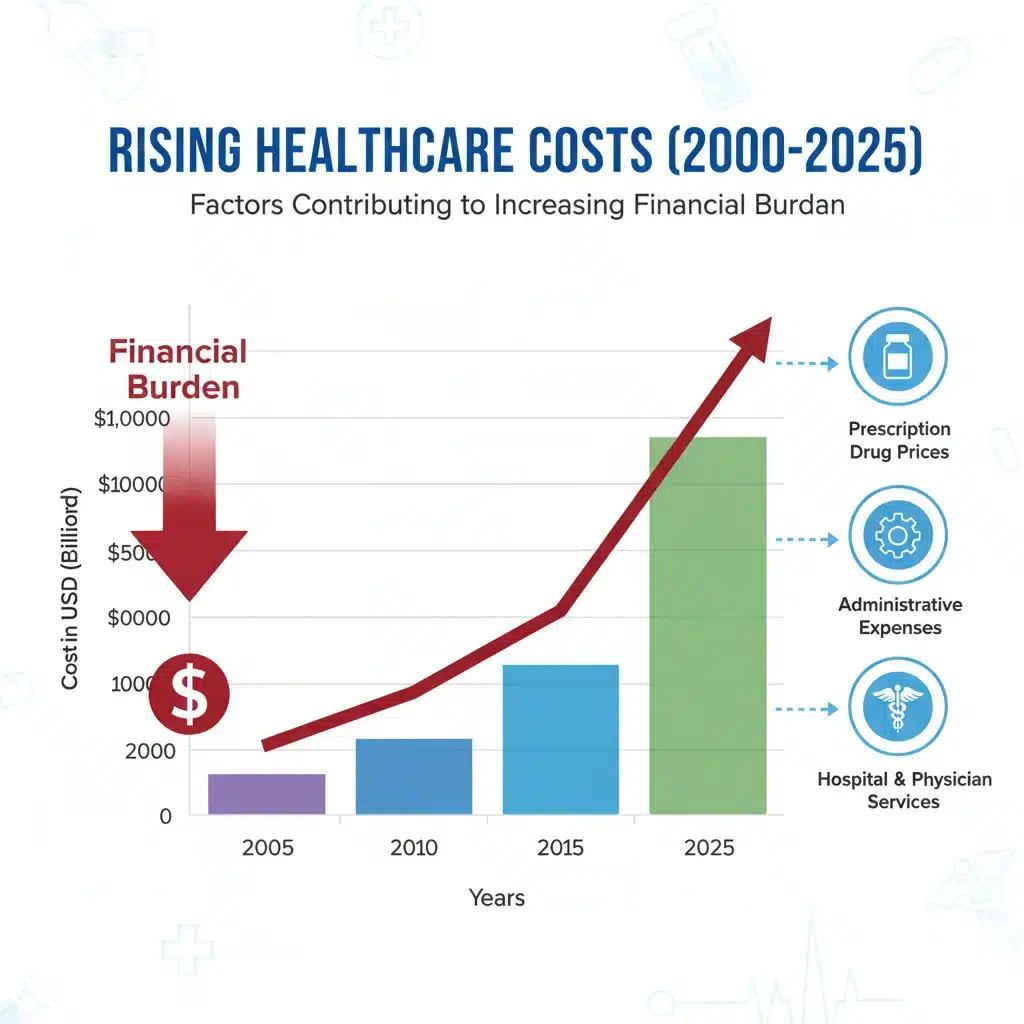
Several factors contribute to the high cost of healthcare in the US. These include the price of prescription drugs, which are often significantly higher than in other countries due to a lack of robust price negotiation; administrative overhead, stemming from the complex billing and coding requirements of a multi-payer system; the high cost of medical technology and specialized procedures; and the fee-for-service model, which can incentivize volume over value in care delivery. Defensive medicine, where providers order additional tests and procedures to avoid potential malpractice lawsuits, also adds to the financial burden. The sheer complexity of these factors makes comprehensive cost containment a monumental challenge within US healthcare policy.
Policy proposals to address costs are varied and often contentious. Some advocate for greater price transparency, allowing consumers to compare costs for services and medications. Others call for stronger government negotiation powers for prescription drug prices, similar to practices in other countries. Value-based care models, which tie reimbursement to patient outcomes rather than the volume of services, are gaining traction as a way to incentivize more efficient and effective care. Additionally, discussions around reducing administrative waste, promoting preventive care to lessen the burden of chronic diseases, and reforming medical malpractice laws are all part of the broader effort to rein in healthcare spending. The cost crisis is not just an economic issue; it’s a humanitarian one, forcing many families into difficult financial situations or delaying necessary care. Any meaningful advancement in US healthcare policy must confront this head-on.

Ensuring Quality and Patient Outcomes
While access and cost dominate much of the public discourse, the quality of care and patient outcomes are equally critical components of US healthcare policy. Quality encompasses everything from patient safety and effectiveness of treatments to patient-centered care and timely access to services. Despite its high spending, the US sometimes struggles with preventable medical errors, disparities in care quality, and suboptimal outcomes for certain conditions compared to peer nations. The focus on quality is not just about avoiding harm; it’s about optimizing health and well-being for every individual.
Measuring and improving healthcare quality is a complex endeavor. It involves collecting and analyzing vast amounts of data on patient safety events, treatment effectiveness, readmission rates, and patient satisfaction. Initiatives like electronic health records (EHRs) are designed to improve data sharing and coordination of care, though their implementation has also presented challenges related to interoperability and physician burnout. Quality improvement efforts often involve setting national standards, promoting best practices, and implementing performance-based incentives for healthcare providers and organizations. The goal is to shift from a system that primarily treats illness to one that actively promotes health and prevents disease.
Addressing health disparities is also central to improving overall quality. When certain populations consistently receive lower quality care or experience worse outcomes, it undermines the entire system. Policy interventions in this area include targeted programs to improve care in underserved communities, cultural competency training for healthcare professionals, and efforts to diversify the healthcare workforce. The integration of mental health services with primary care, a growing area of focus, is another example of how US healthcare policy is evolving to provide more holistic and patient-centered care. Ultimately, a high-quality healthcare system is one that is safe, effective, patient-centered, timely, efficient, and equitable, and these are the benchmarks against which current and future US healthcare policy must be measured.
The Role of Technology and Innovation
Technology and innovation are rapidly transforming the healthcare landscape, presenting both opportunities and challenges for US healthcare policy. From artificial intelligence (AI) in diagnostics to telehealth platforms and personalized medicine, technological advancements have the potential to enhance efficiency, improve outcomes, and expand access to care. However, they also raise questions about data privacy, equitable access to new technologies, and the ethical implications of advanced medical interventions. Integrating these innovations thoughtfully into the existing framework is a critical task for policymakers.
Telehealth, in particular, saw an explosive growth during the COVID-19 pandemic, proving its value in providing remote consultations, monitoring chronic conditions, and improving access for individuals in rural areas or those with mobility issues. Policy changes were rapidly enacted to expand reimbursement for telehealth services, and discussions are ongoing about making these changes permanent. However, challenges remain, such as ensuring broadband access for all populations, establishing consistent licensing requirements across state lines, and addressing concerns about digital literacy among certain patient groups. The successful integration of telehealth into routine care will significantly shape future US healthcare policy.
Beyond telehealth, AI and machine learning are poised to revolutionize diagnostics, drug discovery, and personalized treatment plans. Wearable devices and remote monitoring technologies empower patients to take a more active role in managing their health. However, these innovations come with a steep price tag, raising concerns about exacerbating existing health disparities if access is limited to the affluent. Policymakers must grapple with how to foster innovation while simultaneously ensuring that these advancements benefit all Americans, rather than just a select few. The regulatory environment for new medical technologies, data security protocols, and ethical guidelines for AI in healthcare are all areas where US healthcare policy needs robust development.
Political Polarization and the Path Forward
The debates surrounding US healthcare policy are often deeply intertwined with political ideology, leading to significant polarization and making comprehensive reform difficult. The divide between those advocating for more government involvement and those championing market-based solutions is wide, and finding common ground often proves elusive. This political gridlock can stall progress, leaving critical issues unresolved and perpetuating the challenges of access, cost, and quality.
Despite the divisions, there are areas where bipartisan consensus might be forged. For instance, initiatives to lower prescription drug costs, improve price transparency, and address the opioid crisis often garner support from across the political spectrum. Focusing on preventive care, public health infrastructure, and addressing social determinants of health are also areas that could see broader agreement. The challenge lies in moving beyond ideological purity tests and focusing on pragmatic solutions that can achieve tangible improvements for the American people. Any sustainable path forward for US healthcare policy will require a willingness to compromise and prioritize patient needs over partisan interests.
The future of US healthcare policy will likely involve a continued evolution rather than a revolutionary overhaul. Incremental changes, state-level innovations, and targeted federal programs will probably continue to shape the system. As the population ages, chronic diseases become more prevalent, and new technologies emerge, the need for adaptable and effective policies will only grow. Engaging stakeholders from all sectors – patients, providers, insurers, employers, and government – in constructive dialogue will be paramount. Ultimately, the goal remains the same: to create a healthcare system that is accessible, affordable, and delivers high-quality care to every American, a goal that continues to drive the ongoing evolution of US healthcare policy.
Conclusion: Navigating the Future of US Healthcare Policy
The current state of US healthcare policy is a dynamic and multifaceted challenge, characterized by persistent debates over access, cost, and quality. While significant strides have been made, particularly with the expansion of coverage under the ACA, fundamental issues remain. Millions still struggle to afford or access necessary care, costs continue to escalate at an unsustainable rate, and disparities in care quality persist across different populations. The integration of new technologies offers promising avenues for improvement, but also introduces new complexities that demand careful policy consideration.
Moving forward, the evolution of US healthcare policy will require a delicate balance of innovation, regulation, and a commitment to equity. Addressing the root causes of high costs, expanding access to underserved communities, and leveraging technology responsibly will be crucial. Policymakers must also navigate the political divides to find common ground on issues that directly impact the health and financial well-being of every American. The ongoing dialogue and continuous efforts to refine and improve the system are not just about legislation; they are about fostering a healthier, more resilient nation.
The journey towards an ideal US healthcare policy is far from over. It is a continuous process of learning, adapting, and striving for a system that truly serves all its citizens. As new challenges arise and new opportunities emerge, the commitment to thoughtful, evidence-based policymaking will be more important than ever. The future of healthcare in the US depends on a collective will to overcome obstacles and build a system that reflects the values of compassion, fairness, and health for all.