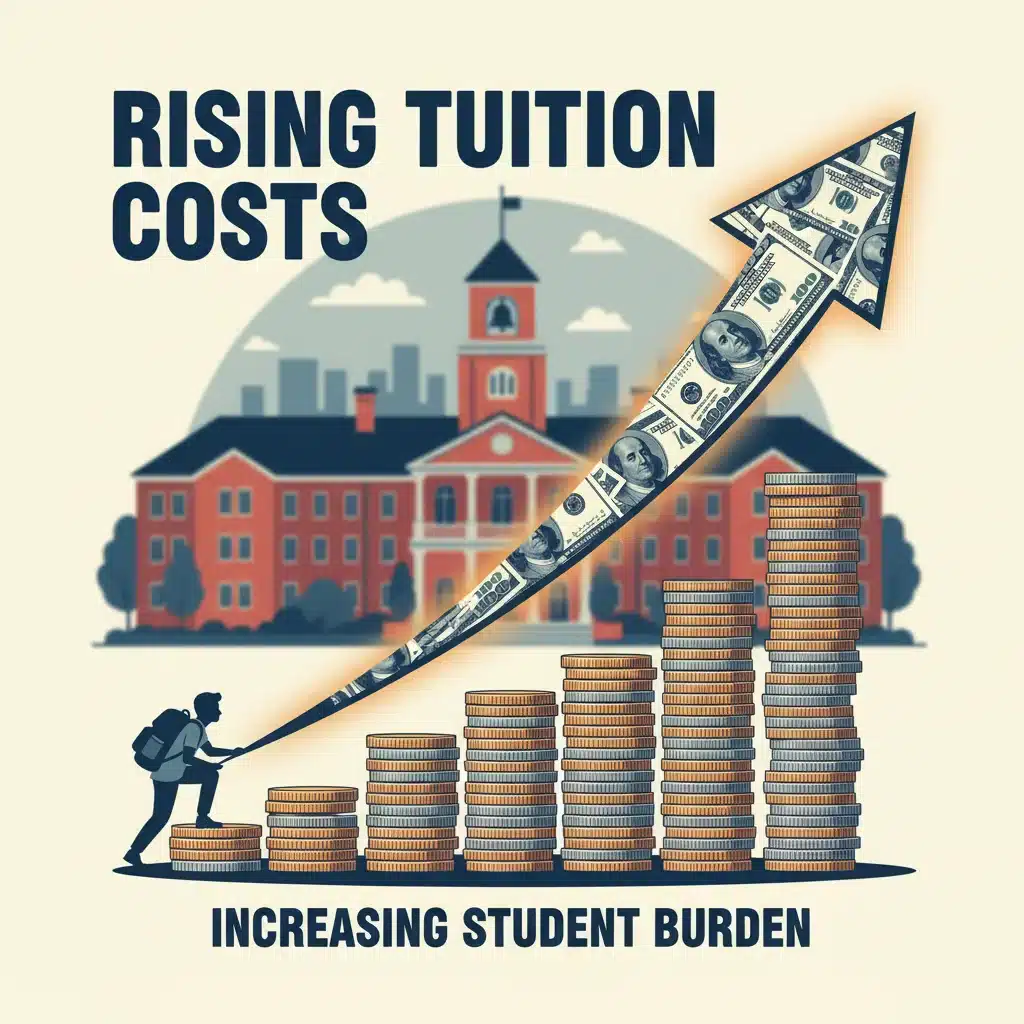
In a groundbreaking and deeply concerning revelation, the Department of Education has released its much-anticipated 2026 report on college affordability, painting a stark picture of the escalating costs of higher education. The report, which offers a comprehensive analysis of tuition trends, student debt, and economic impacts, highlights an alarming 12% college tuition increase across institutions nationwide. This significant jump signifies a critical juncture for prospective students, current enrollees, and policymakers alike, demanding immediate attention and robust solutions to avert a full-blown crisis in educational access.
Anúncios
The findings of the 2026 report are not merely statistics; they represent a growing barrier to opportunity for millions of Americans. For decades, a college degree has been viewed as a gateway to upward mobility and economic stability. However, with the relentless rise in the cost of attendance, particularly this staggering 12% college tuition increase, that gateway is becoming increasingly narrow for many. This article delves into the core aspects of the report, exploring the factors contributing to this trend, its profound implications for students and the economy, and potential pathways forward.
Understanding the 12% College Tuition Increase: What the 2026 Report Reveals
The Department of Education’s 2026 report, titled ‘The State of College Affordability: Trends and Projections,’ meticulously details the financial landscape of higher education. The 12% college tuition increase is an average figure, encompassing both public and private institutions, though the report notes variations. Private universities, traditionally more expensive, saw an average increase of 14%, while public four-year institutions experienced an 11% hike. Community colleges, often seen as a more affordable alternative, also registered a notable 8% increase.
Several factors are cited as primary drivers behind this substantial college tuition increase. Administrative costs continue to climb, fueled by an expansion of non-faculty staff, increased regulatory compliance, and investments in student support services – though the efficacy of these investments in offsetting tuition hikes is a subject of ongoing debate. Furthermore, the report points to a decrease in state funding for public universities per student, forcing institutions to rely more heavily on tuition fees to cover operational expenses. This divestment by states places an undue burden on students and their families, directly contributing to the pronounced college tuition increase.
Anúncios
Another significant factor is the escalating demand for advanced technology and infrastructure. Modern education requires cutting-edge laboratories, robust digital learning platforms, and sophisticated cybersecurity measures, all of which come with substantial price tags. While these investments are crucial for providing a competitive education, the method of funding them predominantly through tuition fees exacerbates the college affordability challenge. The report also touches upon the ‘arms race’ among universities to offer luxurious amenities and state-of-the-art facilities, aiming to attract top talent, which inadvertently drives up overall costs and, consequently, the college tuition increase.
The Ripple Effect: How the College Tuition Increase Impacts Students
The most immediate and profound impact of a 12% college tuition increase is felt by students and their families. For many, the dream of higher education is now further out of reach. The report indicates a significant rise in student loan reliance, with the average student debt burden projected to increase by 15% for the graduating class of 2026 compared to the previous year. This translates to more graduates entering the workforce saddled with substantial financial obligations, delaying major life milestones such as homeownership, marriage, and starting families.

Beyond financial strain, the college tuition increase also impacts academic choices and mental health. Students may opt for cheaper, less suitable programs, or choose to attend institutions that are not their first choice simply due to cost. The pressure to work multiple jobs to cover expenses can detract from academic performance and overall college experience. The report also highlights a concerning trend of increased mental health issues among students, with financial stress being a leading contributing factor. The constant worry about debt and the ability to afford basic necessities can severely impede a student’s well-being and academic success.
Moreover, the 12% college tuition increase disproportionately affects students from low-income backgrounds and underrepresented communities. Despite financial aid programs, the sheer scale of the tuition hike means that the gap between available aid and actual costs is widening. This exacerbates educational inequality, limiting access to higher education for those who stand to benefit from it the most. The report emphasizes that this trend threatens to undermine efforts to promote diversity and inclusion in higher education, creating a less equitable society.
Economic Repercussions of Rising College Costs
The implications of the 12% college tuition increase extend far beyond individual students, posing a significant threat to the broader economy. A highly educated workforce is a cornerstone of economic growth and innovation. When access to higher education becomes restricted due to prohibitive costs, the talent pipeline dwindles, potentially leading to a shortage of skilled professionals in critical sectors. The 2026 report forecasts a potential slowdown in GDP growth if current trends continue, attributing this to reduced human capital development and delayed economic participation.
The growing student debt crisis, directly fueled by the college tuition increase, also has macroeconomic consequences. Billions of dollars are diverted from consumer spending and investment towards debt repayment, dampening economic activity. This reduces demand for goods and services, affects the housing market, and slows down the formation of new businesses. The report draws parallels to previous economic downturns, warning that unchecked student debt could pose systemic risks to financial stability.
Furthermore, the increased cost of education can lead to a less adaptable workforce. Graduates burdened by debt may be less inclined to pursue careers in lower-paying but socially vital fields, such as teaching, social work, or public service. Instead, they might prioritize higher-paying professions to accelerate debt repayment, potentially creating imbalances in the labor market. This shift could have long-term societal costs, impacting the quality of public services and the overall well-being of communities.
Analyzing the Data: A Deeper Dive into the 2026 Report
The 2026 Department of Education report leverages extensive data sets, including institutional financial statements, student loan data, enrollment figures, and economic indicators. The methodology employed provides a robust framework for understanding the intricacies of the college tuition increase. The 12% average is derived from a weighted average across different institution types and takes into account both sticker price and net price after grants and scholarships. Even after factoring in financial aid, the net price for many students has seen a significant uptick, indicating that aid has not kept pace with rising costs.
The report also includes regional breakdowns, showing that certain states and regions experienced even higher increases than the national average. For instance, universities in the Northeast and California reported average tuition increases closer to 15-16%, reflecting higher operational costs and demand in those areas. Conversely, some Midwestern states saw slightly lower, though still significant, increases. This regional disparity suggests that localized policy interventions might be necessary in addition to national strategies to address the college tuition increase effectively.
Predictive modeling within the report projects that if the current trajectory continues, a college degree could become unaffordable for an even larger segment of the population by 2030. The model considers factors such as inflation, wage growth, and anticipated state funding levels. The grim forecast underscores the urgency of addressing the 12% college tuition increase before it creates an irreversible divide in educational access.
Policy Recommendations to Combat the College Tuition Increase
The Department of Education’s 2026 report is not merely a diagnostic tool; it also proposes a range of policy recommendations aimed at mitigating the college tuition increase and improving affordability. These recommendations span federal, state, and institutional levels, advocating for a multi-pronged approach.
Federal Interventions:
- Increased Federal Funding for Higher Education: The report suggests a substantial increase in Pell Grant funding, expanding eligibility, and adjusting award amounts to keep pace with inflation and tuition hikes. This would directly reduce the financial burden on low-income students.
- Student Loan Reform: Recommendations include simplifying the Free Application for Federal Student Aid (FAFSA), expanding income-driven repayment plans, and exploring options for student loan forgiveness programs for specific professions or economic hardship cases.
- Accountability Measures: The report calls for greater accountability for institutions regarding their tuition increases and spending practices. This could involve tying federal funding to tuition caps or performance metrics related to affordability and student outcomes.
- Investment in Public-Private Partnerships: Encouraging collaboration between government, universities, and industry to fund research and development, thereby reducing the reliance on tuition fees for such endeavors.
State-Level Strategies:
- Restoring State Funding: A critical recommendation is for states to reinvest in their public university systems, reversing the trend of declining per-student appropriations. This would alleviate pressure on institutions to raise tuition.
- Tuition Control Policies: States could implement policies that cap tuition increases or link them to inflation rates, providing greater predictability for families.
- State-Specific Grant Programs: Developing and expanding state-funded grant and scholarship programs to supplement federal aid and address local affordability challenges.
Institutional Responsibilities:
- Cost Containment: Universities are urged to critically evaluate their administrative bloat, facility expenditures, and non-essential amenities to identify areas for cost reduction without compromising educational quality.
- Transparent Pricing: Institutions should provide clearer and more transparent information about the true cost of attendance, including all fees, and make financial aid packages easier to understand.
- Innovative Delivery Models: Exploring and investing in innovative educational models, such as hybrid learning, competency-based education, and accelerated degree programs, which can potentially reduce costs while maintaining quality.
- Endowment Utilization: Larger institutions with substantial endowments are encouraged to utilize a greater portion of these funds to directly support student financial aid and reduce tuition costs.
The Path Forward: Collaborative Efforts for College Affordability
Addressing the 12% college tuition increase highlighted in the 2026 report will require a concerted and collaborative effort from all stakeholders. This isn’t a challenge that can be solved by any single entity. Students and their families need to be empowered with better financial literacy and resources to navigate the complex landscape of college financing. Educators and administrators must find innovative ways to deliver high-quality education more efficiently without compromising academic rigor.
Policymakers, at both federal and state levels, bear a significant responsibility to prioritize higher education funding and implement reforms that place affordability at the forefront. This includes revisiting tax policies that could incentivize educational investment and ensuring that financial aid programs are robust and accessible to all who need them. The long-term economic prosperity and social equity of the nation depend on a well-educated populace, and therefore, investing in college affordability is not merely an expense but a crucial investment in the future.
Furthermore, the report suggests a greater emphasis on career counseling and pathways that align educational investments with workforce needs. By ensuring that degrees lead to meaningful employment, the return on investment for higher education becomes clearer, even in the face of rising costs. This also involves fostering stronger connections between academic institutions and industries to create relevant curricula and internship opportunities.
Beyond Tuition: The Total Cost of College
While the 12% college tuition increase is a headline-grabbing figure, the 2026 report also reminds us that tuition is only one component of the total cost of attendance. Housing, textbooks, living expenses, transportation, and other fees significantly add to the financial burden. The report indicates that these ancillary costs have also seen an average increase of 7% over the past year, further compounding the affordability challenge. For students living away from home, these costs can often exceed tuition fees, making comprehensive financial planning essential.
The report advocates for institutions to provide more affordable on-campus housing options, negotiate better deals on textbooks, and offer robust support services to help students manage their overall expenses. It also highlights the growing popularity of open educational resources (OER) as a cost-effective alternative to traditional textbooks, urging wider adoption by faculty and universities.
Conclusion: A Call to Action on College Affordability
The Department of Education’s 2026 report serves as a critical wake-up call. The 12% college tuition increase is unsustainable and threatens the very foundation of equitable access to higher education. While the challenges are immense, the report also provides a roadmap for change, outlining concrete steps that can be taken by governments, institutions, and individuals. It is imperative that these recommendations are not merely acknowledged but acted upon with urgency and conviction.
The future of our workforce, the strength of our economy, and the promise of social mobility for all citizens hinge on our ability to make higher education genuinely affordable. This requires a renewed commitment to public investment, innovative institutional practices, and a collective understanding that education is a public good, not a luxury. By confronting the rising college tuition increase head-on, we can ensure that the dream of a college degree remains within reach for generations to come, fostering a more educated, prosperous, and equitable society.